
How to Monitor Remote Construction Sites with Matrice 4
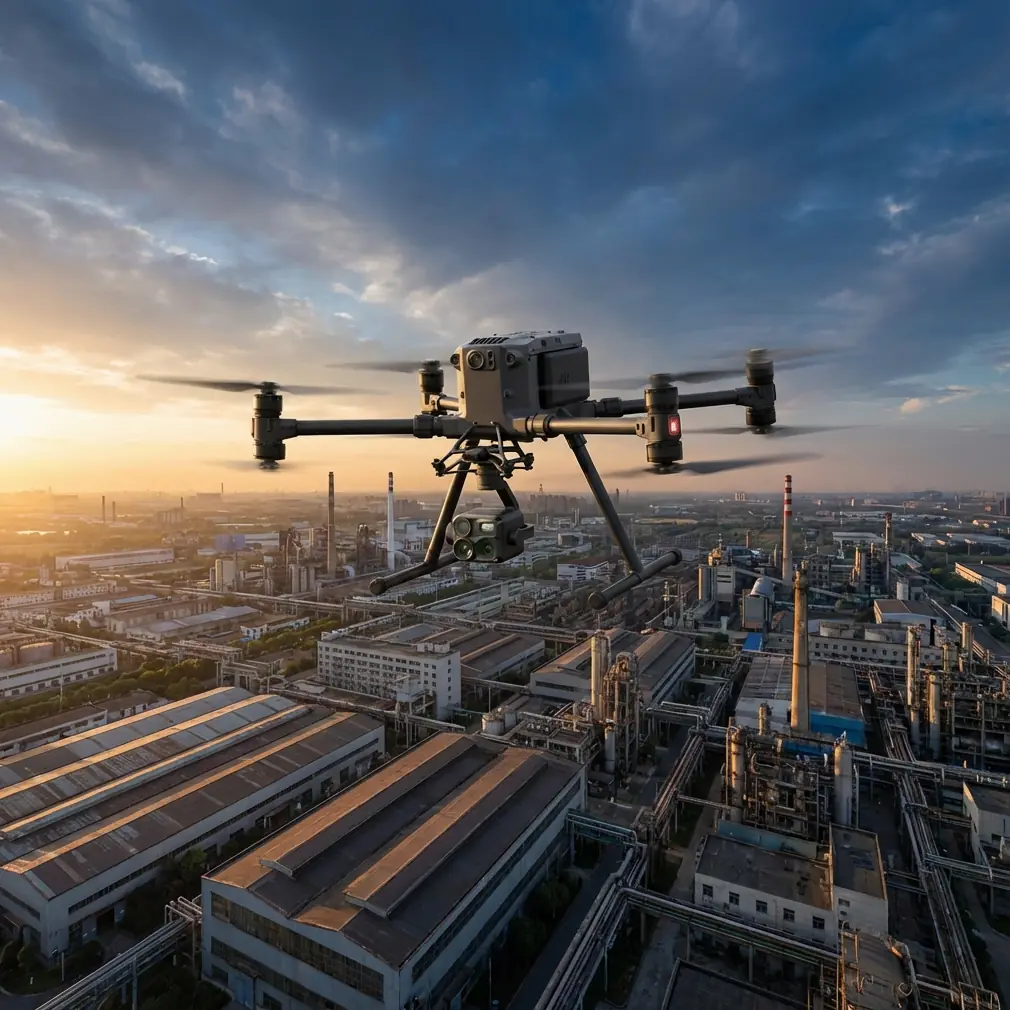
How to Monitor Remote Construction Sites with Matrice 4: A Field Workflow That Actually Holds Up
META: Learn how Matrice 4 can support remote construction site monitoring through fast data capture, on-site processing, secure transmission, and practical workflows for difficult field conditions.
Remote construction projects have a visibility problem.
Not because teams lack sensors, aircraft, or software. The real bottleneck is time: time to capture conditions, time to process imagery into something usable, and time to move that information back to decision-makers when the site is far from stable communications and standard office infrastructure.
That operational gap is not new. A Chinese study on a vehicle-based UAV emergency surveying and mapping system framed the problem clearly: the limiting factor in field mapping is not just image acquisition, but the ability to combine rapid remote-sensing capture, on-site data processing, and immediate remote transmission into one working system. That same logic applies directly to remote construction monitoring with Matrice 4.
If you are responsible for tracking progress, identifying thermal anomalies, documenting earthworks, validating contractor claims, or building a defensible site history, Matrice 4 is not just a flying camera. Used properly, it becomes the aerial component of a mobile surveying workflow.
This article breaks down how to build that workflow around remote construction sites, with special attention to electromagnetic interference, photogrammetry quality, transmission reliability, and practical field deployment.
Why remote construction monitoring fails in the field
A lot of site drone programs are designed backward.
Teams think first about flight time or sensor resolution, then discover later that their biggest delays happen after the aircraft lands. The data sits on media cards. Processing waits until the crew returns to town. Connectivity is weak. Site managers get screenshots instead of usable maps. By the time stakeholders review the output, the conditions have already changed.
The reference paper is valuable because it identifies a more complete operating model. It integrates four pillars:
- remote sensing
- geographic information systems
- global positioning system technology
- network communication
That combination matters in construction because a remote site is never just an image-collection problem. It is a situational-awareness problem. You need accurate location, current imagery, processing capability, and a transmission path to the people who make scheduling, safety, logistics, and quality decisions.
Matrice 4 fits that model well when deployed as part of a vehicle-based field setup. In practical terms, that means the aircraft is only one layer. The full stack includes a site vehicle, charging plan, field tablet or laptop, GNSS workflow, data handling protocol, and a communications method robust enough to send priority outputs before the crew packs up.
The right way to think about Matrice 4 on a remote site
For remote construction, the aircraft should serve three operational goals.
1. Capture conditions quickly
This is the obvious one, but speed here is not just about flying fast. It is about reducing the time from mission request to usable output. If a site superintendent wants confirmation that a haul road washout has not affected today’s delivery route, the value lies in getting actionable imagery within the hour.
The emergency mapping paper emphasizes “rapid acquisition” of remote-sensing imagery. On a construction site, that translates into repeatable flight templates for stockpiles, excavation zones, perimeter fencing, crane staging areas, utility corridors, and temporary access roads.
2. Process enough data on site to make decisions
This is the part many crews skip.
The paper specifically points to on-site processing and output as a key capability. That is critical in remote construction because not every task needs full office-grade processing before it becomes useful. A field team should be able to review image completeness, validate coverage, generate quick-look orthographic outputs, inspect thermal signatures, and flag emerging issues without waiting for a full desktop workflow back at headquarters.
If you miss this step, you often discover too late that a section had poor overlap, an oblique angle introduced blind spots, or dust degraded part of the dataset.
3. Transmit priority information immediately
The paper also highlights immediate remote transmission. That matters even more now because construction stakeholders are distributed: owner’s reps, EPC managers, survey consultants, and scheduling teams may all be off-site.
For Matrice 4 operations, this means separating “must send now” from “archive and sync later.” A thermal hotspot on temporary electrical infrastructure, drainage blockage before a weather event, or visible slope movement near an access cut should move immediately. Full-resolution data packages can follow.
With O3 transmission and secure workflows such as AES-256-protected data handling, you can design a process where essential intelligence moves quickly without compromising project confidentiality.
A practical vehicle-based workflow for Matrice 4
The strongest idea in the reference material is not simply UAV deployment. It is the vehicle-based system concept.
That is a smart match for remote construction.
Instead of treating the drone as a backpack tool, treat the site vehicle as a mobile operations hub. In rough territory, that changes everything. You reduce setup friction, keep batteries organized, protect computing hardware from dust, and maintain a controlled environment for data review.
A workable setup looks like this:
- Matrice 4 airframe and payload configuration
- mission-planning tablet/controller
- spare media and labeled storage workflow
- hot-swap batteries to maintain operational continuity
- field laptop for photogrammetry checks and quick exports
- GNSS/GCP kit for higher-accuracy mapping tasks
- mobile connectivity solution for file transfer and team communication
- antenna positioning strategy for interference-heavy environments
That last point deserves more attention than it usually gets.
Handling electromagnetic interference: what experienced crews do differently
Remote construction sites are not always “clean” RF environments. Quite the opposite.
Temporary site offices, mobile generators, power distribution units, communications trailers, reinforced structures, cranes, steel stock, and nearby transmission infrastructure can all create signal headaches. In some regions, mining-adjacent or energy-adjacent projects add another layer of electromagnetic clutter.
A common mistake is assuming transmission instability is a drone problem when it is actually a launch-position problem.
When I brief crews on Matrice 4 site monitoring, I tell them to watch for interference before takeoff, not after link quality drops. If the control link becomes inconsistent, one of the fastest corrective actions is antenna adjustment combined with a small repositioning of the ground station. Sometimes moving just several meters away from a vehicle roof rack, generator trailer, or steel container makes the difference. Antenna orientation should be aligned to preserve the strongest line between controller and aircraft, especially during low-altitude passes near structures.
This sounds basic, but it is operationally significant. Remote construction monitoring often depends on repeatable corridor flights and low-altitude progress mapping. If interference corrupts transmission during those missions, you risk incomplete coverage or reduced confidence in what the operator is seeing live. A disciplined antenna check before launch is cheaper than reflights.
Photogrammetry on remote sites: where Matrice 4 earns its keep
Construction stakeholders do not just want attractive aerial images. They want measurable outputs.
That is why photogrammetry should be central to any remote Matrice 4 monitoring program. Weekly or biweekly site flights can document grading progress, material stockpile changes, drainage formation, retaining structures, road alignments, and workface development.
If the site requires stronger positional confidence, use GCPs or a GNSS-supported workflow. The exact method depends on terrain, access, and required tolerance, but the principle is consistent: if the output will affect payment verification, progress claims, cut-fill analysis, or design coordination, anchor the dataset properly.
This is where the reference paper’s integration of GPS with remote sensing and GIS becomes so relevant. It is not an academic detail. It is the difference between “we flew the site” and “we produced location-reliable construction intelligence.”
Operationally, that means:
- establish repeatable flight grids over active zones
- maintain adequate overlap for reconstruction quality
- place GCPs where visibility and stability are reliable
- document any site change that could invalidate earlier control references
- process enough of the dataset on site to confirm there are no critical gaps
A quick field review can save an entire day. If a haul road loop or newly excavated trench was missed, fly it again immediately while crews and equipment are still in place.
Thermal monitoring is not just for dramatic visuals
Thermal signature review can be especially useful on remote construction sites, but only when tied to specific inspection questions.
For example:
- temporary electrical connections running hotter than expected
- generator enclosures showing abnormal heat patterns
- water pooling affecting buried or surface infrastructure
- building envelope irregularities during phased construction
- curing differences in some material applications
The key is context. Thermal data should be interpreted alongside visible imagery, site activity, time of day, and recent weather conditions. A heat anomaly without location and operational context is just a colorful image. A heat anomaly linked to mapped site features and transmitted quickly to the right team can prevent rework or downtime.
Again, the reference paper’s emphasis on rapid processing and remote transmission is the real lesson. Thermal monitoring only matters if the result reaches the site manager while there is still time to act.
BVLOS planning in remote environments
Some remote construction projects involve long linear assets, broad footprints, or isolated work packages that push teams to think about BVLOS operations. Whether that is appropriate depends entirely on local regulations, approvals, operator capability, site risk controls, and communications reliability.
What matters from a workflow perspective is that distance increases the penalty for weak systems. If you are operating at larger stand-off distances, then transmission discipline, battery planning, field redundancy, and geospatial consistency all become more important.
This is another reason the vehicle-based concept remains strong. A mobile launch-and-processing unit lets you reposition intelligently as work fronts move. Instead of stretching every mission to the edge of practical control conditions, you can move the operations base and preserve safer, cleaner, higher-confidence flights.
What to send back to HQ, and what to keep local until later
Not every dataset needs immediate upload.
A more efficient structure is to split outputs into three categories:
Immediate operational outputs
These include annotated screenshots, compressed orthomosaic previews, thermal anomaly captures, and short field notes for urgent decision-making.
Same-day technical outputs
These may include preliminary photogrammetry deliverables, progress maps, volume snapshots, or issue-specific image sets.
Deferred full archives
These include raw imagery, complete reconstruction datasets, and long-term documentation packages for recordkeeping and deeper analysis.
If your team needs help structuring that handoff, it is often easier to align the field workflow first and then match transmission capacity to it. A simple way to discuss deployment details is through this direct project chat: https://wa.me/85255379740
The bigger lesson from emergency mapping for construction teams
The reference study was written in the context of emergency surveying and mapping, but the deeper idea carries over perfectly to remote construction.
The limiting factor is not whether the aircraft can fly. The limiting factor is whether the organization can turn airborne data into field-ready and remotely shareable information fast enough to matter.
That is why the paper’s three linked capabilities are so useful as a checklist for Matrice 4 deployment:
- fast image acquisition
- timely on-site processing and output
- immediate remote transmission
Each one has direct construction significance.
Fast acquisition helps you document volatile site conditions before they change. Timely processing lets crews confirm data quality and extract value while still on location. Immediate transmission compresses the delay between observation and action, which is where remote project management usually struggles.
A simple Matrice 4 field routine for remote construction monitoring
If you want a repeatable tutorial-level process, use this sequence:
Define the mission question before launch.
Progress check, thermal inspection, drainage review, volume estimate, or compliance record.Choose the right launch location.
Avoid obvious interference sources such as steel containers, generators, and communications equipment.Verify antenna orientation and signal quality.
If the link is unstable, adjust antennas and move the ground station before assuming the problem is airborne.Fly a repeatable mission profile.
Use consistent altitude, overlap, and route logic for comparable results over time.Capture supplemental obliques where needed.
Especially useful around facades, structures, and stockpile edges.Validate coverage on site.
Do not leave until you confirm the dataset is complete enough for the intended output.Process priority outputs immediately.
Quick-look maps, issue screenshots, thermal review, and site annotations.Transmit essential findings the same day.
Reserve larger archive packages for later synchronization if bandwidth is limited.Log control conditions.
Note weather, RF issues, GCP status, and any deviations from standard flight plans.Build continuity.
The value of remote site monitoring compounds when datasets are collected the same way every time.
Remote construction sites punish weak workflows. Matrice 4 can handle the aircraft side of the job, but the real performance comes from building a field system around it: mobile, geospatially disciplined, interference-aware, and fast enough to get information moving while it still has operational value.
Ready for your own Matrice 4? Contact our team for expert consultation.