
Matrice 4 for Remote Site Monitoring: Why Regulation
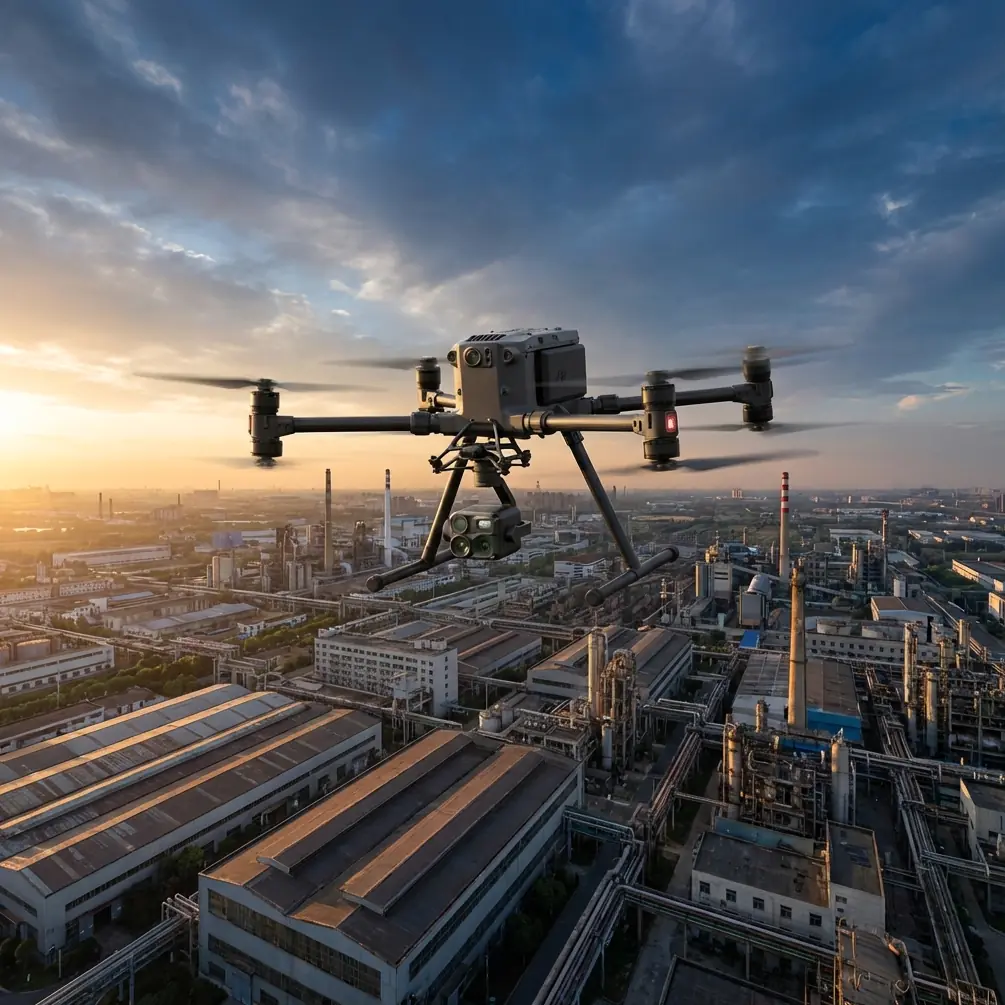
Matrice 4 for Remote Site Monitoring: Why Regulation, Hydrology, and Long-Line Inspection All Point to the Same Operational Standard
META: A technical review of Matrice 4 for remote construction monitoring, grounded in Beijing’s 2026 UAV rules, hydrology response workflows, and long-distance inspection demands across difficult terrain.
Remote construction monitoring has changed. Not because project managers suddenly became drone experts, but because the work itself has become less forgiving. Sites now sit farther from paved access, closer to rivers, reservoirs, unstable slopes, utility corridors, and temporary logistics roads. Getting eyes on conditions quickly is no longer a convenience. It is the operating baseline.
That is the right lens for evaluating Matrice 4.
Too many product reviews treat enterprise UAVs as camera platforms with a few added specs. That misses the point. For remote monitoring, the real question is whether an aircraft can fit into a controlled, documented, repeatable workflow under rising compliance pressure. The signal from recent reference material is clear: the future of drone operations will reward systems that combine field speed with disciplined management.
A recent Beijing rule on unmanned aircraft flight, sales, transport, and storage will take effect on May 1, 2026. The significance goes beyond one city. The policy was framed around both strict management and practical production needs. That balance matters to any contractor, EPC team, environmental consultant, or asset owner using a Matrice 4 in remote project environments. It suggests that drone selection is no longer just a matter of payload or endurance. It is becoming a matter of operational governance: how cleanly the platform fits into documented flight procedures, transport routines, storage controls, data security, and accountability.
Matrice 4 sits right in that intersection.
Why remote construction monitoring is harder than most spec sheets admit
The remote jobsite has more in common with hydrology inspection and utility corridor patrol than with simple aerial photography. Access is uneven. Conditions shift by the hour. Progress tracking often overlaps with safety review, earthwork verification, drainage observation, temporary power inspection, and perimeter monitoring. In some cases, the site footprint spills into flood-prone land, hillside cuts, or linear access roads that resemble small infrastructure networks.
This is where the reference cases become useful.
In water-resource monitoring, traditional methods relied on staff carrying cameras to elevated positions, or even taking boats to inspect rivers and reservoirs. That model is slow and incomplete. The hydrology document points out that UAVs can quickly view detention basins, reservoirs, embankments, and hazardous levee sections from above, then send live information back in real time. Operationally, that matters for remote construction because the same logic applies to stormwater ponds, cofferdams, temporary drainage channels, slope protection, and haul-road washout after heavy rain.
A remote site superintendent does not just need pretty imagery. They need to know whether access roads are passable, whether runoff is undermining a berm, whether a spoil area is expanding beyond plan, and whether a low-lying section is becoming a water hazard. A Matrice 4 configured for this kind of work is far more valuable than a smaller prosumer drone because it can support structured inspection rather than opportunistic flying.
Matrice 4’s advantage is not one feature. It is systems integration.
The strongest enterprise platforms pull multiple jobs into one aircraft cycle. On remote projects, Matrice 4 should be thought of as a combined inspection and documentation node. That means one sortie can support:
- photogrammetry for progress mapping
- thermal signature review for drainage anomalies, equipment heat patterns, or temporary electrical concerns
- visual inspection of perimeter assets and access routes
- repeatable comparison flights tied to GCP-backed survey control
- live observation for supervisors who are not physically on site
That last point is often underestimated. In a remote environment, transmission stability is not a luxury. It determines whether decision-makers can act while the aircraft is still airborne. This is where an enterprise-grade link such as O3 transmission becomes operationally meaningful. It is not just about range on paper. It is about whether a project engineer can review a cut slope, a sediment basin, or a crane laydown edge in enough detail to decide on immediate action instead of waiting for post-flight downloads.
Competitor platforms may offer acceptable image quality, but many become fragmented in actual use. One drone for mapping. Another for thermal checks. A third because the first two are awkward in rough field logistics. That is where Matrice 4 tends to pull ahead. Fewer handoffs mean fewer delays, fewer battery ecosystems to manage, and fewer chances for teams to abandon standard operating procedures because the workflow became too messy.
Lessons from utility inspection apply directly to remote sites
One reference case describes inspection of the 500 kilovolt Dongtian lines, with a total length of 205 kilometers, including 25 kilometers in sparsely populated no-man’s-land where roads are rough and weather changes quickly. That is a powerline case, not a construction case. But the operational challenge is nearly identical to a remote build corridor, pipeline camp, mountain road package, or reservoir-side civil works zone: long distances, poor access, shifting conditions, and high cost for manual inspection.
The lesson is simple. When terrain becomes the bottleneck, the drone is no longer just collecting imagery. It is replacing delay.
For remote construction monitoring, Matrice 4 becomes especially useful when the site stretches across multiple work fronts: access roads, borrow pits, batching areas, worker camps, retaining structures, and utility tie-ins. A smaller aircraft may manage a single pocket of activity. It starts to struggle when the real job is stitching together a coherent operational picture across dispersed geography.
The pipeline and transmission reference also highlights a second point that matters. Traditional patrols in mountains, across rivers, or during flood, landslide, and nighttime conditions are labor-intensive and sometimes impossible to complete effectively. Remote construction shares that same exposure to terrain and weather. After a storm event, for instance, a Matrice 4 can check drainage lines, erosion channels, stockpile containment, and temporary crossings before crews are sent in. That reduces unnecessary exposure and shortens the decision cycle.
Hydrology is not a niche use case. It is a core remote-site requirement.
The hydrology document is especially relevant because many remote projects fail first at the water interface. Not at the structure. Not at the schedule. At the water interface.
The source notes that UAVs can rapidly assess flood storage zones, terrain, reservoirs, embankments, and danger points, then provide real-time information for response decisions. For construction teams, that translates directly into three categories of work:
1. Drainage and runoff verification
After rainfall, a drone can confirm whether temporary drainage is functioning as designed or whether sediment control has been overtopped. A visual pass can be combined with thermal signature analysis in some scenarios to spot moisture differentials or pooling patterns not obvious from ground level.
2. Water area measurement and change detection
The reference discusses water coverage surveys and warning-line analysis. On a construction site, the same approach helps quantify ponding, settlement basin expansion, diversion channel encroachment, or water spread into work zones. That is where photogrammetry tied to GCPs becomes more than a survey exercise. It creates a defensible record.
3. Emergency assessment without sending people into uncertain ground
The source explicitly notes that UAVs help avoid sending personnel deep into fields during drought monitoring and can reach affected areas quickly when transport is constrained. For remote builds, substitute “unstable haul route,” “flooded access,” or “fresh slope movement,” and the operational value becomes obvious.
Matrice 4 is particularly well-suited to this crossover between planned mapping and live incident awareness. Many competing systems perform one of those jobs well but not both. That split is expensive in remote operations because the field team often gets one weather window, one travel slot, and one chance to gather all required data before light or conditions change.
Compliance is moving from background issue to front-line requirement
The Beijing regulation taking effect on 2026-05-01 may seem distant if your project is elsewhere, but it reflects a broader trend already shaping enterprise drone programs. Authorities are looking not only at flight behavior but also at the chain around the aircraft: sales, transportation, and storage. That is a serious message for remote deployment teams.
Why does that matter to a Matrice 4 review?
Because the best aircraft for remote monitoring is not the one with the longest feature list. It is the one that can be integrated into a compliant operating system. That includes secure handling of captured imagery, controlled battery and equipment movement, repeatable preflight and post-flight logging, and disciplined data access. Features such as AES-256 matter here for a practical reason: construction imagery often includes sensitive infrastructure layouts, staging plans, environmental controls, and contractor activity that should not drift into unsecured channels.
As regulation hardens, enterprises will increasingly favor platforms that support governance without slowing fieldwork to a crawl. Matrice 4 fits that need better than lighter, ad hoc drone setups that depend on too many workarounds.
Battery logistics can decide the success of a remote drone program
Remote sites punish weak power management. Long drives, intermittent generators, and compressed work windows expose every inefficiency in the aircraft ecosystem. This is why hot-swap batteries are not a convenience item in serious field operations. They are a scheduling tool.
With hot-swappable packs, teams can maintain sortie continuity for progress capture, issue verification, and follow-up inspection without repeated cooling delays and full shutdown cycles. Over a long site day, that compounds into more completed flight segments, better light consistency for mapping, and fewer half-finished inspection sequences.
This is another area where Matrice 4 tends to outperform loosely assembled alternatives. A drone may look competitive in isolated specs, then create downtime through awkward battery turnover, inconsistent payload readiness, or cumbersome field setup. Remote monitoring exposes those weaknesses faster than urban demonstration flights ever will.
What Matrice 4 looks like in a real remote monitoring workflow
A sound workflow is not glamorous, but it is where value appears.
Start with a morning photogrammetry mission over the active site and access corridor, tied to GCPs where survey-grade repeatability is needed. Use that to document cut/fill status, stockpile movement, drainage changes, and perimeter conditions.
Then run a targeted inspection sortie over water-adjacent features: retention areas, embankments, culverts, temporary crossings, and low points identified from the first map. Add thermal signature review if conditions support useful contrast.
If a weather event or site alarm occurs later in the day, launch a rapid visual check without waiting for a full survey team mobilization. Stream live footage back over the transmission link so the project manager, design office, or environmental lead can review conditions in near real time.
Finally, store and transmit data under a controlled policy that aligns with the stricter compliance direction reflected in Beijing’s new UAV framework.
That is not theoretical. It is exactly the sort of integrated use case suggested by the hydrology and long-line inspection references: reduce labor, shorten inspection cycles, improve timeliness and accuracy, and get information from hard-to-reach places before conditions deteriorate further.
The BVLOS question
For very large or linear projects, teams naturally ask about BVLOS operations. The commercial value is obvious: fewer repositionings, broader corridor coverage, and more efficient data capture across remote terrain. But BVLOS is not just a capability question. It is a regulatory and procedural question, and the new Beijing rule is a reminder that formal oversight is tightening, not relaxing.
So the right approach with Matrice 4 is to evaluate BVLOS readiness as part of a complete operating framework: mission planning, communications reliability, crew roles, risk controls, documentation, and local approvals. The aircraft matters, but governance matters just as much.
A more realistic verdict on Matrice 4
Matrice 4 is not interesting because it is new. It is interesting because the reference materials point toward the exact problems it is built to solve.
Water monitoring documents show the value of rapid overhead awareness when roads, boats, and manual observation are too slow. Utility and pipeline inspection examples show how UAVs reduce the burden of checking long, difficult corridors, with the 205-kilometer transmission case illustrating the scale of terrain-driven inefficiency. The Beijing rule effective May 1, 2026 shows where the industry is headed: tighter control around how drones are flown, transported, sold, and stored, without losing sight of real production needs.
Put those threads together and a useful picture emerges. For remote construction monitoring, the best drone is no longer the one that merely flies well. It is the one that helps a professional team capture survey-grade site intelligence, inspect water and infrastructure interfaces, maintain secure data practices, and keep operating when terrain and logistics are working against them.
That is why Matrice 4 stands out. Not as a generic enterprise platform, but as a field system that matches the real shape of remote work.
If you want to discuss how this kind of workflow would map to your specific site conditions, inspection cycle, or data security requirements, you can message our UAV specialist directly.
Ready for your own Matrice 4? Contact our team for expert consultation.