
Matrice 4 on a Dusty Construction Site: What Actually
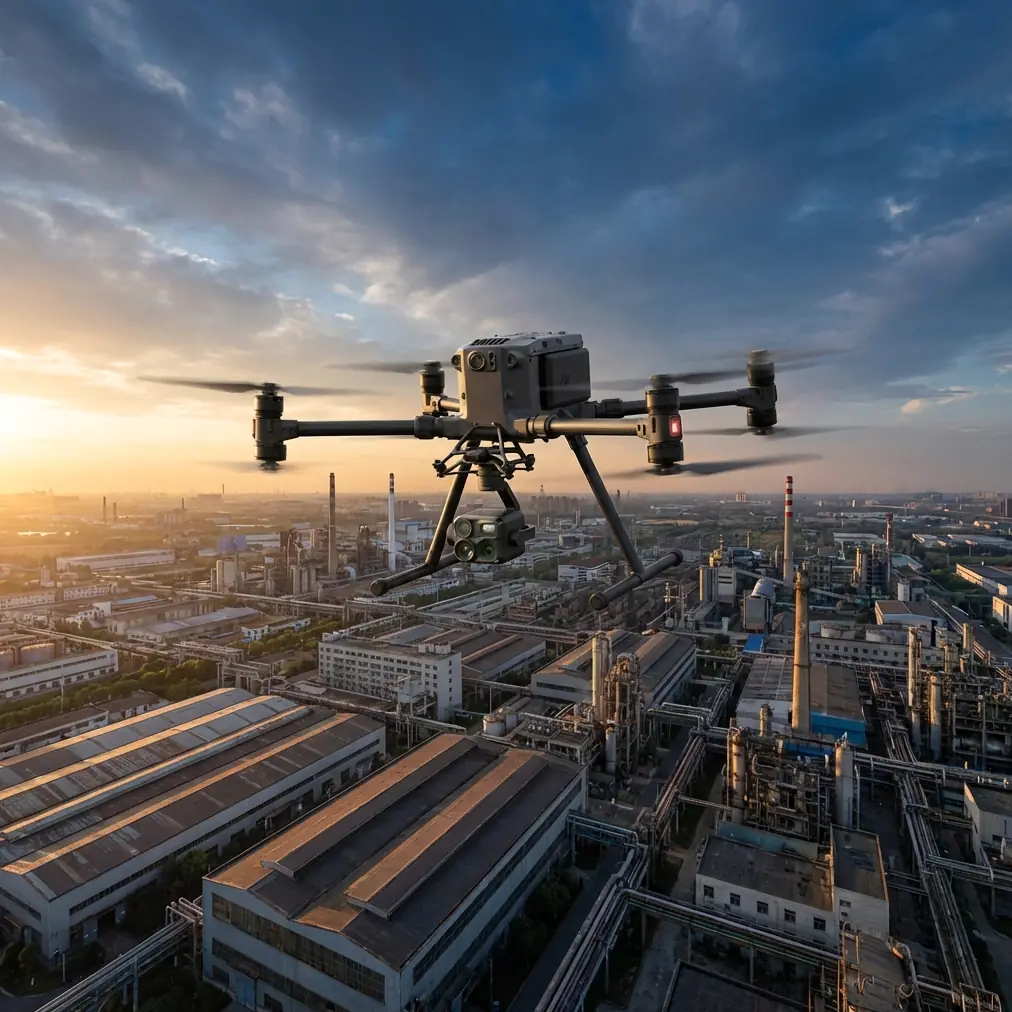
Matrice 4 on a Dusty Construction Site: What Actually Matters When Conditions Turn Mid-Flight
META: A field-led Matrice 4 case study for dusty construction monitoring, connecting airframe clearance, mounting logic, thermal stability, photogrammetry workflow, and changing weather performance.
By James Mitchell
Construction teams rarely get ideal flying conditions. They get haul roads throwing up grit, concrete dust hanging over active zones, steel heating unevenly by noon, and weather that can switch from calm to crosswind before the second battery cycle. That is why a useful discussion about Matrice 4 should not begin with a brochure summary. It should begin with a real operational problem: how do you keep data quality high and aircraft stress low when the site itself is working against you?
I recently worked through that exact question on a large civil project where the brief sounded simple enough: create repeatable progress maps, verify stockpile movement, inspect edge drainage work, and capture thermal signature anomalies around temporary power equipment and curing zones. In practice, the challenge was dust. Not just visible dust, but the kind that changes pilot decisions before takeoff, affects launch positioning, and starts to matter even more once weather shifts during the mission.
That last part is where many drone articles go vague. I won’t.
The site problem was not only imaging. It was aircraft geometry.
Most operators think first about sensors. On a dusty construction site, the first real decision is often lower and more mechanical: how close is the aircraft’s vulnerable intake path and body underside to disturbed ground during launch, recovery, and low-altitude maneuvering?
An old aircraft design principle explains why this still matters, even in a modern UAV context. In conventional aircraft nacelle design, engineers set hard concern thresholds for ground clearance because low-mounted intake areas can pull in dust, sand, and foreign particles during ground operations. Two numbers from that literature are especially revealing: the lowest point of the nacelle should not be less than 600 mm from the ground, and the lower lip of the intake should not be less than 900 mm from the ground. Those figures were developed for larger aircraft, not drones, but the operational logic transfers cleanly: the closer critical airflow paths or exposed lower structures are to debris-rich surfaces, the greater the contamination risk.
For a Matrice 4 crew working from a dusty site, that principle translates into something practical. You don’t launch from the compacted shoulder beside moving dump traffic if there is a cleaner staging point twenty meters away. You don’t recover near loose spoil if you can use a mat, pad, or stabilized concrete strip. You don’t dismiss rotor wash as a nuisance; on a construction project, rotor wash can become the mechanism that recirculates abrasive particles into exactly the areas you want to protect.
That may sound basic. It isn’t. It is the difference between treating dust as an inconvenience and treating it as a system-level factor.
Why mounting logic matters to drone reliability, even if you never see the brackets
The same reference material on aircraft engine installation makes another point that deserves attention. When an engine is hung too far from its structural support, the support length grows, loads increase, and shock events—especially during landing—can create cracking risk around the mounting section. The engineering response is to keep the main mounting node as close as possible to the engine’s center of gravity and to control thermal expansion so local loads do not build into structural problems.
Again, that text was written for aircraft powerplant design, but the significance for Matrice 4 operations is easy to understand. Good industrial drone platforms survive repeated field cycles because their designers respect load paths, balance, and thermal behavior. On a construction site, every hard pack-down, abrupt descent correction, and wind-induced recovery puts real stress into the frame, gimbal isolation, and propulsion interfaces. If the platform handles those forces cleanly, you get more than longevity. You get steadier data.
That steadiness mattered on our mission. We were running photogrammetry passes over excavation progress in the morning, then switching to targeted thermal work over temporary generators and recently poured sections after ambient conditions changed. A less stable aircraft would have shown it in small ways first: uneven hover micro-corrections, image inconsistency on overlap lines, or gimbal behavior that looked fine to the naked eye but created downstream stitching inefficiency. Matrice 4 held line well, which made the outputs more trustworthy when the weather stopped cooperating.
Mid-flight weather change: this is where the aircraft earns its keep
The first battery cycle was straightforward. Light haze, dry surface activity, stable mission geometry. We established GCPs early because dusty terrain can deceive operators into thinking broad visual texture is enough for accurate reconstruction. It usually is not. Dust, graded soil, and repeated material surfaces reduce the uniqueness the processing engine wants. Ground control restored confidence in scale and alignment.
About halfway into the second sortie, conditions shifted. Wind direction rotated across the open cut. Fine airborne dust increased along the western haul corridor. The light flattened just enough to reduce surface contrast in sections we still needed for mapping. This is the moment when a lot of site teams make one of two bad choices: push through with the original flight pattern and accept poorer data, or abort too early and lose the mission window.
We did neither.
Matrice 4’s transmission stability became one of the most useful parts of the system. On busy industrial sites, reliable O3 transmission is not a luxury feature. It affects decision speed. When visibility over the work face changes and airborne dust starts diffusing detail, the pilot needs clean situational awareness and low-friction repositioning. We adjusted the route, raised working altitude slightly over the most active dust source, then segmented the mission into cleaner mapping strips and separate inspection orbits. That preserved the photogrammetry dataset while keeping the thermal tasks viable.
This is also where thermal signature work benefits from a disciplined workflow. Dust and changing wind can alter how surfaces present. A warm electrical enclosure, a curing edge, or a drainage obstruction may still be visible thermally, but interpretation gets sloppy if the aircraft is fighting the air or if the operator is rushing because conditions are degrading. The Matrice 4 platform gave us enough control margin to slow down where it mattered and move quickly where the atmosphere was getting worse.
Dusty construction monitoring is really two jobs, not one
People often collapse “site monitoring” into a single activity. On a serious project, it is at least two distinct missions sharing one aircraft.
The first is measurement. That is your photogrammetry, your terrain updates, your volumetrics, your progress documentation, your alignment with GCPs, and your ability to hand something defensible to engineering or commercial teams. The second is diagnosis. That is where thermal signature review, close visual checks, and exception-based inspection enter the picture.
The weather change forced us to separate those jobs more explicitly. We completed the structured overlap work while the light and air were still manageable, then used a more flexible flight pattern for inspection tasks once surface dust increased. That sequencing sounds obvious after the fact, but it only works if the aircraft can support multiple roles without becoming a compromise in both.
That is one reason Matrice 4 is attracting interest for construction operations. It fits the reality of how sites behave. Conditions do not stay neat long enough for a single-purpose workflow.
The old clearance lesson and the modern drone checklist
Let’s go back to those two numbers—600 mm and 900 mm—because they contain a bigger lesson than simple geometry. In crewed aircraft design, those clearances exist to reduce the chance of foreign object ingestion and contact damage under adverse ground conditions, including sloped landing scenarios. On a construction site, the equivalent risk shows up in UAV operations through launch surface choice, recovery path, and low-hover discipline.
So what did that mean for us operationally?
We moved takeoff and landing to a more controlled pad away from active dust plumes. We avoided unnecessary low hovers near stockpiles. We changed the return path to prevent the aircraft from descending through a zone where rotor wash would have kicked up fresh debris. Those choices sound small. They are not. They preserve optics, reduce contamination exposure, and lower the chance that a routine landing becomes the roughest mechanical event of the day.
That second point links back to the airframe load discussion. The same aircraft design source warns that landing shock can be one of the harshest load cases in the whole operating cycle. For drone crews, that means one careless recovery on uneven, debris-rich ground can do more harm than an otherwise demanding flight. The pilot’s job is not just to complete the mission. It is to finish the mission without adding unnecessary stress to the machine that has to fly again this afternoon.
Data integrity now includes security and continuity
Construction monitoring increasingly involves shared stakeholders: principal contractors, planners, consultants, insurers, utility teams. Once that happens, data handling is no longer a side note. If you are collecting site imagery, thermal findings, and progress evidence that feed claims, safety reviews, or schedule validation, transmission and storage controls matter.
That is why features like AES-256 encryption belong in the same conversation as imaging payloads. Secure data paths are not abstract. They help maintain trust when aerial outputs become part of commercial decision-making. On larger sites, especially those with restricted access zones or critical temporary infrastructure, security expectations are rising faster than many flight teams realize.
Continuity matters too. Hot-swap batteries are not just about convenience. On a dusty site with narrowing weather windows, they reduce the downtime between sorties and let the team preserve mission rhythm. That helped us more than once. As the weather deteriorated, the value was not extra flight time in the abstract. The value was being able to keep the operation coherent—map, inspect, verify, land, swap, relaunch—before the site environment changed again.
What BVLOS planning changes, even when you are not flying full BVLOS
A lot of construction operators throw around BVLOS as if it were merely an endurance issue. It is really a planning discipline. Even on jobs where you remain within conventional visual operating constraints, borrowing BVLOS-style thinking improves site performance: predefine route segments, establish contingency landing areas, model communication reliability, and plan for environmental variability across the whole work zone rather than just the launch point.
That mindset helped on this mission. The western side of the project was far dustier than the eastern drainage corridor once traffic density increased. By structuring the operation in segments instead of one uninterrupted sweep, we avoided forcing the aircraft through the worst air at the worst time. In other words, the mission adapted like a corridor job, not a one-box map. That is a better fit for active construction.
What Matrice 4 proved here
The most useful thing Matrice 4 demonstrated was not a single headline feature. It was composure.
Composure in unstable surface conditions. Composure when the job required both photogrammetry and thermal signature work. Composure when wind and dust forced mission changes after takeoff. And composure in the less glamorous parts of fieldwork: stable transmission, efficient battery turnover, and the ability to land cleanly without turning recovery into the highest-risk phase of the day.
If you manage construction monitoring, that is the real test. You are not buying or deploying a drone for perfect mornings. You are deploying it for ordinary project reality: dust, schedule pressure, mixed tasks, and weather that refuses to stay where the forecast left it.
If you want to compare field workflows or talk through a dusty-site setup strategy, you can message our flight team directly.
The deeper lesson from the reference material is surprisingly modern. Keep critical systems protected from debris. Respect structural load paths and center-of-gravity logic. Account for heat, shock, and mounting stress. Build operations around credible forecasting rather than wishful assumptions. The aircraft design handbooks were talking about larger civil aircraft, but the thinking applies beautifully to drones when you strip away the scale difference.
And that is why Matrice 4 makes sense in this kind of work. Not because the site is easy, but because it isn’t.
Ready for your own Matrice 4? Contact our team for expert consultation.