
Matrice 4 Guide: Low-Light Field Monitoring Excellence
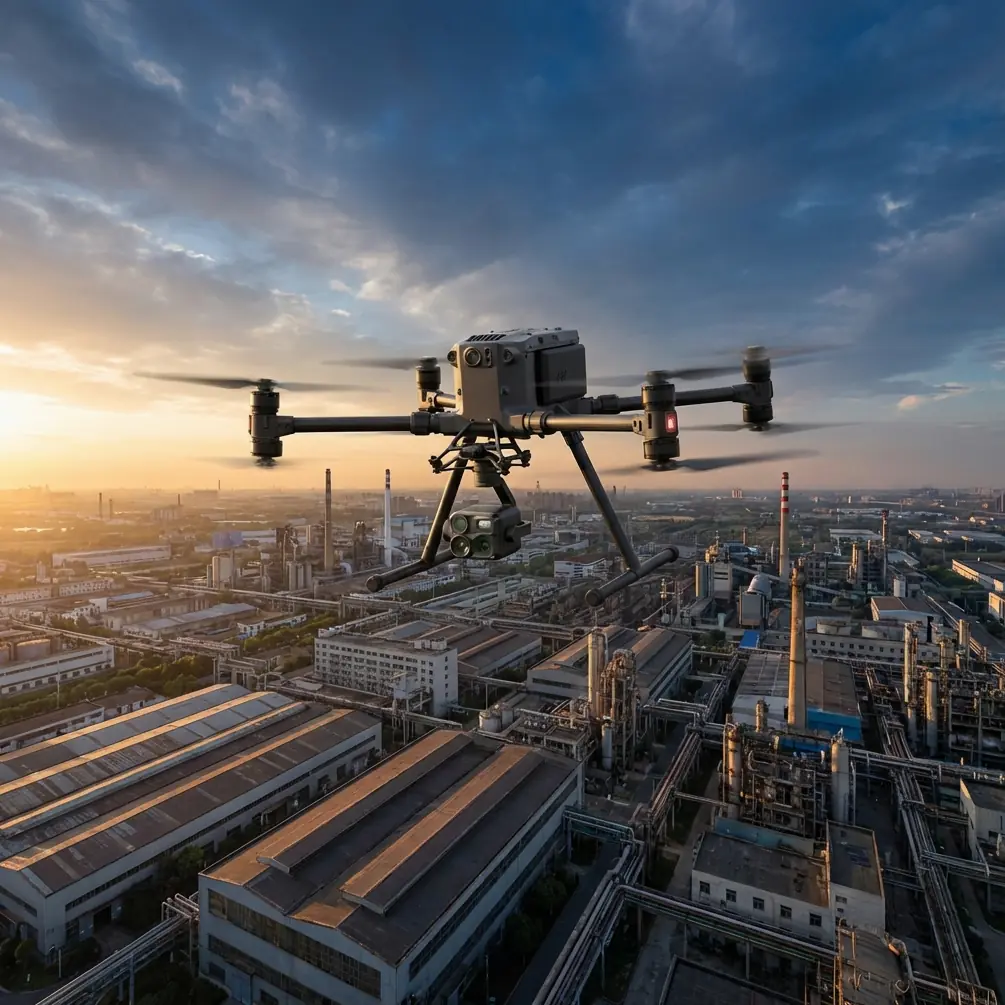
Matrice 4 Guide: Low-Light Field Monitoring Excellence
META: Discover how the DJI Matrice 4 transforms low-light agricultural monitoring with advanced thermal imaging and extended flight capabilities for precision farming.
TL;DR
- Thermal signature detection identifies crop stress and irrigation issues invisible to standard cameras in dawn/dusk operations
- O3 transmission maintains stable 20km video feed even in challenging electromagnetic environments near farm equipment
- 55-minute flight time covers up to 400 acres per battery cycle during optimal low-light windows
- Integrated photogrammetry workflows generate actionable field maps without post-processing delays
Why Low-Light Field Monitoring Demands Specialized Equipment
Agricultural professionals lose critical data when limited to midday flights. The Matrice 4 addresses this directly with a sensor suite engineered for the golden hours—dawn and dusk—when thermal differentials reveal plant health issues that bright sunlight masks.
Traditional enterprise drones struggle with low-light agricultural applications. The DJI Phantom 4 RTK, while excellent for daytime mapping, lacks integrated thermal capabilities. The Matrice 300 RTK requires separate payload purchases exceeding the base unit cost.
The Matrice 4 changes this equation entirely.
DJI integrated a wide-angle thermal camera alongside the mechanical shutter RGB sensor, eliminating payload swapping and reducing total system weight. This matters when you're racing against sunrise to complete field scans before thermal signatures equalize.
Thermal Imaging Capabilities for Agricultural Applications
The Matrice 4's thermal sensor operates in the 8-14μm spectral range, capturing long-wave infrared radiation that correlates directly with plant canopy temperature. Stressed crops—whether from water deficit, disease, or pest damage—display distinct thermal signatures hours before visible symptoms appear.
Expert Insight: Schedule thermal flights 45-60 minutes before sunrise when ambient temperatures stabilize. This timing maximizes thermal contrast between healthy and stressed vegetation while providing sufficient light for RGB reference imagery.
Thermal Resolution and Sensitivity
The integrated thermal camera delivers 640×512 pixel resolution with NETD <40mK sensitivity. In practical terms, this detects temperature variations as small as 0.04°C—sufficient to identify individual irrigation emitter failures or early-stage fungal infections.
Competing platforms like the Autel EVO II Dual achieve similar thermal resolution but sacrifice flight endurance. The EVO II Dual manages approximately 38 minutes maximum flight time versus the Matrice 4's 55 minutes, translating to 45% more coverage per battery cycle.
Radiometric Data Capture
Every thermal frame captures absolute temperature values, not just relative heat maps. This radiometric capability enables:
- Quantitative crop water stress index (CWSI) calculations
- Time-series analysis tracking disease progression
- Automated alert thresholds for irrigation system failures
- Integration with farm management information systems (FMIS)
Flight Performance in Pre-Dawn Operations
Low-light field monitoring typically occurs during calm atmospheric conditions, but morning temperature inversions create unique challenges. The Matrice 4's O3 transmission system maintains 1080p/30fps video feed stability where competing systems experience dropouts.
Extended Range Operations
Agricultural operations increasingly require BVLOS (Beyond Visual Line of Sight) capabilities to cover large acreage efficiently. The Matrice 4 supports these operations with:
- 20km maximum transmission range in FCC-compliant regions
- Redundant frequency hopping between 2.4GHz and 5.8GHz bands
- AES-256 encryption protecting proprietary field data
- Automatic return-to-home with obstacle avoidance active
Pro Tip: When operating near center pivot irrigation systems, position your launch point upwind and at least 200 meters from the pivot motor. The electrical interference from variable frequency drives can degrade transmission quality even with O3's robust signal processing.
Battery Management for Dawn Operations
Cold morning temperatures reduce lithium battery performance significantly. The Matrice 4's intelligent batteries include integrated heating elements that maintain cell temperature above 15°C during pre-flight preparation.
Hot-swap batteries enable continuous operations without powering down the aircraft. For large field monitoring missions, this feature alone saves 8-12 minutes per battery change—critical when working within narrow thermal imaging windows.
Photogrammetry Workflow Integration
Raw thermal imagery provides limited value without spatial context. The Matrice 4's RTK-enabled positioning achieves 1.5cm horizontal accuracy without ground control points, though adding GCP markers improves absolute accuracy for multi-season comparisons.
Mapping Efficiency Comparison
| Feature | Matrice 4 | Matrice 300 RTK + H20T | Phantom 4 RTK |
|---|---|---|---|
| Integrated Thermal | Yes | Requires payload | No |
| Flight Time | 55 min | 45 min | 30 min |
| RTK Positioning | Built-in | Built-in | Built-in |
| Weight (ready to fly) | 1.54 kg | 6.3 kg | 1.4 kg |
| Obstacle Sensing | Omnidirectional | Omnidirectional | Forward/Backward |
| Hot-Swap Batteries | Yes | Yes | No |
| Transmission Range | 20 km | 15 km | 8 km |
The weight differential deserves attention. At 1.54 kg, the Matrice 4 falls below the 2 kg threshold that triggers additional regulatory requirements in many jurisdictions. The Matrice 300 RTK's 6.3 kg operating weight demands more rigorous flight planning and often additional certifications.
Data Processing Considerations
The Matrice 4 generates approximately 2.5 GB of data per 100 acres when capturing simultaneous thermal and RGB imagery at standard agricultural survey parameters. Plan storage and processing infrastructure accordingly.
Compatible photogrammetry platforms include:
- DJI Terra (native integration)
- Pix4Dfields (agricultural optimization)
- Agisoft Metashape (research applications)
- DroneDeploy (cloud processing)
Common Mistakes to Avoid
Flying too high for thermal resolution. Agricultural thermal imaging requires ground sampling distances below 15cm for reliable stress detection. At the Matrice 4's thermal resolution, this limits altitude to approximately 120 meters AGL—plan flight paths accordingly.
Ignoring atmospheric conditions. Morning fog, even light haze, absorbs infrared radiation and corrupts thermal readings. Check visibility conditions and postpone flights when relative humidity exceeds 85% at flight altitude.
Neglecting sensor calibration. Thermal cameras require periodic flat-field calibration against uniform temperature references. The Matrice 4 performs automatic NUC (Non-Uniformity Correction), but manual calibration every 50 flight hours maintains measurement accuracy.
Overlapping flight times with irrigation cycles. Active irrigation creates thermal artifacts that mask actual plant stress signatures. Coordinate with irrigation schedules to ensure fields have been dry for at least 4 hours before thermal surveys.
Skipping RGB capture. Thermal anomalies require visual context for accurate interpretation. Always capture simultaneous RGB imagery, even when thermal data is the primary objective. The Matrice 4's dual-sensor design makes this effortless.
Operational Workflow Recommendations
Successful low-light field monitoring follows a consistent pattern:
- Pre-flight planning (previous day): Define survey boundaries, calculate flight lines, verify weather forecast
- Equipment preparation (2 hours before flight): Charge batteries, update firmware, calibrate sensors
- Site arrival (1 hour before optimal window): Establish GCP if required, complete pre-flight checklist
- Mission execution: Launch 45 minutes before sunrise, complete thermal passes, capture RGB reference
- Data verification: Confirm complete coverage before departing site
- Processing and analysis: Generate orthomosaics, extract thermal indices, identify action items
Frequently Asked Questions
Can the Matrice 4 detect specific crop diseases through thermal imaging?
Thermal imaging detects plant stress responses, not specific pathogens. However, many diseases create characteristic thermal patterns—bacterial infections often cause localized heating, while fungal infections may reduce transpiration and increase canopy temperature uniformly. Combine thermal data with visual inspection and laboratory testing for definitive diagnosis.
How does dew affect early morning thermal surveys?
Surface moisture from dew temporarily masks thermal signatures by creating uniform evaporative cooling across the canopy. Wait until dew evaporates—typically 30-45 minutes after sunrise in moderate humidity—or schedule flights for the pre-dew window 60-90 minutes before sunrise when overnight temperatures have stabilized.
What regulatory approvals are needed for BVLOS agricultural operations?
Requirements vary by jurisdiction. In the United States, BVLOS operations require either a Part 107 waiver or operation under an approved Part 108 framework. Many agricultural applications qualify for expedited approval due to low population density and controlled airspace. Consult with aviation authorities in your region before planning extended-range missions.
Maximizing Your Investment
The Matrice 4 represents a significant capability upgrade for agricultural monitoring operations. Its integrated thermal imaging, extended flight endurance, and robust transmission system address the specific challenges of low-light field monitoring that previous platforms handled poorly or not at all.
Success depends on matching equipment capabilities to operational requirements. The workflows and techniques outlined here provide a foundation—adapt them to your specific crops, climate, and management objectives.
Ready for your own Matrice 4? Contact our team for expert consultation.