
Using Matrice 4 in Mountain Fields: An Expert Workflow
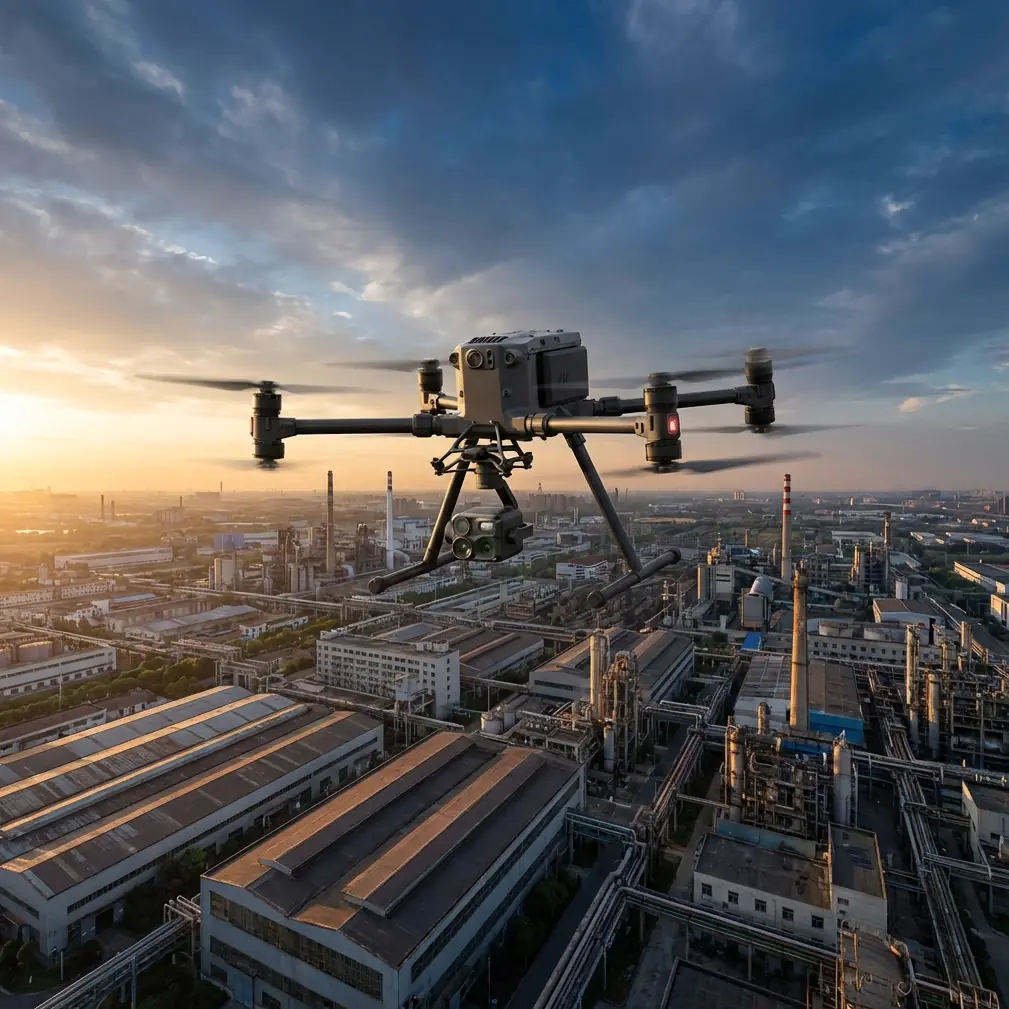
Using Matrice 4 in Mountain Fields: An Expert Workflow for Reliable Mapping and Crop Monitoring
META: Practical Matrice 4 field guide for mountain agriculture, covering flight planning, structural stability, vibration-aware operations, thermal checks, photogrammetry accuracy, and battery management tips from real-world use.
Mountain agriculture exposes every weakness in a drone workflow. Sloped terrain changes your apparent altitude. Wind behaves differently at each ridge. Signal paths open and close as the aircraft slips behind tree lines or contour breaks. And when the job is field monitoring rather than a quick visual pass, the details matter: overlap consistency, thermal timing, battery margins, and the way the aircraft behaves over long linear legs.
That is where a platform like the Matrice 4 becomes interesting. Not because it is simply “advanced,” but because mountain field work rewards systems that stay predictable under uneven loading, changing airflow, and repeated mission legs. If you are using Matrice 4 for crop health assessment, drainage inspection, terrain-sensitive photogrammetry, or repeatable agronomy surveys, the real question is not whether it can fly the mission. The question is whether you can build a workflow that keeps data quality stable from the first battery to the last.
This guide focuses on that problem.
Why mountain fields are harder than flatland mapping
On flat farms, your biggest challenge is usually scale. In mountain fields, geometry becomes the challenge. Terraced plots, narrow access roads, orchard edges, retaining walls, and ridgeline turbulence all introduce small errors that stack up fast.
A mapping run that looks fine on a tablet can later show:
- inconsistent ground sampling distance across slope transitions
- weak image tie points on repetitive crop textures
- thermal inconsistency because one side of the valley warmed earlier
- battery reserve that disappeared faster than expected on headwind return legs
Matrice 4 is well-suited to this environment when the operator treats the mission as a systems problem: airframe behavior, route design, transmission reliability, sensor timing, and energy management all need to line up.
That may sound abstract, but aircraft design principles make the point very clear.
What aircraft structure theory teaches us about drone field work
One of the most useful ideas from traditional aircraft structural design is that member layout strongly affects how loads are carried and whether the surface stays true under stress. In the reference material, stringer spacing is treated as a critical variable because it has a major effect on local skin critical stress. The handbook even gives typical initial spacing ranges by aircraft size: 60–100 mm for small aircraft, 100–140 mm for medium aircraft, and 140–200 mm for large aircraft.
You are not redesigning the Matrice 4’s frame, of course. But the operational lesson is highly relevant: spacing, distribution, and load path determine whether the structure stays stable when conditions become uneven.
For a mountain field operator, this matters in two practical ways.
First, payload and battery installation discipline matters more than many crews admit. Any repeat mission platform benefits from consistent center-of-gravity behavior. If a crew swaps accessories, mounts third-party devices carelessly, or sends the aircraft out with unevenly seated components, they are introducing tiny changes into a system that is supposed to produce repeatable image geometry. On a windy hillside, those small changes show up as extra attitude corrections, slight gimbal workload increases, and data inconsistency across flights.
Second, route geometry should respect how the aircraft carries aerodynamic loads. The structural handbook also notes that some layout choices reduce twisting and make it easier to preserve the intended surface form. Applied operationally, that means avoiding abrupt mission designs that force unnecessary yaw-heavy corrections and aggressive cross-slope transitions. A smoother route is not just easier on batteries; it usually produces cleaner datasets.
In simple terms: stable structure plus stable mission design equals stable data.
Vibration is not just an engineering concept. It affects your maps.
The second reference document deals with structural natural vibration. It frames the problem as an eigenvalue system, with the classic condition:
det[K - λM] = 0
and explains the relationship between stiffness, mass, and mode shapes. That is pure structural dynamics, but it has direct operational significance for Matrice 4 users.
Why? Because every drone is a flying compromise between stiffness and mass. Add mass or alter the distribution of mass, and you alter how the platform responds to motor excitation, gust input, and sudden control corrections. In mountain field work, that response affects:
- image sharpness in photogrammetry
- thermal clarity during hover or low-speed inspection
- gimbal compensation workload
- pilot confidence during terrain-following turns
The handbook also highlights that different mode shapes remain orthogonal with respect to the mass matrix. In practical language, structural responses are not random noise. They have patterns. For operators, the takeaway is straightforward: if the aircraft starts showing a repeatable vibration signature at a certain speed, descent profile, or with a certain payload configuration, do not dismiss it as “normal mountain wind.” Investigate it systematically.
That can mean checking propellers, verifying mounting points, comparing battery seating, and reviewing whether your airspeed on survey legs is exciting a narrow band of unwanted motion. Mapping quality often improves not from buying another sensor, but from removing one repeatable source of vibration.
A mission setup that works well for mountain fields
Here is the workflow I recommend when using Matrice 4 over sloped agricultural land.
1. Split the site by elevation behavior, not just by acreage
Do not plan one giant mission just because the total field area seems manageable. Separate upper terraces, valley-facing slopes, and sheltered lower plots into distinct blocks if they produce different wind behavior or lighting conditions.
This keeps overlap, battery estimation, and return planning realistic. It also makes your outputs easier to compare later, especially if you are building recurring health maps or drainage studies.
2. Use terrain-aware photogrammetry logic
For mountain fields, photogrammetry can break down when the operator plans to a single altitude instead of to the actual surface. On Matrice 4, your mission design should aim for consistent relative height above crop canopy or ground surface, not just a convenient takeoff altitude offset.
If you are collecting data for orthomosaics or terrain products:
- maintain strong front and side overlap
- reduce leg lengths where terrain swings sharply
- use GCPs where repeatable measurement matters
- avoid the temptation to fly too fast over fine crop textures
GCP placement matters even more in mountain plots because vertical error can propagate into horizontal distortions along steep transitions. A few well-placed ground points on elevation breaks often do more for map trustworthiness than another battery’s worth of extra coverage.
3. Schedule thermal work by slope exposure
Thermal signature analysis in mountain agriculture is timing-sensitive. East-facing slopes and west-facing slopes warm at different rates. Water stress, irrigation leaks, compacted soil, and drainage anomalies can either stand out or disappear depending on when the sun reaches that face.
With Matrice 4, thermal runs are most useful when grouped by microclimate zone instead of by convenient flight order. If a lower shaded block stays cool longer, do not rush it just because it is near your launch area. Let the agronomic question drive the sequence.
4. Treat transmission as a terrain issue, not just a distance issue
O3 transmission performance can be excellent in open country, but mountain fields are full of partial obstructions. The problem is often not how far the aircraft is from you. It is what sits between you and the aircraft during a contour turn.
A reliable practice is to position the pilot or visual support team with line-of-sight to the riskiest segment of the route rather than the takeoff point alone. A launch spot that feels convenient beside a road may be worse than a slightly higher setup point with cleaner visibility into the valley shoulder.
If your operation involves longer corridor-style routes across remote plots, build a transmission margin into the plan before considering any BVLOS framework or waiver pathway. Civil compliance aside, mountain topography punishes optimistic assumptions.
5. Keep data security in mind when farms share sensitive boundaries
Some agricultural operators are now more aware of data handling than they were a few years ago, especially when surveying mixed-use land, private estates, water assets, or trial plots. If your Matrice 4 workflow includes cloud sync, team review, or remote file movement, encrypted handling matters.
AES-256 capability is not a marketing footnote in these environments. It is part of maintaining trust when aerial datasets show infrastructure, irrigation patterns, or proprietary crop trials.
My field battery tip: land early on the “easy” leg
Here is the battery rule I teach crews after years of mountain operations: never let the calm outbound leg convince you that the return will cost the same.
It sounds obvious until you watch people ignore it.
On one hillside survey, the aircraft moved out over a descending contour with a slight tailwind and excellent efficiency. The battery percentage looked comfortable, so the crew extended the mission to finish one more strip. Coming back meant climbing into rougher air with a cross-headwind component. The reserve vanished faster than expected.
Since then, my standard practice with hot-swap batteries on mountain field jobs is this:
- swap earlier than you think on any mission that returns uphill
- log battery performance by route segment, not just total flight time
- compare morning and afternoon battery behavior separately
- if one pack consistently sags more under climb load, retire it from critical survey use
Hot-swap capability is valuable because it reduces turnaround friction, but the real benefit is not speed alone. It helps you preserve mission discipline. Crews are less tempted to stretch a pack when swapping is easy and the next sortie can resume with minimal delay.
If you want a quick checklist I use for battery rotation and slope-based mission planning, you can message me here for the field template: https://wa.me/85255379740.
How to keep image quality consistent across repeated surveys
Repeatability is the entire point of crop monitoring. A single beautiful map is less useful than a decent map captured the same way every week.
For Matrice 4 operations in mountain fields, consistency comes from standardizing five variables:
Flight speed
Do not change it casually between missions. If your image network and motion sharpness work at one speed, keep it unless weather forces an adjustment.
Camera angle and route direction
In sloped terrain, sun angle and row direction can alter contrast and tie point quality. Keep route direction consistent when comparing growth stages.
Launch procedure
Use the same preflight sequence every time. Mounting checks, prop inspection, battery seating, IMU status, and gimbal behavior should be verified in the same order.
Wind threshold
Set a real threshold for survey-grade work. A flight that is technically possible may still be a poor data flight.
Ground control strategy
If the project needs measurement integrity, use the same GCP framework or at least preserve the same anchor locations across survey dates.
This is where the structural and vibration references come back into focus. Aircraft performance is not only about whether the drone stays in the air. It is about whether the mass-stiffness system stays predictable enough to support repeatable sensing. The old engineering logic still applies to modern UAVs.
Practical warning signs during mountain missions
There are a few signs that your Matrice 4 workflow needs adjustment:
- the gimbal horizon needs frequent correction after contour turns
- one side of the mosaic consistently looks softer
- thermal imagery is harder to interpret on the same slope week to week
- battery return margins shrink on flights that look similar on paper
- signal quality dips at the same terrain break every mission
- stitching errors cluster near sharp elevation changes
None of these should be treated in isolation. Most come from interaction effects: route design plus wind, payload consistency plus vibration, terrain shielding plus pilot position, or slope heating plus poor timing.
The real advantage of Matrice 4 in mountain agriculture
For field monitoring in mountain terrain, the best use of Matrice 4 is not as a generic “do everything” aircraft. Its strength is that it can support a disciplined, repeatable workflow across several sensing tasks: visible imaging, thermal checks, terrain-aware mapping, and recurring crop health observation.
But performance only shows up when the operator thinks like both a pilot and a systems engineer.
That is why the reference materials matter more than they first appear to. Structural design guidance on spacing and load behavior reminds us that geometry and load paths affect stability. Vibration theory reminds us that stiffness and mass define response patterns, and those patterns can either support or degrade data collection. When you apply those lessons in the field, you make better choices about mission layout, payload consistency, speed, and battery reserve.
And in mountain agriculture, better choices are what separate usable data from expensive noise.
Ready for your own Matrice 4? Contact our team for expert consultation.