
Matrice 4 for Urban Field Monitoring: What Actually Changes
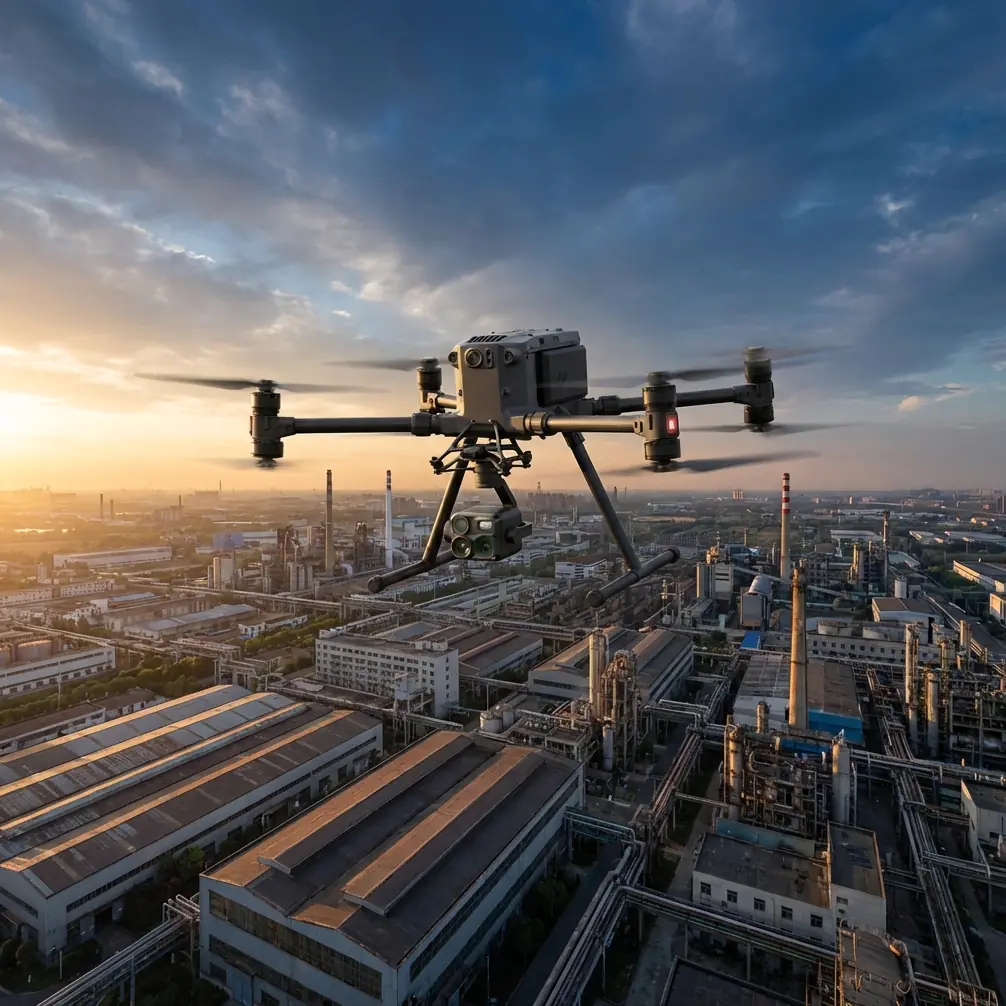
Matrice 4 for Urban Field Monitoring: What Actually Changes in the Workflow
META: A practical expert guide to using Matrice 4 for urban field monitoring, with lessons from telecom drone operations, photogrammetry accuracy, route planning, and institutional deployment needs.
A lot of drone articles talk about sensors first. That is usually the wrong place to start.
When you are monitoring fields in or near urban areas, the real bottlenecks are rarely megapixels alone. The hard parts are access, repeatability, safety, airspace friction, and turning imagery into decisions people trust. I learned that the difficult way on a mixed-use site bordered by utility corridors, roads, and a cluster of low-rise buildings. The field itself was easy to see. The surrounding constraints were not.
That is why the Matrice 4 matters less as a flying camera and more as a workflow machine.
For urban field monitoring, that distinction is everything.
The old problem: the site is simple, the environment is not
A field inside an urban or peri-urban zone tends to create a strange mismatch. Agronomy or landscape teams want frequent updates on plant health, drainage, boundary encroachment, and surface change. Operations managers want consistent datasets. Compliance teams want flights planned around restricted zones. And whoever signs off on the report wants proof that the measurements are not just “close enough.”
Traditional ground inspection struggles here. It is slow, fragmented, and often inconsistent between visits. A crew can walk the site and collect notes, but repeatability suffers. Visual impressions change with the inspector, the weather, and the route taken. If the field edges are boxed in by roads, rooftops, fences, or telecom structures, the blind spots multiply.
This is where the Matrice 4 fits into a more mature model of work: one aircraft, one repeatable route, one dataset structure, many downstream uses.
That sounds obvious until you look at how adjacent industries have already solved similar problems.
What telecom operations teach us about field monitoring
One of the most useful reference points comes from the communications sector, not agriculture. In a telecom drone workflow, maintenance and optimization account for more than 90% of the long operating cycle. That is a huge clue. It tells us that the long-term value of a drone program is not in the first survey. It is in the repeated, structured revisit.
Urban field monitoring works the same way.
You are not flying once to get a pretty orthomosaic. You are building a repeatable inspection layer over the site. That layer might track irrigation stress, surface pooling, fence-line intrusion, vegetation growth near structures, or thermal anomalies around utility-adjacent land. The Matrice 4 becomes valuable when it can return to the same geometry, capture the same angles, and produce data that stands up over time.
The telecom numbers are hard to ignore. Traditional tower inspection in remote areas can take 2 to 3 hours per tower. A drone-based workflow cuts that to about 15 minutes per site, a claimed efficiency lift of over 90%. Now translate that logic to urban field edges, drainage points, light poles, rooftop-adjacent crop zones, or environmental buffer strips. The headline is not just “faster flying.” It is fewer manual touchpoints and more frequent monitoring without bloating labor.
That is the first operational advantage of Matrice 4: tempo.
If your field sits near city infrastructure, the ability to inspect quickly between weather windows and around local activity matters more than many buyers expect.
Why route memory and automated repeatability matter more than pilot skill
In dense environments, skilled manual flying is useful. But repeatable automated capture is usually more valuable.
The telecom reference specifically highlights route memory and fully automated inspection. That matters because urban field monitoring depends on comparison. If this week’s flight path drifts from last week’s, your change analysis starts absorbing flight inconsistency instead of real site change. The Matrice 4, paired with preplanned routes, helps reduce that problem.
For a field bordered by roads and buildings, I would structure missions in layers:
- Perimeter route for encroachment, fencing, runoff paths, and adjacent asset conflicts
- Grid mission for photogrammetry and vegetation pattern review
- Oblique pass for slope, ditch geometry, and edge condition
- Thermal pass, when relevant, to flag water stress, heat-retaining surfaces, or irrigation irregularities
That is where terms like photogrammetry and thermal signature stop being buzzwords and become operational tools.
A field in an urban setting often has microclimate effects that open rural land does not. Heat reflected from pavement, shade from buildings, runoff from hardscape, and altered wind flow can distort what a visual inspection suggests. A thermal layer can expose uneven moisture retention or stress pockets that do not look serious in standard RGB imagery. A clean photogrammetry workflow can reveal grade changes, compaction patterns, and drainage issues that crews on foot simply miss.
The Matrice 4’s value is not that it “sees everything.” No aircraft does. Its value is that it lets you acquire these layers in a disciplined, repeatable way.
Accuracy is not a luxury when stakeholders challenge the map
Here is the second major lesson from the telecom material: 3D modeling and angle measurement became useful because the workflow could reach measurable precision. The reference notes a 2-minute orbit capture and about 1.5 hours to complete a 3D model, with angle measurement error within ±1°.
That level of detail is telecom-specific, but the principle carries directly into urban field work.
If you are monitoring drainage, grade transition, retaining edges, or boundary-adjacent vegetation growth, precision is what separates a map from an argument. Once the data enters a review meeting, someone will question it. They always do. Was the slope really changing? Is that standing water persistent or just yesterday’s rain? Did that boundary shift, or is it a stitching artifact?
This is why I still insist on a disciplined photogrammetry stack, often with GCP support where the site justifies it. Ground control points are not mandatory for every mission, but in urban field monitoring they can be the difference between “useful visuals” and defensible spatial data. Surfaces near buildings and hard edges can be tricky for reconstruction. If the deliverable will affect engineering, maintenance, or lease-line decisions, build for confidence, not convenience.
Matrice 4 operators who understand this tend to get more internal trust from their clients or departments. The aircraft gathers the data. The method earns the decision.
Urban airspace planning is not a side task
This is where many field teams get slowed down.
The telecom document mentions the ability to identify no-fly zones in advance and plan routes and tools beforehand. That sounds basic until you work in a city-edge environment with fragmented airspace rules, temporary restrictions, RF clutter, and multiple stakeholders who all assume they have priority.
With Matrice 4, pre-mission planning should be treated as part of the inspection itself, not admin overhead. For urban field monitoring, I recommend building a standard planning template that includes:
- airspace and local restriction review
- launch and recovery geometry
- emergency landing options
- RF environment notes
- line-of-sight and possible BVLOS constraints where regulations permit
- neighboring structure interference
- data security requirements
This is also where O3 transmission reliability and AES-256-grade data security become more than spec-sheet filler. In urban work, transmission stability matters because interference is rarely theoretical. If you are operating near residential blocks, utilities, rooftop equipment, or telecom assets, you want a command and video link that stays stable under pressure. And if the field belongs to a university, utility, infrastructure operator, or private enterprise, encrypted handling of flight data may be a procurement requirement rather than a nice feature.
The best Matrice 4 deployment plans acknowledge that the urban environment is both a physical site and an information environment.
Why hot-swap battery thinking changes the day, not just the aircraft
Battery strategy is one of those topics people love to oversimplify.
For urban field monitoring, the issue is not just endurance. It is continuity. If you are flying multiple capture types across a constrained site window, hot-swap batteries reduce dead time between missions and help preserve consistent light conditions. That matters when you are trying to compare thermal and RGB outputs or finish a grid before shadows from nearby buildings shift across the field.
This becomes even more useful on institutional sites where access windows are narrow. University research fields, municipal demonstration plots, and commercial green spaces often sit inside broader operating schedules. You may have a short morning block before pedestrian traffic, vehicle movement, or adjacent site activity picks up. Hot-swap efficiency means you spend more of that window capturing data and less of it resetting.
Small workflow gains accumulate. In real operations, they matter more than brochure claims.
The education and technology-transfer angle is bigger than it looks
One recent education-sector development deserves attention here. On April 23, a working meeting in Jiangsu pushed forward the construction of regional technology transfer and commercialization centers for universities. The emphasis was not abstract. The meeting called for deeper integration between scientific innovation and industrial innovation, and for coordination across the innovation chain, industrial chain, capital chain, and talent chain.
That is highly relevant to Matrice 4 adoption in urban field monitoring.
Why? Because many of the most promising urban field use cases sit inside universities, research parks, and applied training environments. These are places where land monitoring, environmental measurement, agricultural trials, digital twin workflows, and talent development converge. A drone like Matrice 4 is not just an operations tool there. It becomes a bridge between research and deployment.
A university field lab can use one platform to teach survey methods, validate vegetation analysis, support infrastructure inspection around the site, and generate outputs useful to external partners. That directly reflects the policy push toward faster conversion of technical capability into practical application.
If you are evaluating Matrice 4 for an education-linked or research-driven urban field program, this matters. The aircraft needs to fit not just a mission profile, but an adoption model: training, repeatability, data governance, and cross-department usefulness.
A practical mission template for Matrice 4 in urban fields
If I were setting up a Matrice 4 workflow from scratch today, this is the sequence I would use.
1. Define the question before the mission
Not “fly the field.” Define what you need to detect.
Examples:
- irrigation inconsistency
- thermal stress near paved boundaries
- drainage changes after rainfall
- vegetation encroachment along service corridors
- progress documentation for research plots
The sensor plan follows the question, not the other way around.
2. Build a restricted-airspace-aware route
Urban field missions fail on planning more often than flying. Pre-check restricted areas, surrounding structures, and safe orbit or grid geometry.
The telecom reference’s point about identifying no-fly zones early is operationally critical. It prevents wasted site visits and supports cleaner route design.
3. Capture RGB for structure, thermal for anomaly
RGB gives you context and measurable geometry through photogrammetry. Thermal signature helps isolate what the eye misses, especially around moisture, surface heat differentials, and stress zones.
Use both when the problem justifies it.
4. Add GCPs when the map must stand up to scrutiny
If the site dataset will inform maintenance work, engineering interpretation, or institutional reporting, consider GCP-backed workflows. In urban-edge environments, accuracy discipline pays for itself.
5. Standardize revisit intervals
The telecom sector’s reliance on long-term optimization is a useful model. Make your Matrice 4 program routine. Weekly, biweekly, or event-triggered after rain or irrigation changes. The more consistent the revisit logic, the more valuable the time-series data becomes.
6. Protect the data chain
Urban land data may contain more than crop rows. It can include adjacent buildings, utilities, roadways, and private property edges. Secure handling is part of the professional standard now, not an extra.
The challenge Matrice 4 solves best
The biggest improvement I have seen is not that Matrice 4 makes one flight better.
It makes repeated field monitoring easier to defend, easier to schedule, and easier to scale.
That is the difference between a pilot-owned workflow and an organization-owned workflow. Once a site team can repeat routes, compare outputs, handle data securely, and explain accuracy with confidence, the drone stops being a specialist tool and starts becoming operating infrastructure.
That shift is especially important in urban field monitoring, where every flight has more stakeholders than it seems.
If you are trying to shape a practical Matrice 4 workflow for your own site conditions, it helps to discuss route planning, sensor mix, and data outputs with someone who has already handled constrained urban environments. You can start that conversation here: message our UAV team directly.
The best Matrice 4 deployments are not built around hype. They are built around friction points: slow inspections, inconsistent measurements, poor revisit discipline, and uncertainty at the edge of urban airspace. Solve those, and the aircraft earns its place very quickly.
Ready for your own Matrice 4? Contact our team for expert consultation.