
Matrice 4 for Remote Forest Monitoring: What Actually
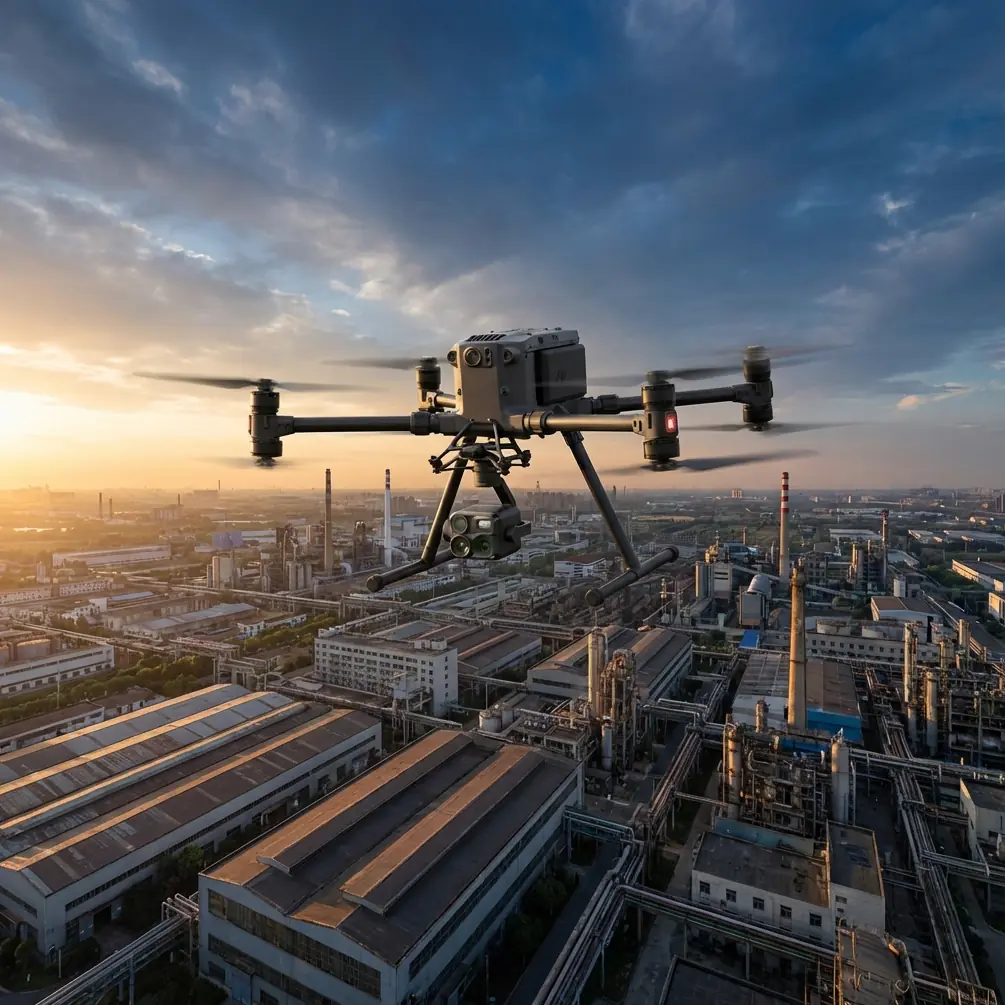
Matrice 4 for Remote Forest Monitoring: What Actually Matters in the Field
META: A technical review of Matrice 4 for remote forest monitoring, covering thermal signature capture, photogrammetry, cold-weather reliability, transmission security, and why maintainability matters in real operations.
I still remember one of the more frustrating forest monitoring jobs I worked on years ago. The mission itself was simple on paper: map a remote stand, identify stressed canopy sections, and verify whether a suspected heat anomaly near a service corridor was machinery, wildlife, or a smoldering ground source. The hard part was everything else. Low temperatures at first light drained batteries faster than expected. Moisture crept into connectors after repeated field assembly. The aircraft could collect data, but the workflow around it felt brittle.
That is why the Matrice 4 conversation is more interesting than spec-sheet chest beating. For remote forest work, the aircraft only earns its place if it reduces operational friction while improving data confidence. In that setting, details like thermal signature interpretation, photogrammetry accuracy, transmission resilience, encryption, and maintainability are not side notes. They are the mission.
This review looks at Matrice 4 through that lens.
Forest monitoring is not one mission. It is three jobs happening at once
People often describe forest drone operations as “inspection” or “mapping,” but remote woodland work usually combines several tasks in one deployment.
First, there is wide-area situational awareness. You need enough coverage to understand terrain, canopy continuity, access paths, clearings, erosion lines, and water movement.
Second, there is measurement. That means photogrammetry, repeatable overlap, stable flight, and enough geospatial discipline to compare one survey against the next. If you are tracking storm damage, disease progression, illegal dumping, replanting success, or seasonal biomass change, visual impressions are not enough.
Third, there is exception detection. This is where thermal signature work enters the picture. Heat anomalies in forests are rarely self-explanatory. They may indicate equipment left running, stressed infrastructure near transmission routes, decomposing organic clusters, localized fire risk, or simply sun-warmed rock. A platform used for forest monitoring has to support that transition from “something is different here” to “here is what we should check next.”
Matrice 4 fits best when it can handle all three without turning the mission into a logistics exercise.
Why cold-weather and high-elevation reliability should be part of the buying decision
A lot of remote forest operations begin at dawn because wind is calmer, visibility is cleaner, and teams can complete larger sections before weather shifts. Dawn also exposes one of the least glamorous truths in drone work: environmental stress changes everything.
One of the reference engineering documents on aircraft reliability includes low-temperature environmental values that plunge far below ordinary field assumptions. In one extracted table, some extreme values reach roughly -80.8°C to -83.6°C at certain conditions, while another reference note flags pressure considerations above 2,500 meters in plateau and mountain regions, especially in September, October, and November. Those are aircraft design handbook figures rather than a direct Matrice 4 operating chart, but they matter because they remind us of the engineering mindset behind serious airframe design: environmental margins are not theoretical. They define whether systems remain dependable when conditions stop being friendly.
That has direct significance for remote forest monitoring.
If your work includes mountain forestry, upland watershed surveys, or seasonal inspections in colder months, then battery behavior, sensor warm-up stability, and the repeatability of takeoff-to-capture workflow become central. A drone that looks excellent in mild test conditions may become annoying, or worse, untrustworthy, once cold-soaked electronics and thin-air performance start influencing flight time and sensor readiness.
This is where hot-swap batteries become more than a convenience. In remote operations, reducing aircraft downtime between sorties means less exposure of equipment to dust, moisture, and repeated handling in the field. It also means you can maintain survey rhythm when environmental conditions give you only a narrow calm-weather window. In forest mapping, consistency across sorties is underrated. The more smoothly you can launch, recover, swap, and relaunch, the cleaner your final dataset tends to be.
Thermal signature work: useful, but only if the aircraft helps you avoid false confidence
Thermal imaging in forests can be transformative, but it is also easy to misuse.
A warm patch under canopy does not automatically mean combustion. A cooler strip does not automatically mean healthy moisture retention. Thermal signature data becomes operationally valuable only when the aircraft helps you cross-reference heat behavior with visual geometry, terrain context, and repeat passes.
That is why the Matrice 4 platform matters most when used as a decision support tool, not a magic detector. In practical forestry work, thermal data can help teams:
- isolate irregular heat sources near access roads and utility corridors,
- locate equipment or human activity in remote zones during scheduled civilian site management,
- identify drainage or moisture patterns that create unusual temperature contrasts,
- prioritize which sectors deserve close visual follow-up.
The key operational significance is speed. Instead of walking broad tracts blindly, teams can narrow ground verification to the handful of areas that actually differ from the baseline.
On older workflows, this stage often broke down because thermal and visual interpretation felt disconnected. Operators would return with “interesting imagery” but weak next steps. Matrice 4 is most useful when it supports a more disciplined chain: detect anomaly, align it with terrain and RGB context, flag coordinates, then assign a follow-up action.
Photogrammetry is where forest monitoring becomes evidence instead of opinion
Forestry teams often underestimate how much project value depends on map consistency rather than camera sophistication.
Photogrammetry in remote forest work is difficult because the scene itself fights your reconstruction. Dense canopy can obscure the ground. Repeating textures can confuse alignment. Elevation changes alter perspective. Lighting can shift dramatically over a single flight block.
A capable aircraft helps, but process discipline matters just as much. If I were building a serious Matrice 4 forest workflow, I would focus on three things:
1. Repeatable flight planning
Repeatability is what turns drone output into a monitoring record. If the same corridor, slope, or compartment is captured with similar geometry over time, change detection becomes credible.
2. GCP strategy where the canopy allows it
GCPs are not always easy to deploy in remote woodland, but when accessible clearings, roads, service edges, or managed breaks exist, they remain one of the most practical ways to tighten map accuracy. In the forest context, a few well-placed control points can make the difference between a visually attractive map and a survey that stands up to operational review.
3. Data continuity between sorties
This circles back to power management and workflow stability. If battery changes, link interruptions, or excessive repositioning force fragmented capture patterns, your reconstruction quality suffers.
For readers evaluating Matrice 4, this is the real question: does the platform make disciplined photogrammetry easier under field pressure? In remote forest programs, ease of repeatability is often more valuable than any headline feature.
Transmission matters more in forests than many teams expect
Remote woodland operations are full of signal obstacles. Terrain folds, tree density, humidity, and long stand-off distances all complicate link stability. That is why O3 transmission is not a marketing footnote in this use case. It directly influences mission continuity.
When the aircraft is working beyond the nearest open clearing, every improvement in transmission robustness reduces the odds of interrupted data collection, unnecessary repositioning, or conservative route trimming. For large-area forest monitoring, that means better route efficiency and fewer compromises in coverage design.
There is also a second layer here: trust.
The reference news item about a newly introduced U.S. Senate bill is not about Matrice 4 itself, but it signals where the broader operational environment is heading. The bill, introduced by Senator Tom Cotton, seeks to expand counter-UAS authority for critical infrastructure operators and specifically addresses authority, training, and funding. Whether or not a forest mission occurs near utility corridors, reservoirs, communications sites, or energy assets, one point is obvious: organizations are paying more attention to drone presence, pilot competency, and response procedures.
That changes how professional operators should think about their own systems. In practical terms, robust transmission and clear operating discipline are no longer just about convenience. They help teams work predictably around sensitive civilian infrastructure and reduce misunderstandings with stakeholders who are already more alert to drone activity ahead of major events and in protected areas.
AES-256 is not just for IT departments
The same trend makes AES-256 worth discussing in plain operational language.
Forest monitoring datasets can include more than trees. Depending on mission design, imagery may incidentally capture utility clearings, access roads, water facilities, maintenance compounds, or private land interfaces. Strong encryption is part of responsible handling, especially when environmental monitoring overlaps with commercially sensitive locations.
The operational significance is simple: secure transmission and secure data pathways make it easier for land managers, environmental consultants, and infrastructure-adjacent operators to approve drone use without treating the aircraft as an unmanaged data risk.
That matters in the real world. A drone program often succeeds or fails based on whether legal, operations, and environmental teams can all live with the workflow.
Maintainability is the quiet feature that determines fleet survival
One of the supplied aircraft design references is centered on reliability and maintainability; another deals with material protection and corrosion control, including sealing practices for structural components and anti-corrosion treatment for steel, aluminum alloys, magnesium alloys, and composites.
Again, those are broad aircraft engineering references, not Matrice 4 brochures. But they point to something experienced operators learn quickly: in remote field use, environmental wear is cumulative and expensive.
Forest work exposes aircraft to:
- fine organic dust,
- moisture cycling,
- temperature swings,
- repeated packing and unpacking,
- rough launch environments,
- long vehicle transport over uneven roads.
That is why maintainability should be part of any serious Matrice 4 assessment. Corrosion protection and sealing philosophy are not abstract engineering topics. They influence connector life, fastener condition, airframe durability, and service intervals. A platform designed with maintainability in mind usually costs less in lost mission time than one that merely performs well when new.
This is one of the biggest differences between hobby-style expectations and enterprise field reality. In enterprise forestry, the aircraft must remain dependable after dozens of repetitive deployments, not just impress on day one.
BVLOS potential changes forest economics, but only when the operation is mature enough
For remote forests, BVLOS is the feature everyone wants to discuss and the one that requires the most discipline to use responsibly within local rules and approvals.
The reason is obvious. Long linear routes, inaccessible terrain, and sparse road access make extended operational reach extremely attractive. A drone system that can support a BVLOS-oriented workflow can reduce repositioning, shorten field days, and allow larger tracts to be monitored with fewer launch points.
But BVLOS only creates value when the rest of the chain is already professional: route planning, airspace awareness, communications, emergency procedures, observer strategy when required, and reliable aircraft performance. Matrice 4 makes sense in that conversation because transmission quality, maintainability, and encrypted links all support the sort of structured operating environment BVLOS demands.
Without that maturity, BVLOS is just a checkbox.
The real advantage: less friction between capture and decision
What changed for me after years of awkward forest operations was not my appetite for more features. It was my appreciation for systems that reduce friction.
That is the best way to judge Matrice 4 for remote forest monitoring.
Not by asking whether it can take images. Of course it can.
Ask instead:
- Does it help us collect repeatable photogrammetry under field pressure?
- Can it support thermal signature work without slowing down verification?
- Is the link stable enough for terrain-heavy routes?
- Does AES-256 satisfy the data-handling expectations of cautious stakeholders?
- Can the battery workflow sustain multiple sorties without breaking operational rhythm?
- Is the platform maintainable enough to survive moisture, dust, and repeated transport?
- Can it fit into a BVLOS-ready program when the operator is authorized and prepared?
If the answer to most of those is yes, then the aircraft becomes more than a sensor carrier. It becomes a practical field system.
For teams planning forest monitoring around remote corridors, upland ecosystems, or infrastructure-adjacent woodland, that distinction matters. It determines whether the drone produces actionable intelligence or just another folder full of imagery.
If you are building out a forestry workflow and want to compare mission design options, payload planning, or cold-weather operating considerations, you can start the discussion here: message Dr. Lisa Wang’s team.
Ready for your own Matrice 4? Contact our team for expert consultation.