
Matrice 4 in Windy Forest Operations: A Field Case Study
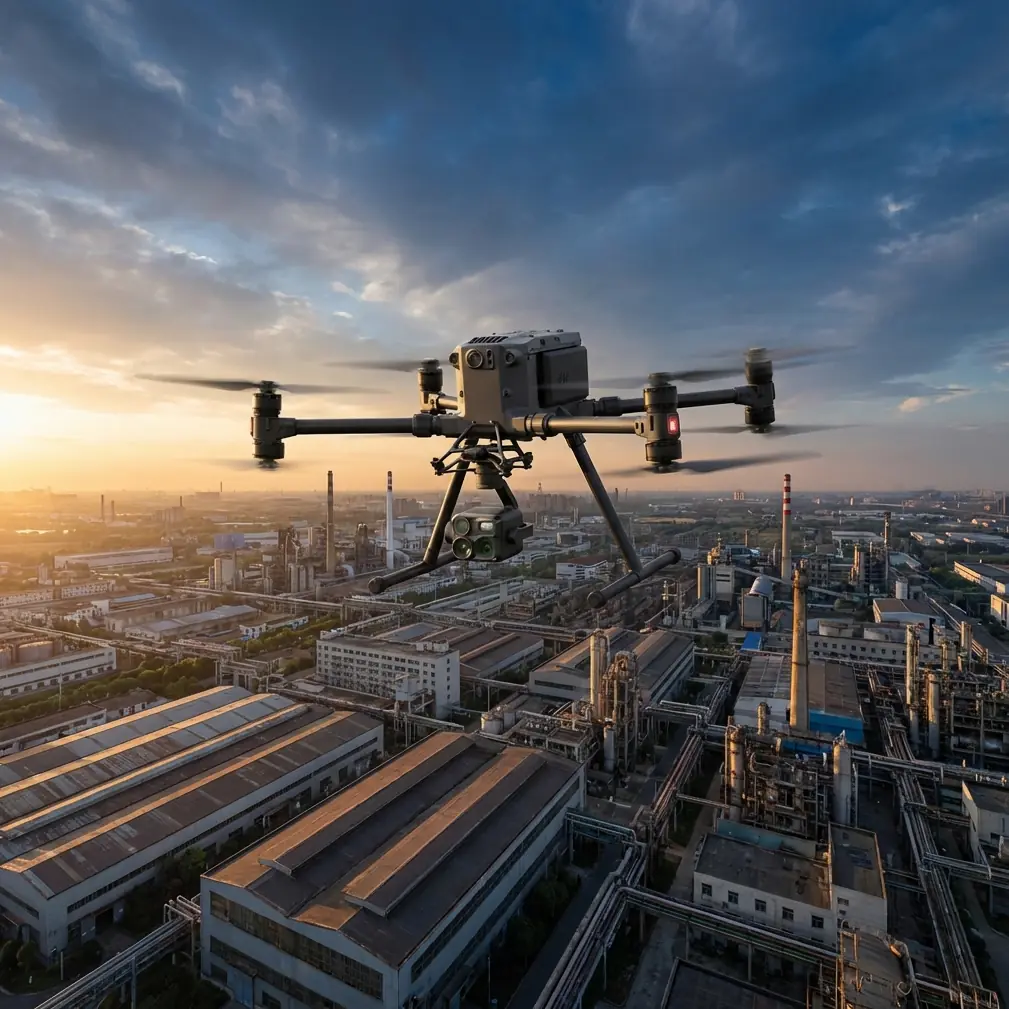
Matrice 4 in Windy Forest Operations: A Field Case Study on Low-Altitude Logistics, Sensing, and Control Discipline
META: Expert case study on using Matrice 4 for windy forest monitoring, with lessons from low-altitude drone delivery, sensor use, transmission resilience, software control principles, and mission planning.
Wind changes everything in the forest.
Not in the abstract. In practice. It alters canopy movement, pushes thermal readings off expected patterns, complicates route repeatability, and turns a routine monitoring sortie into a test of aircraft discipline. That is why the most useful way to think about Matrice 4 for forest work is not as a camera platform, but as a system: sensors, flight control behavior, transmission integrity, battery strategy, and payload security all working together under stress.
I recently framed a windy-forest monitoring plan around a reference point that, at first glance, seems far removed from environmental work: a public low-altitude delivery demonstration in Tianjin. During the seventh Tianjin International Helicopter Expo on October 16, a KFC-branded drone concept flight simulated meal delivery from a restaurant, crossed urban airspace, and landed accurately beside a mobile food truck in about 8 minutes. It was presented in the expo’s first dedicated low-altitude economy hall, alongside partners including Yunchuang Technology and Clanyar-type exhibitors focused on drone applications.
That event matters for Matrice 4 operators even if you never intend to carry a food payload.
Why? Because it captured two issues that are directly relevant to forest missions. First, precision at the end of a route is what determines whether a sortie is operationally useful. Second, the low-altitude economy is maturing around repeatable, short-cycle drone tasks, not just one-off demonstrations. Forest monitoring in wind shares the same requirements: stable traversal, predictable arrival over a target zone, and confidence that the aircraft can complete a mission segment with enough control authority left for a clean recovery.
The mission profile: windy forest monitoring with Matrice 4
The scenario was a mixed woodland block with uneven topography, shifting gusts at ridge level, and a need to inspect canopy health, fire-risk indicators, and wildlife disturbance near a service corridor. The Matrice 4 was chosen because the job demanded flexibility rather than brute lift: visible imaging for photogrammetry, thermal signature checks in shaded cover, secure handling of location data, and a flight stack capable of staying composed when the air got disorderly.
The key operational challenge was not merely “windy conditions.” It was layered wind. Below the canopy edge, the airflow was broken and inconsistent. Above the treeline, it accelerated. In between, the aircraft had to maintain sensor quality while transitioning across turbulence bands. Anyone who has processed a forest orthomosaic after a poor-weather flight knows the result of getting this wrong: blurred overlap, inconsistent GCP alignment, thermal scenes distorted by motion, and revisit data that cannot be trusted.
Matrice 4 earns its place here if it can hold the mission together when the forest is actively trying to break it apart.
What the Tianjin delivery demo teaches forest operators
The Tianjin demonstration was framed around future restaurant service, but the core lesson was route discipline under public visibility. An 8-minute flight ending in a precise landing is not impressive because it is fast. It is impressive because it compresses the entire value chain of low-altitude operation into a measurable outcome: launch, transit, navigation through complex space, and accurate arrival.
Forest monitoring benefits from the same logic.
If your Matrice 4 route is designed for multi-point thermal inspection of a windy tree line, the useful question is not whether the aircraft can technically fly the route. The useful question is whether it can hit each observation segment with enough positional consistency for your findings to be comparable from one sortie to the next. That is the difference between attractive footage and evidence-grade field data.
This is where O3-class transmission resilience and mission planning matter more than headline specs. In forest corridors, signal behavior is rarely ideal. Terrain shoulder effects, partial visual masking by dense foliage, and the pilot’s changing relation to the aircraft can all degrade confidence. A platform that maintains strong situational awareness and link stability under these conditions allows the operator to make small, early corrections instead of large, late ones. Small corrections preserve image geometry. Large ones often ruin it.
The wildlife moment that changed the flight plan
Midway through the mission, the thermal feed picked up a moving heat signature near a break in the trees along a service track. At first it looked like a simple mammal crossing. Then the visible zoom confirmed it was a deer stepping out with a smaller animal close behind, likely a juvenile staying within a narrow thermal envelope.
That changed our priorities immediately.
Instead of descending for a tighter pass, we offset laterally and held altitude to avoid pressure on the animals. In calm conditions, an operator might be tempted to refine the visual capture. In gusting forest air, that is exactly when discipline matters. The Matrice 4’s value in this moment was not aggressive maneuvering. It was the ability to maintain a usable thermal and optical picture while respecting distance and minimizing disturbance.
This is where sensor fusion becomes practical rather than theoretical. Thermal signature alone can flag a living subject in partial concealment. Optical confirmation adds species-level context or at least behavioral interpretation. In a windy forest, where branches move unpredictably and light patterns shift by the second, using both views together is often the difference between logging a credible observation and misreading environmental noise.
Why control-law thinking belongs in drone field work
One of the reference documents, though drawn from civil aircraft design rather than small UAS product literature, highlights an idea drone operators should take seriously: flight envelope protection and control-system behavior are not academic extras. They are central to safe, repeatable work. The document discusses how advanced electronic flight control systems integrate protective functions, including angle and load limitations that a pilot cannot simply override under normal operation. It also notes that software assurance in manned aviation has long leaned on standards such as RTCA DO-178A/B and ED-12A/B, with ED-12A/B described as stricter in certain respects.
No, a Matrice 4 in civilian forest monitoring is not certified like a transport-category airplane. That is not the point.
The point is operational mindset. In wind, the best operators treat the aircraft’s protective logic as part of the mission design, not a hidden background feature. If the platform resists certain pilot inputs or alters its response near handling boundaries, that is useful information. It tells you the environmental envelope is tightening. You should adapt the mission before the data degrades or the safety margin collapses.
This matters especially in BVLOS-adjacent planning discussions, where people sometimes talk as if link range alone defines readiness. It does not. A forest monitoring operation becomes dependable only when transmission, control response, obstacle context, and software behavior are understood together.
Mapping in wind: photogrammetry, GCPs, and what not to rush
Photogrammetry over forested terrain is unforgiving. The canopy itself is a moving subject when the wind picks up, and that means your deliverable may carry hidden instability even if the route flew correctly. The Matrice 4 can still be a productive mapping tool here, but only if expectations are grounded in the environment.
A few principles proved decisive in this case:
- Use GCPs where the terrain allows it. In forest-edge mapping and service-road monitoring, GCPs anchor the project when visual texture is repetitive and wind is introducing motion into upper layers of the scene.
- Separate structure mapping from ecological observation. Trying to capture orthomosaic-grade imagery and opportunistic wildlife data in one rushed pass usually compromises both.
- Adjust overlap for conditions, not convenience. Wind-driven vegetation movement means your comfortable baseline may be too thin for reliable reconstruction.
- Do not chase canopy detail in strong gusts. Stable geometry beats dramatic proximity.
The practical lesson is simple: Matrice 4 can collect useful photogrammetric data in windy forests, but the target should often be infrastructure adjacency, clearings, roads, drainage features, and repeatable management zones rather than a fantasy of perfectly frozen canopy texture.
Mechanical discipline still matters, even on smart aircraft
The other non-obvious reference in the source set comes from an aircraft design handbook page dealing with fittings, torque values, and tube material properties. On the surface, it seems far removed from field drone work. Look closer and it reinforces a principle too many operators skip once they trust the aircraft’s software: hardware integrity still governs mission reliability.
The document cites specific installation torque values for connection hardware and lists material performance data such as Ti-6Al-4V with a tensile strength figure of 130,000 psi in the referenced table. That level of detail is not there for decoration. It exists because aerospace reliability is cumulative. Connections, fittings, tolerances, and material behavior decide whether a system keeps behaving like a system after repeated cycles, vibration, and environmental loading.
For Matrice 4 forest teams, the operational takeaway is straightforward. Wind magnifies the cost of small mechanical neglect. A slightly compromised mount, a fatigued landing interface, contamination around connectors, or a battery seating issue that seems harmless in calm weather can become the reason a mission is aborted when gust loads rise. Hot-swap batteries are excellent for maintaining tempo in field operations, but tempo should never outrun inspection discipline.
Before each forest sortie, my preference is a short, ruthless checklist:
- battery seating confirmed
- gimbal lock and damping condition checked
- landing gear and airframe surfaces visually inspected
- sensor windows cleaned
- payload connection points verified
- antenna orientation and transmission path considered relative to terrain
None of this is glamorous. All of it pays.
Data security is not optional in environmental work
Forestry clients often focus on imagery quality first, but data handling is close behind. Habitat locations, utility corridors, concession boundaries, and environmental anomalies can all be commercially sensitive. That is why AES-256-level data protection and controlled transfer workflows matter even in ordinary civilian missions.
This becomes more relevant as drone work moves closer to routine low-altitude infrastructure. The Tianjin expo’s decision to feature a dedicated low-altitude economy hall signals a broader transition: drones are being normalized as service infrastructure. Once that happens, expectations rise. Reliability, repeatability, and information security stop being premium extras and become baseline requirements.
Forest operators using Matrice 4 should think the same way. It is not enough to fly well. You need clean chain-of-custody for images, logs, coordinates, and reports.
Where Matrice 4 fits in the real low-altitude economy
The KFC demonstration was a symbolic moment because it showed a mainstream brand using drone logistics to illustrate a future service model. For those of us in industrial and environmental UAV work, the significance is larger than the headline. Public-facing delivery concepts help normalize drone operations in shared low-altitude space. That normalization will eventually benefit inspection, mapping, forestry, and infrastructure maintenance, provided operators prove they can deliver quiet competence rather than spectacle.
Matrice 4 sits neatly inside that future if it is used with professional restraint.
In windy forest operations, that means:
- treating thermal as a decision tool, not just a visual novelty
- planning photogrammetry around what the atmosphere will permit
- respecting wildlife through offset observation rather than intrusive approaches
- using transmission and battery strategy to preserve margin
- reading the aircraft’s control behavior as feedback from the environment
- maintaining mechanical discipline even when the software feels effortless
If you are comparing mission design options for forest corridors, ridge lines, or habitat-edge monitoring, a direct technical discussion usually saves time; you can message our UAV team here and talk through route structure, payload choices, and wind limits in practical terms.
Final assessment from the field
After the sortie, the most valuable output was not a single hero image. It was a set of dependable observations gathered without pressing the aircraft or the environment past what the conditions would support. We logged thermal anomalies along the tree line, captured repeatable visual references for future comparison, documented the wildlife encounter without disturbance, and returned with enough battery margin to avoid a hurried recovery.
That is the standard Matrice 4 should be held to in forests.
Not whether it can fly in wind, but whether it can still produce trustworthy work when wind complicates every part of the mission.
The low-altitude delivery demonstration in Tianjin offered a useful public example of precise, timed, point-to-point drone operation. The aircraft design references, oddly enough, added an equally valuable reminder from another corner of aviation: reliable outcomes depend on protected control behavior, disciplined software thinking, and respect for the physical details that keep air systems coherent. Put those ideas together, and the Matrice 4 becomes more than a capable drone. It becomes a practical instrument for forest monitoring in conditions that expose every weakness in planning.
Ready for your own Matrice 4? Contact our team for expert consultation.