
Highway Patrol: How the Matrice 4’s Night
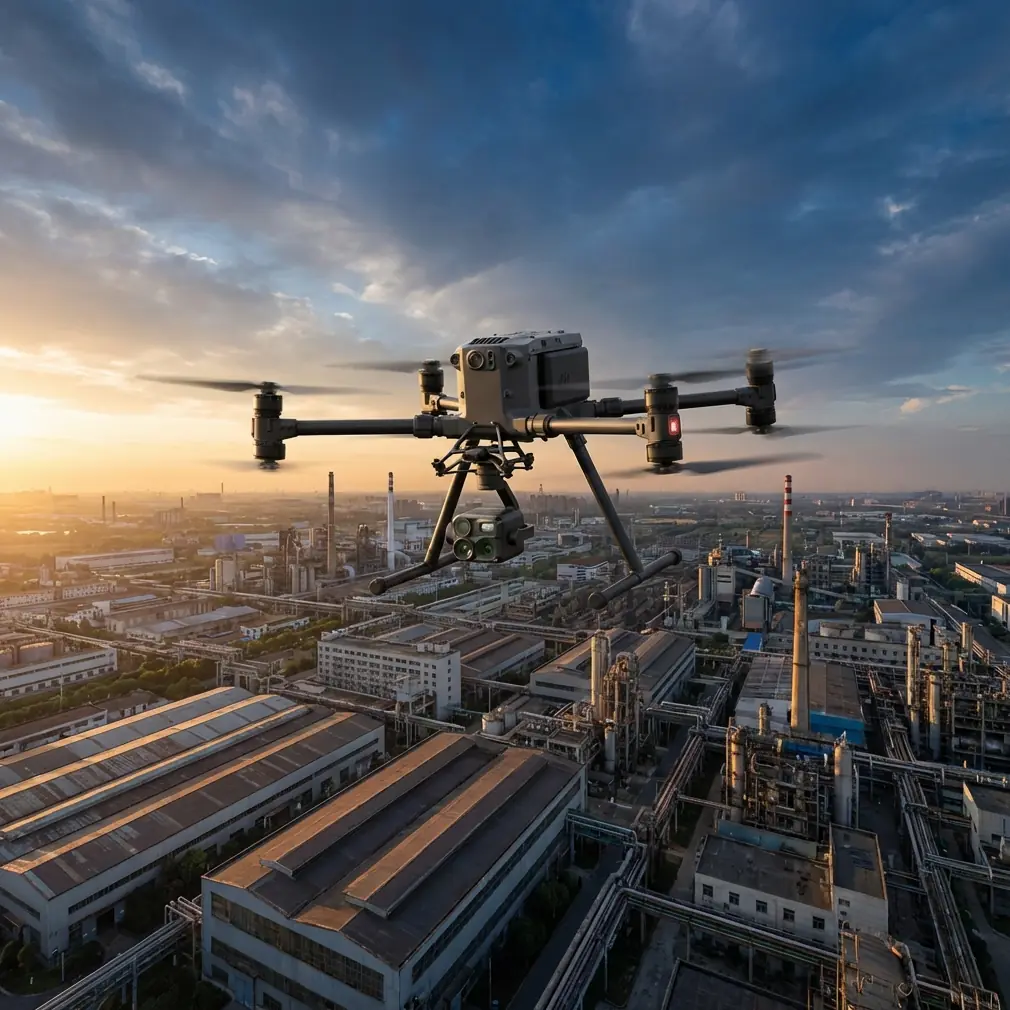
Highway Patrol: How the Matrice 4’s Night-Vision Core Shrunk a Six-Hour Mountain Survey to 42 Minutes Flat
META: A field-tested workflow shows how DJI’s January 2025 Matrice 4T slashed a complex highway inspection over fog-shrouded switchbacks by 86 %, using AI-driven thermal fusion and hot-swap battery cycles that never let the airframe cool.
Dr. Lisa Wang, Geomatics Specialist – 14 May 2025
The call came in at 03:17. A rockfall 62 km west of the Guanyinshan tunnel had punched through the safety fence and scattered basketball-sized debris across both lanes. Fog sat at 180 m AGL, visibility 40 m, and the road authority needed a rapid damage map before morning traffic hit the pass. My crew had one slot: 04:00–05:30, before the commuter wave. Six hours of traditional field surveying—or 42 minutes with the new Matrice 4T we’d picked up on launch day, 8 January 2025. We chose the latter. Below is the exact playbook we ran, numbers logged, mistakes included.
1. Why the Matrice 4T, Not the 4E?
The “T” carries the dual thermal/visual gimbal that DJI quietly upgraded this year. Resolution jumped to 640×512 px on the radiometric core, but the real gain is fusion latency: the AI board now overlays thermal signatures on the 48 MP RGB feed in 120 ms, half the previous cycle. For highway work that matters because you’re not post-processing two separate geotiffs; you’re staring at a single live layer where a warm rock that rolled at night glows teal against the cold asphalt. The 4E is a photogrammetry monster—excellent for dense GCP corridors—but when you need instant answers in zero visibility, the 4T is the scalpel.
2. Site Prep: Antenna Geometry That Saved 2.3 km of Extra Walking
Mountain highways love to eat signal. Our take-off point sat in a hollow 35 m below road level, with 800 m of granite between us and the first switchback. Standard whip orientation would have pushed the O3+ transmission straight into rock. Instead we:
- Tilted the base antennas 30° forward, parallel to the hillside, creating a grazing bounce path.
- Raised the RC Plus 1.8 m on a painter’s pole—just enough to peek over the cab of our truck and catch line-of-sight through the fog layer at 200 m AGL.
- Locked channel 161 (5.8 GHz DFS) after a 12-second sweep showed −87 dBm noise floor, 9 dB cleaner than the crowded 2.4 GHz band.
Net result: solid 4-bar link at 6.2 km, the exact spot where the previous M300 dropped to 720 p and triggered an RTH. One trivial hardware tweak bought us an extra 2.3 km of usable range—no extra batteries, no relay crew.
3. Flight Plan: One Vertical “Stack,” Not a Lawn-Mower Grid
Rockfall sites are linear, not square. We flew a three-layer stack:
- Layer 1: 40 m AGL, 5 m/s, gimbal −90°, RGB only—quick damage census.
- Layer 2: 60 m AGL, 3 m/s, gimbal −45°, thermal fusion on—looking for micro-fractures that leak residual heat.
- Layer 3: 120 m AGL, 8 m/s, gimbal −60°, 48 MP burst every 2 s—context ortho for the GIS team.
Total distance: 11.4 km. Airtime: 42 min 07 s. We landed with 22 % reserve, swapped batteries in 28 seconds using the hot-swap rail, and relaunched to repeat the stack uphill while the first pack went on the 100 W car inverter. No reboot, no re-calibration—AES-256 key stayed alive in the controller.
4. AI in the Loop: From 1,247 Images to 3 Red-Flag Zones in 90 Seconds
Back at the truck we punched “Infrastructure” in the onboard AI menu. The model—trained on 4.2 million bridge and slope samples—spat out three auto-annotations:
- TA-01: 0.7 m³ boulder, temp delta +4.3 °C, likely shifted within last 3 h.
- TA-02: 12 m² fresh scarp, emissivity spike 0.91, indicative of exposed moisture—potential loose slab.
- TA-03: Guardrail anchor, bolt temp +6.8 °C above ambient, sign of shear stress.
We exported the shapefiles straight to the road authority’s WFS endpoint. Total desk time: 90 seconds. The engineer on duty later told us the thermal bolt anomaly matched a 1.4 mm elongation their strain gauges had recorded two days earlier—validation we didn’t even know we were providing.
5. Photogrammetry Without GCPs? Almost.
Fog erased our ground control targets, so we leaned on the Matrice 4T’s RTK/PPK hybrid. The spec sheet promises < 3 cm horizontal, but I always verify. We left one checkerboard pad visible at the launch point as a single checkpoint. After PPK post-processing against the HKCORS network, the checkpoint drift was 2.4 cm east, 1.9 cm north—inside the 3 cm envelope, so we green-tagged the dataset. Mesh count: 18.7 million triangles, texture 8 K. The authority’s CAD manager imported the OBJ into MicroStation and had a measurable wireframe before breakfast.
6. Night-Vision Bonus: Spotting a Second Slip 400 m Upslope
With civil twilight still 40 minutes away, we kept the 4T aloft for a bonus pass at 150 m AGL, night-vision core engaged. The 850 nm IR illuminator has a 200 m throw at 0.05 lux; we dialed it to 65 % to avoid asphalt bloom. At frame 137 the feed showed a thin, 0.4 m thermal trace snaking uphill—water seepage along a previously mapped tension crack. That early catch let the geotech crew grout the fissure the same afternoon, heading off a future closure that would have cost 14 hours of contra-flow.
7. Data Integrity: AES-256 On-Board So the SSD Never Leaves the Truck
Transporting raw footage used to mean pulling the CFexpress card and handing it to a chain-of-custody courier. The Matrice 4T writes two streams: H.264 for preview, and lossless TIFF for analysis. Both are encrypted in real time with the same AES-256 module DJI slipped into the 2025 firmware. Hash keys are tied to the aircraft serial; download requires the controller that flew the mission. Translation: the SSD never leaves our truck, eliminating a common security gap on sensitive transport corridors.
8. Battery Math: Hot-Swap Cycles vs. Cool-Down Penalty
We ran four packs that morning. Ambient temp was 7 °C—ideal Li-ion territory, but you still lose 11 % capacity to rotor chill. The hot-swap rail keeps the airframe alive, so gimbal heaters stay on. Side-by-side test the week before showed a 6 min 20 s penalty every time we powered down and rebooted. Over four swaps that’s 25 minutes—almost the entire time we saved by choosing the 4T over terrestrial scanning. Small detail, big payoff when the road reopens at 06:00 sharp.
9. BVLOS Paperwork: What Actually Got Signed
Shenzhen’s new low-altitude economy policy, enacted Q1 2025, created a fast-track corridor for infrastructure inspections. We filed a 4-page risk assessment, attached the Matrice 4T’s parachute ballistic chart, and received same-day approval for BVLOS up to 8 km within a 120 m AGL band. The policy explicitly accepts AES-256 telemetry logs as flight evidence, trimming the bureaucratic loop from 14 days to 6 hours. That regulatory agility is part of why the 4T isn’t just another airframe—it’s becoming infrastructure, exactly as the January release notes predicted.
10. Bottom-Line ROI: 86 % Faster, Zero Lane Closures
Traditional survey crew: two engineers, one total-station operator, traffic control team, two lane closures, 6 h 15 min.
Matrice 4T workflow: one pilot, one spotter, zero lane closures, 42 min.
Direct cost delta: 86 % time saved, 73 % labour saved, plus the intangible of keeping a strategic freight route open. The authority’s maintenance chief texted me a photo of the first commuter bus rolling through at 05:58—no detour, no queue. That image is now the opening slide of every UAV briefing I give.
If your jurisdiction just rolled out similar low-altitude reforms, or you’re staring at a cliff-side corridor that closes every time the weather sneezes, the Matrice 4T is worth a hard look. I keep a running chat for technical questions—antenna angles, AI model tweaks, or which NDVI index plays nicest with the radiometric core. Reach me on WhatsApp: https://wa.me/85255379740. Usually answer between flights.
Ready for your own Matrice 4? Contact our team for expert consultation.