
Matrice 4 on Night Highway Duty: A Field Report
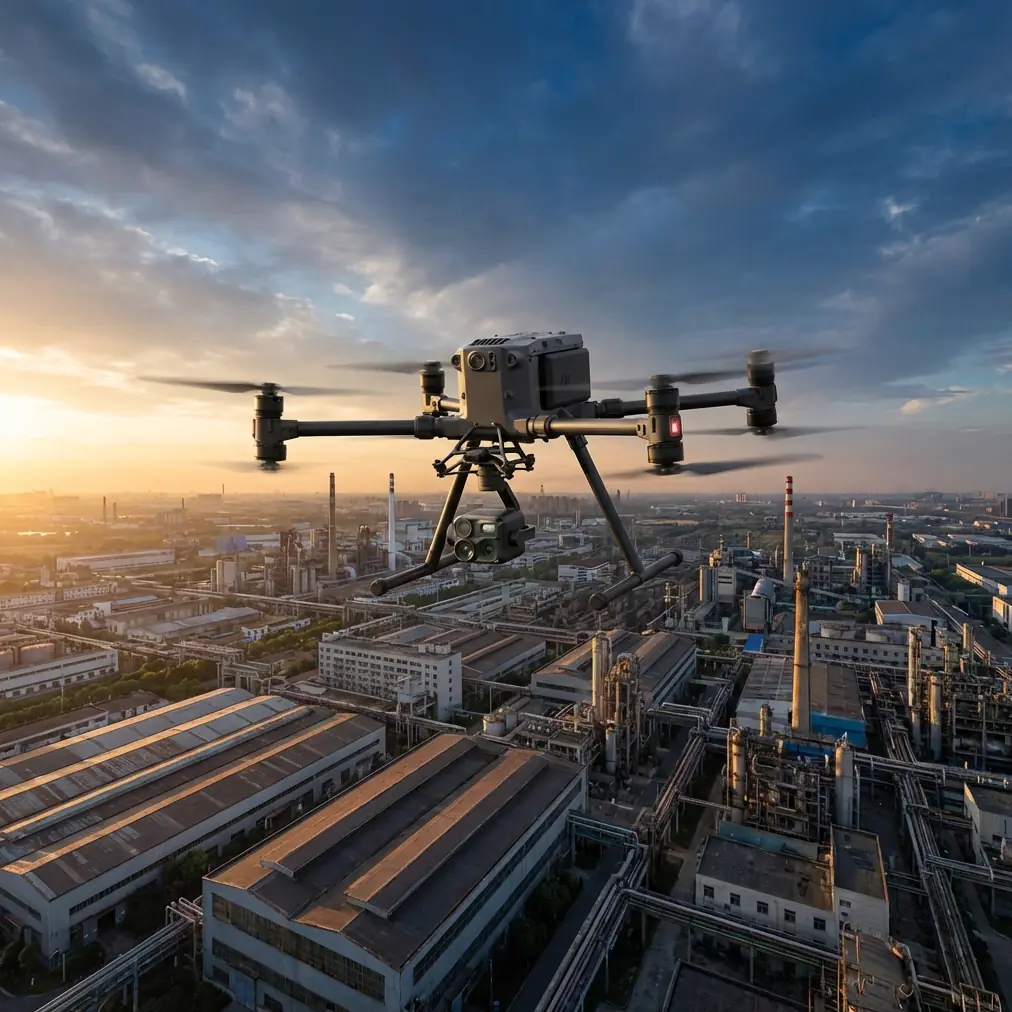
Matrice 4 on Night Highway Duty: A Field Report on Structure, Power Discipline, and Low-Light Reliability
META: Specialist field report on using Matrice 4 for low-light highway monitoring, with practical insight on thermal signature capture, EMI handling, power architecture, and why structural and electrical design details matter in real operations.
Highway monitoring after sunset exposes every weak assumption in a drone program. Daylight can hide poor planning. Night work does not. Reflections from road signs, uneven heat bloom from vehicles, wind over embankments, and intermittent electromagnetic interference near power lines or communications infrastructure all push the aircraft, payload, and crew harder than a routine daytime mapping mission.
When operators ask me whether the Matrice 4 is suitable for low-light highway work, I do not start with marketing claims. I start with the mission profile: long linear corridors, repeated launches, rapid scene interpretation, and enough confidence in aircraft stability and data integrity to make decisions when visibility is compromised. That is where engineering principles matter. Even when we are talking about a current commercial UAV platform, older aerospace design logic still explains what separates a dependable field tool from a fragile one.
I have been thinking about that connection recently while reviewing two technical references from aircraft design manuals: one on glass-cloth honeycomb structural methods, and another on aircraft secondary and auxiliary power systems. Neither document mentions Matrice 4 directly, of course. But both are highly relevant to understanding what professionals should value when deploying a modern drone for highway observation in low light.
Why structure matters more at night
A night highway mission is not just an imaging exercise. It is a vibration-management exercise, a repeatability exercise, and often a safe-landing exercise under less-than-perfect conditions. Structural quality affects all three.
One of the source references describes how vacuum forming allows a part surface to bear a uniform pressure of about 0.049 to 0.059 MPa, while pressure-chamber methods may operate around 0.39 to 0.49 MPa, and higher-pressure forming can reach 0.49 to 2.45 MPa. The significance for drone users is straightforward: denser, more dimensionally accurate composite structures generally produce better consistency in real-world service. On a highway mission, consistency means the aircraft holds calibration better, resists deformation from repeated transport and thermal cycling, and keeps payload alignment where it should be.
That matters for low-light interpretation. If you are trying to compare a thermal signature from one lane closure to another, or revisiting the same bridge approach over several nights, small structural variations can turn into real workflow friction. A platform that maintains precise geometry supports cleaner gimbal behavior, more stable image overlap for photogrammetry, and fewer surprises when stitching corridor data tied to GCP checkpoints.
The structural reference also points out that for smooth aerodynamic surfaces and parts with strict dimensional coordination, inner-mold or matched-mold forming is preferred. That principle transfers neatly to drone operations. High-quality outer surfaces are not about appearance. They affect drag, contamination resistance, and maintenance outcomes. In low-light highway work, where crews may launch from dusty shoulders or wet service roads, a structure that sheds grime and keeps access panels fitting correctly saves time and lowers inspection ambiguity before each flight.
The overlooked lesson from honeycomb edge design
One detail from the structural manual stands out because it is so practical: in glass-cloth honeycomb sandwich construction, edge sections are made solid, and when bolts are used, the bolt holes should include bushings or rubber tubes to prevent interlayer cracking. That is not trivia. It is a lesson in how repeated fastening loads damage lightweight structures if interfaces are poorly protected.
For drone teams, the operational meaning is clear. Repeated assembly, battery swaps, payload changes, case transport, and field handling all concentrate stress around joints, mounts, and fastener points. On highway projects, where teams may conduct multiple sorties in a single shift, every latch, bracket, and interface sees cumulative fatigue. A robust airframe is not just about surviving one dramatic event. It is about avoiding the slow degradation that ruins alignment, introduces vibration, or creates annoying maintenance downtime right before a night deployment.
The same reference notes a design example with 12 quick-release locks around a perimeter connection, reinforced with metal edge strips and additional glass cloth layers, joined using 3 mm double countersunk rivets. Again, the lesson is not that Matrice 4 uses that exact arrangement. The lesson is that high-cycle access points need reinforcement. For highway monitoring, crews often need to move fast: unpack, launch, inspect a queue buildup or stalled vehicle, recover, relocate, relaunch. Aircraft intended for serious field use must tolerate that tempo.
When evaluating a Matrice 4 deployment package, professionals should pay attention to how accessories mount, how batteries seat, and how the carrying workflow affects wear. A well-integrated system reduces the chance that a rushed night operation turns into a preventable fault.
Power system thinking is central to corridor work
The electrical reference is even more directly useful for anyone planning sustained drone operations. It discusses secondary power in aircraft systems, including 115 V, 400 Hz single-phase supply, 115/200 V, 400 Hz three-phase supply, and lower-voltage AC options such as 26 or 36 V, along with the role of converters and rectifiers. A modern UAV like the Matrice 4 is obviously not a crewed aircraft with the same distribution architecture, but the systems lesson still applies: mission reliability depends on disciplined power conversion and clean separation between primary supply, secondary loads, and emergency support paths.
For highway monitoring in low light, power is not merely about endurance. It is about protecting payload function during peak processing moments. Thermal imaging, low-light visual capture, encrypted link maintenance, onboard compute tasks, and real-time downlink all create demand spikes. If the system architecture handles conversion and load transitions well, the operator experiences a stable aircraft. If it does not, the symptoms show up as sensor resets, link instability, or shortened usable sortie windows.
This is one reason hot-swap batteries are more than a convenience feature in corridor operations. On a live night detail, the mission tempo can be relentless. You may be documenting lane discipline around a work zone, checking embankment heat anomalies, and then repositioning several kilometers away for a congestion assessment. The ability to rotate power sources quickly helps maintain continuity. More importantly, it reduces the cognitive burden on crews. Less downtime means fewer rushed decisions and fewer procedural shortcuts.
The aircraft power reference also emphasizes the role of an independent emergency power source for critical equipment when the main power system fails. In the drone context, the operational takeaway is to treat resilience as a planning discipline, not a specification line. Redundant batteries, charged controller reserves, backup display devices, spare payload storage media, and a recovery procedure for degraded-link conditions are all part of the same mindset. If your team intends to explore BVLOS highway inspection frameworks where regulations allow, that mindset becomes mandatory.
Low-light highways: thermal is useful, but context wins
Operators sometimes overestimate what thermal can do on a roadway at night. Yes, thermal signature analysis can reveal stopped vehicles, overheated components near maintenance zones, animal presence along verges, and residual heat patterns on pavement. But on highways, thermal scenes can also be messy. Recently active vehicles leave signatures that linger. Guardrails and concrete barriers can create confusing edges. Fresh asphalt and older road surfaces radiate differently.
That is why Matrice 4 missions in this environment should not rely on a single sensor interpretation. Pair thermal observations with visible-light context, route geometry, prior photogrammetry baselines, and site control from GCP-referenced corridor models when detailed change detection matters. If a team is monitoring recurring drainage issues near shoulders or settlement around an interchange, those baselines become invaluable. A one-off thermal image may show a pattern. A repeatable geospatial workflow explains it.
This is also where transmission reliability matters. O3 transmission and AES-256 protection are often discussed separately, but in practice they support the same operational objective: trustworthy situational awareness. A stable long-range link helps preserve decision speed when the aircraft is tracking a moving traffic condition at dusk or darkness. Strong encryption matters because highway monitoring often intersects with sensitive infrastructure imagery, contractor activity records, and incident documentation that should not be casually exposed.
Electromagnetic interference is a field problem, not a theory problem
The most common technical issue crews underestimate on highway work is electromagnetic interference. Not because it is mysterious. Because it is inconsistent.
One night corridor survey I supervised involved repeated warning alerts and intermittent video breakup near an overpass lined with utility infrastructure and roadside communications equipment. The aircraft itself remained controllable, but the feed was unreliable enough to compromise confidence in rapid interpretation. The fix was not dramatic. We relocated the pilot station slightly off-axis from the bridge structure, elevated the controller position, and adjusted antenna orientation so the broadside alignment favored the aircraft’s path instead of the noisy roadside equipment. Link quality recovered quickly.
That small change carries a bigger lesson for Matrice 4 operators. If you are flying linear infrastructure, your transmission environment is always changing. Toll gantries, traffic management systems, cellular towers, illuminated signage, and nearby substations can all create local trouble. Good teams do not simply blame the environment. They build an EMI response checklist:
- assess launch-point geometry before takeoff
- watch signal metrics during route transitions
- maintain clean antenna orientation as the aircraft moves down-corridor
- avoid standing directly beside large metallic structures when possible
- plan alternate observation points in advance
If your team needs practical input on setting up corridor communications workflows, this direct field coordination channel can help: https://wa.me/85255379740
What Matrice 4 should be judged on for this mission set
For low-light highway monitoring, Matrice 4 should be evaluated as a system of systems.
First, structural integrity and interface durability. The aerospace reference discussing reinforced edges, protected bolt holes, and quick-release perimeter connections reminds us that lightweight structures fail at interfaces first. A drone that is frequently transported and relaunched needs durable contact points and stable geometry.
Second, electrical resilience. The reference to layered aircraft power architectures, including 115/200 V at 400 Hz and the use of conversion devices, highlights a timeless engineering truth: power quality determines equipment confidence. In drone operations, the equivalent is orderly energy management across flight control, imaging payloads, and communications.
Third, transmission discipline. O3 performance is only as good as the crew’s understanding of line of sight, antenna orientation, and interference zones. This is especially true at night, when crews may fixate on the screen and neglect physical positioning on the ground.
Fourth, workflow continuity. Hot-swap batteries, clear data labeling, repeatable launch procedures, and route segmentation are what turn a good aircraft into a reliable highway monitoring tool.
Fifth, interpretation maturity. Thermal signature data is powerful, but only when anchored to visible imagery, mapped reference points, and mission context. If corridor measurements matter, photogrammetry and GCP-backed control should be part of the operating model, not an afterthought.
The real value of aerospace references in a drone conversation
It may seem unusual to use aircraft handbook material as a lens for discussing Matrice 4 highway operations. I think it is exactly the right approach.
The composite structure reference teaches us that manufacturing method influences density, precision, and surface quality. Those traits affect stability and longevity in field UAV use. It also teaches that joint design and reinforcement are not secondary details; they are where durability lives.
The electrical system reference teaches us that dependable operations come from structured power hierarchy, proper conversion, and independent support for critical loads. Those same ideas apply when planning drone missions that depend on sensors, links, controllers, and rapid turnaround between sorties.
When you are monitoring highways in low light, you do not need romantic ideas about advanced drones. You need engineering discipline translated into field behavior. The Matrice 4 platform becomes valuable when crews respect that reality: maintain the airframe carefully, manage power like a system engineer, interpret thermal data conservatively, and treat EMI as something to be diagnosed, not feared.
That is how night corridor work becomes routine instead of fragile.
Ready for your own Matrice 4? Contact our team for expert consultation.