
Matrice 4 for Highway Monitoring in Low Light: A Field
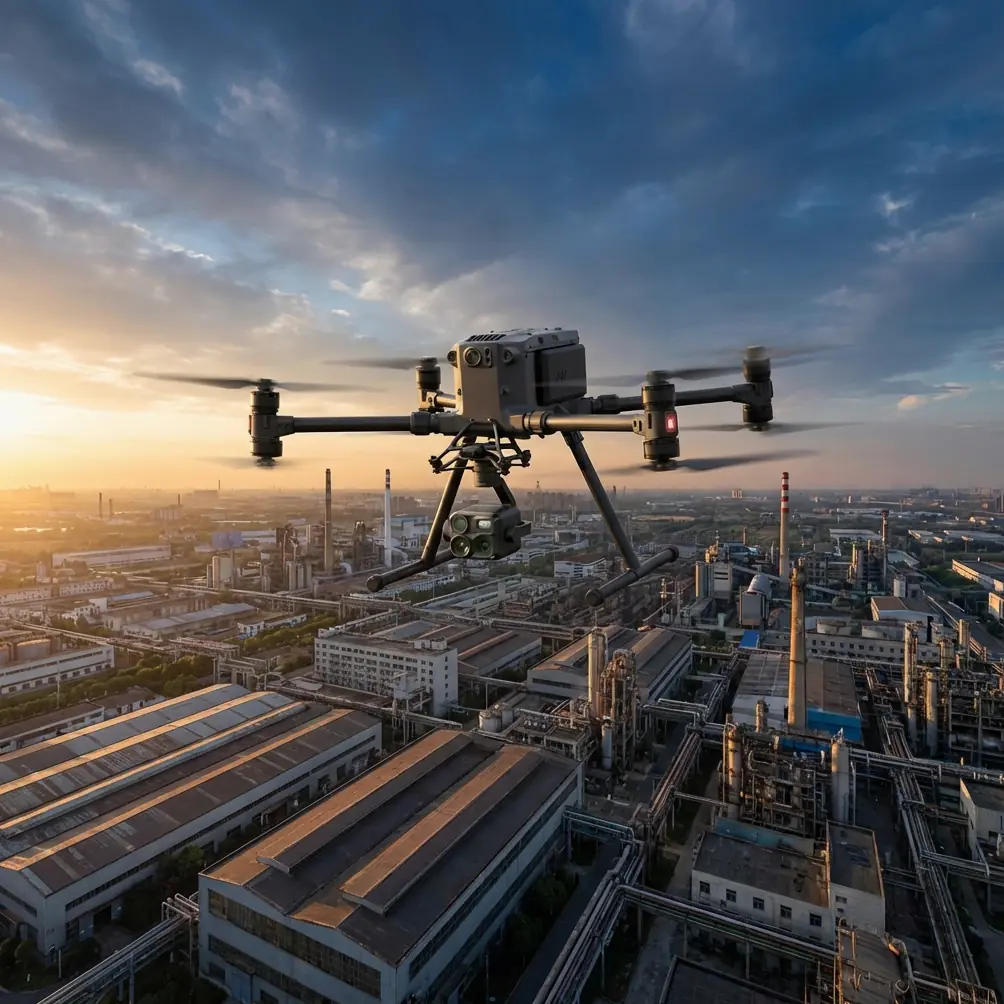
Matrice 4 for Highway Monitoring in Low Light: A Field-First How-To
META: Expert how-to on using Matrice 4 for low-light highway monitoring, with practical guidance on thermal signatures, transmission stability, mapping workflow, pilot workload, and accessory choices.
Highway monitoring after dusk exposes the difference between a drone that merely flies and a drone system that supports decisions. Low-angle headlight glare, long linear corridors, changing surface temperatures, and the need to keep crews off live lanes all put pressure on the aircraft, the payload, and the operator. For teams evaluating the Matrice 4 for this kind of work, the real question is not whether it can capture usable imagery. It is whether the platform can keep a stable, readable, low-fatigue workflow when visibility drops and mission length stretches.
That is where a few design principles from manned aviation become unexpectedly useful.
One of the references behind this discussion, a civil aircraft interior design manual, makes a deceptively simple point: people respond to color before shape, and shape before texture. It also warns against strong color contrast and rotational patterns because they can increase discomfort and disorientation. On the surface, that sounds unrelated to drones. In practice, it maps directly to how you should configure a Matrice 4 mission for nighttime highway work.
When an operator is scanning a live video feed for stalled vehicles, heat buildup around an electrical cabinet, shoulder intrusions, or debris with a distinct thermal signature, visual clarity matters more than decorative complexity. A cluttered display, aggressive overlays, or poorly chosen palette settings can increase cognitive load at exactly the wrong moment. If the aircraft is feeding several information layers into the controller, thermal, visible, map position, obstacle data, and route geometry, then every display choice either helps the operator recognize a problem early or delays that recognition.
Start with the viewing logic, not the flight route
A lot of teams plan low-light highway missions backwards. They begin by sketching a corridor route and only later think about what the pilot and payload operator will actually be looking at for the next 20 or 40 minutes.
For Matrice 4 corridor operations, build the viewing environment first.
Use a restrained interface layout. The aircraft interior reference recommends keeping the number of colors limited and avoiding chaotic combinations. For Matrice 4 operators, the operational version of that advice is simple: keep map symbology clean, choose a thermal palette that separates roadway, vehicles, and surrounding vegetation without oversaturating the hottest objects, and avoid unnecessary screen elements. You are not designing a presentation. You are reducing time-to-detection.
This matters even more in low light because operators tend to overcompensate. They brighten screens too much. They stack windows. They jump between visible and thermal views too quickly. Over time that creates fatigue, and fatigue leads to missed details. In a highway environment, missed details have consequences.
A practical setup is to dedicate the primary attention area to the sensor that best reveals the current target class. If you are checking for pedestrians on a shoulder or an overheating component near roadside infrastructure, thermal should usually lead. If you are assessing lane markings, crash scene geometry, or drainage edge conditions, visible imagery may take priority. The handoff between those modes should feel deliberate, not frantic.
Why “upper light, lower dark” still matters on a drone job
The same aircraft design source also recommends a top-light, bottom-dark color principle to create a stronger sense of spatial stability. Again, that sounds like a cabin design rule. But it has a useful field translation for drone teams working highways at night.
In controller setup and map design, brighter top-level information and darker background layers reduce strain and stabilize visual scanning. If your mission control tablet or smart controller supports customizable basemaps or display themes, avoid highly reflective, high-contrast map styles. In darkness, a harshly lit interface can be almost as disruptive as oncoming headlights.
This is one of those small workflow details that separates a comfortable two-hour shift from a mentally draining one. Teams often invest heavily in the aircraft and sensor stack but neglect the operator environment. For Matrice 4 highway monitoring, the operator environment is part of the sensor chain.
Use thermal signature intelligently, not continuously
Low-light highway work tempts crews to lean too hard on thermal imaging. Thermal is powerful, but it is not magic. Asphalt retains heat. Guardrails can create misleading reflections. Vehicles that have recently stopped may still radiate strongly after the reason for interest has changed. The goal is not to stare at heat; it is to interpret heat in context.
A better Matrice 4 workflow is cyclical:
- Sweep with thermal for anomaly detection.
- Pause or orbit briefly to confirm persistence.
- Cross-check with visible imagery for scene context.
- Mark the location for repeatable review or photogrammetry if required.
That sequence keeps the thermal feed useful instead of overwhelming. It also aligns well with corridor operations where the aircraft may need to cover long distances and revisit flagged points later.
If the mission includes roadway asset monitoring, expansion joints, lighting poles, drainage channels, retaining walls, or signage infrastructure, then thermal can help expose abnormal patterns that are harder to spot in standard night video. But if your team does not maintain disciplined interpretation standards, every warm object starts to look important. That is how noise enters the workflow.
Transmission reliability is not a luxury on a road corridor
Highways produce an awkward signal environment. You are often flying along linear paths bordered by moving metal, variable terrain, lighting infrastructure, and occasional overpasses. Stable O3 transmission becomes more than a convenience here. It is what keeps the mission readable when you are operating at a safe offset from the traffic flow.
A low-light corridor mission is only as good as the weakest link in the live feed. If the aircraft can see the subject but the operator receives a degraded, delayed, or unstable image, the practical value drops fast. For teams considering Matrice 4 for routine road monitoring, transmission resilience should sit near the top of the evaluation list, right alongside payload choice and battery logistics.
Security matters too, especially when the mission involves critical infrastructure or contracted roadway management. AES-256-level transmission protection is not a marketing footnote in that context. It supports client confidence and internal compliance when imagery, incident locations, and infrastructure conditions are being observed and transmitted in near real time.
Pilot workload is where aviation design thinking becomes surprisingly relevant
The second reference source focuses on aircraft systems and highlights the operational value of FADEC, or Full Authority Digital Engine Control, which became widely adopted from the 1970s onward because it simplified control inputs, added monitoring and protection, and maintained more linear response under changing atmospheric conditions and altitude. The source specifically notes that FADEC improves convenience and maintainability by automating starts, increasing protective monitoring, and simplifying thrust control.
A Matrice 4 is not a turbofan aircraft, but the principle carries over cleanly: automation that reduces operator workload without obscuring system status is good design.
For low-light highway missions, that means the best setup is not one that gives the pilot maximum manual involvement at every moment. It is one that handles stabilization, route consistency, and camera transitions in a predictable way while still making aircraft state obvious. In other words, automation should reduce friction, not hide risk.
Why does this matter on a highway? Because the pilot is already balancing airspace awareness, lane-adjacent safety constraints, lighting conditions, signal quality, and mission objectives. Anything that creates a more linear, less mentally jagged control relationship improves safety and data quality. The old FADEC lesson applies: smoother control logic leaves more attention available for actual mission decisions.
Mapping the corridor: when photogrammetry and GCPs still make sense at night
Not every low-light highway mission is purely observational. Some teams need repeatable documentation for maintenance planning, drainage analysis, pavement edge review, or post-incident reconstruction support. That is where photogrammetry enters the picture.
Night photogrammetry is not automatically the right call, but dawn, dusk, and controlled low-light windows can still support useful mapping if your team understands the limits. If you need measurable repeatability across inspections, build the mission around known checkpoints and use GCPs where practical and safe. On a highway corridor, that usually means placing them off active lanes and coordinating with traffic control procedures where required.
The point is not that GCPs solve everything. It is that low-light corridor documentation benefits from anchors. Without them, comparisons across time can become too loose, especially if the goal is to track gradual changes in shoulder erosion, drainage patterns, embankment stress, or work-zone progression.
For Matrice 4 users, the better question is not “Can this drone do photogrammetry?” Most professional platforms can. The sharper question is whether your low-light workflow preserves enough consistency in image capture, camera angle, overlap, and geospatial control to make the outputs operationally credible.
A third-party accessory that genuinely improves the job
One accessory category deserves more attention in this use case: a high-output third-party strobe or anti-collision light mounted in a way that does not interfere with the payload or airflow. On long, low-light highway missions, that extra visibility can help the visual observer maintain aircraft awareness against a confusing background of road lighting and vehicle movement.
The key is restraint. The accessory should enhance team awareness, not contaminate the sensor picture or create glare in the visible feed. A well-chosen strobe can make corridor operations smoother, especially in mixed ambient lighting where the aircraft may otherwise disappear against sodium lamps, LED spill, or dark tree lines.
If you want to compare accessory setups for your mission profile, a practical way to discuss mounting and field compatibility is through direct mission planning support.
Battery strategy: hot-swap discipline keeps the corridor covered
Highway monitoring punishes sloppy battery habits. Linear routes encourage “just a bit farther” decision-making, and low light can mask how quickly fatigue is setting in for the crew. If your Matrice 4 configuration supports hot-swap batteries, use that capability as part of a deliberate continuity plan rather than as a convenience feature.
A good battery rotation method does three things:
- preserves mission tempo without rushing takeoff decisions,
- protects data continuity across long corridors,
- and reduces pressure on crews to stretch a pack beyond their comfort threshold.
For repeated road inspections, segment the route so each battery cycle corresponds to a defined corridor block. That makes handoffs cleaner and post-mission review easier. It also helps when a flagged thermal anomaly needs a revisit. You know exactly which route segment, environmental conditions, and battery cycle were involved.
BVLOS discussions need operational realism
BVLOS is part of nearly every serious highway drone conversation because roads are long and inspection targets are distributed. Still, the value of BVLOS is not just extended distance. It is mission coherence. If the regulatory framework, risk controls, and operator qualifications align, BVLOS can let a Matrice 4 cover a corridor in a way that better matches the infrastructure itself.
But the mistake is assuming BVLOS automatically improves outcomes. It only does so when the sensor plan, transmission reliability, geospatial logging, and crew procedures are equally mature. Otherwise you just move inefficiency farther away from the operator.
For low-light highway monitoring, a disciplined near-BVLOS or approved BVLOS model should emphasize predictable checkpoints, transmission health, anomaly tagging, and predefined abort logic. Night operations tolerate improvisation poorly.
What actually makes Matrice 4 useful here
The strongest case for Matrice 4 in low-light highway work is not one headline feature. It is the way several pieces can be made to support one another: thermal signature detection for anomaly spotting, stable O3 transmission for corridor readability, AES-256 for secure data flow, hot-swap batteries for sustained route coverage, and structured capture methods when photogrammetry or repeatable inspection records are needed.
The aviation references behind this piece add two useful reminders.
First, human perception is easily overloaded. The cabin design guidance specifically warns against excessive contrast and spinning visual patterns because they can cause discomfort. For drone operators, that translates into interface discipline, sensible palette choices, and lower visual clutter during night missions.
Second, control systems become more valuable when they simplify the operator’s workload while preserving clarity. The FADEC discussion in the propulsion manual points to automation’s real benefit: not glamour, but smoother control, protective monitoring, and easier operation under changing conditions. That is exactly the standard serious Matrice 4 workflows should aim for on highways after dark.
If you build around those two ideas, visual calm and operational simplicity, the aircraft becomes much more than a flying camera. It becomes a practical monitoring tool for one of the most demanding civilian inspection environments.
Ready for your own Matrice 4? Contact our team for expert consultation.