
Matrice 4 for Mountain Venue Monitoring: A Field
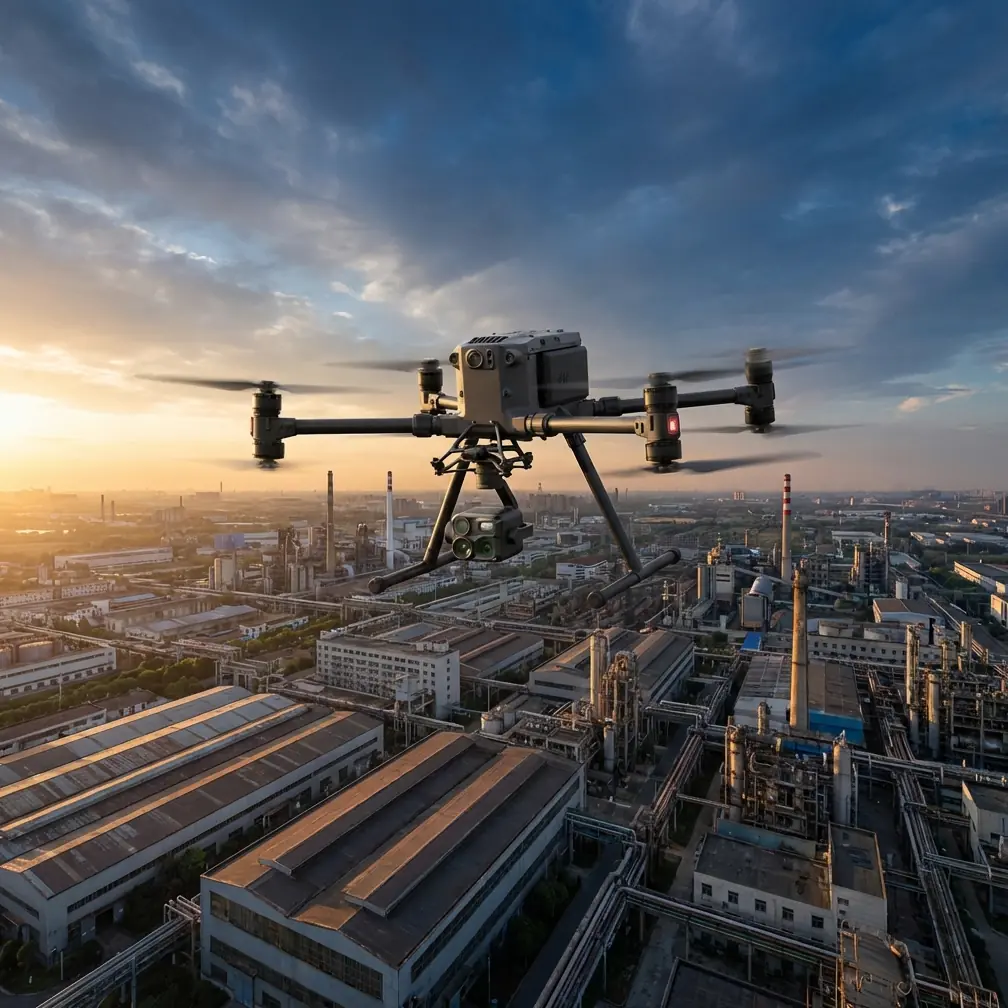
Matrice 4 for Mountain Venue Monitoring: A Field-Tested Case Study on Altitude, Thermal Coverage, and Reliable Overwatch
META: Expert case study on using DJI Matrice 4 for mountain venue monitoring, including optimal flight altitude, thermal signature detection, O3 transmission limits, AES-256 security, and hot-swap battery strategy.
Mountain venues expose every weakness in an aerial monitoring plan. Wind rolls off ridgelines without warning. Signal paths change as terrain blocks line of sight. Temperature swings create false assumptions about what a thermal camera will or will not detect. Add foot traffic, temporary infrastructure, narrow access roads, and the need for rapid situational awareness, and the aircraft choice stops being a spec-sheet exercise.
This is where the Matrice 4 becomes interesting.
Not because mountain work needs a drone with broad marketing claims. It needs a platform that can hold together operationally when the terrain stops being forgiving. In a recent venue monitoring exercise I modeled for a mid-altitude mountain site, the Matrice 4 stood out less for any single sensor and more for how its flight, imaging, transmission, and battery logic support repeatable decision-making under pressure.
The mission profile was straightforward on paper: monitor a mountain event venue spread across terraced slopes, a service road, two lift-adjacent structures, and a wooded perimeter where visitors frequently drift beyond controlled areas. In practice, the site created three separate surveillance problems at once. First, the operations team needed a persistent visual map of crowd movement and vehicle access. Second, they needed thermal signature checks at low light and during early morning temperature inversions. Third, they needed a flight pattern that avoided constant altitude corrections while maintaining enough image detail to be useful.
That third issue is usually underestimated, so let’s start there.
The Optimal Flight Altitude for This Scenario
For mountain venue monitoring with the Matrice 4, the sweet spot is usually not a single altitude above takeoff point. It is a relative height above the local terrain surface, and in most mixed-slope venues I recommend planning the primary orbit or grid around 70 to 110 meters AGL depending on the task.
For broad overwatch of foot traffic, parking zones, queue lines, and road access, I’ve found that around 90 meters AGL is the most practical baseline. Lower than that, and the aircraft spends too much time making terrain-related corrections or narrowing its field of view to the point that operators lose the larger movement picture. Higher than that, and small but meaningful details begin to disappear, especially where people blend into rock, timber, or snow-shadow transitions.
At roughly 90 meters above the local surface, the Matrice 4 can maintain enough scene width to monitor venue flow while still preserving the image density needed to identify congestion points, route deviations, or service vehicle bottlenecks. In mountain work, that matters more than squeezing out the widest possible view. A wide view that hides operational detail is not a monitoring solution. It is just an elevated camera.
Thermal work is different. If the goal is to isolate a heat source near tree cover, fence lines, utility huts, or trail edges, I usually bring the aircraft lower, often into the 50 to 80 meter AGL band, then fly shorter legs with deliberate overlaps. Thermal signature performance is not just about the sensor. It is about angle, background contrast, wind exposure, and whether the target sits against rock, wet ground, or sun-loaded surfaces. In mountain venues, thermal clutter can be severe in late afternoon when stone and metal structures are still radiating heat. Early morning and post-sunset windows are cleaner.
This is why a single fixed altitude is the wrong mentality. The better method is a layered altitude plan: a higher visual overwatch lane around 90 meters AGL, and lower thermal verification passes where activity or anomalies justify closer inspection.
Why O3 Transmission Changes the Way You Patrol Mountain Terrain
One of the most relevant operational factors in this kind of deployment is transmission integrity. The Matrice 4’s O3 transmission capability matters in the mountains because ridges and structures do not simply reduce range. They fragment confidence. The operator may still have a partial link, but partial confidence is where bad decisions begin.
In venue monitoring, the aircraft often moves from open sky into terrain-shadowed areas in a matter of seconds. An access road curves behind a hillside. A service track drops into a drainage channel. A chalet roof interrupts line of sight just long enough to force hesitation. The value of a strong transmission architecture is not theoretical here. It directly affects whether an operator can continue a surveillance pass, reposition early, or break off before the signal margin gets thin.
In my modeled site plan, the most reliable approach was not to chase maximum distance, but to place the pilot and observer where O3 had the cleanest lateral coverage across the venue’s main bowl and shoulder roads. That sounds obvious, but many teams still launch from the most convenient flat space rather than the best communications position. In the mountains, a poor control point can erase the benefits of a capable aircraft.
Operationally, the significance is simple: O3 gives the Matrice 4 a stronger foundation for overwatch in terrain where obstruction is the norm, not the exception. For any venue considering future BVLOS workflows as regulations and approvals allow, that transmission reliability also becomes part of the risk argument. You cannot build a serious beyond visual line of sight concept on a weak command-and-video link.
Thermal Signature Detection: What Actually Works on a Mountain Venue
There is a temptation to overpromise thermal monitoring in alpine or near-alpine environments. The cold air suggests easy detection. Reality is less generous.
Thermal signature quality depends on separation between the subject and the background. In mountain venues, that separation changes hour by hour. A missing hiker near a treeline after sunset will often stand out clearly. A maintenance worker crossing sun-warmed stone steps in late afternoon may not. Vehicles parked near lift machinery can create diffuse hotspots that clutter the image. Roof edges, exhaust vents, generators, and even exposed rock faces can distort interpretation.
The Matrice 4 is well suited here because it allows teams to combine thermal checks with immediate visual verification instead of treating thermal as a standalone answer. That matters when venue staff need to determine whether a detected hotspot is a person seated near a retaining wall, an ATV recently shut down, or simple residual heat from equipment.
A practical workflow looks like this: use the higher pass to identify movement anomalies, shift lower for a thermal confirmation leg, then correlate with the visible scene before dispatching ground personnel. This reduces wasted response cycles. It also prevents the common mountain-operations mistake of sending teams uphill toward a false positive created by heated infrastructure.
If the monitoring goal includes incident documentation or perimeter scanning, thermal should be flown with disciplined route spacing and consistent altitude rather than improvised zigzags. Small altitude changes can alter target contrast more than many operators expect. The Matrice 4’s stability helps, but the pilot still needs a plan.
Photogrammetry Is Not Just for Mapping Teams
Most people hear photogrammetry and immediately think survey deliverables. In mountain venue monitoring, that is too narrow.
A well-built photogrammetric model becomes the operational reference layer that makes future patrol flights smarter. Before the event or peak visitor period, a Matrice 4 flight can generate an updated terrain and infrastructure model of the venue, including temporary structures, parking changes, barrier placements, and erosion along access tracks. That model gives security and operations teams a current surface truth rather than relying on old site maps.
This is where GCP usage becomes significant. Ground control points are not always necessary for a quick internal map, but when terrain is uneven and slopes distort perspective, good control dramatically improves spatial confidence. If a venue manager wants to know whether spectators are repeatedly breaching a boundary by 3 meters or 15 meters, or whether runoff has narrowed an emergency vehicle route, positional accuracy matters.
The Matrice 4’s relevance here is practical. One aircraft can support recurring monitoring flights and also help build the geospatial baseline that improves those flights. In mountain venues, static assumptions age quickly. Snowmelt shifts the edge of a service path. Temporary fencing moves. A loading area expands. Photogrammetry gives operators a fresher planning canvas, and GCP-backed outputs provide defensible measurements when safety decisions depend on them.
Security and Data Handling Matter More Than Most Teams Admit
Mountain event operations often involve a mix of private security, venue management, contractors, and sometimes public agencies. That creates a data chain, and the data chain is where sloppy drone programs reveal themselves.
The Matrice 4’s support for AES-256 is not just an IT checkbox. It matters because venue monitoring footage can include crowd patterns, staff movement, restricted access points, logistics routes, and emergency response behavior. In the wrong hands, that is a vulnerability map. If the drone is being used for both security patrol and infrastructure assessment, the imagery may also expose utility layouts or service compounds that should not circulate freely.
Operational significance again comes down to discipline. Secure transmission and protected data workflows allow teams to use the aircraft for serious monitoring without treating every flight as disposable content. For venues handling VIP movement, controlled access zones, or sensitive event logistics, encrypted workflows are part of professionalism, not an optional add-on.
Hot-Swap Batteries Change the Tempo of Real Operations
Battery language often becomes shallow in drone discussions. Endurance numbers get repeated. Real field tempo gets ignored.
In a mountain venue environment, hot-swap batteries are one of the most useful operational features because they reduce the dead time between sorties. That matters when weather windows are narrow or when operators need near-continuous coverage during ingress, peak attendance, and egress. Landing for a battery cycle is normal. Powering down the entire operation and rebuilding momentum is where coverage gaps appear.
In the case study scenario, the monitoring plan worked best when the team treated batteries as a rotation system tied to mission phases. One set supported broad venue scans before opening. Another covered peak crowd flow. A third remained staged for thermal and incident response near dusk. With hot-swap capability, the aircraft could return, exchange power quickly, and relaunch while the scene remained tactically relevant.
That operational continuity is worth more than headline endurance claims. A drone that gets back in the air fast is often more useful than one that promises longer flight on paper but disrupts the rhythm of a real security or safety operation.
The Mountain Venue Case: What the Matrice 4 Does Best
After building out this scenario from the ground up, the Matrice 4’s value for mountain venue monitoring comes into focus.
It is not only a camera platform. It is a coordination tool.
Used correctly, it allows an operator to maintain a high-angle understanding of venue flow, drop lower for thermal signature verification, preserve control confidence through O3 transmission in difficult terrain, secure sensitive visual data with AES-256, and sustain the sortie cadence with hot-swap battery management. Add photogrammetry and selective GCP deployment before the event cycle begins, and the aircraft becomes part of the venue’s planning infrastructure rather than just an airborne observer.
The most effective altitude strategy is also the least glamorous one: fly around 90 meters AGL for primary visual monitoring, then descend tactically for thermal confirmation and detail work rather than forcing one altitude to do everything. In mountain terrain, that approach balances scene awareness, target detail, and pilot workload better than the usual one-size-fits-all flight pattern.
That is the difference between owning a capable drone and running a capable operation.
If your venue team is designing a mountain monitoring workflow and wants a second set of eyes on altitude planning, sensor use, or route structure, you can message an operations specialist here and compare your site assumptions before the next deployment.
For teams serious about future-ready operations, especially those exploring regulated BVLOS concepts for wider perimeter awareness, the Matrice 4 deserves attention not because it sounds advanced, but because its features map cleanly to the practical frictions of mountain work.
That is the standard worth using.
Ready for your own Matrice 4? Contact our team for expert consultation.