
Matrice 4 in Extreme Temperatures: A Practical Monitoring
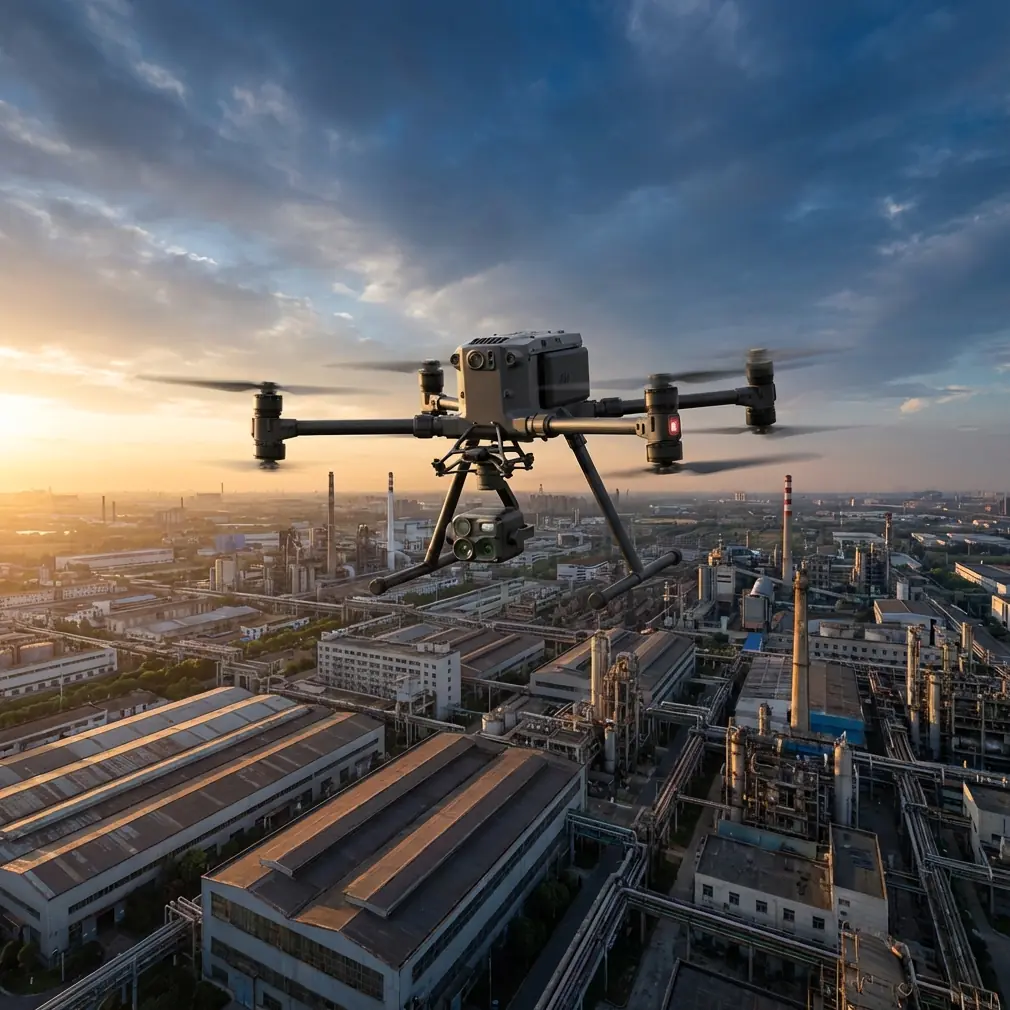
Matrice 4 in Extreme Temperatures: A Practical Monitoring Workflow for Demanding Venues
META: Expert how-to guide for using Matrice 4 in extreme temperatures, covering thermal signature capture, battery strategy, O3 transmission, AES-256 security, and venue monitoring best practices.
When a venue has to be monitored in punishing heat or bitter cold, the aircraft matters less than the workflow around it. That is where most operations succeed or fall apart. The Matrice 4 is a strong platform for this kind of mission, but only if the pilot team treats temperature as a planning variable rather than a background inconvenience.
I have seen venue operators focus on payload specs and miss the operational chain that actually protects uptime: preheating or cooling batteries, validating thermal signature behavior across surfaces, preserving link quality in RF-dense environments, and structuring image capture so the data can still support photogrammetry later if a security incident or maintenance claim needs reconstruction. In extreme weather, those details stop being optional.
This guide is built for that exact scenario: monitoring venues with the Matrice 4 when ambient conditions are well outside comfortable norms. Not a generic overview. A field-ready approach.
Start with the mission profile, not the aircraft
A venue monitoring mission usually sounds simple on paper. Patrol the perimeter. Watch access points. Check rooftop equipment. Verify crowd flow or contractor activity. Scan for heat anomalies. Maintain reliable video back to the control point.
But extreme temperatures alter almost every part of that profile.
In high heat, surfaces store and radiate energy long after sunset. Metal railings, rooftops, HVAC housings, and paved lots can remain thermally active, which changes how a thermal camera interprets the scene. In cold weather, the opposite challenge appears: equipment cabinets, generators, occupied rooms, and vehicles stand out more clearly, but battery performance and crew endurance decline fast. Either way, the Matrice 4 is only as useful as the operator’s ability to predict what temperature will do to the data.
So the first step is to define the mission around three outputs:
- live overwatch for immediate decisions
- thermal evidence for anomaly detection
- structured imagery for later review or photogrammetry
If you do not define those outputs up front, you tend to fly one compromised mission instead of three coordinated ones.
Build a temperature-aware preflight routine
The most common mistake in extreme conditions is treating preflight as a standard checklist. It should be a temperature management routine.
Battery readiness comes first. A Matrice 4 team working a venue in freezing conditions needs to think beyond charge level. Cold batteries may show acceptable percentage but still sag under load, especially during ascent or aggressive repositioning. In hot environments, the issue shifts from reduced power efficiency to thermal stress over repeated sorties. That is why hot-swap batteries matter operationally. They do more than reduce downtime. They let you maintain a rotation strategy, keep packs within a usable temperature band, and avoid stretching a single set through conditions that steadily erode performance.
For a venue with continuous monitoring requirements, I recommend assigning battery groups by sortie purpose rather than grabbing the next available pack. One group for perimeter circuits. One for stationary overwatch and hover-heavy tasks. One for thermal inspection passes. Those profiles draw power differently. Over time, that separation gives the crew cleaner expectations around endurance and replacement timing.
Airframe acclimation matters too. Moving directly from a climate-controlled vehicle into severe cold can create condensation risks on sensors and optics. Moving from cold storage into extreme heat can produce the same problem in reverse. Give the system time to stabilize before launch. Five to ten minutes of disciplined setup can protect an hour of usable data.
Use thermal as a decision tool, not a visual effect
A thermal signature is only valuable when you understand what created it.
In venue monitoring, operators often overreact to raw heat contrast. A bright hotspot on the display does not necessarily indicate a threat or fault. It may be a normal exhaust stack, a transformer under expected load, or retained solar heat on a rooftop membrane. The Matrice 4 becomes far more effective when thermal observation is paired with a reference library of the site.
That means flying baseline thermal passes under different conditions and storing the outputs for comparison. A stadium roof at 6 a.m. in winter behaves differently from the same roof at 8 p.m. after a hot day. The loading dock wall that looks cool at noon may reveal a significant internal heat source at dawn. Without a baseline, thermal alerts become subjective.
For venue teams managing critical infrastructure, I would segment the site into thermal zones:
- energy systems and mechanical plant
- public-facing access areas
- roof and envelope sections
- temporary structures or event installations
Then capture repeatable views from the same positions and altitudes. That consistency matters. If one week’s pass is flown at 30 meters and the next at 65 meters with a different look angle, trend comparison gets weaker. Precision creates confidence.
This is also where a third-party accessory can make a measurable difference. A quality high-output strobe from providers such as Firehouse Technology can improve aircraft visibility during dawn, dusk, or low-contrast weather operations around large venues. That does not improve the thermal sensor itself, but it reduces visual acquisition issues for nearby ground teams and support staff, which is especially useful when the aircraft is repositioning around structures, cranes, light poles, or temporary rigging.
Protect the link in RF-heavy venues
Many venues are bad places for clean wireless performance. Dense concrete, steel, LED infrastructure, broadcast systems, temporary event gear, and a wall of personal devices can all challenge the control link. That is where O3 transmission earns its place in the operational plan.
The point is not just range. In venue monitoring, robust transmission matters because control teams often work from suboptimal positions: inside command trailers, under partial cover, beside service corridors, or near utility structures. O3 transmission helps preserve stable video and control in these cluttered environments, but pilots still need to fly with venue geometry in mind.
Do not launch and then discover that a scoreboard, roofline, or service tower cuts your best route in half. Walk the site first. Identify shadow zones. Test line-of-sight positions. If the venue has multiple sectors, establish handoff points where the pilot or observer can physically relocate before the link quality degrades.
This becomes even more relevant if your venue is exploring future BVLOS procedures under a formal risk-managed framework. Even when a current operation remains within visual line of sight, disciplined communication-link planning is what prepares teams for more advanced operating models later. BVLOS is not just a waiver topic. It starts with habits formed during ordinary flights.
Secure the data path, not just the aircraft
Venue monitoring often involves more than situational awareness. It may include sensitive infrastructure, visitor movement, contractor access, or evidence preservation after an incident. That is why AES-256 matters here.
Too many teams think of encryption as an IT checkbox. In drone operations, it directly affects trust in the chain of custody. If a Matrice 4 mission is used to document a perimeter breach, an overheated electrical unit, or unauthorized rooftop access, the integrity of that transmission and stored output becomes part of the operational value. AES-256 helps protect the video and telemetry path from interception or tampering concerns, which is especially relevant at high-profile sites where privacy, reputation, and compliance are all under scrutiny.
Security planning should also include role separation. The person flying should not be the only person handling mission data. Create a simple workflow for transfer, labeling, and retention. Sort imagery by mission type, zone, and timestamp. A thermal clip with no location context is far less useful three weeks later.
If your team is refining that workflow and wants a practical operations template, I would point them to a direct field support channel rather than improvising procedures under pressure.
Capture imagery that can serve photogrammetry later
A monitoring sortie can do double duty if it is flown correctly. This is one of the most underused advantages of a structured Matrice 4 workflow.
Suppose an extreme weather event damages roofing, temporary fencing, or elevated mechanical equipment at a venue. If your routine monitoring flights already produce overlapping, consistent imagery, those data sets may support photogrammetry for later review. That can help with damage assessment, contractor validation, or timeline reconstruction.
This does not happen by accident. Photogrammetry needs discipline. Overlap, altitude consistency, camera angle control, and repeatable route planning all matter. If the site requires higher positional confidence, add GCP planning where practical. Ground control points are not necessary for every monitoring mission, but when you anticipate engineering review or asset-level measurement, GCP usage can dramatically improve spatial reliability.
The key is to decide before takeoff whether the sortie is “watch only” or “watch plus map.” If you try to improvise halfway through, you usually compromise both objectives.
For venues with repetitive inspection needs, I prefer a split schedule:
- rapid-response patrol flights for live awareness
- slower grid or corridor flights designed for photogrammetry
- dedicated thermal comparison flights at fixed times of day
That separation creates cleaner data. It also helps the crew avoid rushing a capture pattern that later turns out to be the only visual record of an issue.
Adapt flight technique to heat and cold
Extreme temperatures influence not just endurance but control decisions.
In heat, minimize unnecessary hovering over reflective or radiating surfaces when close inspection is not needed. The more efficient approach is often a moving orbit or short pass with planned re-acquisition points. Keep the aircraft working, not baking in one pocket of rising heat. Watch for visual distortion above rooftops and paved areas, which can affect interpretation of the scene even when control remains stable.
In cold weather, give yourself more margin on return thresholds. Do not fly the battery down to a percentage that felt comfortable during mild-weather operations. Voltage behavior can change quickly near the end of a sortie. Shorter flights with cleaner objectives are better than forcing the aircraft to finish one more sector.
Crew management matters as much as aircraft management. A cold, tired observer misses details. A pilot overheating inside protective gear becomes less precise. Build rotations for people, not just batteries.
Use venue-specific trigger points
The best Matrice 4 monitoring programs are not generic patrol schedules. They are trigger-based.
That means the drone launches because one of several predefined conditions occurs:
- thermal irregularity reported near plant equipment
- perimeter activity outside expected hours
- weather-driven concern at roofs, drains, or temporary structures
- crowd or vehicle flow exceeding a threshold
- post-event verification requirement
This approach improves both efficiency and record quality. Instead of collecting hours of loosely relevant footage, you gather targeted, contextualized data tied to actual operational questions.
For a venue in extreme temperatures, I would also define weather triggers. Launch at a specific heat index. Launch after a hard freeze. Launch at sunrise following a major temperature swing. Those conditions often reveal problems that stay hidden during normal daytime checks.
Create a postflight review loop
A Matrice 4 operation becomes more valuable over time if every mission teaches the next one something.
After each sortie, review three things:
- Did the thermal signature align with what the site team found on the ground?
- Did battery performance match the expected profile for those conditions?
- Did link quality remain stable in all planned sectors?
This is where small operational notes compound into real gains. Maybe one rooftop corner consistently creates misleading thermal reflections. Maybe one service alley weakens transmission. Maybe one battery group underperforms in cold dawn launches. Record it. The aircraft does not become smarter by itself. The operation does.
The practical takeaway
The Matrice 4 is well suited to venue monitoring in extreme temperatures, but the edge comes from process. Hot-swap batteries support continuity across repeated sorties. O3 transmission helps maintain control and video reliability in structurally dense, RF-noisy venues. AES-256 strengthens the security posture around sensitive footage and telemetry. Thermal workflows become truly useful when they are built on repeatable baselines, not one-off impressions. And if you capture with intent, the same missions can support photogrammetry, especially when GCP discipline is added for higher-confidence mapping.
That combination is what turns a drone from an occasional overhead camera into a dependable operational system.
Ready for your own Matrice 4? Contact our team for expert consultation.