
Expert Monitoring in Complex Terrain with Matrice 4
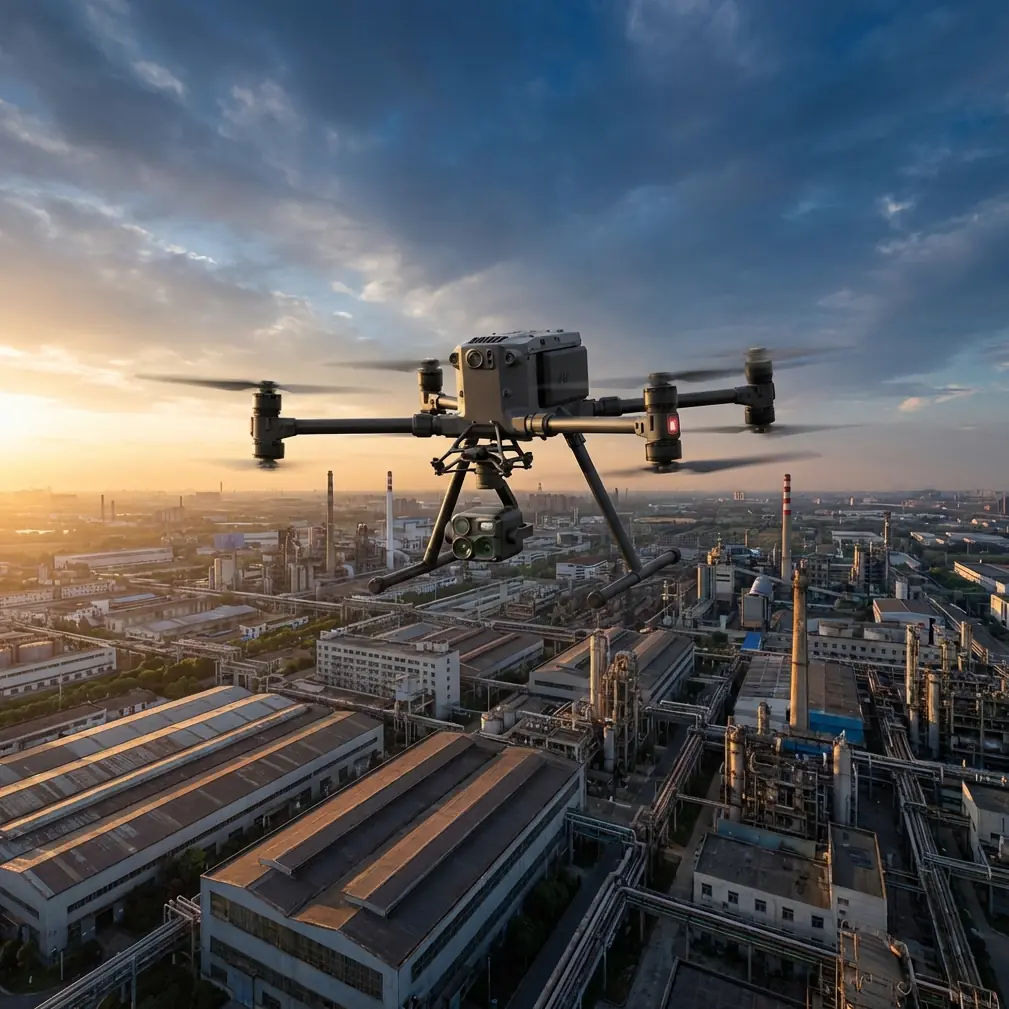
Expert Monitoring in Complex Terrain with Matrice 4
META: A field-driven look at using Matrice 4 for venue monitoring in difficult terrain, with practical insight on thermal signature detection, photogrammetry, O3 transmission, AES-256 security, and why airflow and connector protection details matter in real operations.
By Dr. Lisa Wang, Specialist
Monitoring a venue in complex terrain sounds straightforward until the landscape starts interfering with everything that matters. Ridgelines cut radio paths. Dust, moisture, and cable strain show up where the aircraft is supposed to be reliable. Airflow changes as the drone moves from open valley to tree-lined bowl to rock face. If the mission includes crowd-adjacent event spaces, remote facilities, eco-tourism sites, or temporary infrastructure, the pilot is balancing image quality, link stability, battery turnaround, and safety margins all at once.
That is where the Matrice 4 conversation becomes more interesting than a spec sheet.
For this type of work, the aircraft is not just a camera platform. It is a mobile sensing node that has to keep performing when terrain creates partial obstruction, microclimate shifts, and intermittent visual clutter. In practice, the best Matrice 4 deployments come from teams that think beyond payloads and flight time. They look at the full chain: transmission resilience, thermal interpretation, photogrammetry workflow, power continuity, connector protection, and even airflow behavior around vents and inlets.
I was reminded of this during a venue monitoring exercise near a hillside reserve that bordered a stepped outdoor event site. Just after sunset, the aircraft picked up a moving thermal signature beyond a service road. At first glance it looked like a person crossing into a restricted area. The thermal contrast was clean, but the movement pattern was wrong. A zoom pass and angle change revealed the truth: a small deer navigating scrub near a retaining wall. The drone’s sensors let the team identify the animal without sending ground staff into rough terrain unnecessarily. That matters. A false dispatch costs time, increases risk, and can create avoidable disturbance in mixed-use environments where wildlife and public access overlap.
That one encounter says a lot about why Matrice 4 matters for venue monitoring. It is not enough to detect heat. The system has to support interpretation. It has to hold link quality while the aircraft shifts position for confirmation. It has to preserve enough image integrity to distinguish a human intrusion from wildlife movement. The value is in reducing ambiguity.
The real problem: terrain breaks clean assumptions
Most venue monitoring plans are drafted as if the site behaves consistently. Complex terrain does not cooperate. A venue on sloped ground or near cut rock, forest edge, or water channels creates three recurring problems.
First, communication paths are rarely clean. Even strong transmission systems can be challenged by terrain masking. That is why O3 transmission is operationally meaningful here, not just marketable terminology. In a complex site, robust transmission buys the pilot time to reposition, maintain visual context, and avoid overcorrecting because of transient signal degradation.
Second, sensing conditions change minute to minute. Thermal signature interpretation in a flat open lot is easy compared with a venue spread across berms, terraces, drainage lines, and mixed vegetation. Surfaces release heat differently. Shadows cool rapidly. Animals and people can appear similar until angle, motion, and scene context are assessed together.
Third, the aircraft itself experiences environmental stress. Dust from access roads, moisture near vegetation, and repetitive battery swaps in field conditions all expose the weak points of a deployment. In those weak points, small hardware details decide whether the mission feels professional or fragile.
That last point is usually underestimated.
Why a detail from aircraft design manuals still matters to a Matrice 4 operator
One of the reference materials behind this discussion is not a drone brochure. It is a technical handbook section describing electrical protective caps and airflow-related openings. At first glance, that seems far removed from venue monitoring. It is not.
Document 1 references the 202D9 series electrical protective cap, describing a lipped cap used for cable-to-connector connections. It also notes structural features associated with a vent opening and an injection opening, along with dimensional data. One listed product dimension reaches 7.00 inches in a larger variant, showing that these are not abstract micro parts but real protective components sized for field hardware interfaces.
Operationally, this matters because Matrice 4 missions in complex terrain involve repeated handling of connectors, payload interfaces, charging systems, mobile control setups, and sometimes external workflow equipment such as GCP survey kits and portable network gear. A cable-to-connector interface is often where environmental exposure begins. Dust intrusion, moisture retention, and mechanical wear do not always cause immediate failure. They cause intermittent faults, bad data transfers, unstable power behavior, and troubleshooting delays when the aircraft should be flying.
A lipped protective cap design is significant because it helps shield the connection edge rather than simply covering the face. In rough monitoring environments, that extra protection can preserve continuity during setup, transport, and standby intervals. If your team is managing hot-swap batteries, rotating operators, and moving between observation points, connector discipline becomes a real reliability advantage.
The mention of vent and injection openings is just as useful. Airframe reliability depends on controlled flow and contamination management. On a field drone, venting cannot be treated casually, especially when the aircraft transitions between warm electronics, cooler evening air, dust plumes, and humidity pockets. Venue monitoring often includes repeated low-speed repositioning, hover holds, and climbs along terrain. Those are exactly the conditions where heat management and exposure control begin to matter over long duty cycles.
Airflow is not academic when the mission sits in a bowl-shaped venue
The second reference document comes from aircraft intake system design, and while it was written for a very different class of aircraft, one principle carries over cleanly: there is often an optimal opening area where pressure recovery is highest and distortion is lower. The text explains that selecting the size of an auxiliary intake opening depends on flow demand, duct geometry, and the position of the auxiliary opening. It also warns that mismatched geometry and operating condition can cause unstable flow behavior and added drag. In the source, this is tied to wind-tunnel testing and variable geometry concepts.
For Matrice 4 operators, the lesson is simpler and practical. Airflow management is dynamic, not fixed. When you fly in steep or irregular terrain, the aircraft encounters changing local flow fields caused by slope lift, recirculation near walls, tree-edge turbulence, and heat differentials from sun-exposed ground. A drone may not have the variable intake ramps described in the handbook, but it still lives or dies by how well its cooling and internal flow paths handle real conditions.
This has two direct implications for venue monitoring.
The first is performance consistency. If the aircraft is holding station over a thermal inspection point or orbiting a venue perimeter at low speed, it is not operating in the same cooling regime as a fast transit segment. Heat buildup affects sensor stability, processing behavior, and battery efficiency. The intake-system reference emphasizes that getting the opening and flow relationship right improves pressure recovery and reduces undesirable flow effects. Translating that into drone operations: keep vents clear, avoid improvised mounting setups that obstruct airflow, and build mission profiles that account for hover-heavy thermal work versus movement-heavy mapping legs.
The second is payload confidence. Thermal data quality depends on more than the sensor core. Stable platform behavior, consistent onboard processing, and predictable thermal environment all help reduce interpretation errors. In venue monitoring, you are often making decisions from small differences in contrast. Anything that adds instability upstream of the final image is a problem.
Matrice 4 as a problem-solver, not just an observer
When Matrice 4 is used well in complex terrain, it solves three operational bottlenecks at once.
1. It reduces uncertainty in detection
Thermal signature monitoring is powerful, but only if crews treat it as a layered process. A warm object on a slope might be a person, vehicle component, generator housing, or wildlife. In our deer encounter, the aircraft’s ability to hold a stable view and confirm with angle and movement analysis prevented an unnecessary response.
That is the difference between raw detection and decision-ready detection.
For venue operators, this is valuable during after-hours perimeter checks, temporary infrastructure monitoring, and environmentally sensitive site management. If your venue borders habitat or rough terrain, thermal interpretation can quickly become noisy. Matrice 4 gives teams a way to sort real alerts from natural activity without pushing staff into difficult ground.
2. It supports mapping-grade context around the venue
Photogrammetry is often treated as a separate mission type, but in complex terrain it should be tied directly to monitoring. A current terrain model improves patrol planning, line-of-sight assessment, and blind-spot prediction. Add GCP control where precision matters and the venue operator can compare drainage changes, temporary structure placement, and edge-condition risks over time.
This is where Matrice 4 earns its place beyond surveillance. The same platform supporting thermal incident review can also feed a photogrammetry workflow that explains why certain zones are repeatedly problematic. Is the issue radio shadowing behind a ridge shoulder? A footpath appearing in vegetation? A newly formed erosion line near a service route? Mapping answers those questions.
3. It keeps the mission moving
Hot-swap batteries sound like a convenience until the site is large, sunset is narrowing your thermal window, and the best observation point is a long walk from the vehicles. Then they become mission continuity.
In complex terrain, battery turnover is never just about endurance. It is about preserving rhythm. Lose rhythm and you lose coverage consistency, overlap quality for mapping, and the ability to confirm a transient event before it disappears behind topography. Hot-swap capability helps teams maintain sensor presence instead of rebuilding the sortie every time power changes hands.
Security and transmission are part of trust, not add-ons
Venue monitoring often involves sensitive layouts, temporary access control points, contractor movements, and private event logistics. That means data handling is part of operational quality. AES-256 matters because the monitoring mission is not only about what the drone sees, but who can access it and how securely it moves through the workflow.
The same goes for O3 transmission. In difficult terrain, a resilient link is not just a pilot convenience. It is what allows the operator to inspect a suspicious thermal return, maintain image quality during a reposition, and avoid risky overextension in marginal signal geometry. Reliable transmission supports disciplined flying. Disciplined flying supports better data.
If a site operator needs help designing a secure and practical monitoring workflow around Matrice 4, I usually recommend discussing the mission profile before the equipment list. A direct field conversation often resolves more than a stack of generic recommendations; this is one route teams sometimes use to start that discussion: message a Matrice 4 workflow specialist.
A smarter way to monitor venues in rough ground
The best Matrice 4 deployments for complex terrain are rarely flashy. They are quiet, repeatable, and hard to break. The aircraft lifts off with a clear route plan, a current terrain model, protected interfaces, a realistic battery rotation, and a thermal interpretation workflow that respects false positives.
That may sound mundane. It is exactly why these missions succeed.
The references behind this article point to something many drone programs overlook. Small physical details and airflow principles shape mission outcomes just as much as payload headlines. A 202D9-series protective cap built for cable-to-connector protection tells us that connection integrity is not optional in field aviation. The intake-system discussion about an optimal auxiliary opening area and the need to match geometry to operating condition reminds us that flow behavior is never static. Bring those lessons into Matrice 4 operations and the result is better uptime, cleaner data, and fewer surprises in terrain that resists neat planning.
For venue monitoring, that is the standard worth aiming for. Detect early. Confirm carefully. Map the terrain that creates the problem. Protect the little things that keep the aircraft dependable. And when the thermal target near the fence line turns out to be a deer instead of a trespasser, treat that as a sign of system maturity, not a false alarm.
Ready for your own Matrice 4? Contact our team for expert consultation.