
Matrice 4 for Coastal Venue Monitoring: What Helicopter
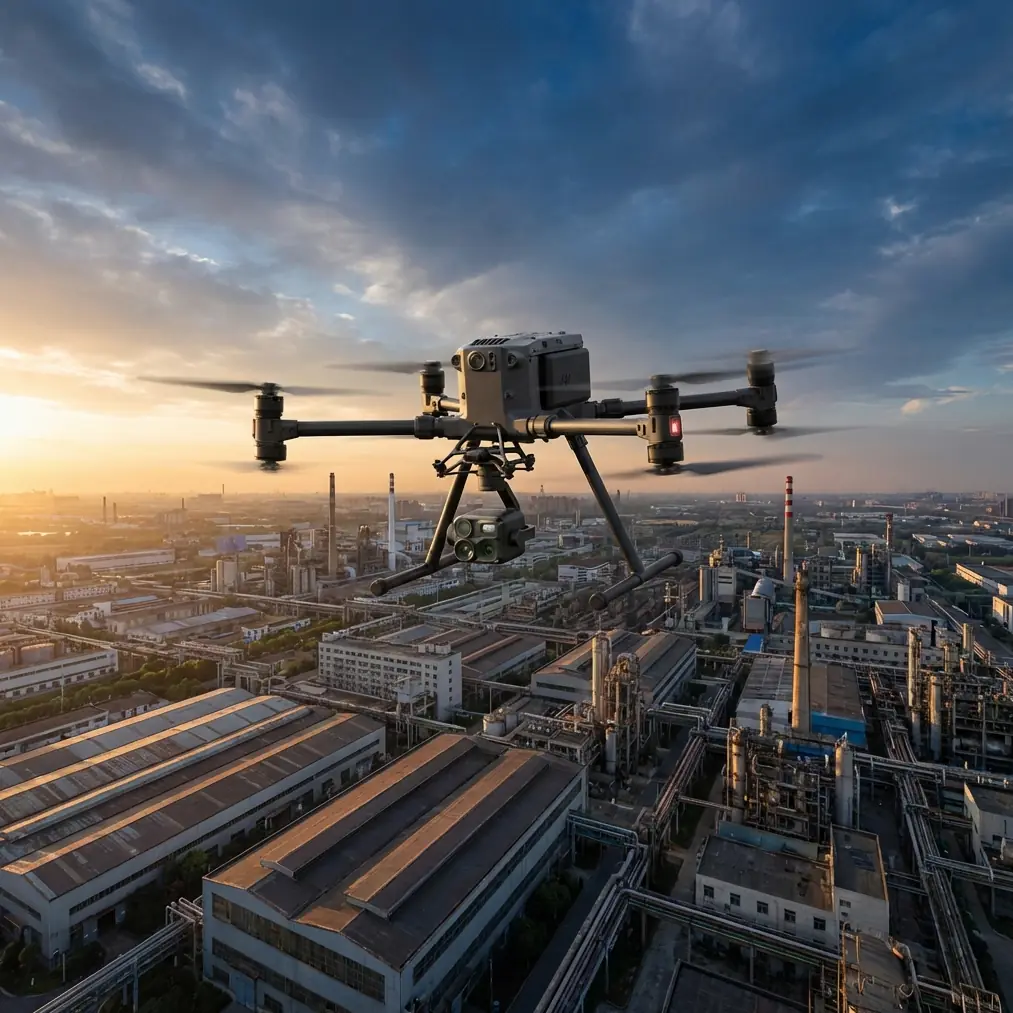
Matrice 4 for Coastal Venue Monitoring: What Helicopter Design Rules Teach Us About Safer, Smarter Drone Operations
META: A technical review of Matrice 4 coastal venue monitoring best practices, including wind loading, rotor braking, maintenance turnaround, antenna positioning, thermal workflows, and operational reliability.
Coastal venue monitoring looks simple from a distance. Launch the aircraft, scan the perimeter, check roofs, crowd routes, utilities, and shoreline edges, then come home.
In practice, the coast is where small oversights become expensive. Salt air accelerates wear. Wind shifts fast around grandstands, marinas, ferry approaches, and exhibition structures. Ground handling is less forgiving because a drone often spends as much operational risk time on the pad as it does in the air. That is why the most useful way to think about Matrice 4 in this environment is not as a camera platform first, but as a system that must remain structurally predictable and quickly serviceable between sorties.
Two older aircraft design references, both written for manned aviation, are surprisingly relevant here. One focuses on helicopter ground-load cases. The other deals with maintainability and line-replaceable equipment. Neither mentions Matrice 4, of course. Yet together they provide a sharp lens for understanding what matters when you are monitoring coastal venues with a modern enterprise UAV.
The hidden risk is often on the ground, not in the air
Most drone discussions fixate on flight modes, payloads, AI tools, or image quality. For coastal venue operations, ground states deserve equal attention.
A helicopter design handbook identifies several load cases that occur while the aircraft is stationary: tied-down conditions, rotor start-up acceleration, rotor brake loads, gust-driven blade uplift and drop, and even frozen skids resisting movement. The details were written for rotary aircraft, but the logic transfers directly to how a Matrice 4 should be handled near the sea.
One detail stands out. When a rotor brake load cannot be analyzed precisely, the handbook recommends sizing that case using 2 times the maximum braking torque, distributed across all blades. Operationally, this matters because stopping a rotor system is not a trivial housekeeping event. It is a structural event. For a coastal drone team, that means abrupt post-landing handling in strong wind is not just bad practice; it can compound loads at exactly the moment the aircraft feels “safe” because it is already back on the ground.
The second load case is even more relevant to venue monitoring near waterfront structures: gust-induced rotor movement while the aircraft is stationary. The handbook gives a fallback method using a vertical load factor of 4.67 multiplied by blade weight when detailed analysis is unavailable. You do not need to turn that directly into a drone calculation to appreciate the message. Gusts can create severe transient loads before takeoff and after landing. On open coastal pads, roof decks, promenade staging areas, and marina service zones, the aircraft should never be left exposed with casual assumptions about “just a little wind.”
For Matrice 4 crews, this translates into a simple doctrine: your launch and recovery protocol is part of your structural risk management.
Why tied-down logic matters for Matrice 4 on coastal venues
Another reference case in the helicopter manual covers tied-down loading on flight decks, in hangars, and on land pads. The manual separates the causes of those loads clearly: ship motion can introduce inertia loads, while land pads primarily face wind loads.
That distinction is useful for Matrice 4 teams monitoring coastal venues because many real sites blend these conditions. A drone may launch from a stable land-based operations zone, but still work around piers, floating docks, temporary stages, moored platforms, or structures exposed to channel wind. In other words, a coastal venue is often a “land” operation with “deck-like” wind behavior.
This is where operating discipline beats raw specification sheets.
If you are staging Matrice 4 near the waterfront:
- face the aircraft and your ground setup with the expected dominant wind in mind,
- minimize time with rotors armed while waiting for clearance,
- secure loose equipment that can become debris,
- avoid placing the aircraft where building edges create rolling turbulence,
- and treat every recovery zone as if gust loading can change in seconds.
That is not theoretical caution. It is exactly the kind of thinking behind manned rotorcraft tied-down design, adapted for enterprise drone reality.
Antenna positioning advice for maximum range in coastal monitoring
The user scenario here is venue monitoring, not long-range exploration for its own sake. Still, coastal sites routinely create signal challenges: reflective water surfaces, metal roofs, scaffold towers, temporary broadcast equipment, and moving vessels can all degrade link quality.
If you are relying on O3 transmission, antenna positioning is one of the easiest performance gains available. Most crews underuse it.
A practical rule: do not point the tips of the controller antennas at the aircraft. Present the broad face of the antenna pattern toward the Matrice 4, and keep your body, vehicle roof, and steel barriers out of the signal path. At coastal venues, a small repositioning of the pilot station can outperform a much larger investment in unnecessary hardware. Step away from railings, generator trailers, and media trucks. Gain a cleaner Fresnel zone. Elevation helps, but only if it does not put you into a more turbulent launch area.
There is another coastal nuance. Over water, crews often assume the line of sight is excellent because the horizon looks open. RF conditions may still be messy due to reflections. If your downlink quality fluctuates while the aircraft appears visually unobstructed, try rotating your pilot position or moving several meters laterally before assuming the problem is range. In many cases, it is geometry.
For teams planning recurring venue coverage, document the best controller positions during the first site survey and standardize them. That is the drone equivalent of building a reliable operating envelope rather than improvising every shift.
Thermal signature is only useful if the sortie cadence supports it
For coastal venue monitoring, thermal signature work is often more valuable than headline video specs. It helps crews inspect roof moisture patterns, overloaded electrical points, HVAC irregularities, shoreline utility cabinets, after-hours occupancy indicators, and heat anomalies around temporary event infrastructure.
But thermal work creates its own operational rhythm. Flights are often shorter, more targeted, and repeated at different times of day to compare conditions. That increases the importance of turnaround.
Here the second aviation reference becomes highly relevant. The civil aircraft design handbook states that line-replaceable units should generally be replaceable within 30 minutes, and even for items allowed to remain in service with a fault, replacement should generally not exceed 90 minutes. It also stresses that maintenance preparation should be simple, require only ordinary technical skill, and support coordinated work with minimal ground delay.
For Matrice 4 operators, those principles matter more than they first appear to. A venue monitoring program is rarely judged by a single spectacular flight. It is judged by repeatability: can the system launch on schedule, recover, swap power, validate payload status, and be airborne again without a maintenance bottleneck?
That is why hot-swap batteries are not just a convenience feature in this kind of workflow. They are a scheduling tool. If your thermal survey window is narrow—say, just after sunset when residual heat patterns are clearest—battery exchange speed directly affects data quality. Lose too much time on the ground and the thermal contrast changes. The opportunity is gone.
The aviation logic is clear: rapid replacement capability protects utilization. In drone terms, utilization is the difference between a complete coastal venue condition set and an incomplete one.
Maintainability should drive how you build your Matrice 4 kit
The same maintainability reference recommends designing wear-prone elements as removable assemblies so localized damage does not force replacement of a larger system. Again, that is a manned-aircraft principle, but it maps neatly onto enterprise UAV field practice.
A Matrice 4 kit built for coastal monitoring should be organized around quick isolation and replacement of likely problem points:
- batteries with clear rotation tracking,
- propellers inspected and segregated by condition,
- payload glass cleaning tools isolated from salt-contaminated cloths,
- spare antennas, cables, and tablet power accessories,
- and a field checklist that distinguishes airframe faults from ground-station faults.
This is also where AES-256 matters, though in a different way than marketing usually presents it. Encryption protects sensitive venue imagery and operational data during transmission and handling, particularly when inspections involve critical infrastructure, private event spaces, or restricted roof access. In coastal operations where multiple contractors may share staging zones and wireless environments, security is not abstract. It is part of professional data governance. A robust link is one thing; a protected link is another.
Photogrammetry at coastal venues is harder than it looks
Many operators assume photogrammetry around venues is straightforward because the subject is mostly built infrastructure. Coastal reality complicates that. Water edges reduce tie-point consistency. Repetitive surfaces such as seating, paving, roofing membranes, and tenting can confuse reconstruction. Salt haze can soften imagery. Temporary installations change between event days.
If Matrice 4 is being used to produce measurable outputs rather than just visual awareness, you need a disciplined control strategy. That means GCP planning where practical, especially for repeat surveys of erosion-adjacent paths, drainage structures, retaining edges, and roof-mounted assets. Ground control is not always necessary, but on coastal sites it often separates visually acceptable models from defensible measurements.
Operationally, this also loops back to wind and turnaround. Photogrammetry depends on consistency. If gusts force repeated passes or battery timing disrupts overlap, the model quality suffers. The aircraft may be excellent; the dataset may still be weak.
BVLOS thinking starts before regulation enters the conversation
The context hints at BVLOS, and while coastal venue operations are often conducted within direct visual oversight, the planning mindset behind BVLOS is useful even when the mission remains local and compliant with visual constraints.
Why? Because BVLOS-grade thinking forces teams to consider link resilience, recovery contingencies, battery reserve discipline, site segmentation, and alternate observation points. Those habits improve even conventional venue monitoring.
For Matrice 4, that means building route blocks that respect RF shadows, planning fallback hover or return corridors away from cranes and lighting trusses, and making sure your antenna orientation and pilot placement support the whole mission footprint rather than only the first leg. Coastal sites reward this level of preparation because conditions can change mid-sortie with very little warning.
What a strong Matrice 4 coastal workflow actually looks like
A serious coastal venue monitoring workflow with Matrice 4 is less about flashy features and more about engineering discipline:
- Choose the pad carefully. Avoid turbulence traps near parapets, containers, stage structures, and vessel exhaust paths.
- Validate wind behavior at ground level and above roofline. Surface calm does not guarantee stable air over the venue edge.
- Set controller antennas deliberately. Broadside to aircraft, clear of your body and metal clutter, with pilot position tested for O3 stability.
- Use thermal with timing in mind. Plan around heat retention windows, not just staff availability.
- Build for fast resets. Hot-swap battery workflow, clean media handling, and fault isolation should be routine, not improvised.
- Protect the data path. AES-256-class security matters where venue imagery and infrastructure records are sensitive.
- Use GCPs when measurements matter. Coastal geometry and reflective surfaces can punish lazy mapping setups.
If your team is refining that workflow and wants a practical conversation about field setup, transmission geometry, or maintenance rhythm, you can message a coastal UAV specialist directly here.
The real takeaway
The most interesting thing about the reference material is not that it comes from traditional aircraft design. It is that the old engineering concerns are still the right concerns.
One handbook warns us to respect ground-induced rotor loads, including braking loads estimated at 2x maximum brake torque and gust cases severe enough to justify a 4.67 vertical load factor in fallback analysis. The other reminds us that reliable operations depend on maintainability, simple service procedures, and component replacement targets measured in 30-minute rather than half-day windows.
That combination is exactly how mature Matrice 4 operations should be judged in coastal venue monitoring. Not by brochure-level capability, but by whether the aircraft can be deployed repeatedly, protected from harsh ground conditions, kept mission-ready between flights, and trusted to deliver clean data when the environment is least cooperative.
For coastal teams, that is the difference between flying a drone and running an aerial monitoring system.
Ready for your own Matrice 4? Contact our team for expert consultation.