
Matrice 4 in Complex Terrain: A Field Strategy for Reliable
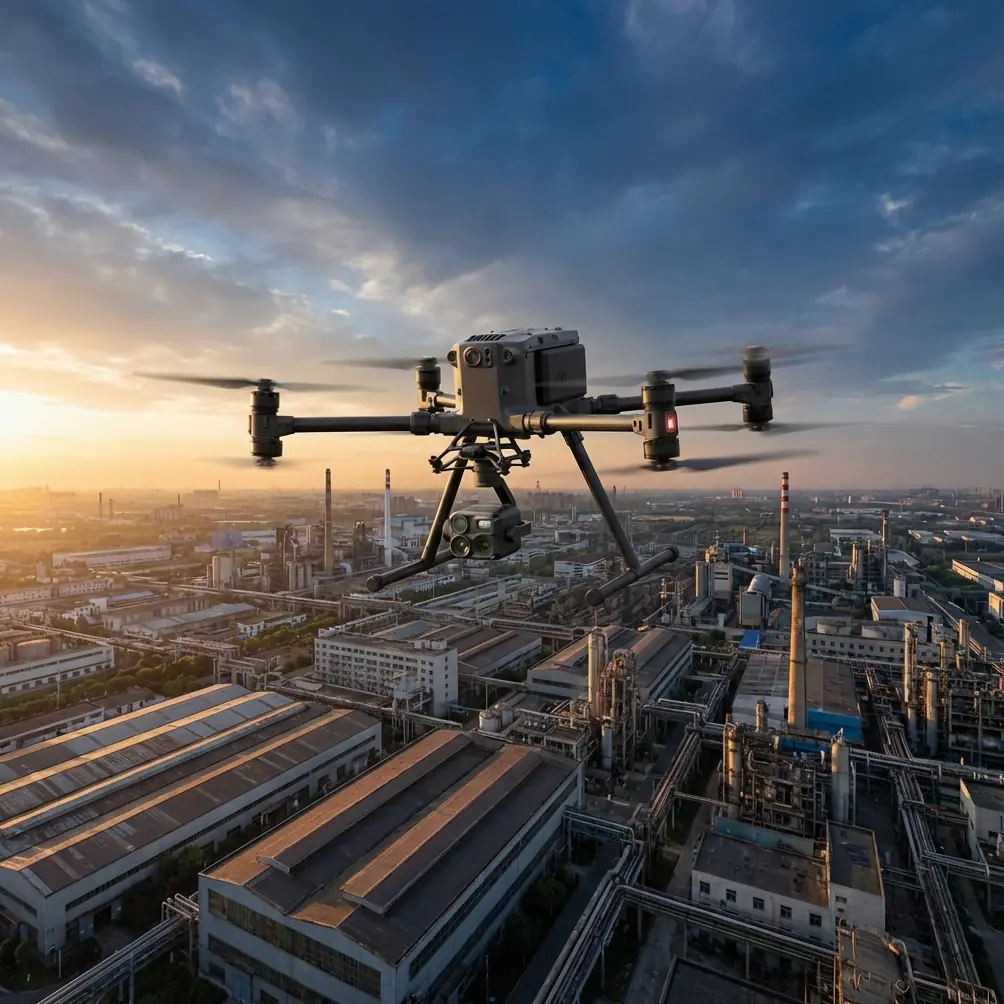
Matrice 4 in Complex Terrain: A Field Strategy for Reliable Venue Monitoring
META: A specialist case-study on using Matrice 4 for venue monitoring in complex terrain, with practical guidance on flight altitude, thermal signature capture, photogrammetry workflow, and why structural modeling discipline matters in mission planning.
When people talk about venue monitoring, they often picture a simple perimeter flight over flat ground. Real sites are rarely that cooperative. Hills distort radio paths. Retaining walls create blind pockets. Temporary structures change airflow. Tree lines and ridges interfere with both visual assessment and data consistency. In this kind of environment, the difference between a useful drone operation and a noisy one is not hardware alone. It is the rigor behind the workflow.
For Matrice 4 operators working in complex terrain, that rigor should look less like improvisation and more like engineering.
I have been thinking about this through an unusual lens: not just aerial operations, but aircraft structural analysis. One of the reference materials behind this piece, a section from 飞机设计手册 第9册 载荷、强度和刚度, makes a sharp point that still applies on the drone side. It explains why full-scale destructive testing is often impractical for expensive aircraft, and how computer simulation became necessary as computing power and computational mechanics advanced. It also warns that good software alone does not guarantee correct analysis. The quality of the finite element model, and how faithfully its simplifications match reality, determines whether results can be trusted.
That is not a theoretical detour. It is exactly the lesson Matrice 4 teams need when monitoring venues in difficult topography.
The case: a venue spread across uneven ground
Consider a civilian event venue built into sloped terrain: parking zones on a lower shelf, a main gathering area on an elevated platform, service roads weaving behind wooded embankments, and temporary installations added for crowd flow and equipment staging. The operator’s job is not simply to “fly and look.” The job is to generate dependable situational awareness for operations staff, maintenance crews, and site managers.
On paper, you could assign the Matrice 4 a standard grid, push imagery into photogrammetry software, and call it done. In practice, that usually fails in one of three ways:
- Altitude is chosen from the launch point rather than terrain-relative height.
- Thermal signature data is captured at the wrong distance, flattening temperature contrast.
- The radio and data chain are treated as fixed, even though ridges and man-made obstacles alter the link profile across the mission.
This is where the structural-analysis analogy becomes useful. A venue in complex terrain is a real system. Your mission plan is a simplified model of that system. Every simplification introduces error.
Why model discipline matters for a Matrice 4 mission
The aircraft design reference emphasizes that measured test data should be used to correct the model, making numerical simulation more reliable. It specifically mentions measured modal and displacement data as anchors for model correction. In drone operations, the equivalent is field-validated mission refinement.
That means your first Matrice 4 sortie over a complex venue should be treated as a calibration mission, not the final answer.
You fly a partial route. You verify:
- effective O3 transmission quality behind terrain breaks
- image overlap stability over changing elevation
- thermal readability on surfaces with different sun exposure
- the effect of local wind acceleration near slopes and structures
- whether planned GCP placement supports terrain-correct photogrammetry
Then you adjust the model. You do not assume the software was right because the screen looked neat.
This sounds obvious, but operators still skip it. They trust the mission planner, then wonder why stitched outputs drift along slope transitions or why thermal comparisons are inconsistent between morning and afternoon passes.
Optimal flight altitude in complex terrain: the practical answer
The most common altitude mistake in venue monitoring is flying a constant height above takeoff point instead of maintaining a constant height above ground level. In rolling or stepped terrain, that creates wildly different data quality across the same mission.
For Matrice 4, my preferred starting point for this scenario is not one fixed altitude, but a terrain-relative envelope:
- 45 to 60 meters above ground level for primary visual monitoring and general thermal screening
- 30 to 40 meters above ground level for detailed inspection of choke points, service access lanes, temporary structures, and heat anomalies
- 70 meters or slightly higher only where terrain relief and obstacles require wider context, while preserving enough resolution for operational decisions
Why this range?
At around 45 to 60 meters AGL, you usually get a strong balance between coverage efficiency and interpretability. The aircraft sees enough of the venue geometry to support movement tracking, queue analysis, drainage observation, and perimeter review without pushing the imagery so high that critical details dissolve into abstraction. In uneven ground, that middle band also helps maintain a healthier radio geometry for O3 transmission than lower, more obstructed flight lines.
But there is a catch. If your terrain rises sharply beneath the aircraft, a nominal 60-meter mission can become a 25-meter pass over the crest and a 90-meter pass over a depression. That destroys consistency. For photogrammetry, it affects ground sample distance and overlap. For thermal work, it changes how surface signatures present and whether anomalies remain comparable.
So the real guidance is this: use terrain-following logic whenever available, and think in AGL, not launch-point altitude.
For venue managers, this has direct operational significance. A thermal hotspot near a generator enclosure, a drainage issue behind a temporary stand, or a crowd buildup near a sloped access ramp can all be missed or misread if the aircraft’s stand-off distance keeps changing.
Thermal signature is not just a sensor output
In complex terrain, thermal signature interpretation is strongly influenced by angle, surface composition, and moisture retention. Asphalt pads, synthetic coverings, concrete retaining walls, grass strips, and metal temporary structures all absorb and release heat differently. Slopes facing the sun can remain visually unremarkable while producing thermal contrast that obscures truly important anomalies.
This is where a second reference becomes unexpectedly relevant.
The materials handbook excerpt on SYL-3 core material provides concrete data on mechanical and environmental behavior. One table lists typical tensile strength values, including 2.77 MPa for one configuration and up to 6.68 MPa for another. Another notes wet-heat performance under 53–57°C and 95%–100% humidity conditions. On the surface, that is aircraft materials data, not drone mission planning. But it carries a lesson venue-monitoring teams should respect: material behavior changes under environmental stress, and performance cannot be inferred from one condition alone.
Translate that into Matrice 4 operations and the takeaway is immediate. Surfaces and structures at a venue do not behave thermally in a uniform way. A retaining panel, composite roof cover, foam-cored temporary partition, or laminated platform skin may present very different heat patterns after sun loading, rainfall, or humid overnight conditions. If you conduct a thermal pass at noon and compare it casually to a dawn pass, you may be comparing environment-driven material response rather than meaningful operational change.
That is why I recommend thermal missions in this type of venue use repeatable windows:
- early morning for identifying retained heat and moisture-related contrast
- late afternoon for locating solar loading effects and equipment-related warming
- spot-check flights after weather shifts, especially after high humidity or rainfall
Consistency matters more than sheer flight frequency.
Photogrammetry in broken terrain: where GCPs still earn their place
Matrice 4 can support a highly capable mapping workflow, but complex terrain punishes lazy control strategy. If the venue includes elevation breaks, terraces, ramps, tree-shadow transitions, or partially obscured service corridors, relying on aerial alignment alone can produce subtle geometry errors that only show up when someone tries to use the map operationally.
This is why GCPs remain valuable.
Not everywhere. Not excessively. But strategically.
Place GCPs across elevation transitions rather than only around the perimeter. Put them where the terrain changes behavior: upper deck, lower service road, central open area, and one or two near constricted pathways or retaining features. The purpose is not box-ticking. It is to constrain the model where simplification error is most likely.
Again, the structural-analysis reference said the critical issue is not the existence of software but whether the model reflects the actual system. In venue mapping, that means your orthomosaic or 3D product should be challenged where the site is hardest to represent.
A flat parking lot can forgive mediocre control. A stepped venue cannot.
O3 transmission and AES-256: more than spec-sheet talking points
In complex terrain, transmission integrity is operational, not cosmetic. A ridge shoulder, stand structure, or dense landscaping belt can degrade the link just enough to create hesitation in the workflow: lag in framing, delayed thermal interpretation, or reduced confidence during handoff to a second observation segment.
O3 transmission matters here because maintaining a stable data path lets the operator keep the aircraft where it should be, rather than where signal conditions happen to feel safer. For recurring venue monitoring, that improves route repeatability and therefore data comparability over time.
AES-256 also deserves a practical mention. Venue monitoring often involves sensitive civilian operational information: contractor activity, infrastructure layout, equipment staging, access patterns, and maintenance records. Strong encryption is not a technical footnote. It supports responsible handling of operational imagery, especially when external consultants, event operators, and facility teams all touch the information chain.
Hot-swap batteries change the tempo of the mission
Complex terrain monitoring is usually a sequence problem. You may need one mission for broad visual overview, one for thermal checks, and another for localized follow-up around structures or service corridors. Long reset times break continuity. Hot-swap batteries help preserve it.
That matters because environmental conditions shift quickly on uneven sites. Shadows move. Wind channels through cuts and ramps. Metal surfaces warm up. Ground traffic changes. If the gap between flights is too long, your second data set may no longer describe the same operational state as the first.
With hot-swap workflow, the Matrice 4 team can preserve the context of the inspection instead of reconstructing it later from mismatched datasets.
A word on BVLOS planning in civilian operations
For larger venues with extended access roads or external support zones, some operators will naturally think about BVLOS frameworks. The right way to approach that is not as a shortcut, but as a system-design question. Terrain masking, emergency landing options, observer positioning, and communications resilience all become more demanding once the aircraft extends beyond conventional visual boundaries.
In practical terms, even if the operation remains within standard visual constraints, planning as if link geometry and route segmentation matter will make the mission stronger. Complex terrain rewards disciplined corridor design and pre-identified recovery points.
The operating method I recommend
If I were building a Matrice 4 workflow for this exact scenario, I would structure it in four layers:
1. Calibration sortie
A short initial flight at 50 meters AGL equivalent over representative terrain zones. Measure link stability, visibility into blind pockets, and thermal contrast.
2. Terrain-relative baseline mapping
Photogrammetry pass with consistent overlap and GCP distribution across elevation changes. This becomes the site reference.
3. Focused thermal mission
Lower-altitude runs at 30 to 40 meters AGL over infrastructure clusters, shaded retaining edges, drainage paths, and temporary structures.
4. Repeatable monitoring template
Save route segments by function rather than one oversized mission: perimeter, service roads, crowd-flow areas, utilities, staging areas.
That last point is underrated. Modular missions are easier to repeat consistently, and consistency is what gives the data value.
If your team is refining a similar venue-monitoring setup and wants a practical second opinion on altitude bands, thermal timing, or control-point layout, you can share the site profile here: send the terrain details directly.
The bigger lesson from the reference material
The aircraft handbook’s discussion of finite element work comes down to one hard truth: a model becomes useful only after it is corrected against reality. The materials handbook adds another: performance varies with material configuration and environmental exposure, and numbers matter. In the source table, SYL-3 tensile strength spans from 2.77 MPa to 6.68 MPa depending on configuration. That spread is a reminder that assuming uniform behavior across different structures is a mistake.
For Matrice 4 venue monitoring in complex terrain, the same mindset pays off. Do not assume one altitude fits the whole site. Do not assume one thermal pass tells the whole story. Do not assume software-generated outputs are trustworthy simply because they are clean.
Treat the venue as a physical system with variation. Build your mission as a testable model. Then refine it with measured results.
That is how drone monitoring stops being a flight and becomes an operational instrument.
Ready for your own Matrice 4? Contact our team for expert consultation.