
Monitoring Vineyards with Matrice 4 | Wind Tips
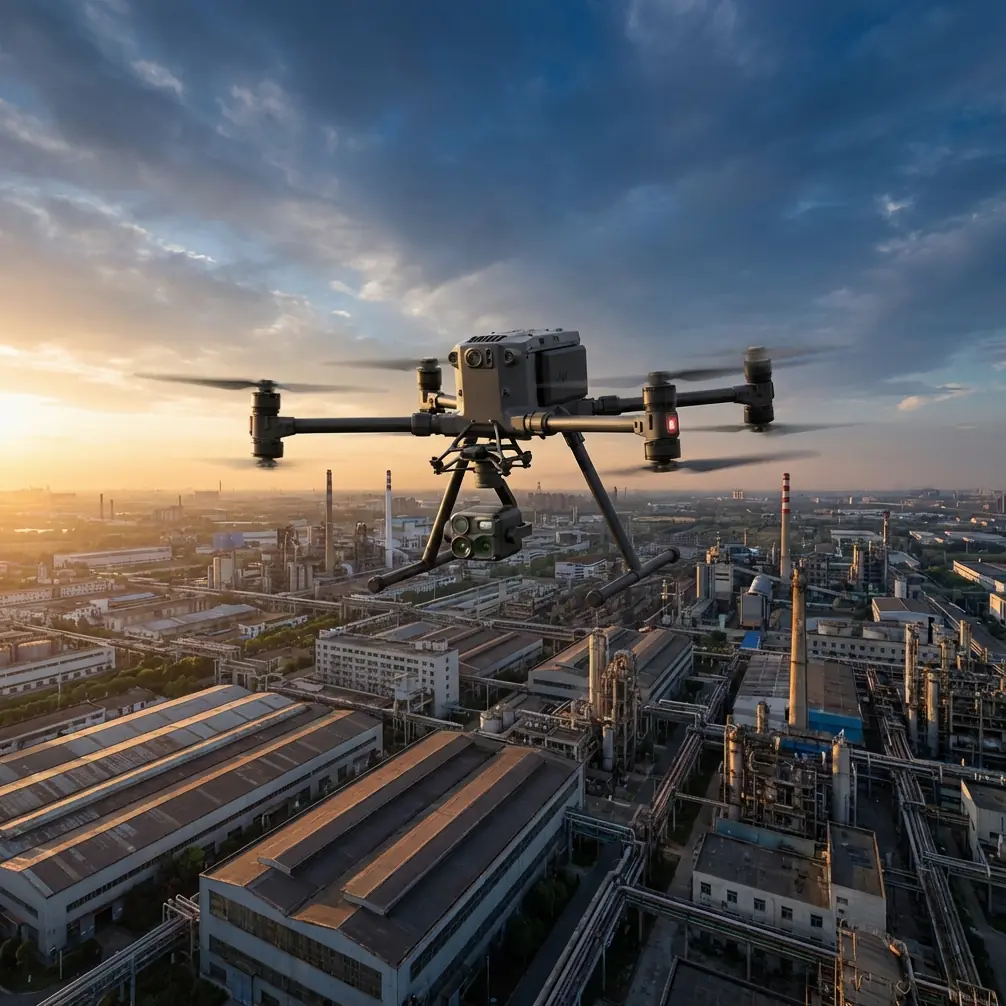
Monitoring Vineyards with Matrice 4 | Wind Tips
META: Learn how to monitor vineyards in windy conditions using the DJI Matrice 4. Expert tutorial covering thermal signature analysis, flight planning, and pro tips for reliable results.
By James Mitchell | Drone Operations Expert & Precision Agriculture Specialist
TL;DR
- Pre-flight lens and sensor cleaning is a non-negotiable safety step that directly impacts thermal signature accuracy and obstacle avoidance reliability in dusty vineyard environments.
- The Matrice 4's O3 transmission system and wind resistance up to 12 m/s make it a strong performer for vineyard monitoring even on gusty days.
- Proper GCP placement and photogrammetry workflows are essential for generating actionable vineyard health maps from aerial data.
- This tutorial walks you through every step—from pre-flight prep to post-processing—so you can capture reliable vineyard data when conditions are less than ideal.
Why Wind Makes Vineyard Monitoring So Challenging
Vineyard monitoring from the air sounds straightforward until a 15 km/h crosswind starts buffeting your drone between tight trellis rows. Wind introduces motion blur, destabilizes thermal readings, and drains batteries faster than calm-day flights. Choosing the wrong drone or skipping critical preparation steps can turn a productive survey into a wasted morning.
The DJI Matrice 4 was built for exactly these scenarios. With its wind resistance rated up to 12 m/s, integrated wide-angle and thermal sensors, and robust O3 transmission link, it handles challenging vineyard environments with confidence. This tutorial breaks down the entire workflow so you can capture accurate, repeatable data even when the wind picks up.
Step 1: The Pre-Flight Cleaning Ritual That Protects Your Safety Systems
Here's something most tutorials skip: cleaning your sensors before every vineyard flight is a safety-critical step, not just a maintenance nicety. Vineyards are dusty. Pollen, sulfur spray residue, and fine soil particles settle on every exposed surface overnight.
The Matrice 4 relies on its vision sensors and infrared perception system for obstacle detection. A thin film of vineyard dust on those sensors can degrade obstacle avoidance performance—dangerous when you're flying 3 to 5 meters above vine canopy in gusty wind.
Pre-Flight Cleaning Checklist
- Vision sensors (all directions): Wipe with a microfiber cloth using gentle circular motions. Check for smudges or residue under direct light.
- Thermal sensor lens: Use a lens pen or optical-grade wipe. Even a fingerprint can introduce a 2-3°C error in thermal signature readings.
- Wide-angle camera lens: Clean and inspect for micro-scratches that cause flare in bright vineyard conditions.
- Propellers: Check for nicks or caked-on debris that creates imbalance—amplified in windy flights.
- Cooling vents: Blow out dust to prevent overheating during computationally intensive thermal capture missions.
Expert Insight: I've seen operators lose an entire morning of data because sulfur spray residue on the thermal lens created phantom hot spots across their vineyard maps. A 30-second cleaning routine before each flight eliminates this risk entirely. Make it non-negotiable.
Step 2: Setting Up Ground Control Points for Accurate Photogrammetry
If you're generating orthomosaics or NDVI-style maps from your Matrice 4 flights, GCP accuracy determines whether your data is useful or decorative. Wind complicates this because it can shift lightweight GCP targets between placement and flight time.
GCP Best Practices for Vineyards
- Place a minimum of 5 GCPs across the survey area—one near each corner and one in the center.
- Use weighted or staked targets (at least 60 cm x 60 cm) that won't shift in wind gusts.
- Record RTK-corrected coordinates for each GCP with a survey-grade GNSS receiver. The Matrice 4's onboard RTK module improves direct georeferencing, but GCPs add a critical layer of verification.
- Avoid placing GCPs under canopy cover. Position them in row middles where the drone has a clear line of sight.
- Photograph each GCP from ground level as a reference before launching.
Accurate GCPs transform your photogrammetry output from "roughly correct" to sub-centimeter precision, which matters when you're tracking vine-by-vine stress patterns across seasons.
Step 3: Flight Planning for Windy Vineyard Conditions
Automated mission planning is essential for repeatable vineyard surveys. The Matrice 4 integrates with DJI's flight planning ecosystem, but wind demands specific adjustments to your standard mission parameters.
Wind-Adjusted Flight Parameters
| Parameter | Calm Conditions | Windy Conditions (8-12 m/s) |
|---|---|---|
| Flight altitude (AGL) | 25-30 m | 30-40 m |
| Overlap (front) | 75% | 80-85% |
| Overlap (side) | 65% | 70-75% |
| Flight speed | 8-10 m/s | 5-7 m/s |
| Gimbal stabilization mode | Standard | FPV / Recenter active |
| Battery reserve threshold | 20% | 30% |
| Estimated flight time per battery | ~40 min | ~28-32 min |
Why These Adjustments Matter
Higher altitude gives the drone more clearance from turbulence generated by vine rows and surrounding tree lines. Wind flowing over canopy creates eddies at low altitudes that can jolt the drone mid-capture.
Increased overlap compensates for slight positional drift between shutter actuations. In photogrammetry software, this extra overlap gives the stitching algorithm more tie points, producing cleaner mosaics even when individual frames show minor motion artifacts.
Slower flight speed allows the Matrice 4's gimbal to stabilize fully between shots. At 5 m/s in gusty conditions, the gimbal compensates effectively; at 10 m/s, you risk frames where stabilization lags behind a sudden gust.
Higher battery reserve accounts for the increased power draw when the Matrice 4's motors fight crosswinds. Hot-swap batteries are your best friend here—keep a second set charged and ready so you can swap and resume without losing your mission progress or warming window.
Pro Tip: Fly your vineyard survey legs parallel to the prevailing wind direction, not perpendicular. This reduces the lateral corrections the drone must make and extends effective flight time by roughly 10-15%. It also produces more consistent ground sampling distance across your dataset.
Step 4: Capturing Thermal Signatures for Vine Stress Detection
The Matrice 4's thermal sensor opens a powerful diagnostic channel for vineyard managers. Thermal signature analysis reveals irrigation inconsistencies, disease onset, and root zone stress that the visible spectrum misses entirely.
Optimal Thermal Capture Conditions
- Time of day: Early morning (6:00-8:00 AM) or late afternoon (4:00-6:00 PM). Midday solar loading creates thermal noise that masks subtle vine stress patterns.
- Wind consideration: Light wind (3-5 m/s) actually helps by creating uniform convective cooling across the canopy. Above 8 m/s, differential cooling from wind shadows between rows introduces artifacts.
- Emissivity setting: Set to 0.95-0.98 for grapevine canopy. This ensures your thermal signature readings reflect actual leaf surface temperature.
- Capture mode: Use radiometric thermal output (not just palette-colorized imagery) so post-processing software can extract absolute temperature values per pixel.
Reading Vineyard Thermal Maps
Healthy, well-watered vines typically show cooler thermal signatures due to active transpiration. Stressed vines close their stomata, reducing transpiration, and appear as warmer clusters in thermal imagery.
Look for patterns:
- Uniform warm bands across rows → likely irrigation line failure
- Scattered warm individuals → potential disease or root damage
- Cool patches in normally warm zones → possible standing water or drainage issues
Step 5: Data Link Security and BVLOS Considerations
When flying larger vineyard blocks, you may approach or exceed visual line of sight limits. The Matrice 4's O3 transmission system provides a reliable data link at extended ranges, but operating BVLOS requires proper authorization and protocols in most jurisdictions.
Key Technical Considerations
- O3 transmission maintains HD video feed and telemetry at ranges well beyond typical vineyard dimensions, even in environments with RF interference from irrigation controllers and weather stations.
- AES-256 encryption secures your command-and-control link and data stream. For vineyard operations contracted to high-value estates, this ensures proprietary crop data isn't intercepted during transmission.
- Always carry a visual observer if you don't hold a BVLOS waiver. Vineyard terrain features—hillsides, tree lines, equipment sheds—can obscure your drone faster than you expect.
Common Mistakes to Avoid
- Flying in wind speeds above the rated 12 m/s limit. The Matrice 4 can handle gusts, but sustained wind beyond spec degrades data quality and risks a forced landing in vine rows. Check weather at flight altitude, not ground level—winds at 30 m AGL are often 30-50% stronger.
- Skipping the pre-flight sensor clean. Dust contamination is cumulative. Operators who clean "when they remember" end up with inconsistent thermal datasets that can't be compared season over season.
- Using default overlap settings in wind. The standard 75%/65% overlap works on calm days. Wind demands the higher values outlined above, or you'll find gaps in your orthomosaic exactly where the gusts hit hardest.
- Ignoring battery temperature. Cold morning starts combined with wind chill can drop battery temperature below optimal range. Pre-warm batteries to at least 20°C before flight for consistent power delivery and accurate remaining-time estimates.
- Neglecting GCP verification post-flight. Always re-check that your GCPs haven't moved after the survey. A shifted GCP that goes unnoticed will warp your entire photogrammetry output.
Frequently Asked Questions
Can the Matrice 4 capture both RGB and thermal data in a single vineyard flight?
Yes. The Matrice 4's integrated payload includes both a wide-angle visual camera and a thermal sensor. You can configure missions to capture synchronized RGB and thermal imagery simultaneously, eliminating the need for separate flights. This is particularly valuable in windy conditions where you want to minimize total airtime and battery consumption.
How many vineyard hectares can I cover per battery in windy conditions?
This depends on your altitude, speed, and overlap settings. As a realistic benchmark, expect to cover 8-12 hectares per battery at 35 m altitude with 80% front overlap and 70% side overlap at a flight speed of 6 m/s in moderate wind. Hot-swap batteries let you continue the mission without re-initializing, so carry at least 3-4 charged batteries for a full vineyard block survey.
What photogrammetry software works best with Matrice 4 vineyard data?
The Matrice 4's output is compatible with all major photogrammetry platforms including DJI Terra, Pix4D, Agisoft Metashape, and OpenDroneMap. For vineyard-specific analysis, many operators process in Pix4D or DJI Terra for orthomosaic generation and then import into specialized agricultural analytics platforms for thermal signature interpretation and vine-level health scoring. The key is ensuring your software supports radiometric thermal data import if you're doing quantitative stress analysis.
Ready for your own Matrice 4? Contact our team for expert consultation.