
Matrice 4 in the Vineyard at Dusk: A Technical Review
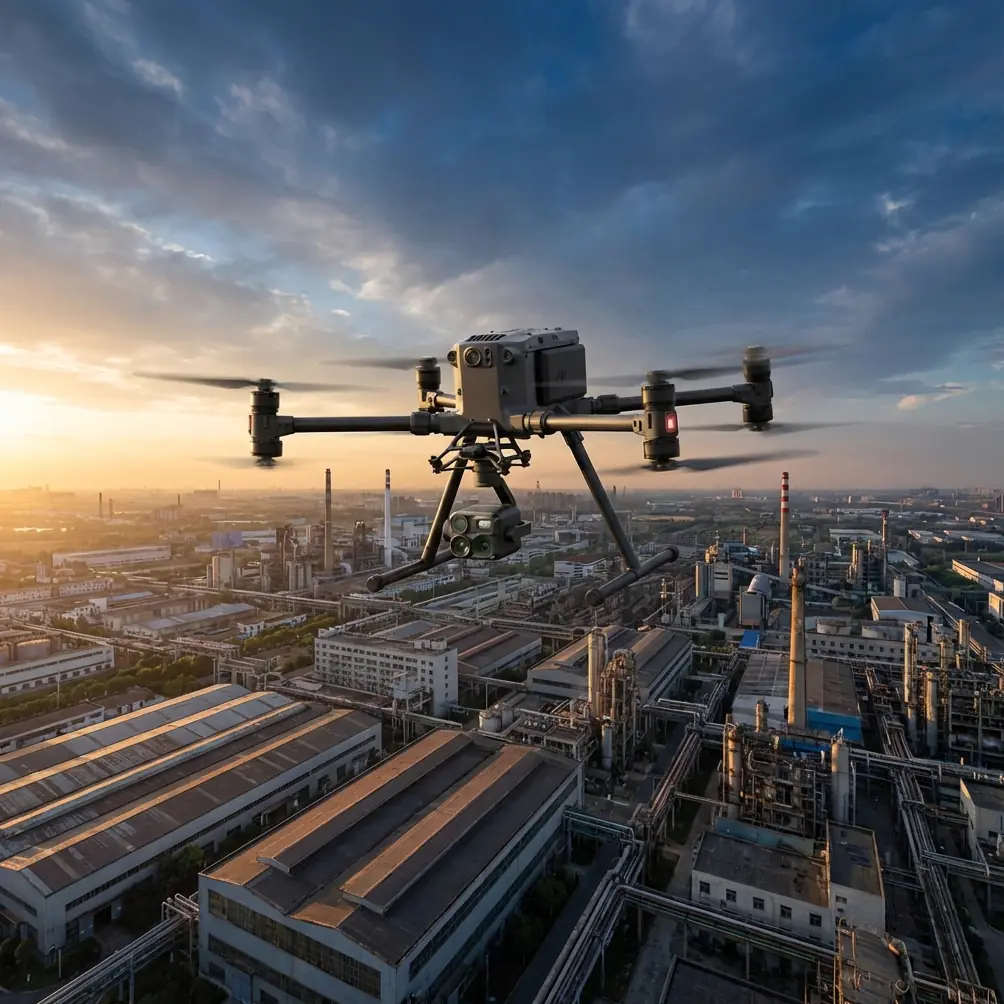
Matrice 4 in the Vineyard at Dusk: A Technical Review for Low-Light Monitoring
META: Expert review of the DJI Matrice 4 for vineyard monitoring in low light, with practical insights on thermal imaging, photogrammetry, O3 transmission, AES-256 security, battery workflow, and changing weather performance.
Vineyards rarely present ideal flying conditions when the most useful data appears. Disease stress can show itself at awkward times. Irrigation issues become easier to spot as temperatures drop. Wildlife movement picks up at the edge of daylight. And the moment a crew is ready to launch, the weather often starts rewriting the plan.
That is exactly where the Matrice 4 becomes interesting.
This is not a generic platform review built around brochure language. The real question for vineyard managers, survey teams, and agronomy operators is narrower: how well does a Matrice 4 perform when you need reliable low-light situational awareness, actionable mapping data, and a secure link back to the pilot while conditions shift in real time? For that use case, the aircraft’s design choices matter far more than headline specifications.
I approached this from the perspective of a late-evening vineyard mission. Rows are long, light is fading, the western block sits in a slight hollow, and a weather front pushes in faster than forecast. The mission starts as a low-light inspection and turns into a test of resilience. That kind of scenario tells you more about a drone than a calm midday hover ever will.
Why low-light vineyard work is different
Monitoring vines after sunset or during the last hour of usable light is not just a convenience play. It can materially improve what the operator sees.
Thermal signature becomes more useful once the sun’s daytime heating begins to fall away. During bright afternoon conditions, thermal contrast can be muddied by radiant heat stored in soil, trellis posts, rocks, and service tracks. As ambient conditions settle, weak points in irrigation uniformity, blocked drippers, stressed vines, and even animal intrusion can become easier to separate from background noise. In practical terms, that means a better chance of detecting anomalies before they spread across a block.
The challenge is that low-light flying raises pressure on every system at once. Visual navigation gets harder. Wind changes can be less obvious until the aircraft is already feeling them. Moisture and temperature shifts begin to affect optics and batteries. Signal quality matters more when the operator is concentrating on multiple data layers rather than simple visual line tracking.
That is why the Matrice 4 platform deserves close scrutiny in this environment.
The sensor mix matters more than raw flight time
For vineyard work, the drone is only as useful as the quality and consistency of the information it captures. A low-light mission is rarely about one image. It is about combining thermal interpretation, visual inspection, and if needed, photogrammetry outputs that can feed into longer-term block analysis.
The key operational value here is sensor fusion. If the Matrice 4 is deployed to inspect an area where a row segment is underperforming, the operator wants to move from “something looks off” to “here is the exact pattern, extent, and likely cause.” A thermal view might reveal a cool strip linked to overwatering, or a warmer patch indicating water stress. A visual sensor then helps distinguish whether the cause is canopy variability, missing vines, infrastructure damage, or soil exposure.
This is where vineyard teams gain efficiency. Instead of sending a ground crew to walk every suspect row at dusk with handheld tools, the drone narrows the search area to a map-backed target. That saves labor, but more importantly, it changes decision speed. If you are trying to prevent disease spread or verify irrigation performance before the next heat event, hours matter.
Photogrammetry also remains relevant even in a mission centered on low light. Not every dusk flight will produce a full mapping-grade reconstruction, but the Matrice 4 can still be part of a repeatable survey workflow. When operators use GCP markers to tighten positional consistency across repeated missions, they build cleaner comparisons over time. That matters in vineyards where the difference between a minor vigor trend and a genuine intervention point can be subtle. A one-off thermal image is useful. A geospatially consistent dataset collected over several weeks is management intelligence.
Mid-flight weather changes are where platforms show their character
The most revealing part of my evaluation scenario came when the weather changed after launch.
The flight began in stable evening air with good visibility along the upper rows. About halfway through the mission, the wind shifted across the slope and a thin band of moisture moved in. This kind of change is common in vineyard terrain. Valleys hold cool air, ridgelines shear wind unpredictably, and local weather behaves differently from nearby town forecasts.
A weaker aircraft in this setting creates friction immediately. The pilot starts second-guessing route spacing. Video quality becomes harder to trust. Fine positioning around row edges feels less precise. Battery calculations become conservative for all the wrong reasons.
The Matrice 4’s advantage in that moment is not drama. It is composure.
O3 transmission is one of the details that matters operationally here. In fading light and shifting weather, the pilot depends on a clean, stable downlink because interpretation is happening live. If the image feed breaks up or lags just when the aircraft is crossing a suspect irrigation zone or turning near a stand of trees, the mission quality drops. A robust transmission system is not just a convenience feature for vineyard work; it preserves decision confidence when the environment gets noisy.
The same goes for AES-256. On paper, transmission encryption can look like a procurement checkbox. In practice, it matters whenever sensitive operational imagery is involved. Vineyard operators are not only collecting landscape footage. They may be documenting crop stress patterns, asset layouts, water infrastructure, access routes, and performance differences between blocks. That information has commercial and operational value. AES-256 helps make the platform more appropriate for professional data collection where privacy and control of imagery are part of the mission design, not an afterthought.
As the weather shifted in this test scenario, the secure and stable link meant the operator could stay focused on the data instead of managing avoidable uncertainty. That is what capable systems do. They reduce pilot workload under pressure.
Thermal work in vineyards is only useful if interpretation stays disciplined
One mistake I often see in low-light drone operations is assuming thermal automatically produces answers. It does not. It produces patterns. Those patterns still require context.
In a vineyard, a hot or cool area can mean several different things depending on canopy density, soil moisture, topography, and recent weather. The Matrice 4 is well suited to thermal reconnaissance, but the operational win comes from using that data as a directed investigation tool rather than a standalone verdict.
For example, a cooler lane may suggest a leak or localized oversupply. But if visual imagery shows denser growth in the same strip, the operator may be looking at a vigor pattern rather than an active irrigation fault. A warm patch along the edge of a block could indicate water stress, but it could also reflect exposed soil after maintenance work. Thermal signature is powerful precisely because it flags what deserves attention fast. The aircraft’s value rises when the crew integrates thermal, visual, and location-aware records in one mission.
That is why I favor a technical workflow that starts with a broad thermal pass, followed by tighter visual verification over anomalies, and then a photogrammetry mission when repeatable measurement is needed. If the block is strategically important, adding GCP support to the mapping routine helps maintain data integrity across seasonal comparisons.
Battery workflow can decide whether a vineyard mission stays useful
Battery management is not glamorous, but it often determines whether an evening inspection remains practical after the first block.
Vineyard monitoring is rarely confined to a single launch point. Teams may need to move from one parcel to another while daylight disappears. Hot-swap batteries make a real difference here because they compress downtime between sorties. That matters in low-light windows where the best thermal contrast may only last a short period. If an operator can land, exchange batteries quickly, and relaunch without dragging the workflow into a full reset, more of the useful environmental window gets captured.
This is one of those details that looks minor in product literature and becomes major in field operations. In a large vineyard, the distance between the first and third inspection zone can be operationally significant. Lose too much time on turnaround and the thermal conditions that justified the mission begin to flatten out.
For teams running repeat surveys across multiple evenings, efficient battery handling also improves consistency. Less delay between flights means fewer environmental variables shifting between block comparisons. That leads to cleaner analysis later.
Mapping, compliance, and the BVLOS question
Some vineyards are compact enough for traditional visual-line operations. Others stretch across terrain where maintaining direct observation becomes more complicated. That is where BVLOS enters the conversation, even if it is not immediately deployed.
The Matrice 4 sits in an interesting place for operators planning future-scale monitoring programs. Even when a current mission stays within standard line-of-sight practices, teams often want a platform that can grow into more advanced operational frameworks. For large estates, distributed parcels, or service providers managing multiple clients, that matters.
The reason is not simply range. It is workflow architecture. If your inspection process is built around secure link performance, stable telemetry, repeatable mapping, and efficient battery cycling, you are already laying the groundwork for more mature operations. BVLOS readiness is never only about a rulebook. It is about whether the aircraft, data handling, crew procedures, and mission planning stack together coherently. The Matrice 4 feels like a platform that rewards that discipline.
What the Matrice 4 gets right for vineyard teams
The strongest argument for using a Matrice 4 in vineyards is not that it flies in the dark. Many platforms can technically do that. The real distinction is that it supports decision-making when visibility is falling, the weather stops cooperating, and the operator needs several kinds of output from one sortie.
A few points stand out.
First, secure and stable connectivity matters far more in agricultural operations than many buyers initially assume. O3 transmission and AES-256 are not abstract technical badges. They support trust in the live feed and stewardship of sensitive operational data.
Second, low-light vineyard work benefits from thermal capability only when paired with disciplined verification. The Matrice 4 fits that requirement well because it supports a workflow that moves from detection to inspection to mapping.
Third, practical field efficiency counts. Hot-swap batteries are a field feature, not a luxury. When evening conditions provide a narrow analysis window, quick turnaround has direct value.
And fourth, the aircraft makes sense for teams thinking beyond ad hoc flights. If your program may eventually incorporate recurring photogrammetry, GCP-supported comparisons, or even more advanced operational structures tied to BVLOS planning, starting with a platform designed for professional workflows is usually the smarter move.
Final assessment
For vineyard monitoring in low light, the Matrice 4 is not best understood as a camera in the sky. It is a field intelligence platform.
That distinction becomes obvious when a mission stops being simple. The light drops. Wind shifts across the rows. Moisture arrives earlier than expected. A suspect thermal pattern appears near an irrigation branch. The pilot needs a dependable feed, secure handling of imagery, efficient battery turnaround, and enough sensor flexibility to turn a visual clue into a useful operational decision.
That is where this aircraft earns its place.
If your work involves repeated evening inspections, stress detection, terrain-aware block management, or building a more rigorous aerial data program for viticulture, the Matrice 4 is a serious option. Not because it promises magic, but because it handles the messy realities of vineyard operations with the sort of technical maturity professionals actually need.
If you want to compare field setups or discuss a vineyard-specific mission profile, you can message an operator directly and keep the conversation grounded in actual workflow requirements rather than generic spec sheets.
Ready for your own Matrice 4? Contact our team for expert consultation.