
Matrice 4 for Urban Vineyard Monitoring: A Technical Review
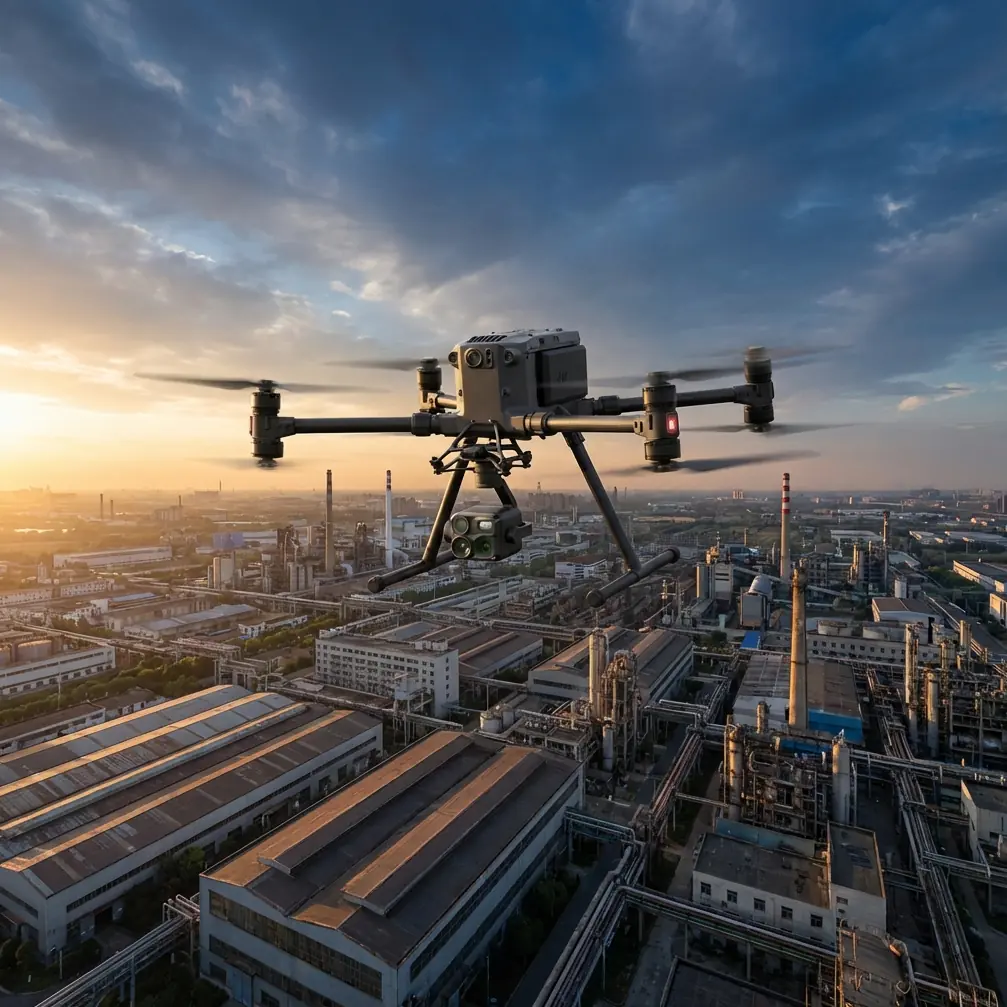
Matrice 4 for Urban Vineyard Monitoring: A Technical Review from the Field
META: Expert review of the Matrice 4 for urban vineyard monitoring, covering thermal workflows, photogrammetry accuracy, O3 transmission, AES-256 security, hot-swap battery efficiency, and where it stands against competing UAV platforms.
Urban vineyards ask awkward questions of drone hardware. You are not flying endless rural blocks with clear margins and generous takeoff zones. You are working around roads, buildings, RF noise, fragmented plots, reflective surfaces, tree lines, workers, and neighbors who do not appreciate unnecessary noise or repeated passes over the same row. That changes what matters in an aircraft.
For this kind of work, the Matrice 4 deserves attention not because it is simply “advanced,” but because its feature set aligns unusually well with the real bottlenecks of vineyard monitoring in constrained environments. The right payload strategy is only part of the story. Signal resilience, battery handling, image consistency, data security, and mapping precision matter just as much when the vineyard sits close to urban infrastructure.
I have spent enough time around crop monitoring and inspection programs to know that a drone spec sheet can be misleading. Vineyard teams do not buy lines of text. They buy fewer missed stress zones, cleaner map reconstruction, shorter field windows, and less friction between flight and analysis. That is the lens I am using here.
Why urban vineyards are a tougher test than open farmland
A vineyard in or near an urban setting creates three practical problems at once.
First, connectivity becomes less predictable. Buildings and interference sources can complicate live video and command links, especially when the aircraft is working near edges, around elevation changes, or beyond direct visual openness in a fragmented site.
Second, the data burden is higher than many teams expect. Vine health assessment is rarely one-dimensional. You may be comparing RGB image texture, canopy density, vine spacing, thermal signature anomalies, and terrain variation in the same mission cycle.
Third, operations have to move quickly. If your crew loses time to battery swaps, mission restarts, poor georeferencing, or inconsistent thermal capture, the “low acreage” assumption of urban vineyard work disappears fast. Small plots can be operationally expensive.
The Matrice 4, viewed through that reality, starts to make sense as more than a premium platform. It is a workflow tool.
Thermal signature analysis is where Matrice 4 becomes genuinely useful
For vineyard monitoring, thermal is not a decorative extra. It can reveal vine water stress patterns, irrigation inconsistency, blocked emitters, disease spread indicators, drainage issues, and heat retention differences between rows and adjacent hardscape. In urban sites, those edge effects matter. A building wall, paved lane, retaining structure, or neighboring rooftop can influence microclimate behavior in ways that standard visual imagery won’t show clearly.
That is why thermal signature quality is more than “can it see heat.” You need repeatability and context. The Matrice 4 is better understood as a platform that lets thermal become operationally actionable rather than merely interesting.
Compared with lighter, camera-first competitors, this class of aircraft tends to manage multi-sensor work with more discipline. The advantage is not just sensor presence. It is stability in flight, better mission repeatability, and stronger integration between live viewing and subsequent analysis. In vineyard work, especially for detecting early-stage anomalies row by row, that translates to fewer false priorities and better decisions on where agronomists should actually walk.
The difference becomes obvious after a few cycles. A platform optimized for hobby-adjacent image capture may produce a usable visual map. A platform like Matrice 4 is far more likely to support a structured monitoring program where thermal and RGB outputs can be compared over time without the whole dataset collapsing into inconsistencies.
Photogrammetry in vineyards lives or dies on control, not marketing claims
Photogrammetry over vineyards is deceptively difficult. Vines create repetitive geometry. Shadows shift rapidly. Row alignment can trick weaker reconstruction pipelines. Add urban obstructions and variable lighting, and you have a recipe for messy outputs if the aircraft, mission planning, or positioning workflow is not tightly controlled.
This is where Ground Control Points, or GCPs, still deserve respect. Even with strong onboard positioning, vineyard managers and survey teams who need dependable measurements should not treat GCPs as old-fashioned. They are one of the cleanest ways to anchor mapping products and reduce cumulative error, especially when the output will be compared seasonally.
The Matrice 4 fits that discipline well. It is not merely about collecting images. It is about collecting images predictably enough that GCP-backed photogrammetry produces maps you can trust when comparing canopy expansion, drainage changes, row vigor, or maintenance impacts over time.
This matters in urban vineyards because management decisions are often constrained by limited intervention windows. You may not get many opportunities to rework irrigation, prune selectively, or inspect problem rows in a single week. If your map is off, your response is off.
A lot of competing platforms can produce attractive orthomosaics on easy days. The Matrice 4’s edge shows up when conditions are less forgiving and the output has to support technical decisions rather than presentation slides.
O3 transmission is not a headline feature. It is an operations feature.
The mention of O3 transmission may look like a networking footnote, but for urban vineyard monitoring it has real significance. Transmission strength and stability influence how confidently pilots can maintain awareness near structures, tree lines, and fragmented field boundaries.
In less cluttered rural settings, a weak link can be annoying. In urban-adjacent agriculture, it can break the mission rhythm. Lost confidence in the live feed means slower passes, more conservative routing, aborted segments, and repeated coverage. All of that burns battery and introduces inconsistencies into the dataset.
This is one area where Matrice 4 has a practical advantage over smaller platforms that are fine in open skies but become less comfortable around reflective surfaces, mixed elevations, and RF congestion. A stronger, more reliable transmission architecture gives crews smoother control and better visual confirmation during inspection or mapping runs.
That does not magically make every operation simple, and it certainly does not erase the need to comply with local flight rules or maintain safe procedures. But it does reduce the friction that urban terrain imposes. If your team is trying to monitor vines bordered by roads, walls, utility corridors, or nearby buildings, that reduction in friction is worth a great deal.
AES-256 matters more than many vineyard owners realize
Most agricultural drone conversations still center on cameras and endurance. That is understandable, but incomplete. In urban vineyard projects, especially those tied to estates, hospitality properties, research partnerships, or mixed-use developments, image and infrastructure data can be commercially sensitive.
AES-256 is one of those technical details that tends to be ignored until someone asks how flight data, imagery, and transmission security are being handled. Then it becomes very relevant, very quickly.
For a vineyard operator near populated areas, secure transmission and data handling are not abstract enterprise concerns. They affect trust. If your maps reveal irrigation layouts, utility routes, access roads, drainage patterns, building interfaces, or crop performance history, that information has value. Using a platform associated with AES-256-level encryption helps answer a question that clients increasingly ask: how is this data protected?
This is another point where Matrice 4 stands above more casual alternatives. Competitors may capture imagery. That is not the same as fitting into a professional information-management environment.
Hot-swap batteries save more time than extra advertised endurance
I am usually skeptical when operators obsess over maximum flight time. In production work, the interruption cost often matters more than a single endurance number. Urban vineyard missions are a perfect example.
If a crew has to pause repeatedly, power down, reinitialize, and rebuild mission flow, those small delays stack up. Light changes. Workers move through rows. Wind shifts. Site access windows narrow. The practical value of hot-swap batteries is that they keep the mission cadence intact.
That is not glamorous. It is simply efficient.
For repeated grid flights, thermal checks at similar times of day, or progress monitoring across multiple urban plots, hot-swap support can be the difference between a smooth morning and a fragmented one. It also reduces the temptation to squeeze too much from a single sortie, which is where data quality and operational discipline often begin to slip.
Against competitors in lighter classes, Matrice 4’s battery workflow can be a stronger advantage than raw speed. Vineyard teams benefit from momentum. When the aircraft returns, batteries are changed, and the mission resumes cleanly, the whole operation becomes more consistent.
BVLOS talk should be handled carefully, but the platform is relevant to expanding programs
BVLOS is one of those terms that gets thrown around too casually. For civilian vineyard monitoring, the useful point is not to imply that every operator can or should fly beyond visual line of sight. Local regulations, approvals, training, and safety procedures govern that.
The more grounded takeaway is this: a platform built with robust transmission, security, and professional mission architecture is better positioned for organizations that plan to scale. If a vineyard group manages multiple sites or longer corridor-like properties and is building toward more advanced operational approvals over time, Matrice 4 belongs in that conversation.
Even when every current mission remains within standard visual procedures, the underlying platform maturity matters. It influences documentation, crew confidence, repeatability, and the long-term viability of the drone program.
Where Matrice 4 outperforms common alternatives for vineyard work
Let’s be specific.
Many smaller competitors are appealing because they are fast to deploy and produce very good imagery in ideal conditions. For marketing visuals, quick boundary checks, or casual progress snapshots, that may be enough.
But vineyard monitoring in urban settings is rarely ideal. The edge cases become the daily case.
Matrice 4 excels when the task demands:
- thermal and visual interpretation in the same operational ecosystem
- stable mapping runs with reliable photogrammetry inputs
- stronger link confidence through O3 transmission in cluttered environments
- secure handling supported by AES-256
- reduced downtime through hot-swap battery workflows
- a path toward more formalized and scalable drone operations
That package is difficult for lighter competitors to match at the same level of professionalism. They may win on portability. Matrice 4 wins on mission integrity.
And mission integrity is what creates value in agriculture. Not the drone itself.
A practical workflow for monitoring an urban vineyard with Matrice 4
A sensible Matrice 4 vineyard workflow usually begins with a baseline RGB mapping mission supported by GCPs. That establishes a trustworthy spatial reference for row conditions, drainage patterns, canopy structure, and any visible damage or irregularity. If this baseline is weak, everything that follows becomes harder to compare.
Next comes thermal collection under consistent environmental conditions. The key is not simply “fly thermal.” It is to build repeatable capture windows so that temperature differences reflect crop and site behavior rather than changing timing or surface heating randomness. Urban vineyards are particularly sensitive to reflected heat and localized temperature distortions, so consistency matters.
Then the operator overlays those findings with known field realities: irrigation zones, slope changes, problem rows, maintenance records, and observations from ground crews. The drone should not replace agronomy. It should sharpen it.
This is where a platform like Matrice 4 earns its place. It supports a higher-quality first pass, which narrows the area requiring boots-on-the-ground verification. Over a season, that can mean less wasted inspection time and faster intervention on genuine issues.
If you are building this kind of program and want to discuss mission design or payload fit without turning it into a generic product pitch, you can reach out directly on WhatsApp for a technical conversation.
The real value of Matrice 4 for vineyards near the city
Urban vineyards are not large-scale commodity agriculture in miniature. They are a distinct operating environment. They have tighter airspace considerations, more interference sources, more visible boundaries, and often higher expectations around data privacy and professional presentation.
The Matrice 4 is well suited to that environment because it addresses the hidden costs of drone work, not just the visible ones. O3 transmission helps maintain control quality where the signal path is less forgiving. AES-256 supports secure operations in settings where imagery may carry business sensitivity. Hot-swap batteries protect mission continuity. Thermal and photogrammetry capabilities, when paired with GCP discipline, create outputs that can actually support vineyard management decisions.
That combination is why I would place Matrice 4 ahead of many competitor platforms for urban vineyard monitoring. Not because it does one spectacular thing, but because it does the hard practical things well enough to make the whole workflow more reliable.
And in agriculture, reliability is what separates interesting drone flights from useful drone programs.
Ready for your own Matrice 4? Contact our team for expert consultation.