
Matrice 4 Monitoring Tips for Vineyards in Low Light
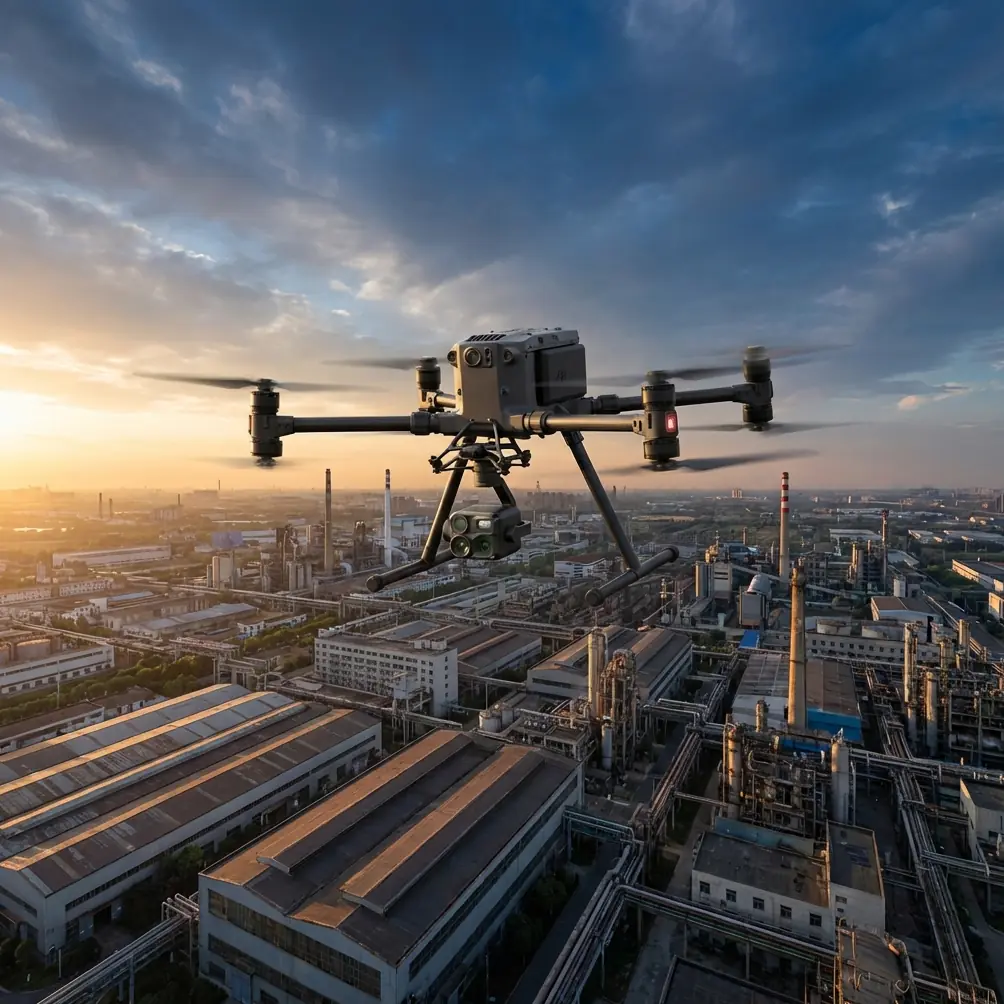
Matrice 4 Monitoring Tips for Vineyards in Low Light
META: Expert advice on using Matrice 4 for vineyard monitoring in low light, with practical tips on thermal detection, pre-flight cleaning, battery strategy, transmission security, and mapping accuracy.
Walk a vineyard before sunrise and you’ll see the real workload. Cold air settles into low rows. Moisture clings to leaves. Weak irrigation can hide for days until a stressed block starts showing uneven vigor. Wildlife activity often happens when human crews are off-site. By the time full daylight makes problems obvious, the best intervention window may already be closing.
That is where a Matrice 4 workflow starts to earn its keep.
Not because low-light flying is somehow exotic. It matters because vineyards are full of subtle signals that appear earlier, and often more clearly, outside bright midday conditions. A block that looks visually uniform at noon can show distinct thermal variation at dawn. A leaking line can shift soil temperature patterns before canopy color changes enough to catch a ground scout’s eye. A faulty pump or overheated electrical component near an irrigation zone may reveal itself as an abnormal thermal signature long before it becomes a service call.
For vineyard managers, operators, and service providers, the Matrice 4 fits this environment best when it is treated as part of a disciplined observation system rather than just a camera in the air.
The real problem with low-light vineyard monitoring
Low-light operations challenge three things at once: visibility, consistency, and decision speed.
Visibility is the obvious one. Vine rows create repeating geometry, narrow corridors, and dense canopy transitions that can confuse less capable sensing setups. Consistency is the quieter problem. If your early-morning mission on Monday cannot be repeated with similar framing and stable capture on Thursday, comparison loses value. Decision speed is where many drone programs stall. Flights happen, images are collected, but the operator returns with interesting visuals rather than actionable findings.
The Matrice 4 conversation should center on reducing that gap.
A vineyard monitoring mission in low light usually needs a blend of visual context, thermal interpretation, and mapping discipline. That is not the same as simply flying slower in darker conditions. It means planning for what each sensor is expected to reveal and how that data will be validated on the ground.
Why thermal matters more than people think
In vineyards, thermal is often misunderstood as a dramatic heat-finding tool. In practice, its value is usually quieter and more agricultural.
You are looking for pattern disruption.
Healthy rows under similar conditions tend to produce a fairly coherent thermal story. When sections drift from that pattern, something operational may be happening: inconsistent irrigation, blocked emitters, stressed vines, equipment anomalies near infrastructure, or surface moisture variation after maintenance. Thermal does not diagnose everything by itself, but it helps narrow the search area fast.
That operational significance is hard to overstate. Instead of sending a team to inspect an entire parcel, you can prioritize a handful of suspect zones before the workday is fully underway.
Low-light periods are especially useful because solar loading is reduced. Once the sun climbs, thermal readings can become harder to interpret if surfaces start heating unevenly. Dawn flights often produce cleaner comparative thermal data across rows, roads, tanks, pumps, and edge areas.
Start with the least glamorous step: clean the safety system
Before a low-light mission, the most underrated safety action is a careful cleaning pass on the aircraft’s sensing surfaces.
Not the dramatic parts. The lenses, obstacle sensing windows, and any forward, downward, or auxiliary vision-related surfaces that support situational awareness and stable navigation.
Dust, spray residue, condensation marks, and pollen are common around vineyards. They build up quickly, especially during dry periods and after field movement near tractors or sprayers. In low light, even minor contamination on safety-related optics can degrade how well the aircraft interprets the scene around it. If you are depending on obstacle avoidance or precision positioning near trellis lines, service roads, and utility structures, this is not cosmetic housekeeping. It is risk control.
Make this part of the checklist:
- Inspect visual and thermal lenses for haze, smears, and fine dust.
- Wipe obstacle sensing windows with the correct materials.
- Check landing gear and lower surfaces for mud or debris that could affect downward sensing.
- Confirm there is no moisture film from overnight storage temperature changes.
That last point matters in vineyards. Taking a drone from a cooler vehicle or indoor storage into humid predawn air can create temporary fogging. If you skip the check, the aircraft may technically launch but provide poorer environmental awareness right when you need confidence most.
O3 transmission changes the way large vineyard blocks are monitored
Vineyards are not all compact estates with a tasting room and a few neat rows. Many operations span large blocks, uneven topography, and signal-challenging terrain. Reliable transmission becomes central to mission quality, especially in low light when visual line interpretation is already more demanding.
This is where O3 transmission has operational significance. A stable, high-quality link helps the pilot maintain better situational awareness, assess thermal and visual feeds with fewer interruptions, and make cleaner calls on whether an anomaly deserves a second pass. In practical terms, fewer dropouts and stronger image continuity reduce the temptation to rush or overcompensate during a mission.
If your monitoring program is moving toward more advanced corridor flights or future-ready BVLOS planning where regulations and approvals allow, a robust transmission architecture matters even more. Even when you are not flying beyond visual line of sight, working across broad vineyard parcels benefits from transmission reliability because the mission depends on data confidence, not just aircraft range.
Pair that with disciplined antenna orientation and a launch position chosen for terrain visibility rather than convenience. Too many crews launch beside buildings, tanks, or parked vehicles that compromise the first minute of link quality.
Security is not a side topic when you are collecting farm intelligence
Commercial agriculture creates sensitive operational data. Block health, infrastructure conditions, irrigation issues, and production patterns are not details every business wants floating around unsecured. If your drone workflow supports growers, cooperatives, consultants, or estate operators, data handling should be treated seriously.
That is why AES-256 is worth mentioning in a Matrice 4 discussion. Encryption is not just an IT footnote. It affects how comfortable clients are with aerial monitoring over productive land and private facilities. If your missions involve shared reporting, off-site analysis, or recurring condition tracking over time, secure transmission and storage practices support trust as much as image quality does.
For vineyard managers hiring a drone service provider, this should be part of the conversation. Ask how flight data is secured, who has access, and how files are transferred after the mission. If you need a direct technical discussion before setting up a workflow, you can message a Matrice 4 specialist here.
Battery strategy decides whether your data is comparable
Low-light vineyard monitoring often happens in tight windows. Pre-dawn, first light, and the period just after sunrise can each tell a slightly different story. If your aircraft is down for long battery swaps, that continuity breaks.
Hot-swap batteries are especially useful in this kind of work because they reduce turnaround between sorties. That is not just a convenience feature. It protects mission consistency. If you are comparing neighboring blocks or repeating a thermal pass over a suspect irrigation zone, minimizing downtime helps keep ambient conditions from changing too much between flights.
In agriculture, time drift is a silent source of bad interpretation. A warm patch found at 6:10 may look different at 6:35 simply because light and surface conditions have shifted. Hot-swap capability lets crews keep that delta smaller and makes side-by-side comparisons more meaningful.
A practical tactic: organize batteries by temperature and cycle condition, not just state of charge. On cool mornings, battery behavior can differ enough to affect endurance assumptions. Build your route plan around conservative flight time, especially if your mission includes hovering for thermal confirmation or low-altitude rechecks near infrastructure.
Use photogrammetry carefully in vineyards
Photogrammetry in vineyards can be extremely useful, but only if expectations are realistic.
Rows, canopy texture, and repetitive patterns can produce mapping outputs that look impressive while hiding alignment issues. That is why GCPs matter. Ground control points provide fixed references that help tie your imagery to the real world more accurately, which becomes especially valuable when you are trying to compare drainage, slope influence, missing-vine sections, or recurring stress pockets over time.
This is one of the clearest places where Matrice 4 missions move from “interesting aerial views” to dependable agronomic records.
A vineyard manager may ask for a map showing weak zones across a block after several low-light flights. Without proper control, the visual output may shift just enough between missions to weaken trend analysis. With GCP-supported photogrammetry, the same parcel can be monitored more rigorously, and interventions can be documented with more confidence.
That traceability matters when you are trying to answer practical questions:
- Did a repair in one irrigation section change the thermal pattern a week later?
- Is a recurring warm zone tied to terrain and runoff, or is it drifting because your map alignment is inconsistent?
- Are edge-row differences real, or are they artifacts from weak processing control?
If mapping is part of your deliverable, establish your control workflow before the first seasonal monitoring cycle, not halfway through harvest prep.
A vineyard-ready low-light mission profile
For most vineyard clients, a useful Matrice 4 low-light mission does not need to be complicated. It needs to be repeatable.
A strong profile usually includes:
- A pre-dawn thermal sweep across target blocks.
- A follow-up visual pass for contextual confirmation.
- A focused revisit of anomalies near irrigation, pumps, tanks, or row transitions.
- Optional photogrammetry runs with GCP support when structural mapping or season-over-season comparison is required.
- Same-day notes tied to exact row sections or infrastructure markers.
The reason this works is simple. Thermal shows you where to look. Visual imagery helps explain what you are seeing. Repeatable capture turns isolated observations into management decisions.
What operators often miss
The most common mistake is chasing dramatic imagery instead of useful contrast.
A low-light vineyard mission should be designed around known decision points. Are you trying to detect irrigation irregularity? Confirm overnight equipment heat anomalies? Track moisture retention patterns? Document canopy variation before crews enter the field? Each objective changes altitude, angle, timing, and revisit logic.
Another mistake is ignoring environmental history. Thermal signatures make more sense when paired with context: previous day temperature, irrigation schedule, wind conditions, recent repairs, and topographic drainage behavior. A Matrice 4 can reveal the anomaly, but the operator still needs a working model of the vineyard to interpret it correctly.
That is why the best results usually come from programs where the pilot and vineyard team speak the same operational language.
The bigger value of Matrice 4 in vineyards
The Matrice 4 is most useful in vineyards when it shortens the path between observation and intervention.
Not every mission needs a full analytical stack. Sometimes the win is simply spotting a suspicious thermal deviation before field symptoms become obvious. Sometimes it is building a controlled photogrammetry record anchored with GCPs so management can compare blocks over time. Sometimes it is the unglamorous combination of O3 transmission stability, AES-256 data security, and hot-swap battery continuity that makes a professional monitoring workflow reliable enough to trust during a critical part of the season.
Low-light vineyard monitoring rewards discipline. Clean the sensing surfaces before takeoff. Treat thermal as a pattern tool, not a magic diagnosis engine. Use transmission strength and secure data handling as operational fundamentals. Build your mapping outputs on control, not guesswork. If you do that, the Matrice 4 becomes more than a drone flight. It becomes an early-warning layer over the vineyard.
Ready for your own Matrice 4? Contact our team for expert consultation.