
Matrice 4 in Steep Vineyards: A Practical Workflow
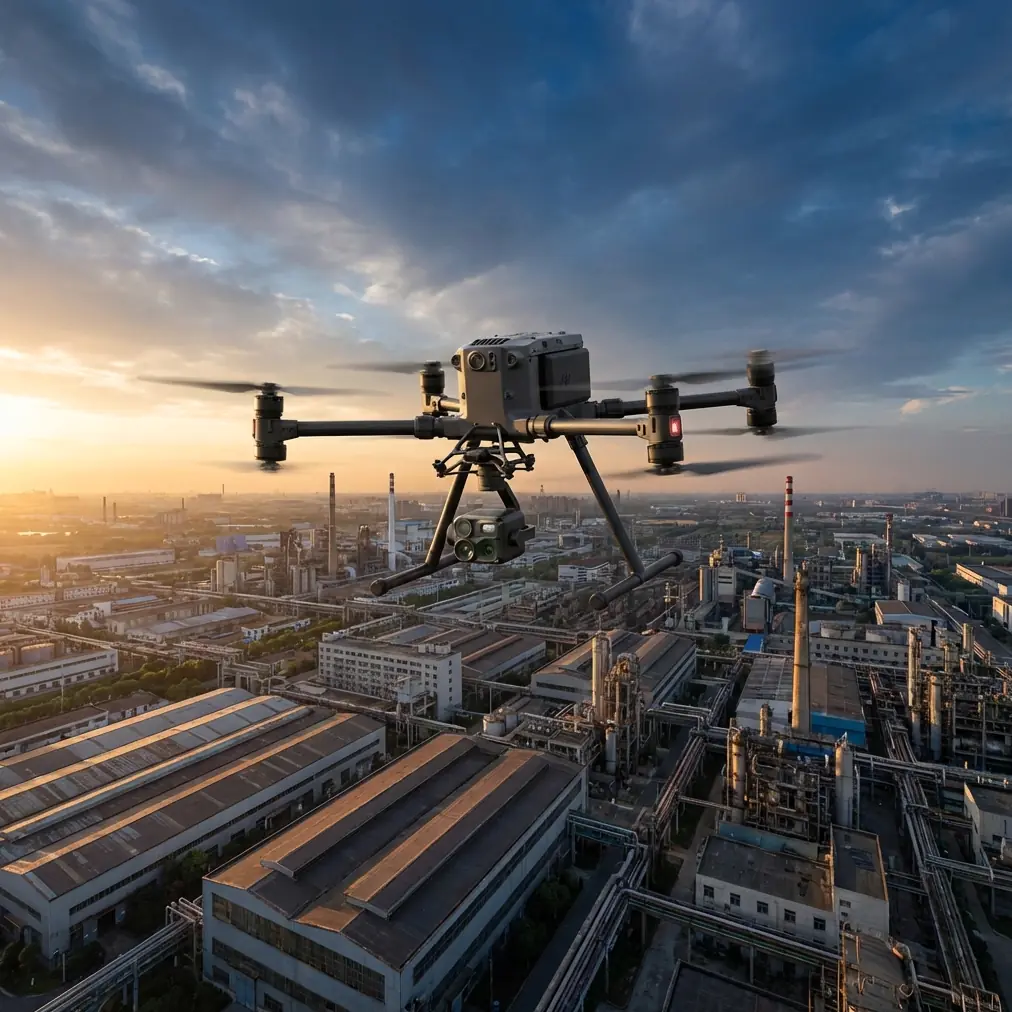
Matrice 4 in Steep Vineyards: A Practical Workflow for Monitoring Complex Terrain
META: Expert tutorial on using Matrice 4 for vineyard monitoring in complex terrain, with insights on vibration control, acoustic design logic, thermal workflows, photogrammetry, and field-ready accessories.
Vineyards punish lazy drone workflows.
Rows bend around slopes. Elevation changes break line of sight. Wind rolls over ridgelines, then disappears inside gullies. A mission plan that works over a flat construction site can fall apart fast once you are flying above terraced blocks, narrow access roads, and mixed canopy density. That is why the Matrice 4 conversation gets interesting only when it moves beyond headline specs and into field behavior.
For vineyard monitoring in complex terrain, the real question is not whether the aircraft can capture imagery. Most modern enterprise platforms can. The question is whether the aircraft, payload, transmission link, and accessories can hold measurement quality together when the terrain keeps changing underneath you.
This is where a few engineering ideas from classic aircraft design are surprisingly useful.
Why vibration discipline matters more in vineyards than people think
When operators talk about drone data quality in vineyards, they usually jump straight to sensor resolution, thermal signature, or photogrammetry settings. Those matter. But before any of that, the airframe has to behave.
One of the reference materials behind this discussion examines how structural configuration changes modal behavior, including how connection geometry affects vibration modes and how laminate layer count shifts frequency response. Several frequency plots in that material extend up to 500 Hz, and one extracted data point reaches 234.34 in the tabulated results. The exact aircraft in that handbook is not the point here. The operational lesson is.
A drone flying over steep vineyards is constantly dealing with excitation sources: rotor harmonics, gust loading, sharp attitude corrections near contour-following turns, and repeated acceleration-deceleration cycles between rows. If those inputs interact badly with the structure or gimbal support system, the first symptom is not always obvious blur. Sometimes it shows up as subtle mapping inconsistency, unstable edge definition in canopy models, or thermal frames that are technically usable but less trustworthy when you start comparing row-to-row stress patterns.
That matters for Matrice 4 users doing repeatable monitoring. You are not just collecting pretty images. You are looking for trend fidelity across time: weak irrigation zones, drainage issues, disease spread corridors, and canopy variation by elevation band. Stable modal behavior means the aircraft is less likely to inject noise into the dataset during aggressive terrain-following work.
In plain terms: if the platform remains mechanically composed, your orthomosaic has a better chance of aligning cleanly, your digital surface model will need less cleanup, and your thermal map is more defensible when a vineyard manager wants to know whether a hot patch is real or just a flight artifact.
The hidden acoustic lesson that applies to drone operations
The second reference document comes from aircraft propulsion system design, specifically intake noise reduction. At first glance, that seems far removed from a vineyard drone mission. It is not.
That text explains how resonant acoustic liners work: air in a perforated neck moves like a piston, friction and damping dissipate sound energy, and cavity pressure behaves like a spring. It also notes that when multiple holes are used instead of one, resonance behavior changes, and that metal micro-perforated plate composite liners built over a honeycomb core are valued because they offer strong low-frequency attenuation, simple structure, and long service life. NASA research cited there also explored Kevlar-29 fiber materials as acoustic lining in harsh intake environments.
Why should a Matrice 4 operator care?
Because the same design mindset—managing vibration, resonance, damping, and durability in hostile airflow—maps directly to what separates a drone setup that survives complex agricultural work from one that merely flies. Vineyards in steep terrain generate turbulent, shifting, localized airflow. Accessories, mounts, cases, landing pads, and even payload protection choices should be selected with structural and damping logic in mind, not just convenience.
A third-party accessory that genuinely improves capability in this context is a high-quality RTK base and ruggedized ground control workflow kit: foldable survey pole, checkpoint markers, weighted landing pad, and transport protection for sensors and batteries. That may sound less glamorous than a new camera add-on, but on sloped sites it is often the difference between “good enough imagery” and map-grade vineyard analytics. The weighted landing pad in particular helps on uneven, dusty terraces where rotor wash can contaminate optics during takeoff and landing. Good field hardware reduces mechanical disturbance before the aircraft even leaves the ground.
Building a Matrice 4 vineyard workflow that actually holds up
Let’s walk through a practical approach.
1) Start with transmission planning, not camera planning
In complex terrain, O3 transmission strategy deserves attention before you even discuss overlap percentages. Hillsides, tree lines, retaining walls, and outbuildings all interfere with clean links. If your aircraft repeatedly shifts behind terrain breaks, transmission quality can degrade just when the platform needs precise control to maintain a clean flight path.
For vineyard monitoring, I recommend dividing the property into terrain-coherent blocks rather than trying to fly one oversized mission. Keep launch locations high when possible, and work outward in sectors that preserve line quality. Even if you are preparing for future BVLOS-authorized operations under the proper civilian framework, the data discipline remains the same: robust link planning reduces pilot corrections, and fewer abrupt corrections usually mean better image consistency.
O3 transmission is especially useful here because complex topography creates transient weak-link moments. A stable enterprise link is not just about safety. It supports cleaner mission execution, which feeds directly into mapping quality.
2) Use photogrammetry settings that respect slope geometry
Flat-field mapping habits do not translate well to vineyards cut into hillsides.
In steep terrain, your effective ground sampling distance changes constantly if altitude is referenced poorly. If the Matrice 4 mission is planned with terrain awareness, you preserve more consistent scale across rows and reduce reconstruction stress later. Side overlap should be strong enough to capture row structure from multiple angles, especially where vines cast long directional shadows near slope transitions.
This is also where GCP discipline earns its keep. A few well-placed ground control points and independent checkpoints across different elevation bands can stabilize the model dramatically. On vineyard sites with terraces or irregular slopes, do not cluster all GCPs near easy road access. Spread them vertically and laterally. If one section of the block sits in a depression or wraps around a ridge, it needs control nearby.
Many operators assume RTK alone will eliminate the need for GCPs. In some routine inspections, maybe. In complex vineyard terrain where the goal is defensible volumetrics, drainage interpretation, or multi-date vine vigor comparison, GCPs are still a smart insurance policy.
3) Thermal signature work requires mechanical consistency
Thermal data over vineyards can be powerful, but only if collected carefully.
You are not just identifying hot objects. You are reading subtle thermal differences across canopy zones, irrigation lines, exposed soil, and moisture-retaining depressions. That means timing, altitude consistency, sensor calibration behavior, and platform steadiness all matter.
This loops back to the structural lesson from the first reference. If an aircraft’s dynamic behavior degrades under wind and repeated turns, the resulting thermal dataset may still look acceptable at a glance while losing analytical sharpness. Thermal signature interpretation benefits from repeatable pathing and minimized micro-disturbances. In practice, that means flying when the microclimate is stable, avoiding excessive speed on tight contour turns, and checking that payload mounting and protective accessories are not introducing avoidable vibration.
A good third-party shade hood or field monitor solution for the remote display can also improve thermal interpretation on bright vineyard days. It sounds minor, but if the pilot or visual observer cannot clearly read contrast transitions in direct sunlight, decisions in the field get weaker.
If you want to compare accessory options for field deployment, battery planning, or RTK kits in a vineyard environment, you can message our enterprise team here: https://wa.me/85255379740
4) Treat batteries as mission architecture
Hot-swap batteries are not just a convenience feature in hilly agricultural work. They shape the mission architecture.
Large vineyard properties in broken terrain often require multiple short sorties rather than one long linear run. A hot-swap approach lets you keep the aircraft working while preserving operational rhythm. That matters because lighting can shift quickly across slopes. If your objective is consistent photogrammetry or comparable thermal passes, minimizing time gaps between mission segments helps.
It also reduces the temptation to push a battery too deep while trying to finish a block on the far side of a ridge. In vineyards, the return route is not always aerodynamically symmetrical. Headwinds and climb requirements can appear on the way back. Conservative battery planning is part of data quality, not just safety.
5) Secure the data chain from aircraft to agronomy team
AES-256 matters more than many agricultural operators realize.
Vineyard maps can reveal irrigation patterns, block health, site layout, and operational routines. For commercial estates, that information has real business value. If Matrice 4 workflows involve external consultants, cloud transfer, or multi-party review, data protection becomes part of professional practice.
Encrypted transmission and disciplined storage procedures help preserve client trust. This is especially relevant when thermal datasets are combined with yield forecasts, disease tracking, or georeferenced treatment planning.
6) Add one accessory that improves the whole day, not just one feature
The most useful accessory is often the one that removes friction across the entire operation.
On steep vineyard sites, one of my favorites is a rugged third-party RTK/GCP field kit paired with weather-resistant carry organization. Not because it is flashy, but because it upgrades the entire chain: faster setup, cleaner control placement, better repeatability, less field improvisation. If the mission includes repeated seasonal monitoring, those small gains compound.
A second excellent choice is a high-visibility landing platform with anchoring points. On dusty, sloped, or gravel surfaces, it protects the aircraft during launch and recovery and reduces the chance of rotor wash pulling loose debris into the system.
Neither accessory changes the headline brochure specs of Matrice 4. Both can improve the final quality of your vineyard dataset.
What this means for Matrice 4 users
The value of Matrice 4 in vineyard monitoring is not just that it can carry advanced sensors or produce attractive maps. Its value appears when you build a workflow that respects structural behavior, airflow reality, and terrain complexity.
The two reference documents used here come from traditional aircraft engineering, but their practical message is modern and directly relevant. First, structural mode behavior changes with design details, and that affects how a flying platform handles excitation. Second, airflow and resonance can be managed with durable, intelligently layered materials such as micro-perforated structures over honeycomb cores, a reminder that harsh environments reward good damping and robust design.
Applied to Matrice 4 in vineyards, those lessons translate into better mission planning, cleaner sensor output, smarter accessory choices, and more reliable analytics.
If your goal is to monitor vine stress, terrain-driven irrigation issues, row uniformity, or canopy development across difficult topography, then the best Matrice 4 workflow is the one that treats the aircraft as a measurement system, not merely a camera in the sky.
That is the difference between flying a mission and producing data a grower can act on.
Ready for your own Matrice 4? Contact our team for expert consultation.