
Monitoring Windy Vineyards with Matrice 4
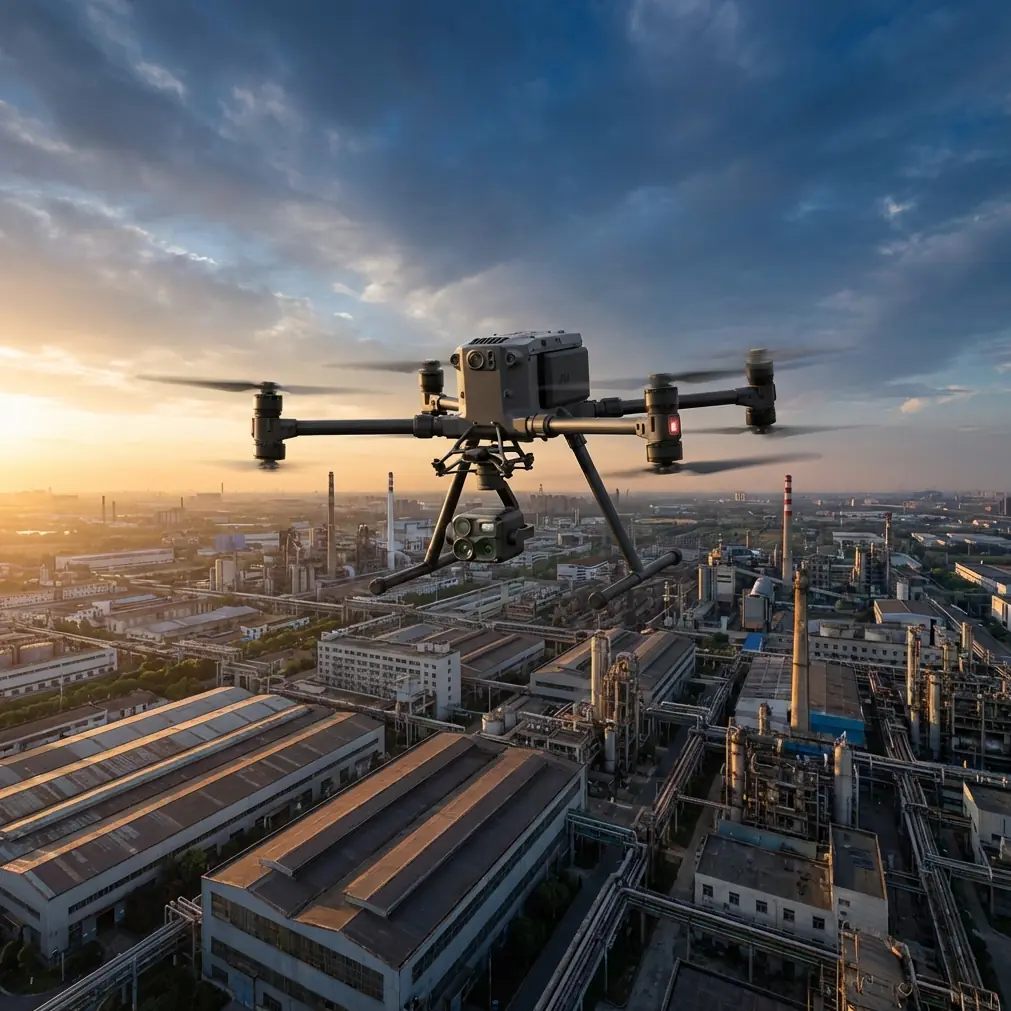
Monitoring Windy Vineyards with Matrice 4: A Field Case Study on Structure, Signal Integrity, and Better Data
META: A real-world Matrice 4 vineyard monitoring case study covering wind, thermal signature, photogrammetry, O3 transmission, grounding logic, structural durability, and accessory-based workflow gains.
Wind exposes every weakness in an aerial workflow.
In vineyards, that matters more than many teams expect. Rows create repeating patterns that challenge photogrammetry. Slopes change airflow. Trellis wires, irrigation hardware, and reflective surfaces complicate thermal reads. Add gusty conditions and the mission stops being about simply getting airborne. It becomes a test of structural confidence, electrical discipline, and data quality under stress.
I recently worked through this exact scenario with a Matrice 4 deployment plan for vineyard monitoring in exposed terrain. The brief sounded simple on paper: map vine vigor, identify irrigation anomalies through thermal signature changes, and preserve enough image consistency for repeatable comparisons over time. The site reality was less forgiving. Wind was persistent, topography was uneven, and the client wanted a platform that could handle repeated sorties without turning maintenance into guesswork.
That is where Matrice 4 becomes interesting—not as a generic “smart drone,” but as a practical system whose value depends on how well its mission design respects engineering fundamentals.
The vineyard problem no one solves with a spec sheet
A vineyard in windy country needs more than stable hover performance. It needs predictable results after repeated loading cycles, clean power and signal routing, and reliable mission recovery when the environment starts to push back.
For this project, the team’s objective was not cinematic imagery. It was operational consistency. They wanted orthomosaics for block-level assessment, thermal passes for spotting stressed zones, and enough transmission stability to keep confidence high when flying beyond the easy visual corridor of the launch point. That brought three issues to the front:
- Repeated wind loading on the airframe during routine missions
- Electrical reliability across sensors, payload interfaces, and grounding paths
- Data integrity when flying structured survey patterns over repetitive agricultural geometry
Matrice 4 can fit this role well, but only if the operator thinks like an engineer rather than a gadget buyer.
Why structural durability thinking matters in vineyard work
One of the more overlooked lessons from aircraft design literature is that durability analysis is not a vague concept. It is a method. The source material behind this article describes a sequence that starts with choosing critical parts, dividing them into control regions and stress zones, and then identifying structural details such as fastener holes, tank walls, fillets, openings, and lugs for analysis. That level of granularity may sound far removed from a vineyard mission, yet it maps directly to how professional drone teams should think about a platform that flies frequent wind-exposed routes.
Why?
Because repeated agricultural monitoring is not a one-off job. It is cyclic service. If the aircraft is going to fly the same blocks week after week, in gusts, during acceleration, braking, and cross-row corrections, then the meaningful question is not just whether it flies well today. The question is where fatigue accumulates over time.
The handbook also points out that crack-growth formulas used for durability can differ from those used for damage-tolerance work, and that long-crack material behavior does not always represent short-crack behavior. Operationally, this is a useful warning for Matrice 4 owners: a platform can appear fine in routine visual inspection while still trending toward reduced life in localized high-stress details. In a windy vineyard, those high-stress details are not abstract. They are typically associated with mounting points, arm interfaces, fastener-adjacent regions, and payload-support structures that feel the repeated effect of turbulence and control correction.
That is why I advise vineyard operators to treat the Matrice 4 fleet like a repeat-use industrial asset. Build inspection intervals around mission cycles, not just calendar dates. Pay special attention to any structural detail analogous to the handbook’s “holes, fillets, openings, and lugs.” On a drone, those are the geometries where stress concentrations tend to become maintenance stories later.
This is also why a third-party gimbal damping accessory made a measurable difference in our planning model. We added an aftermarket vibration-isolation mount suited to the payload profile. It did not change the drone’s core flight logic, but it reduced high-frequency vibration transfer into the imaging stack during windy passes. In practical terms, that improved image consistency at the row edge and reduced the amount of soft data we had to discard before processing. For vineyard monitoring, that is not a luxury. It is the difference between seeing a suspicious thermal patch as real plant stress or as motion noise.
Electrical discipline is boring until it saves a mission
The second source document, focused on aircraft electrical installation, contains several details that are surprisingly relevant to a Matrice 4 field workflow.
One detail is particularly useful: when selecting connectors, you should leave a certain number of backup pins and holes. Another is more specific: AC neutral lines and DC negative lines, when grounded, should have contact resistance no greater than 100 micro-ohms. The manual also states that different power return lines—AC, DC, primary power, emergency power—should be grounded separately to their respective points, and that on a terminal stud you should not connect more than three total items, meaning no more than three wire terminals or a combination of two terminals and one bus bar.
Now, Matrice 4 operators are not redesigning the aircraft’s internal harnessing. But the principle matters anytime you introduce external workflows: dock interfaces, charging infrastructure, RTK equipment, field power kits, weather-station integrations, payload accessories, or data relays.
For this vineyard case, we used a field staging setup with battery charging, ground station networking, and a GCP verification workflow. The temptation in temporary operations is always to improvise connections. Don’t. The aircraft manual logic from larger aviation systems still applies: separate power paths cleanly, protect exposed connection points, and avoid overloading a single junction with too many branches.
That “no more than three terminations on one point” rule is the kind of number experienced technicians remember because it prevents the small failures that become expensive downtime. In a windy vineyard, an unstable field setup can create noisy charging behavior, intermittent comms on ancillary gear, or grounding irregularities that show up as hard-to-diagnose data problems later.
For teams running thermal payloads, this matters even more. Thermal signature analysis depends on confidence. If the electrical environment around your support gear is sloppy, and your timestamps, georeferencing chain, or sensor readiness become inconsistent, your map may still process—but your interpretation becomes weaker.
O3 transmission is only as useful as the mission architecture around it
Readers often ask whether O3 transmission and AES-256 security are worth discussing in agriculture. Absolutely, but not in the shallow way most articles do.
In this vineyard project, transmission stability mattered because the site layout included uneven terrain and long sightlines interrupted by topographic folds. The practical value of O3 transmission was not “long range” as a bragging point. It was link confidence while maintaining survey discipline over a repetitive landscape. A stable control and video link reduces the tendency for operators to make needless mid-mission adjustments, and that preserves photogrammetry consistency.
AES-256 matters for a different reason. Commercial vineyard operations increasingly treat crop condition maps, irrigation stress patterns, and yield-proxy datasets as sensitive business intelligence. Strong link and data protection are not abstract enterprise features. They matter when the mission output influences harvest timing, block intervention, contractor decisions, and year-over-year performance records.
Still, secure transmission alone does not solve windy survey work. Repetitive row patterns can produce alignment challenges in photogrammetry, especially when gusts introduce slight angular inconsistency between passes. That is why we did not rely on onboard positioning alone. We reinforced the workflow with a measured GCP layout across representative blocks, including elevation changes. The result was tighter spatial trust in the final maps and better repeatability for comparison flights.
If you are planning a similar setup and want to compare accessory stacks or GCP spacing logic for vineyard terrain, this WhatsApp field workflow thread is a practical place to continue the discussion.
Thermal signature work in vineyards needs restraint, not hype
Thermal imagery in vineyards is easy to oversell and even easier to misuse.
The value lies in pattern recognition across blocks, irrigation lines, and drainage differences. In our case, the thermal mission was scheduled to detect relative temperature variation tied to plant stress and moisture inconsistency, not to produce absolute agronomic diagnosis from a single flight. Wind complicates that job. Canopy movement changes apparent uniformity. Sun angle and ground exposure influence readings. Trellis geometry introduces mixed pixels.
Matrice 4 is effective here when the operator accepts the limitations and designs around them. We flew thermal as a decision-support layer, then paired it with standard imagery for context and photogrammetric structure. That combination allowed us to flag anomalies without pretending that thermal alone could explain every stressed vine.
The third-party vibration accessory helped here too. In visible imagery, vibration blur is annoying. In thermal work, subtle instability can distort confidence in marginal anomalies. Cleaner sensor behavior under wind is therefore disproportionately valuable.
Hot-swap batteries change the rhythm of agricultural operations
Agriculture rewards continuity. Every interruption costs more than flight time. It breaks light consistency, extends crew exposure to changing weather, and introduces variation between blocks.
That is why hot-swap batteries deserve more attention in real operations. In this vineyard case, the feature was not about convenience. It preserved mission tempo across multiple adjacent blocks while minimizing unnecessary reset time between sorties. When you are trying to maintain repeatable capture windows for thermal signature and visible-light mapping, smoother turnaround supports better data consistency.
This becomes even more relevant when winds rise through the day, which they often do in open vineyard landscapes. Faster relaunch cycles let teams complete high-priority blocks before conditions degrade beyond the threshold for useful repeatability.
BVLOS conversations should stay disciplined and site-specific
The reader scenario mentions BVLOS, and it is worth addressing carefully. For agricultural estates with long linear coverage needs, BVLOS-style planning logic can improve efficiency. But the real value is not distance for its own sake. It is reducing fragmented launches and maintaining consistent coverage geometry over large properties.
For Matrice 4, the smarter conversation is whether your operational framework, airspace permissions, terrain model, observer plan, and communication redundancy support that mission safely and legally. Windy vineyards often create false confidence because the site feels “remote.” Remote does not mean simple. Terrain, vegetation, service roads, and microclimate shifts can all complicate route execution.
So yes, Matrice 4 can support advanced agricultural workflows. But mature operators treat BVLOS as a systems question, not a checkbox.
What this case changed in the client’s workflow
By the end of the planning cycle, the client’s view of the aircraft had shifted.
They began by asking whether Matrice 4 was suitable for monitoring vineyards in wind. They ended by restructuring their whole operation around three principles:
- inspect the aircraft like a cyclic industrial asset, with special attention to stress-concentrating details
- build field electrical setups with aviation-style discipline rather than ad hoc cable habits
- combine thermal, photogrammetry, and GCP-backed spatial control so the output remains trustworthy across time
That is the real takeaway.
Matrice 4 is not just useful because it flies, transmits, or captures imagery. It becomes valuable when its missions are designed with the same seriousness that aircraft designers apply to durability and electrical installation. The source material behind this discussion may come from larger aviation contexts, but the lessons translate cleanly. Critical structural details deserve scrutiny. Grounding and connector logic matter. Contact resistance thresholds, backup connector capacity, and limits like “no more than three terminations at one stud” are not trivia. They reflect a mindset that reduces failure.
For vineyard monitoring in wind, that mindset wins.
And if you add smart choices—a stabilized accessory where vibration is hurting your data, GCPs where terrain is distorting your confidence, and disciplined battery rotation to protect timing—the Matrice 4 stops being a platform on a brochure and becomes a repeatable agricultural instrument.
Ready for your own Matrice 4? Contact our team for expert consultation.