
Matrice 4 for Mountain Coastline Scouting
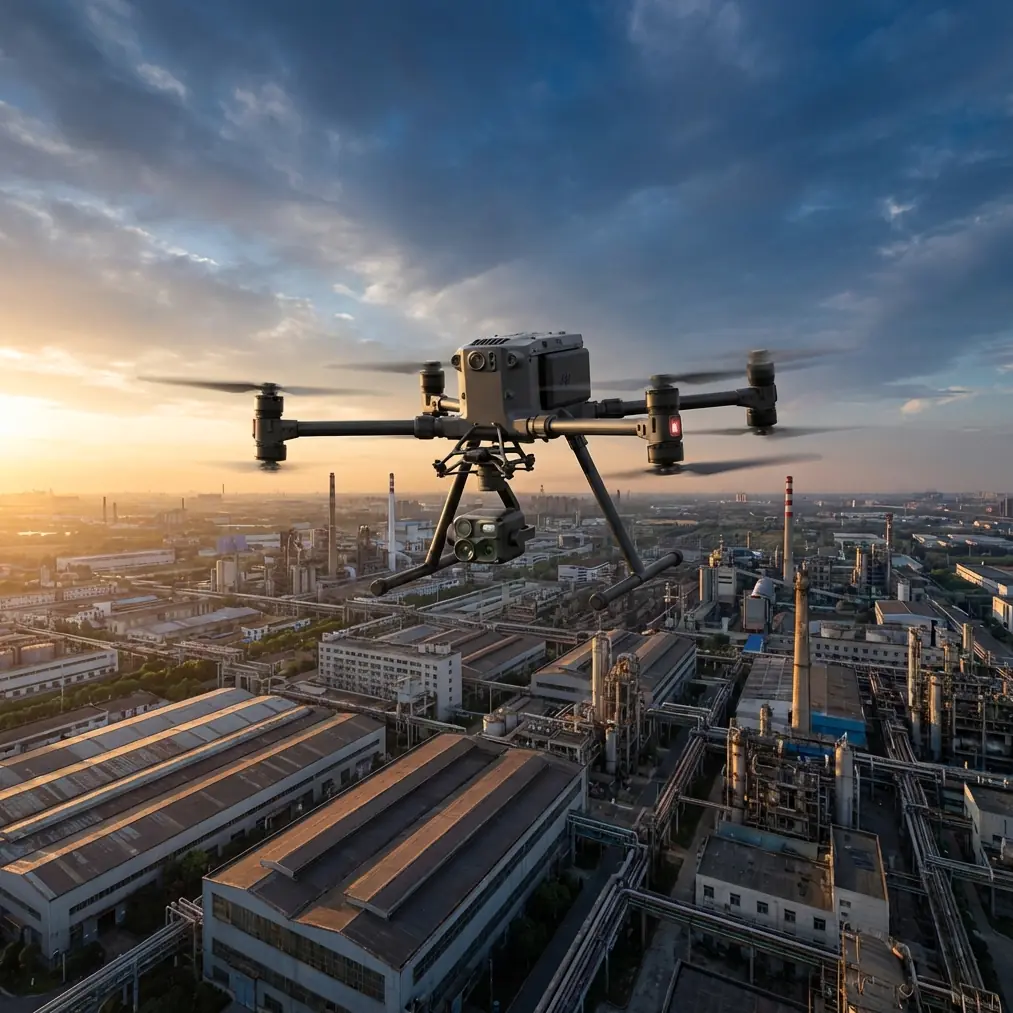
Matrice 4 for Mountain Coastline Scouting: What Actually Matters in the Field
META: Expert guide to using Matrice 4 for mountain coastline scouting, with practical insights on vibration, noise, inertia, thermal workflows, photogrammetry, O3 transmission, AES-256 security, and BVLOS-ready planning.
Mountain coastlines punish weak drone workflows.
You are dealing with cliff faces, wind shear, salt-laden air, shifting light, broken sightlines, and long stretches of terrain that rarely give you a clean launch-and-recover rhythm. In that setting, the value of a platform like Matrice 4 is not just sensor quality or flight time on a spec sheet. It is whether the aircraft stays stable, keeps its data clean, and remains predictable when the environment starts stacking small errors on top of each other.
That is the right lens for evaluating Matrice 4.
A lot of commentary around new enterprise UAVs gets trapped in feature recitation. For coastline scouting in mountainous terrain, the better question is this: which design principles actually protect mission quality when the route is complex, the wind is inconsistent, and the client expects usable outputs from a single deployment?
Two engineering ideas from traditional aircraft design help answer that question surprisingly well. The first is that reducing vibration alone does not meaningfully improve the onboard environment unless noise is addressed at the same time. The second is that aircraft inertia and balance are harder to measure accurately than many operators assume, and even modest error margins can have operational consequences. One source cited pitch inertia error at 23%, yaw at 16%, and roll at 4% when relying on calculation rather than careful physical measurement. Those numbers come from full-scale aircraft work, but the lesson transfers neatly to high-end drones: platform behavior is not just about power. It is about how the whole system moves, resonates, and carries its sensors.
That is where Matrice 4 has an edge when compared with lighter, less integrated competitors. Smaller prosumer platforms often look attractive for coastal scouting because they are easier to transport. But on mountain shorelines, that convenience can cost you image consistency, transmission confidence, and thermal reliability once gusts start hitting from changing angles. A more purpose-built enterprise aircraft is usually better at preserving the integrity of the mission, not simply getting airborne.
The real problem on mountain coastlines is compounded instability
Cliff-backed coastal routes create a messy operational environment. Wind rebounds off rock walls. Moist marine air reduces contrast at certain times of day. Narrow inlets interrupt direct line-of-sight. If you are collecting photogrammetry, the trouble shows up as uneven overlap, blurred edges on terrain transitions, and alignment headaches around vertical features. If you are running thermal signature searches for erosion seepage, stranded equipment, or structural heat anomalies, the trouble shows up as inconsistent readings caused by aircraft attitude changes, scene noise, and unstable hover performance.
This is where the old helicopter design insight becomes useful. The source material makes a blunt point: if you only reduce vibration or only reduce noise, the improvement in ride quality is limited; reducing both together is what changes the experience in a meaningful way. In a drone context, “ride quality” translates into sensor working conditions.
Why does that matter for Matrice 4? Because the payload is only as good as the platform carrying it. A coastline scouting mission demands repeatable imagery and dependable target interpretation. Vibration affects image sharpness, gimbal workload, and fine-detail capture. Noise, in aircraft design terms, is not just about what a person hears. It often reflects energy moving through the system, mechanical interactions, and the wider disturbance environment around sensitive equipment. For UAV operators, the takeaway is simple: a stable enterprise platform is not a luxury feature. It is the foundation of trustworthy data.
On a mountain coast survey, that means fewer soft frames along ridgelines, cleaner obliques for 3D reconstruction, and more confidence when comparing one pass against another. Competitor models that fly well in open farmland can start to look ordinary when asked to map cliffs, coves, and ridgeline access corridors in one continuous operation.
Why design-stage thinking matters to daily operations
One of the most useful lines in the reference material is not a hardware detail. It is the design philosophy: vibration and noise control should be built into the aircraft early, during design, so the result is achieved with minimal weight and minimal penalty to overall performance.
That logic is exactly why enterprise users should care about how Matrice 4 is positioned in the market.
A serious scouting platform should not need operators to “fix” core flight behavior with workarounds in post-processing. If you have to compensate for weak stability by flying slower than planned, repeating shoreline passes, or discarding a large chunk of your thermal dataset, the aircraft is consuming time that your team cannot bill twice. In contrast, when the airframe, transmission stack, battery architecture, and sensor package are engineered as a coherent system, the mission plan becomes more reliable from the start.
This is especially relevant in mountain coastal work where the route often combines several tasks in a single sortie:
- terrain familiarization
- thermal scanning of problem areas
- photogrammetry capture for later modeling
- verification imagery for planners or engineering teams
A fragmented platform struggles here. Matrice 4 is more compelling when viewed as a mission continuity tool. O3 transmission matters not because it sounds advanced, but because mountain contours constantly challenge signal stability. AES-256 matters not because encryption looks good in a tender document, but because infrastructure, utility, and environmental survey clients increasingly expect secure handling of operational imagery. Hot-swap battery workflows matter because coastline scouting rarely happens next to a perfect staging area. You may be operating from a pull-off road, a harbor edge, or a ridge access point where turnaround time decides whether you finish before weather shifts.
Stability is not abstract; it changes your map quality
The second reference document deals with aircraft weight, center of gravity, and rotational inertia. At first glance, that seems far removed from a Matrice 4 article. It is not.
The source notes that high-accuracy inertia measurement is difficult, especially with fuel onboard, and that computed values can diverge significantly from measured results. Again, the quoted differences were substantial: 23% for pitch inertia, 16% for yaw, and 4% for roll in one comparison. For drone operators, the operational meaning is clear. Aircraft behavior around pitch, roll, and yaw is not something to take for granted, especially in edge-case environments.
Mountain coastlines produce exactly those edge cases.
When an aircraft transitions along a cliff edge, then turns seaward, then reorients to inspect a slope face, its response in pitch and yaw directly affects data capture. Even if the autopilot keeps the platform safe, the finer question is whether those attitude changes remain smooth enough to preserve sensor performance. This matters for photogrammetry where overlap and camera geometry need to stay consistent. It matters for thermal work where repeated observation angles can determine whether a temperature difference is interpreted as a genuine anomaly or just a changing view condition.
A less capable competitor may still complete the route. But completion is a low bar. The real benchmark is whether the output holds up under engineering review.
Matrice 4 is better understood as a platform for reducing uncertainty in those transitions. That is the difference between a drone that merely flies the coastline and one that helps you build a usable model of it.
Thermal scouting on a coastal mountain route
Thermal signature work in this environment is often misunderstood. Operators new to coastal missions assume the sea is the complicated part. Often the land interface is harder. Rocky escarpments store and release heat unevenly. Moisture emerging from cracks can create subtle patterns. Built assets such as retaining structures, trail supports, rooflines, or utility housings may present thermal anomalies that shift quickly with sun angle and wind exposure.
For Matrice 4 users, the key is disciplined acquisition rather than chasing dramatic imagery. Fly for interpretation, not spectacle.
That means planning thermal passes when the terrain gives you meaningful contrast, not when the sky looks best. It means using stable stand-off positions that reduce unnecessary gimbal correction. It means pairing thermal observations with visible imagery and, where needed, photogrammetry outputs so a suspicious heat pattern can be located precisely later.
This is another area where stronger platform stability beats lighter consumer alternatives. In gusty shoreline air, every extra correction imposed on the aircraft can ripple into the image sequence. If your mission involves detecting subtle thermal differences across rock faces or structures, that calmness in flight is part of the sensing chain.
Photogrammetry over cliffs: where Matrice 4 earns its keep
Coastal mountain photogrammetry is unforgiving. Horizontal mapping habits from inland sites usually fail here because the terrain is not just uneven; it is vertical, recessed, reflective, and often partially obscured by vegetation or shadow.
With Matrice 4, the better strategy is to think in layers:
- A higher overview grid for broad terrain context
- Oblique passes to capture cliff geometry
- Targeted detail collection on erosion zones, access paths, or structures
- Ground control points where practical, especially if downstream measurements matter
GCP use is not glamorous, but it separates pretty models from defensible ones. On mountain coastlines, you may not be able to place many control points safely, so each one has to be selected with purpose. If you cannot distribute them evenly, prioritize areas where grade changes and vertical relief are most likely to amplify model error.
This is where aircraft consistency becomes a productivity issue. A platform that maintains smoother movement and cleaner image capture reduces the amount of rescue work in processing. That matters when you are stitching steep terrain where even small inconsistencies can distort cliff faces or shoreline edges.
BVLOS planning starts long before takeoff
Many coastline scouting missions naturally push toward BVLOS-style thinking, even where the actual operation remains within local rules and approvals. Distances are long. Sightlines break. The route may pass behind terrain shoulders or along inaccessible stretches of coast.
Matrice 4’s value here is not just that it is associated with higher-end enterprise operations. It is that the workflow can be built around continuity and control. O3 transmission supports more resilient link management in difficult terrain. AES-256 supports data governance expectations. Battery handling and operational turnover become practical rather than improvised.
But BVLOS readiness is not a toggle in the app. It starts with route design, comms planning, observer placement if required, recovery contingencies, and a realistic understanding of how terrain blocks radio paths. Mountain coastlines can make a nominally short route behave like a much more complex mission.
If your team is refining that kind of operation and wants a field-ready checklist for route planning, payload setup, and handover procedures, a practical way to ask is through direct mission coordination on WhatsApp.
A note on cabin acoustics that oddly fits drone operations
One reference detail mentions a helicopter cabin solution using double-layer sidewalls and ceiling panels with foam filling, including an 8 cm sidewall thickness. That is obviously not a blueprint for a drone airframe, and no one should pretend otherwise. But the principle behind it is relevant: acoustic treatment works best when the designer treats the environment around people and equipment as a whole system, not as a single-source problem.
For Matrice 4 operations, that same systems mindset applies to field setup. Aircraft choice, payload settings, battery rotation, launch location, observer positioning, and post-processing standards all interact. If even one piece is casual, the coastline will expose it.
That is why mature operators tend to favor platforms that reduce the number of weak links. In this class, Matrice 4 stands out because it is not trying to be everything for everyone. It makes the most sense when the mission is operationally demanding, data-sensitive, and logistically constrained.
The practical case for Matrice 4 over lighter rivals
Against smaller competitors, Matrice 4’s advantage in mountain coastline scouting is not style. It is composure.
You want a drone that can:
- hold data quality through gust transitions
- support thermal and visual tasks in one workflow
- keep transmission dependable around terrain interruptions
- fit secure enterprise handling requirements
- minimize downtime during battery turnover
- produce imagery that survives technical scrutiny later
That is the standard. And on that standard, Matrice 4 is the more convincing tool.
Anyone can launch a drone over a coastline. The harder part is coming back with thermal observations you trust, photogrammetry you can process efficiently, and mission records that look professional under review. That is where serious platform design starts to show.
Ready for your own Matrice 4? Contact our team for expert consultation.