
Matrice 4 Field Report: Scouting Remote Construction Sites
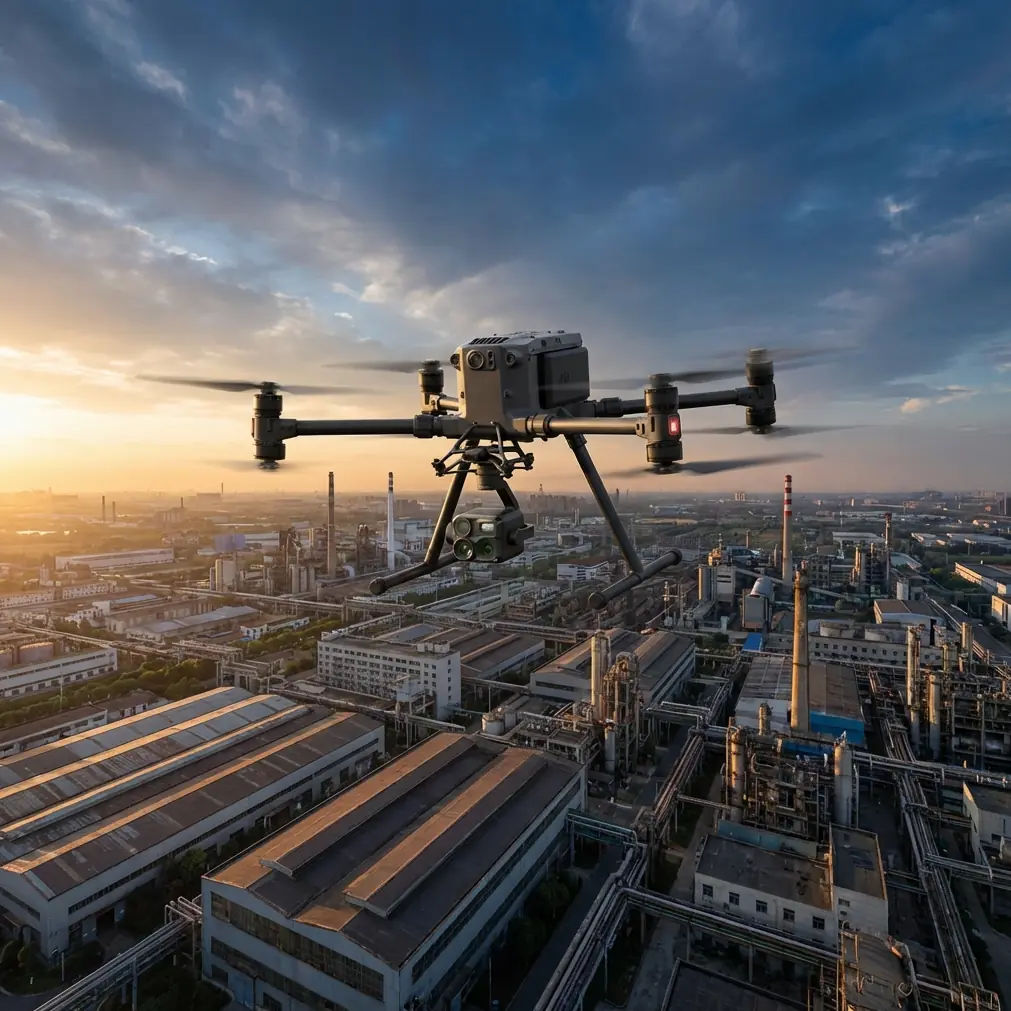
Matrice 4 Field Report: Scouting Remote Construction Sites When Signal Conditions Turn Ugly
META: Expert field report on using Matrice 4 for remote construction site scouting, with practical guidance on photogrammetry, thermal signature review, EMI mitigation, antenna adjustment, O3 transmission, AES-256, and battery strategy.
Remote construction scouting looks simple on a mission brief. Get airborne, map the site, identify risk, send the data back. In practice, the hard part usually starts after takeoff. Terrain blocks line of sight. Temporary site power creates pockets of electromagnetic noise. Steel framing distorts compass behavior. Cellular coverage is inconsistent, yet the team still expects reliable imagery, clean map products, and enough thermal detail to catch a fault before a technician drives three hours to inspect it.
That is exactly where a Matrice 4 workflow needs to be judged: not by spec-sheet theater, but by how it holds up when a site is half-built, electrically noisy, and far from support.
I have been asked repeatedly how I would configure a Matrice 4 operation for remote construction reconnaissance, especially when the pilot has to capture both photogrammetry outputs and thermal clues in one deployment window. My answer is less about chasing a perfect setup and more about building a repeatable field method. The aircraft only performs as well as the operational discipline around it.
For remote projects, the first question is not camera resolution or maximum range. It is whether the platform can maintain a stable command-and-video link long enough to collect decision-grade data. That is why O3 transmission matters in this scenario. On a construction site, transmission performance is not a luxury feature. It determines whether the pilot can hold precise framing on a retaining wall, verify overlap during mapping passes, and safely reposition around cranes, stockpiles, or unfinished structures without guessing what the aircraft sees.
When electromagnetic interference enters the picture, the problem becomes more subtle. People often assume interference means immediate link loss. More often, it shows up as inconsistent video quality, delayed telemetry response, or a controller signal that feels “soft” even though the aircraft remains technically connected. I have seen this near temporary generators, welding stations, inverter systems, and improvised site communications gear. If you are scouting a remote construction zone with a Matrice 4, antenna adjustment is not a minor pilot habit. It is part of risk control.
The fix is rarely dramatic. I teach crews to stop treating controller antennas as static hardware. If the video feed begins to degrade, do not just climb blindly or push farther. Reassess orientation. Keep the broad side of the antenna pattern directed toward the aircraft rather than aiming the antenna tips at it. Even a small change in body position can help if a truck, metal container, or earth berm is shadowing the signal path. On stepped terrain, a lateral movement of only a few meters may clear an obstruction and restore a cleaner path for O3 transmission. That sounds basic. On a remote job site, it can be the difference between finishing the mission and scrubbing it halfway through.
This matters even more when the aircraft is collecting photogrammetry data. Mapping flights are unforgiving because the mission quality depends on consistency. If the pilot loses confidence in the feed and starts improvising around the route, overlap can suffer. Then the downstream model degrades. That means soft edges on stockpile volumes, reconstruction gaps near facades, or control-point alignment headaches that burn hours back in the office. Remote site teams do not care whether the issue came from signal noise or pilot hesitation. They care that the model cannot support earthwork measurement or progress verification.
That is why I still recommend a disciplined GCP strategy even when the onboard navigation and flight automation are strong. Ground control points remain one of the simplest ways to harden the final deliverable against variable field conditions. On an isolated construction site, the survey crew may not be available every day, and weather windows may be narrow. If you get one mapping opportunity this week, you want those outputs to hold up under scrutiny. Good GCP placement anchors the mission to usable accuracy instead of relying solely on idealized assumptions. The Matrice 4 becomes much more valuable when its imagery feeds directly into engineering or progress documentation workflows without an extra round of excuses.
Thermal work adds another layer. Construction managers often think of thermal imaging as a maintenance tool for finished assets. In the field, it has wider value during active site scouting. A thermal signature can reveal overloaded temporary distribution points, uneven heat patterns in recently installed electrical runs, moisture-related anomalies in building envelopes, or unexpected hot spots in equipment staging areas. None of that replaces a certified electrical inspection, but it can prioritize where the team sends people first.
The operational significance is straightforward. A visible-light map tells you where something is. A thermal pass can suggest where attention should go next. Combining both in a single Matrice 4 deployment reduces the number of separate site visits, which matters when reaching the location takes half a day and weather can close the window without much warning.
There is also a sequencing issue that operators often overlook. If the mission goal includes both photogrammetry and thermal review, run the structured mapping segment first while batteries are fresh, winds are lower, and the site remains less congested. Follow with targeted thermal inspection paths around suspect areas. This is where hot-swap batteries become operationally important. On a remote site, turnaround time is not just about convenience. Hot-swapping lets the crew keep the aircraft ready between sorties without collapsing the pace of the mission or forcing a full reset in field rhythm. When the sun angle changes fast or a subcontractor suddenly opens access to a restricted zone, those saved minutes matter.
Security also deserves more attention than it usually gets in construction drone conversations. Many remote projects involve critical infrastructure, high-value materials, or sensitive development data. If your Matrice 4 workflow includes site layouts, utility corridors, thermal imagery, and progress documentation, you are no longer handling casual media. You are managing operational intelligence. AES-256 encryption matters because remote scouting often involves transmitting and storing data that could expose vulnerabilities in site logistics, asset placement, or partially completed systems. The practical takeaway is simple: the aircraft is part of the security posture, not separate from it.
This becomes especially relevant for teams preparing future BVLOS operations. Even if the current mission remains within visual line of sight, the discipline required for remote construction scouting overlaps heavily with BVLOS readiness. Link management, route predictability, contingency planning, crew coordination, and data handling all have to mature before an operator can safely expand farther. The Matrice 4 fits into that progression well when teams use it to build procedure, not just collect imagery.
A remote construction site also exposes another truth: the best drone data is usually captured before the site looks “interesting.” Early-phase scouting tends to deliver outsized value because it creates a baseline. You can compare future cut-and-fill progress against an initial terrain model. You can document drainage behavior before heavy vehicle traffic changes the surface. You can identify whether thermal anomalies were present before a power system became fully loaded. That historical context is often more useful than a spectacular one-off aerial shot.
For teams deploying the Matrice 4 in these conditions, I recommend thinking in terms of decision layers.
The first layer is airspace and signal discipline. Before launch, identify likely interference sources: generators, site offices with networking equipment, tall steel structures, temporary towers, and large parked machinery. Then select a pilot position that protects both visibility and signal geometry. If the feed degrades, adjust antenna orientation first, then reposition the pilot if terrain or equipment is shadowing the link. Do not normalize a weak connection just because the aircraft still responds.
The second layer is survey integrity. If the mission will support photogrammetry, establish your GCP workflow before the aircraft is in the air. Confirm where the final model will be used and by whom. A project superintendent, survey team, and design consultant rarely need the exact same product. The Matrice 4 mission should be designed around the required output, not around whatever the pilot happens to capture.
The third layer is thermal prioritization. Not every site needs a broad thermal sweep. Some benefit more from short, targeted inspection segments near temporary power, recently energized systems, roofing transitions, or water intrusion concerns. Thermal data becomes far more useful when it answers a defined field question.
The fourth layer is mission continuity. Remote work punishes delay. Hot-swap batteries, pre-labeled flight plans, and a clear division of crew roles can preserve momentum when conditions shift. I have seen strong aircraft underperform simply because the field process was improvised. The Matrice 4 earns its place when the crew treats every sortie as part of a larger information system.
There is a human factor here too. Construction personnel respond better to drone operations when they understand the purpose. If the aircraft is framed as a surveillance object, access gets tighter and cooperation drops. If the flight is clearly tied to progress verification, safety spotting, haul-road assessment, or thermal troubleshooting, field teams usually help rather than hinder. That cultural piece is easy to dismiss and expensive to ignore.
One practical habit I encourage is immediate post-flight triage on site. Do not wait until you are back at the office to discover that the overlap near the south berm was inadequate or that the thermal angle on the switchgear row was compromised by reflection. Review enough of the dataset in the field to know whether the mission achieved its purpose. If the crew needs a fast second opinion on interpreting a suspect heat pattern or deciding whether a remap is warranted, I usually recommend they keep a direct escalation path open, such as this field support chat: https://wa.me/example.
The larger point is that remote construction scouting is not one mission type. It is a layered intelligence task. The Matrice 4 is most effective when it supports multiple questions at once: What changed? What is missing? What looks unstable? What needs another set of eyes on the ground? A robust visible-light capture, a usable thermal signature, secure handling through AES-256, and stable O3 transmission under less-than-ideal RF conditions together make the platform far more than a flying camera.
If I were writing the mission brief for a remote site tomorrow, I would not focus on glamour metrics. I would focus on whether the operator can maintain a clean link near interference, whether the photogrammetry plan is anchored with GCPs, whether thermal collection is tied to a real diagnostic question, and whether battery handling keeps the sortie cadence intact. Those are the details that decide whether the aircraft merely flies or actually contributes to construction decision-making.
That is the real story with Matrice 4 in this environment. Not novelty. Reliability under friction. When the site is distant, noisy, and changing by the hour, that is the standard that matters.
Ready for your own Matrice 4? Contact our team for expert consultation.