
Matrice 4 for Remote Construction Scouting
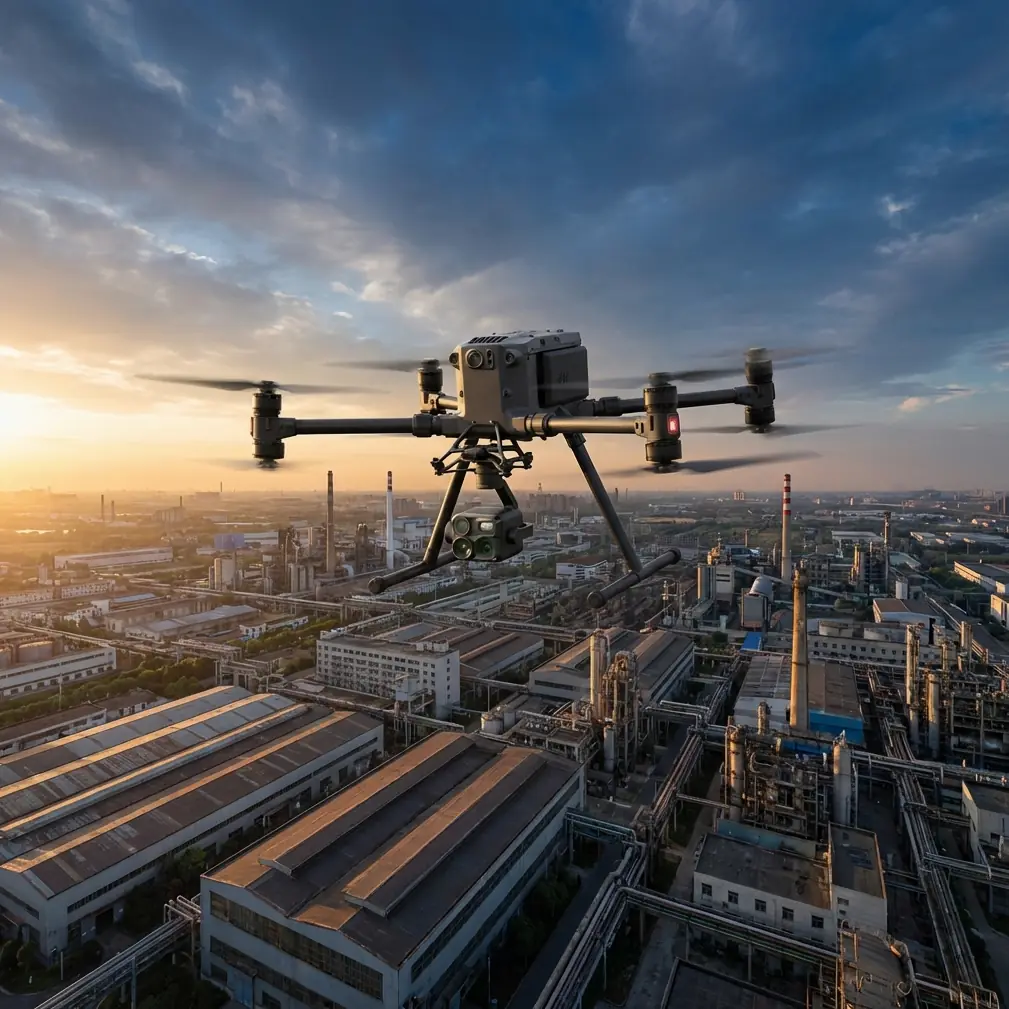
Matrice 4 for Remote Construction Scouting: A Field Case Study on Safer, Smarter Site Intelligence
META: Expert case study on using the DJI Matrice 4 for remote construction site scouting, covering thermal signature checks, photogrammetry, GCP workflow, O3 transmission, AES-256 security, battery strategy, and pre-flight safety practice.
Remote construction scouting stops being a simple “go look at the site” exercise the moment distance, terrain, and schedule pressure collide. A mountain access road washed out last spring can still be unstable in late summer. Temporary haul routes shift. Crews change staging zones without much notice. On paper, the job is visual verification. In practice, it is risk reduction, documentation, and decision support packed into a narrow weather window.
That is where the Matrice 4 makes sense.
I have been looking at how this platform fits one very specific assignment: scouting a remote construction site before heavy equipment and survey crews commit to a full mobilization. Not a generic drone demo. A real field problem. The question is whether one aircraft can help a project manager, survey lead, and safety coordinator build a reliable picture of site conditions without burning a day on unnecessary travel.
The answer depends less on headline specs and more on workflow discipline.
The scenario: a remote site with incomplete visibility
Consider a civil construction team preparing to expand a utility corridor across rough ground several hours from the nearest operations yard. The team needs current intelligence on three things:
- whether the access route can handle vehicles and trailers,
- whether drainage changes have altered the terrain since the last survey pass,
- and whether any thermal anomalies or active equipment hazards are present around temporary power units, pump systems, or recently disturbed ground.
A Matrice 4 deployment in this context is not just about collecting pretty aerials. It is about compressing uncertainty.
Photogrammetry handles the terrain piece. Thermal signature analysis adds a second layer that can expose issues the visible camera misses. A secure link matters because location data, infrastructure layout, and construction sequencing are operationally sensitive. And battery management becomes a mission-planning concern because “just land and recharge later” is not a smart assumption when the nearest safe launch point may already be a long drive from the crew.
Why the pre-flight cleaning step matters more than operators admit
Before discussing outputs, I want to focus on one small step that too many teams rush through: cleaning the aircraft’s safety-related sensors and optical surfaces before takeoff.
On remote construction jobs, dust is not incidental. It is part of the environment. Fine aggregate, cement powder, dried mud, and diesel residue settle everywhere. If the Matrice 4’s vision sensors, lens glass, or obstacle-sensing windows are carrying a film of grime, two problems appear immediately. First, you degrade situational awareness during low-altitude reconnaissance around stockpiles, temporary structures, and suspended materials. Second, you compromise the quality of the data you plan to process later.
That matters operationally. A photogrammetry mission relies on sharp, consistent image capture. A thermal scan depends on clear optics and repeatable interpretation. Even transmission confidence can suffer if the crew is already troubleshooting avoidable issues caused by sloppy setup.
The crews I trust treat sensor cleaning as a safety action, not cosmetic housekeeping. Soft brush first. Lens-safe cloth second. A close look at cooling vents and obstacle-sensing surfaces. Then a deliberate systems check before arming motors. It takes minutes. It can save an expensive reshoot, or worse, prevent a poor low-altitude decision when the aircraft is navigating near unfinished steel, poles, or temporary fencing.
For remote site work, that discipline is part of the mission, not a footnote.
The operational value of pairing photogrammetry with thermal signature review
Construction scouting often fails when teams rely on only one data type. Visible imagery is excellent for layout verification, haul road condition assessment, stockpile monitoring, and cut-fill interpretation. But it does not always reveal hidden concerns. Thermal signature review adds a useful diagnostic layer.
On a remote jobsite, that can mean identifying an overheating generator enclosure, a stressed pump assembly, or a localized heat pattern near electrical infrastructure that deserves ground inspection. It can also help teams compare areas of recent disturbance, moisture retention, and drainage concentration, especially during early morning flights when thermal contrast is more readable.
That second layer changes how a site visit is prioritized. Instead of sending the whole team everywhere, the Matrice 4 can narrow the list of places worth walking.
This is where the platform becomes more than a camera carrier. For a construction manager, the practical benefit is fewer blind spots before mobilization. For the safety lead, it is a better chance of catching active risk zones before personnel enter them. For the survey specialist, it means the map and model are informed by more than a top-down visual record.
Used together, photogrammetry and thermal review create a stronger scouting product than either one alone.
GCP discipline still separates useful models from attractive ones
I see a common misunderstanding in remote drone mapping conversations: operators assume the aircraft alone will deliver a model accurate enough for planning decisions. Sometimes it will be close. Close is not always good enough.
If the site team intends to use Matrice 4 outputs for grading analysis, drainage interpretation, corridor planning, or quantity checks, ground control points still matter. GCP placement gives the photogrammetry workflow a reference framework. Without it, the model may look clean while quietly drifting in the dimensions that matter to engineers and field supervisors.
That is the difference between a visually convincing map and a reliable one.
On remote jobs, the smartest approach is often hybrid. Use the Matrice 4 to perform an initial fast reconnaissance pass. Confirm terrain changes and identify priority zones. Then place or validate GCPs in those critical areas for the higher-confidence mapping mission. This reduces wasted field effort while improving final output quality.
For construction scouting, that sequencing is operationally significant. It means the aircraft is not replacing established survey discipline. It is making that discipline more efficient by telling the team where precision matters most.
O3 transmission changes what “remote” really means in practice
Long-distance site work introduces one stubborn problem: signal reliability. Deep cuts, rolling terrain, reflective structures, and tree lines can all interfere with the operator’s confidence. A capable transmission system is not just a convenience feature. It shapes how safely and effectively the mission can be flown.
That is why O3 transmission deserves attention in the Matrice 4 conversation.
For remote construction scouting, a robust link supports cleaner decision-making at the edge of the site envelope. The pilot sees what the aircraft sees with less hesitation and fewer surprises. That matters when inspecting winding access roads, embankments, or temporary works where a brief moment of uncertainty can force an unnecessary abort or, worse, a poor maneuver choice.
It also improves mission continuity. On real jobs, every interrupted pass creates downstream cost: re-flying segments, resequencing battery use, re-briefing visual observers, or delaying the data handoff to the office. A more stable transmission chain helps protect the schedule, which is often the real scarce resource on remote projects.
Does that automatically turn every construction mission into a BVLOS operation? No. And crews should be careful not to confuse technical capability with regulatory permission. But stronger transmission support does influence how confidently teams can build a scalable remote-scouting workflow under the rules that apply to them.
AES-256 is not an abstract spec when you are mapping active infrastructure
Security tends to get treated as a procurement checkbox until someone remembers what the aircraft is actually collecting. On remote construction assignments, that may include access routes, utility alignments, work sequencing, temporary power layouts, and the current state of unfinished infrastructure. In some sectors, that is sensitive operational information.
AES-256 matters because it addresses the transmission and handling of that information in a more serious way than consumer-grade assumptions allow.
A remote drone team may be operating from a field truck, a temporary office, or a staging pad with multiple contractors nearby. Data exposure risks are not theoretical. If the aircraft is scouting a power corridor, water project, industrial plant expansion, or telecom site, the imagery itself can reveal more than the client wants casually shared.
For project owners and prime contractors, the significance is straightforward: a secure platform helps align drone operations with broader site governance. For operators, it means security should be part of mission planning from the start, alongside weather, airspace, and battery allocation.
When teams choose a Matrice 4-class workflow for construction scouting, they are not only choosing sensors and flight performance. They are choosing how responsibly the resulting site intelligence is handled.
Hot-swap batteries help protect the mission window
Battery conversations often drift into endurance bragging. That misses the real issue on construction reconnaissance flights: continuity.
Remote scouting jobs are vulnerable to interruption. A brief weather opening may be all you get. Light conditions shift fast in valleys and wooded corridors. Site managers want data before they commit crews and equipment. If the aircraft needs a long reset between sorties, momentum disappears.
Hot-swap batteries matter because they reduce dead time between flight segments. For a remote construction workflow, that means you can run a thermal pass at first light, transition quickly into a mapping sortie once the site is visually readable, and then perform spot inspections on problem areas without losing the operational window to unnecessary downtime.
That continuity can be the difference between returning with a full decision package and returning with half a dataset that forces a second trip.
It also helps with role coordination. The pilot stays in rhythm. The payload operator or observer remains focused on task progression. The office team gets a cleaner, more complete handoff. Those are mundane gains, but in field operations, mundane gains are usually the ones that keep projects on schedule.
A realistic field workflow for remote construction scouting
Here is how I would structure a Matrice 4 mission for this kind of site.
Start with a pre-flight cleaning and inspection routine. Pay special attention to obstacle-sensing surfaces, primary camera glass, and any thermal optical elements. Confirm firmware status, battery health, and home-point logic before launch.
Then run a short reconnaissance leg focused on access roads, staging areas, and major terrain changes. This first pass is not about collecting perfect mapping data. It is about orienting the team and identifying any immediate safety concerns or mission adjustments.
After that, move into the structured photogrammetry capture with GCP support where accuracy is required. Keep overlap, altitude, and route discipline tight. Construction clients do not benefit from artistic improvisation during a mapping mission.
If thermal review is part of the objective, schedule it intentionally. Early morning often gives the clearest differentiation. Focus on equipment clusters, temporary electrical infrastructure, drainage anomalies, and zones of recent disturbance.
Finally, package the outputs around decisions, not just imagery. Can trucks reach the site? Has runoff compromised the approach? Are there heat anomalies that justify a maintenance check? Which areas need a ground survey crew first?
That is the handoff a project manager actually uses.
If your team is building a similar remote-scoping workflow, it helps to compare mission planning notes with operators who work these environments regularly; a quick field-ops discussion can save a lot of trial and error, and this direct channel is a practical place to start: message our UAV team here.
Where the Matrice 4 fits best
The Matrice 4 is most valuable when construction teams need a single platform that supports secure remote reconnaissance, actionable visual documentation, and more advanced inspection context through thermal work. Its strength is not that it eliminates every other field method. Its strength is that it helps the right people show up with better information.
That distinction matters.
For remote construction scouting, the best drone is rarely the one with the flashiest marketing profile. It is the one that reduces uncertainty before expensive resources move. In this use case, several details stand out: O3 transmission supports more reliable field control in difficult terrain, AES-256 addresses the sensitivity of project data, hot-swap batteries preserve narrow mission windows, and a disciplined GCP workflow keeps photogrammetry outputs useful rather than merely attractive.
Add one more lesson that deserves repeating: clean the aircraft before every mission, especially the safety and optical surfaces. It is a small act with disproportionate impact. In dusty construction environments, that routine supports obstacle sensing, image quality, and mission confidence all at once.
That is how the Matrice 4 earns its place on a remote site—not as a novelty, but as a practical intelligence tool that helps construction teams make better calls before boots and machines commit to the ground.
Ready for your own Matrice 4? Contact our team for expert consultation.