
Matrice 4 Guide: Scouting Fields in Low Light
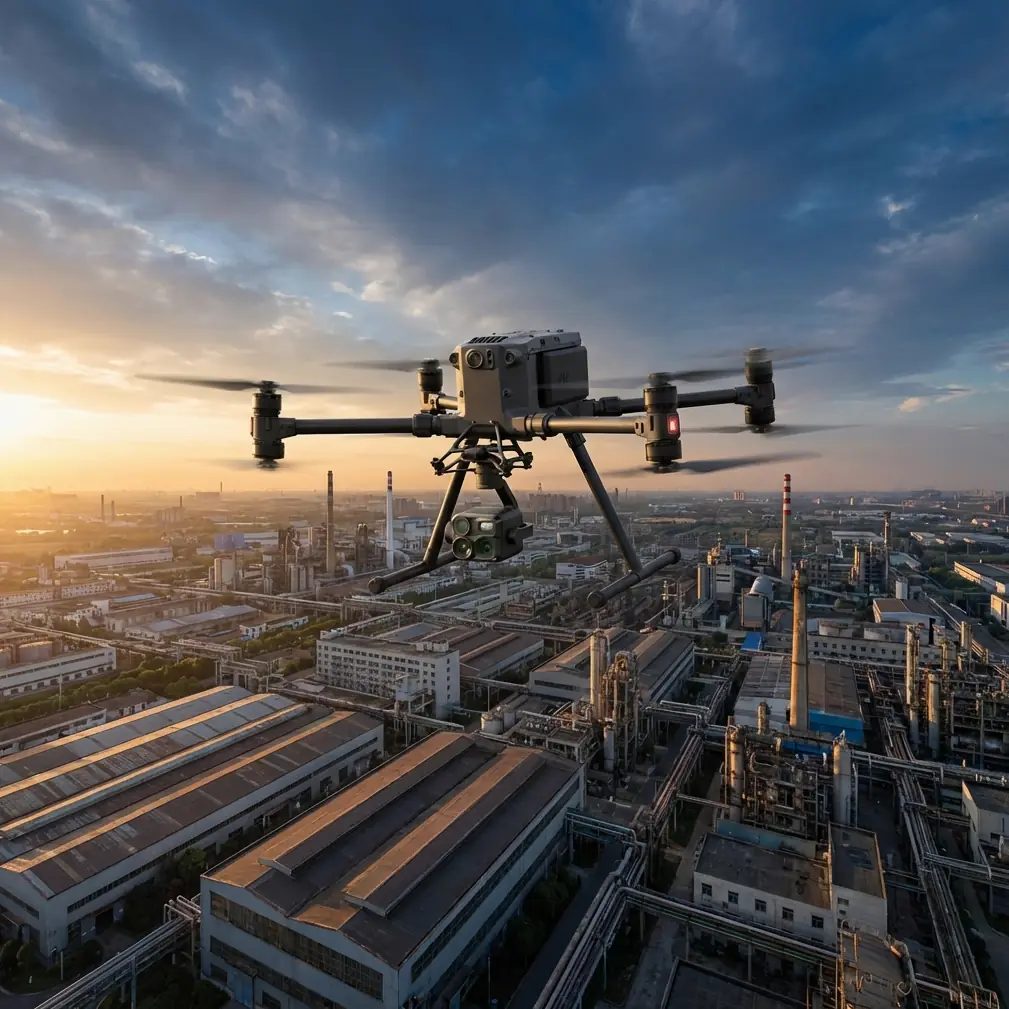
Matrice 4 Guide: Scouting Fields in Low Light
META: Learn how the DJI Matrice 4 transforms low-light field scouting with thermal imaging, O3 transmission, and BVLOS capability. Expert tutorial inside.
By Dr. Lisa Wang, Agricultural Drone Specialist | Updated June 2025
TL;DR
- The Matrice 4 enables reliable field scouting during dawn, dusk, and overcast conditions where traditional RGB drones fail to capture usable data.
- Its wide-angle thermal sensor detects crop stress, drainage issues, and wildlife thermal signatures invisible to the naked eye.
- O3 transmission maintains a stable HD feed up to 20 km, letting you scout large parcels without signal dropout.
- This tutorial walks you through a complete low-light scouting workflow—from mission planning to post-flight photogrammetry.
Why Low-Light Field Scouting Changes Everything
Low-light field scouting isn't a compromise—it's an advantage. Crop stress indicators, soil moisture differentials, and pest activity all present stronger thermal signatures during cooler parts of the day. The Matrice 4 gives agronomists and farm managers the sensor payload and transmission reliability to exploit these windows. This guide breaks down every step so you can execute your first low-light mission with confidence.
Two seasons ago, I was hired to assess 1,200 acres of winter wheat across three parcels in central Kansas. The client needed data before a frost event, and our only viable flight windows fell between 5:15 AM and 6:45 AM. My older platform—a capable machine in daylight—produced noisy, unusable thermal mosaics and dropped its video link twice mid-mission. That project pushed me to evaluate the Matrice 4, and the difference was immediate. Every workflow step below reflects lessons from that experience and dozens of missions since.
Step 1: Pre-Mission Planning for Low-Light Conditions
Selecting Your Flight Window
The ideal low-light scouting window depends on what you're looking for. Thermal contrast between healthy and stressed vegetation peaks when ambient temperatures shift rapidly—typically 30 minutes before sunrise through 90 minutes after, and again during the final hour before sunset.
Key planning considerations:
- Check civil twilight times for your GPS coordinates, not just sunrise/sunset.
- Wind speed below 15 km/h reduces thermal noise from convective mixing.
- Cloud cover above 70% can extend usable thermal windows into midday.
- Dew point proximity: when air temperature is within 2°C of the dew point, moisture on leaves can mask thermal signatures.
Setting Ground Control Points (GCPs)
Accurate photogrammetry in low light demands GCPs with high thermal contrast. Standard black-and-white checkerboard targets become nearly invisible to RGB sensors at dawn. Instead, use reflective thermal GCP targets or heated panels.
Place a minimum of 5 GCPs across the survey area—one at each corner and one near the center. Record RTK-corrected coordinates for each. The Matrice 4's onboard RTK module achieves centimeter-level positioning accuracy, but GCPs remain essential for photogrammetric bundle adjustment, especially when stitching thermal and visible-light layers.
Pro Tip: I carry hand warmers and attach them to the underside of my GCP boards during cold-morning flights. They create a consistent thermal hotspot that's easy to identify in post-processing, even when the RGB imagery is underexposed.
Step 2: Configuring the Matrice 4 for Low-Light Operations
Camera and Sensor Setup
The Matrice 4 carries a dual-sensor payload that pairs a wide-angle visible-light camera with a radiometric thermal imager. For low-light scouting, your thermal channel does the heavy lifting, but don't ignore the RGB sensor—it provides context for your thermal overlays.
Recommended settings:
- Thermal palette: Whitehot for crop canopy analysis; Ironbow for drainage mapping.
- Thermal sensitivity (NETD): The Matrice 4's sensor resolves temperature differences as small as ≤40 mK, critical for detecting early-stage crop stress.
- RGB mode: Set to auto-ISO with a maximum cap of ISO 6400 to limit noise.
- Capture interval: 2 seconds for 75% frontal overlap at a ground speed of 5 m/s.
- Altitude: 40–60 m AGL balances thermal resolution with coverage efficiency.
Transmission and Safety Configuration
Stable command-and-control links are non-negotiable when flying in reduced visibility. The Matrice 4's O3 transmission system operates on triple-frequency bands and delivers 1080p/60fps live feed with a measured latency under 130 ms. In my Kansas project, I maintained full HD downlink at 8.4 km with the aircraft behind a tree line—a scenario that would have caused total signal loss on my previous platform.
For security-sensitive agricultural clients, the Matrice 4 encrypts all telemetry and imagery with AES-256 encryption, ensuring that proprietary field data stays protected from interception.
Step 3: Executing the Low-Light Flight
Autonomous Mission vs. Manual Scouting
For broad-acre surveys, fly an autonomous grid pattern planned in DJI Pilot 2 or your preferred GIS mission planner. For targeted scouting—investigating a specific drainage problem or a suspected pest hotspot—switch to manual flight with live thermal feed.
Flight execution checklist:
- Verify hot-swap batteries are fully charged; carry at least 3 sets for missions exceeding 45 minutes of flight time.
- Calibrate the thermal sensor flat-field correction (FFC) before launch and set automatic FFC intervals to every 5 minutes.
- Enable obstacle avoidance on all axes—the Matrice 4's omnidirectional sensing works in low light, but performance degrades in complete darkness.
- Log ambient temperature at launch; you'll need this for radiometric calibration in post-processing.
- Monitor BVLOS compliance: if your operation holds a BVLOS waiver, ensure your visual observer network is positioned and communicating.
Expert Insight: The Matrice 4's hot-swap battery system eliminates the need to power down between battery changes. On large parcels, this saves 8–12 minutes per swap cycle—time that adds up fast when your scouting window is only 90 minutes wide.
Reading the Live Thermal Feed
As you fly, watch for these patterns in the thermal downlink:
- Cool linear bands across a field often indicate subsurface drainage tiles functioning properly.
- Warm irregular patches in a crop canopy suggest reduced transpiration—a hallmark of water stress or root disease.
- Small, bright hotspots moving at field edges may be wildlife (deer, feral hogs) that could explain crop damage patterns.
- Uniform cool zones near field borders can reveal wind-driven frost pockets that damage sensitive crops.
Step 4: Post-Flight Data Processing
Building Thermal Orthomosaics with Photogrammetry
After landing, transfer your dual-channel dataset (thermal + RGB) into your photogrammetry platform. Software such as Pix4Dfields, DroneDeploy, or Agisoft Metashape can process radiometric thermal imagery into calibrated orthomosaics.
Processing workflow:
- Import thermal TIFFs with embedded GPS/RTK metadata.
- Apply GCP corrections using your logged coordinates.
- Set radiometric calibration parameters: emissivity (0.95–0.98 for vegetation), reflected temperature, and ambient temperature at launch.
- Generate thermal orthomosaic at native resolution.
- Overlay RGB mosaic for spatial context—even dim RGB data helps identify field boundaries and landmarks.
- Export as GeoTIFF for integration into your farm management information system (FMIS).
Technical Comparison: Matrice 4 vs. Common Scouting Alternatives
| Feature | Matrice 4 | Mid-Range Thermal Drone | Fixed-Wing Ag Platform |
|---|---|---|---|
| Thermal Sensitivity (NETD) | ≤40 mK | ~50 mK | ~60 mK |
| Transmission Range | 20 km (O3) | 10–12 km | 8–15 km |
| Encryption | AES-256 | AES-128 | Varies |
| Battery Swap | Hot-swap | Cold-swap (power down) | N/A (single battery) |
| Max Flight Time | Up to 42 min | 30–38 min | 60+ min |
| Obstacle Avoidance | Omnidirectional | Forward/downward only | None |
| RTK Positioning | Built-in | Optional accessory | Built-in |
| BVLOS Readiness | Yes (with waiver) | Limited | Yes (with waiver) |
Common Mistakes to Avoid
1. Ignoring Flat-Field Correction (FFC) Scheduling Thermal sensors drift as their internal temperature changes during flight. If you skip regular FFC shutter events, your mosaic will show banding artifacts that mimic crop stress patterns. Set automatic FFC to every 5 minutes or less.
2. Flying Too High to "Cover More Ground" At 120 m AGL, individual thermal pixels cover roughly 13 cm—too coarse to detect early-stage stress in row crops. Stay at 40–60 m AGL for actionable resolution and plan additional flight lines instead.
3. Neglecting GCPs for Thermal Missions RTK alone does not guarantee sub-pixel alignment between thermal and RGB layers. Without GCPs, your photogrammetry software may introduce 2–5 m horizontal error in the thermal mosaic, making prescription map overlays unreliable.
4. Draining All Batteries Before Processing Always reserve one fully charged hot-swap battery set. If your post-flight data review reveals a missed strip or corrupted captures, you need the ability to re-fly immediately—the thermal window won't wait.
5. Forgetting to Log Environmental Conditions Ambient temperature, humidity, and wind speed at the time of capture are required inputs for accurate radiometric calibration. A thermal map without these values is a pretty picture, not a diagnostic tool.
Frequently Asked Questions
Can the Matrice 4 scout fields in complete darkness?
The thermal sensor operates independently of visible light, so it captures usable thermal imagery in total darkness. However, the obstacle avoidance system relies partly on visual cameras that need ambient light. For flights in complete darkness, reduce speed to 3 m/s, increase altitude above obstacles, and maintain enhanced situational awareness through your visual observer team. Always verify local regulations regarding nighttime BVLOS operations.
How many acres can I scout in a single low-light window?
With 3 hot-swap battery sets and a flight altitude of 50 m AGL at 5 m/s ground speed with 75% overlap, expect to cover approximately 200–250 acres in a 90-minute dawn window. Variables such as wind, field shape, and required overlap will shift this number. Plan conservatively and prioritize your highest-value parcels first.
Do I need a separate photogrammetry license for thermal data?
Most major photogrammetry platforms (Pix4Dfields, DroneDeploy, Agisoft Metashape) include thermal processing in their standard or agricultural subscription tiers. Verify that your license supports radiometric TIFF import and multi-sensor alignment—some entry-level plans restrict these features. Thermal-specific tools like FLIR Thermal Studio can supplement your pipeline for single-image analysis without full mosaic generation.
Low-light field scouting with the Matrice 4 isn't just a workaround for bad scheduling—it's a deliberate strategy that reveals crop health data invisible during midday flights. The combination of high-sensitivity thermal imaging, rock-solid O3 transmission, AES-256 data security, and hot-swap battery convenience makes this platform the most capable tool I've used for agricultural reconnaissance across hundreds of missions.
Ready for your own Matrice 4? Contact our team for expert consultation.