
Matrice 4 in Remote Field Scouting: A Practical Field
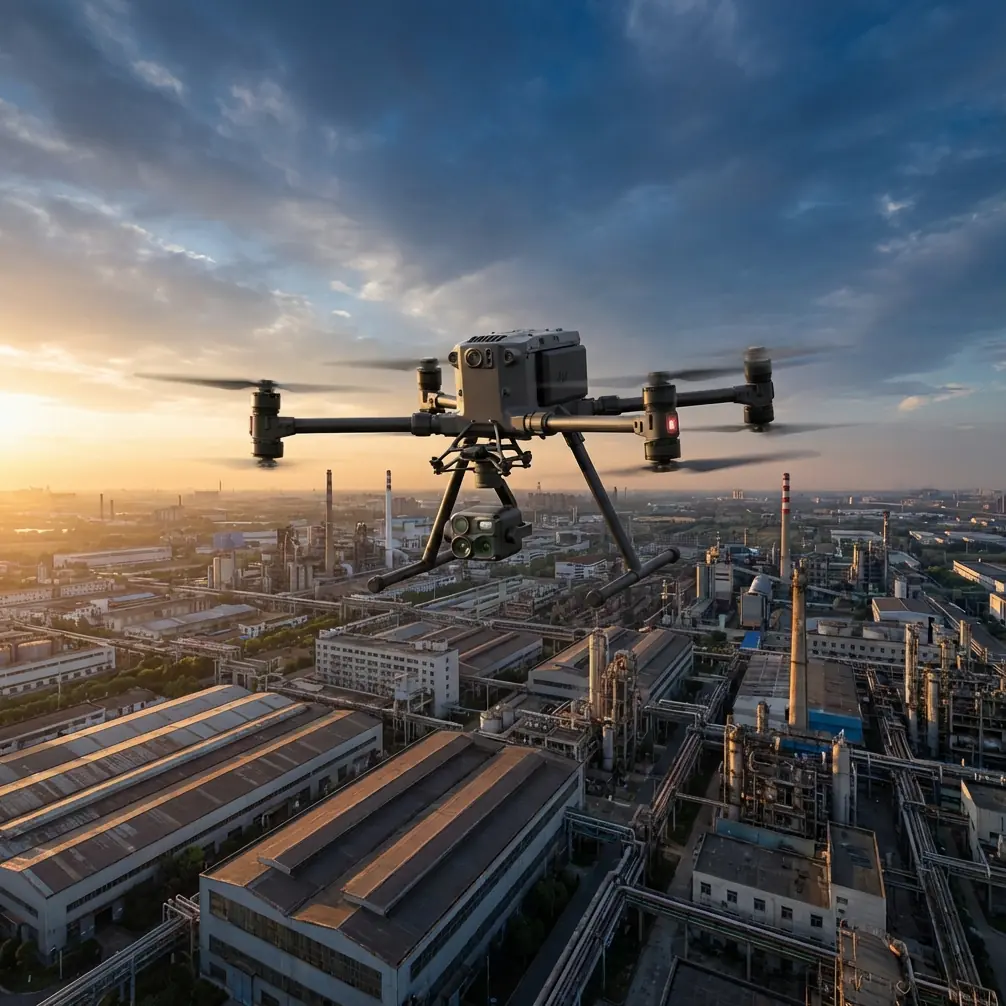
Matrice 4 in Remote Field Scouting: A Practical Field Report from the Edge of Coverage
META: A field-tested look at using Matrice 4 for remote field scouting, covering thermal signature work, photogrammetry, battery rotation, O3 transmission, AES-256 security, and BVLOS-ready workflows.
Remote field scouting exposes weaknesses fast. Not on a spec sheet. Out where the truck loses signal, the wind picks up over a ridgeline, and every battery cycle has to count.
That is where the Matrice 4 conversation gets interesting.
I’m writing this from the perspective of someone who cares less about brochure language and more about whether an aircraft can help a field team return with usable agronomic and mapping intelligence before weather closes the window. For readers looking at Matrice 4 for agricultural scouting in isolated areas, the real value is not one headline feature. It is how several systems come together: stable transmission, practical battery handling, thermal signature interpretation, secure data flow, and a workflow that supports both fast reconnaissance and more rigorous photogrammetry.
Why remote field scouting is a different test
Scouting fields near infrastructure is one thing. Scouting remote acreage is another. Distances are longer. Terrain interferes with line of sight. Crew size is usually smaller than ideal. You often need to make decisions on the first pass because coming back costs time, vehicle mileage, and daylight.
In that environment, the Matrice 4 class matters because operators are rarely asking for “a drone.” They are asking for three things at once:
- A fast way to identify problem zones.
- A credible method to document those zones spatially.
- A reliable system that does not create new field logistics problems.
That changes how you judge the aircraft. A drone that captures beautiful imagery but wastes time on battery handling is less useful than one that supports disciplined sortie planning. A drone with good imaging but weak transmission confidence can slow every decision in rolling terrain. And if your team is collecting crop or land data tied to client operations, security is not a side issue. It is part of the operational checklist.
The transmission question matters more than most buyers realize
One of the most operationally significant details in the Matrice 4 discussion is O3 transmission. On paper, transmission technology sounds like a technical footnote. In the field, it directly affects the quality of your scouting decisions.
When you are scanning remote plots, especially where tree lines, irrigation structures, elevation shifts, or patchy visibility interfere with signal quality, a robust transmission link helps preserve live situational awareness. That sounds obvious. What is less obvious is how much this influences mission tempo. A cleaner, more dependable feed means the pilot and visual observer are not constantly second-guessing whether a visual anomaly is a real crop stress pattern or just degraded image confidence caused by link instability.
For agronomy teams, this matters when using thermal signature observations to distinguish irrigation irregularity from soil heat variance. For mapping teams, it matters when trying to validate overlap and coverage before leaving site. For farm managers, it matters because re-flights on distant parcels are expensive in a way office-based planners tend to underestimate.
O3 is not just a convenience feature. In remote scouting, it is a decision-quality feature.
Thermal signature work is only valuable if you know what not to overread
Thermal payload capability tends to attract attention for obvious reasons: stressed crops, irrigation line issues, water pooling, drainage inconsistencies, and heat differentials can all become visible in ways RGB imagery may not immediately show.
But thermal signature data in remote field scouting is often misunderstood. Operators sometimes treat thermal as a magic layer that automatically reveals “the problem.” It does not. Thermal is a fast triage tool. It tells you where to look harder.
With the Matrice 4 platform, the operational significance of thermal imaging is speed. You can prioritize inspection zones before sending a ground crew across large acreage. In practical terms, this reduces wasted walking time and improves same-day intervention decisions. If one section of a remote field shows a stronger midday heat contrast than surrounding rows, the drone has not diagnosed the agronomic cause. It has shortened the search.
That distinction is crucial.
The best results come when thermal passes are paired with a second workflow: either targeted visual inspection or a structured photogrammetry mission over the anomaly zone. Thermal finds the question. Photogrammetry helps frame the answer spatially.
Photogrammetry is where scouting becomes documentation
A lot of field teams still separate “scouting” from “mapping” as if they are unrelated. In practice, remote operations work best when they are linked.
If your Matrice 4 workflow identifies an issue area, the next step is often a short photogrammetry mission to produce a measurable record. That record can support treatment planning, drainage review, replant analysis, or season-over-season comparison. Once you have orthomosaic-quality outputs tied to known positions, discussions become less subjective.
This is where GCP strategy enters the picture.
Ground control points are not always necessary for every quick scouting flight, but they are operationally significant when you need repeatable spatial accuracy. In remote fields, especially large ones, teams often skip GCP deployment to save time. Sometimes that is the correct choice. Sometimes it creates a problem later when comparing a suspected irrigation issue against earlier survey data.
My recommendation from field practice is simple: classify your mission before launch. If the flight is exploratory, move fast and keep it light. If the output may later support drainage correction, contractor coordination, acreage dispute resolution, or longitudinal crop analysis, deploy GCPs or at least plan a control-aware workflow from the start. The extra time on the front end is usually cheaper than trying to reconstruct positional confidence later.
The Matrice 4 earns its keep when it supports both modes without friction: quick reconnaissance and disciplined photogrammetry.
A battery management tip that saves more missions than people expect
The battery discussion is rarely glamorous, but remote field scouting is often won or lost here.
The most useful field habit I can share is this: never land all packs at the same low state of charge on the same day if you can avoid it. Stagger your battery rotation intentionally.
Here’s why. In remote work, delays stack up unpredictably. A gate is locked. A vehicle gets bogged down. Wind changes. A second field suddenly becomes priority. If every pack has been flown hard in a narrow time window, you lose flexibility just when the day becomes dynamic.
With hot-swap batteries in the workflow, the Matrice 4 setup supports faster turnaround between sorties, but that advantage only pays off if the crew manages packs as a rotating reserve rather than a simple sequence. I train teams to think in three states: active pair, ready reserve, protected contingency. The contingency set stays untouched unless conditions change or a target zone appears that cannot wait until tomorrow.
This sounds minor. It is not. On remote acreage, preserving one healthy reserve cycle can mean the difference between documenting a developing issue before sunset and leaving with half the story.
A second tip: after a high-heat midday mission, do not rush warm batteries straight back into a demanding follow-up sortie just because the field schedule feels tight. Let them normalize. Heat and haste are a bad combination for consistent mission endurance.
Security is part of the field workflow, not just an IT concern
The inclusion of AES-256 in the conversation around Matrice 4 is significant for a reason many agricultural and land-management teams are only starting to appreciate.
Remote field scouting increasingly produces sensitive business data. That may include crop health patterns, infrastructure conditions, treatment timing, land improvement status, irrigation weaknesses, and georeferenced imagery tied to operational decisions. For contractors and consultants, this is often client-confidential information even when it is not regulated in the strictest sense.
AES-256 matters because secure handling of transmitted and stored data builds trust across the chain: operator, farm manager, agronomist, consultant, and client. If you are collecting imagery from a remote production area and sharing findings back to decision-makers off site, the system’s data security posture is part of professional readiness.
This becomes even more relevant as more teams coordinate from dispersed locations. A pilot may be in the field while the analyst is back at the office. Secure transmission and controlled handling stop being abstract technical talking points and become part of the service standard.
Preparing for BVLOS-adjacent operations without cutting corners
BVLOS is one of the most frequently discussed concepts in remote field scouting because the geography seems to invite it. Large parcels. Long straight corridors. Sparse surrounding activity. But readiness for BVLOS-type workflows is not the same as conducting them casually.
The Matrice 4 is relevant here because remote agricultural operators often want a platform that can fit into future, more advanced operational structures as regulations and approvals permit. That means they are not only evaluating what the aircraft can do today under standard constraints. They are asking whether the workflow architecture is mature enough to scale.
That includes transmission reliability, mapping consistency, battery discipline, observer coordination, emergency procedures, and data handling. A crew that cannot execute clean visual-line-of-sight missions with repeatable process is not truly preparing for BVLOS. They are just extending distance.
The operational significance is this: a Matrice 4 program can serve as a bridge. Teams can use it now for legal, structured remote scouting while building the documentation habits, route planning standards, and risk controls that future expanded operations will demand.
What a real remote field workflow looks like
A useful Matrice 4 field day usually follows a layered logic rather than a single long flight.
Start with a broad pass to establish crop uniformity and identify any visible or thermal anomalies. Then narrow the focus. If one irrigation sector shows unusual thermal contrast or visual texture, fly a lower, more structured pass over that area. If the issue appears likely to require contractor action or comparative analysis later, shift into a photogrammetry profile with enough overlap to support clean reconstruction. If accuracy matters, use GCPs.
That workflow sounds simple when written down. The challenge is execution under field pressure. Light changes. Dust increases. Crew members try to compress steps to save time. The aircraft itself is only part of the equation. The Matrice 4 becomes valuable when it reduces friction between these phases rather than forcing operators to choose between speed and rigor.
Human factors still decide whether the mission works
Even with strong hardware, remote scouting remains a human systems problem. The pilot has to read wind over open ground, not just the forecast. The observer has to communicate clearly and early. The data lead has to know whether the mission goal is fast diagnosis or formal documentation. And someone has to own battery discipline.
That is why I tell teams not to evaluate Matrice 4 purely by payload capability. Evaluate it by how cleanly your crew can operate it at hour six of a long field day, when everyone is dusty, sun-tired, and tempted to skip process.
The better aircraft is the one that still supports good decisions under those conditions.
If your operation is planning field scouting in isolated areas and you want to talk through mission design, battery rotation, or whether thermal plus photogrammetry is the right combination for your acreage, you can reach a specialist team directly on WhatsApp here.
The bottom line for remote scouting teams
Matrice 4 stands out in remote field scouting not because of one dramatic feature, but because several practical capabilities align with what isolated agricultural operations actually need. O3 transmission improves confidence when terrain and distance interfere with easy flying. Thermal signature tools accelerate anomaly detection. Photogrammetry and GCP-aware workflows turn observations into measurable documentation. AES-256 supports professional data stewardship. Hot-swap battery routines, when managed properly, protect mission continuity instead of just shortening turnaround.
For remote fields, that combination matters.
You are not simply flying to collect images. You are trying to leave the site with better decisions than you had when you arrived.
Ready for your own Matrice 4? Contact our team for expert consultation.