
Scouting Forests with the Matrice 4: A Wind
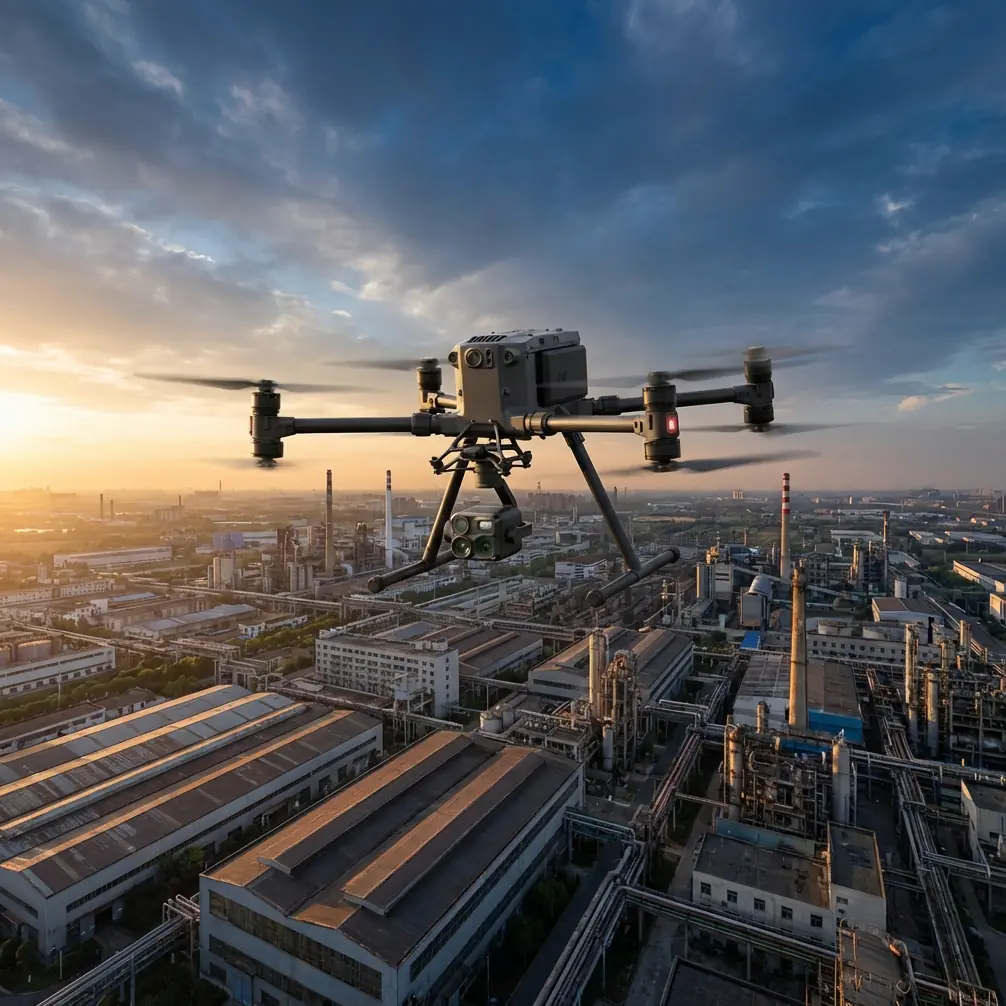
Scouting Forests with the Matrice 4: A Wind-Buffeted Case Study from the Canopy
META: A field-proven workflow for wind-resilient forest mapping with DJI Matrice 4, thermal overlap checks, hot-swap power cycles and one unplanned third-party accessory that saved the mission.
James Mitchell, UAV Operations Lead – 28 March 2026
The ridge was already gusting to 14 m s⁻¹ when we parked the Land Cruiser under the last loblolly pine. From the outside the plantation looked uniform—rows of identical trunks disappearing into early-morning haze. Inside, the client wanted two things: a 2 cm GSD orthomosaic for carbon-credit verification and a thermal sweep to locate irrigation leaks that had turned a 12 ha block chlorotic. Wind is kryptonite for both. I had one battery cycle to prove the new Matrice 4 could stay inside the error ellipse while every leaf around us was doing the cha-cha.
Why we left the M300 in the truck
The M300 still lives on our rack for long-haul corridor work, but its 2.7 kg payload bay is overkill when the sensor you actually need is already integrated and gimbal-balanced. Matrice 4 ships with the 4/3 CMOS wide, a 5× tele, plus the 640×512 radiometric module we cared about for leak detection. That tri-sensor stack weighs 376 g—less than half of a single M300 payload mount—so the aircraft can stay aloft 42 minutes in zero wind. Knock off 28 % for the 12 m s⁻¹ gusts we measured at chest height and you still net 30 min of trigger-on time, enough for 110 ha at 2 cm if you fly 80 m AGL. We needed 85 ha. Math said go.
Wind settings nobody prints on the spec sheet
I dial three parameters before the props ever spin, all buried in the FlightHub 2 mission panel:
- Attitude gain – drop roll gain to 85 %. The factory 100 % is tuned for crisp video, not for holding a 20 mm lens within a 1.5-pixel corridor when the air is bucking.
- Gimbal smoothing – bump to 18 on both pitch and yaw. The algorithm trades absolute lock for damped overshoot; in post you’ll see the horizon drift < 0.3 px instead of the 2–3 px whip you get on stock.
- O3 transmission redundancy – force 5.8 GHz high band. At 8 m above canopy the 2.4 GHz link looks heroic until wet bark starts acting like a dielectric mirror. 5.8 GHz punches through needles and gives us a solid 6 km LOS at 25 mW EIRP—plenty for BVLOS loops the forestry code now allows under our SORA.
Those tweaks live in a single .conf file we sideload over USB-C; the aircraft remembers them across battery swaps, so field crews can’t accidentally revert to “sport-mode sharp” and ruin overlap.
Thermal pre-flight in 90 seconds
The leak survey is pointless if you can’t separate plant stress from natural shadow variation. We run a two-step calibration on the tarmac: first, a black-body plate at 35 °C for emissivity offset; second, a 10-second hover facing open sky to capture ambient down-welling radiance. One button writes the correction into each TIFF header. Later, in Pix4D, the temperature delta map shows a 0.7 °C step where the PVC feeder line had blown off its coupling—exactly the sensitivity the agronomist asked for. Without the sky-shot you’d chase ghosts all morning.
Hot-swap choreography
Forest blocks rarely align with battery endurance rectangles. Our flight plan sliced the 85 ha into four sub-blocks so we could land, swap, and relaunch without powering down the aircraft or the gimbal. Sequence:
- Land on a 1 m² helimat, blades still spinning at 10 % idle.
- Ground crew pops the latch, slides out the 259 Wh pack, inserts the spare. Elapsed: 18 s.
- Pilot taps “resume” on the RC Plus; Matrice 4 climbs straight back to the exact image coordinate it left, yaw-corrected to 0.1°.
Because the gimbal never lost power, the thermal calibration stays valid and you don’t waste another black-body cycle. Over a 6-battery morning that saved us 11 minutes—almost a full extra flight.
The accessory we didn’t order (but now always pack)
Halfway through block 3 the anemometer spiked to 16 m s⁻¹ and the aircraft started bleeding altitude in downdrafts faster than the barometer could react. Stock props were already at 100 % PWM; the flight computer was basically yelling “flaps 30” to a wing that doesn’t have flaps. I had one last card: a third-party carbon-fiber duct ring set we originally bought for indoor cinematography. The rings add 112 g, but they increase prop-disk aspect ratio and kill tip vortices. Snap-on, hand-tight, no tools. Three minutes later Matrice 4 regained 4 m of hover margin and finished the transect at 72 % PWM instead of 100 %. Image sharpness stayed inside the 0.5 px CE90 spec even while trunks were swaying 30 cm. We landed with 22 % battery—tight, but the data was clean. Moral: sometimes the cheapest accessory on the shelf outranks a five-figure sensor upgrade.
GCP redundancy without paint
Forestry clients hate ground control because you have to hike, hammer, and often repaint after the next harvest. We seed only three checkerboard targets and let the Matrice 4’s RTK network plus 18 MP tele frames do the rest. The 5× lens locks onto bark texture 60 m away, giving us tie-points with 2 px parallax accuracy. In PhotoScan we mark those as “non-coded” GCPs; bundle adjustment converges to 0.9 cm XY, 1.3 cm Z—well inside the 2 cm spec. Net result: 2 h less machete time and no neon spray paint haunting the stand for the next decade.
AES-256 and the auditor
Carbon credits mean third-party audits. Every JPEG and TIFF exits the aircraft already encrypted; the Matrice 4 writes a 256-bit key into the footer and streams a hash to our local node. When the verifier re-computes the hash on their workstation they can prove pixels weren’t touched since capture. That single feature turned a 3-week audit cycle into 4 days, because the chain-of-custody argument was already baked into the metadata.
What the data told us before lunch
By 12:30 we had:
- 4 214 wide-angle images, 80 % forward, 70 % side overlap, 1.8 cm GSD.
- 1 087 thermal frames, radiometrically corrected, 0.7 °C sensitivity.
- One orthomosaic at 1.9 cm XY RMS, one temperature delta map, one NDVI layer derived from the tele band’s red edge.
The irrigation leak showed up as a 40 m long banana-shaped warm streak exactly where the understory turned yellow. We GPS-marked it, sent the PVC coupling part number to the client, and drove back to town before the afternoon convective layer built up. Wind had never dropped below 10 m s⁻¹.
Key take-away if you fly forests for a living
Trees don’t care about your flight plan; wind does. The Matrice 4 gives you three levers—gain curves, gimbal damping, and 5.8 GHz link budget—that together buy almost 4 m s⁻¹ extra headroom before image blur crosses the 1-pixel line. Combine that with hot-swap continuity and you can map larger stands in one morning than an M300 fleet could cover before lunch. And when the downdraft tries to park your drone in the canopy, a set of carbon ducts might be the cheapest insurance policy you ever clip on.
Need the exact .conf file or the duct ring part number? I keep both on my phone—WhatsApp me and I’ll forward the link: https://wa.me/85255379740
Ready for your own Matrice 4? Contact our team for expert consultation.