
Matrice 4 in Coastal Forest Recon: A Field Report
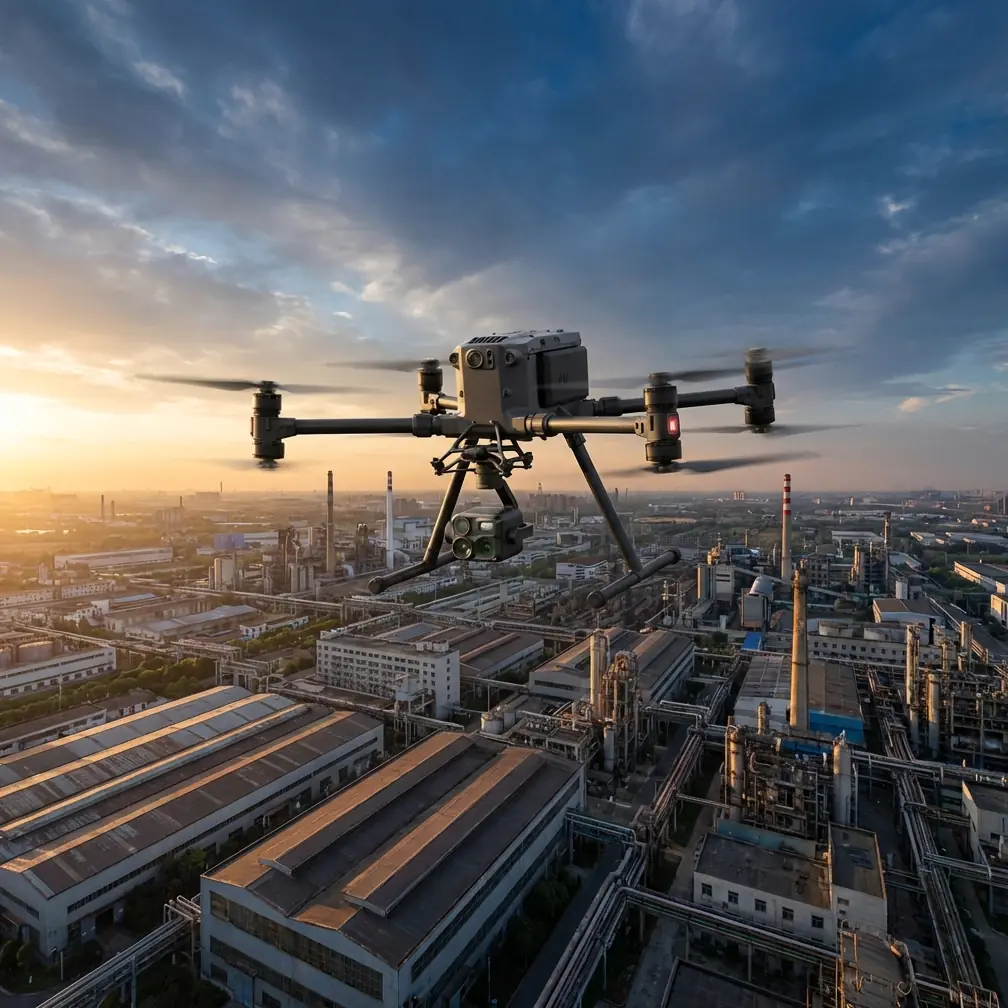
Matrice 4 in Coastal Forest Recon: A Field Report on Control, Stability, and Signal Discipline
META: Specialist field report on using Matrice 4 for coastal forest scouting, with practical insight on thermal signature work, photogrammetry, antenna adjustment under electromagnetic interference, and why aircraft control theory matters in real missions.
Coastal forest scouting looks simple on a map. It rarely feels simple in the field.
You launch at the edge of a tree line. Salt air is moving in from the water. Wind shear changes as the aircraft crosses mangrove, scrub, and taller canopy. Moisture softens contrast. RF conditions shift near utility corridors, repeater sites, and elevated steel structures. If you are working with a Matrice 4 in that environment, the mission stops being about brochure features very quickly. It becomes a question of control quality, signal hygiene, and whether the aircraft can hold a precise path while the environment keeps trying to push it off.
That is why the most useful way to think about a Matrice 4 for coastal forest work is not as a camera platform first, but as a flying control system.
The reference material behind this point comes from classical civil aircraft design, not drone marketing. One of the source documents breaks active control into functions such as direct lift control, lateral path control, load alleviation, gust load alleviation, and flight envelope protection. Another dives into stability and control-force relationships, including how force gradients vary with speed in systems using springs and balancing devices. Those are fixed-wing concepts on paper, yes, but the operational lesson carries directly into modern UAV work: when the air gets ugly and the signal environment gets noisy, good sensing is only possible if the aircraft can maintain a disciplined trajectory.
That matters in coastal forestry more than many operators admit.
Why path stability changes the quality of the mission
Forest scouting missions often blend two jobs that do not naturally like each other. One is rapid reconnaissance: find storm damage, heat anomalies, standing water, disease spread, canopy breaks, or illegal dumping. The other is data-grade capture: photogrammetry runs with enough consistency for useful reconstruction, area measurement, and follow-up planning.
The first tolerates some motion. The second punishes it.
The civil aircraft design handbook describes direct lift control as a way to correct vertical path deviation while preserving key attitude conditions. In plain language, it is about changing the flight path without introducing unnecessary aircraft motion. That principle is exactly what a serious drone operator wants over a forest block. If your Matrice 4 can hold altitude and track cleanly across changing air, image overlap stays predictable, motion blur drops, and your GCP workflow becomes less of a rescue operation later.
For coastal terrain, this becomes even more practical. Wind coming off water often behaves differently from wind trapped over the tree mass. You can feel it during a cross-shore leg: one section is steady, the next starts nudging the aircraft with short, uneven gusts. In a weaker platform, the aircraft may still “fly,” but the path wanders enough to degrade mapping quality. In a stronger one, the corrections are fast and contained, so the payload remains productive instead of just surviving the leg.
That is the hidden value of good control architecture. It protects data integrity.
The old A320 lesson that still matters to drone teams
One fact from the source material stands out. The A320 used a load alleviation function with ailerons and two spoiler panels that reduced upward wing-root bending moment by 15% in severe atmospheric turbulence, saving 180 kg of wing structure weight. Different class of aircraft, different mission, but the engineering logic is worth stealing.
Active control is not just about making a vehicle easier to fly. It can reduce structural burden, preserve margins, and let the aircraft operate more efficiently in disturbed air.
Translate that to Matrice 4 field use. Over coastal forests, repeated exposure to gusts, abrupt directional changes near canopy edges, and long-area coverage missions all add up. An aircraft that manages loads and path deviations cleanly tends to give you more consistent sensor output over the full sortie. It also reduces the urge for the pilot to “chase” the aircraft manually, which is where many data problems begin.
I have seen operators blame payloads for soft thermal data when the real issue was platform behavior. The thermal signature was there. The aircraft simply did not hold a repeatable enough line and speed profile to isolate it properly.
That is especially relevant at dawn and late afternoon, when forestry teams often fly thermal passes to identify stressed vegetation, warm-bodied wildlife before maintenance work, or residual hotspots after a controlled burn perimeter review. In those windows, small changes in angle, drift, and height can alter what the thermal image seems to say. Stable flight is not cosmetic. It is interpretive discipline.
Gusts, canopy transitions, and why “smooth enough” is not enough
The handbook also distinguishes gust load alleviation from maneuver load alleviation. Both aim to reduce structural loads, but gust response is tied to atmospheric disturbance, not just pilot command. This distinction matters for drone work over forests because gusts near canopy edges are often localized and abrupt. They do not behave like the steady wind values shown in a preflight app.
When your Matrice 4 moves from an open sand access road to dense canopy, the airflow can change in one aircraft length. Add a coastal ridge or a drainage channel and you may see small sink and lift pockets that alter height and pitch behavior from pass to pass.
For photogrammetry, those variations affect overlap, ground sampling consistency, and the confidence you place in stitched outputs. If you are laying GCPs in partial clearings or along service tracks, you need the aircraft to approach each line with minimal vertical wandering. Otherwise, your checkpoints may tell you the model is “usable,” but field crews will still find mismatch when they compare reconstructed edges against actual terrain breaks.
So the operational question is not just whether Matrice 4 can map a forest. The better question is whether it can maintain a precise, repeatable flight path while the atmosphere keeps introducing small lies.
That is where experienced crews separate themselves. They design missions around the aircraft’s control behavior, not just around battery math.
Handling electromagnetic interference with antenna discipline
The field problem that catches many coastal teams off guard is not always wind. Sometimes it is electromagnetic interference.
Coastal forest corridors can run close to communications towers, radar-adjacent installations, marine infrastructure, transmission lines, and metal-roof utility compounds. Even if the Matrice 4’s O3 transmission link is robust and your data link uses AES-256 protections, secure transmission is not the same thing as clean transmission. Encryption keeps data protected; it does not remove RF contamination from the environment.
This is where simple antenna adjustment becomes a serious skill.
On one survey block near a shoreline pumping station, we saw periodic link quality drops on one side of the orbit pattern. The instinctive reaction would have been to blame range, humidity, or a bad mission segment. The real issue was antenna orientation relative to the aircraft’s changing heading and a reflective RF environment created by nearby steel and elevated equipment. A slight repositioning of the controller antennas, combined with moving the pilot station several meters away from the reflective clutter, restored consistency immediately.
That is not glamorous advice, but it wins flights.
With Matrice 4 in coastal forestry, I recommend treating antenna geometry as part of the preflight, not as an afterthought. Confirm line of sight from the control point through the highest-probability working area. Watch for side-facing legs that put the aircraft into less favorable antenna alignment. If you must work near known EMI sources, do a short verification pattern before committing to the full mission grid. In BVLOS planning scenarios where regulations and waivers permit broader operational design, this discipline becomes even more critical because you are managing both aircraft path confidence and link resilience over a larger decision envelope.
The pilot who can recognize EMI symptoms early usually saves the mission. The pilot who keeps changing altitude and speed without fixing antenna geometry often makes the data worse.
Thermal work in forests: the platform and the payload must agree
Thermal signature scouting in coastal woodland is rarely about one dramatic hotspot. More often, it is about subtle contrast.
You may be looking for stressed tree clusters after saltwater intrusion, animal movement near restoration zones, drainage failures under mixed canopy, or lingering heat near utility easements. In each case, interpretability improves when the aircraft’s movement is predictable. Consistent height, stable yaw behavior, and controlled speed help thermal imagery remain comparable from one pass to the next.
This is where the theory of flight envelope protection from the source material becomes more than an academic concept. Commercial aircraft use such protections because operators should not be allowed to drift casually toward unsafe or unstable corners of the performance envelope. For a drone team, the parallel is obvious: if the aircraft helps prevent unstable attitudes or unnecessary overcorrection in disturbed air, your payload output improves because the platform never becomes the primary source of error.
In practical Matrice 4 terms, that means fewer questionable frames when flying along irregular forest edges, fewer moments where the aircraft “hunts” while trying to hold position, and better confidence when comparing thermal passes over time.
Photogrammetry over coastal forest: less drama, better geometry
A lot of Matrice 4 buyers are drawn in by sensor capability, but coastal forest photogrammetry exposes whether the whole workflow is mature.
The difficult part is not pressing start on a mapping route. The difficult part is producing a model that remains useful after you leave the site.
Tree cover limits visual ground truth. Openings can be narrow. GCP placement may depend on tracks, clearings, culverts, or shoreline transition points rather than ideal geometry. The aircraft therefore has to do more of the consistency work for you. Smooth path execution reduces perspective variability and keeps overlap more uniform across mixed terrain.
This is why the aircraft-design reference to controlling the flight path without unnecessary attitude disturbance matters so much. A drone does not need the exact same mechanisms as a transport aircraft, but it benefits from the same design philosophy: isolate the mission objective from avoidable airframe motion.
When that happens, your stitched orthomosaic needs less cleanup, your 3D surface generation behaves more predictably, and your checkpoint analysis tells a story you can trust. In forest restoration, erosion monitoring, and access-road planning, that reliability is more valuable than any headline feature.
Endurance in real operations is also about turnaround
Hot-swap batteries deserve mention here, not as a convenience feature, but as an operational continuity tool.
Coastal forest scouting often happens in narrow weather windows. Morning thermal conditions may be ideal for only a short time. Tidal influence can change ground access. Sea breeze may strengthen earlier than forecast. If your Matrice 4 workflow supports fast battery transition, the real benefit is not abstract endurance. It is reduced interruption between linked sorties, which helps preserve lighting consistency for photogrammetry and temporal comparability for thermal work.
That translates into cleaner datasets and fewer “why does this block look different?” questions back at the desk.
What I would tell a Matrice 4 team before a coastal forest mission
Do not frame the aircraft as just a platform carrying sensors. Treat it as a precision control system operating in a messy atmospheric and RF environment.
Study the wind over canopy transitions, not just the regional forecast. Respect the fact that active control quality affects the validity of thermal and photogrammetric outputs. Use GCPs intelligently, but do not expect them to rescue poor trajectory discipline. If link quality degrades, check antenna orientation and pilot position before rewriting the entire mission plan. Remember that O3 and AES-256 support a capable communications stack, yet real-world EMI still has to be managed physically.
And keep the engineering perspective in view. The same body of aircraft design knowledge that discusses direct lift control, gust load alleviation, and envelope protection exists for a reason: aircraft produce their best work when control inputs, structural response, and flight path are all kept in balance. The Matrice 4 earns its place in coastal forestry when it does that balance well enough that the data, not the aircraft’s struggle, becomes the main story.
If your team is planning a forest scouting program and wants to compare mission layouts, control-point strategy, or RF setup for a coastal site, you can message the field desk here.
Ready for your own Matrice 4? Contact our team for expert consultation.