
Scouting High-Altitude Highways with Matrice 4
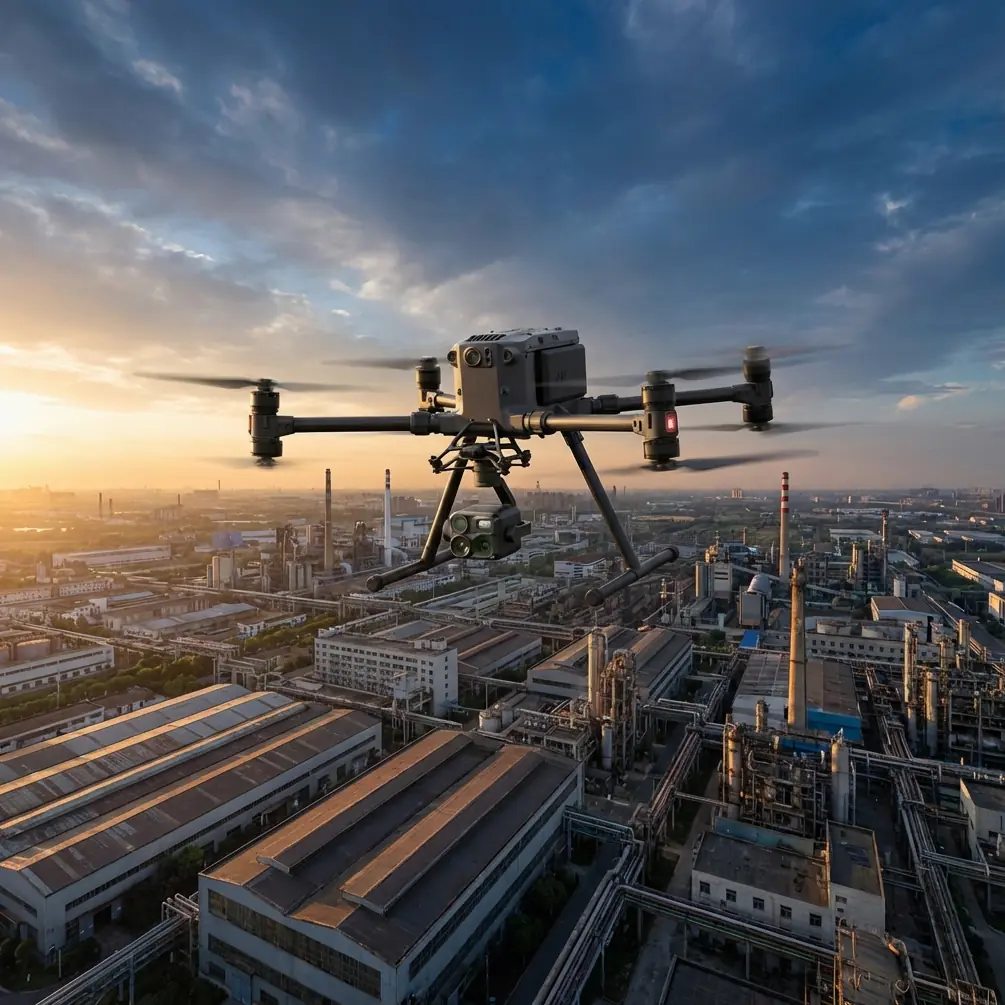
Scouting High-Altitude Highways with Matrice 4: What Actually Matters in the Field
META: A field-led look at using Matrice 4 for high-altitude highway scouting, with practical insight on transmission, thermal signature work, photogrammetry, battery strategy, and why aircraft design fundamentals still matter.
High-altitude highway scouting looks simple on a planning board. Long corridors, repeatable routes, clear deliverables. Then you get on site and reality starts stacking the deck against you.
Thin air changes aircraft behavior. Mountain weather moves fast. Signal paths are clean one minute and broken by terrain the next. Asphalt, concrete, retaining walls, drainage cuts, exposed rock, and bridge decks all create a job that is part mapping exercise and part inspection campaign. You are not just collecting images. You are trying to collect dependable evidence under conditions that punish weak systems and sloppy flight planning.
That is where the Matrice 4 conversation becomes interesting.
I’m not talking about it as a spec-sheet object. I’m talking about what it means when you have to scout highway sections at elevation, cover ground efficiently, preserve image integrity for photogrammetry, and still leave enough margin to revisit a heat anomaly or structural concern on the same sortie window.
A few years ago, one of the hardest parts of this kind of work was not the sensor payload. It was operational consistency. We could usually get data, but getting clean, repeatable, defensible data over a mountainous road corridor was another matter. The drone might fly well enough at takeoff, then start showing the small penalties of altitude and environmental variability as the mission stretched out. That problem forced crews to think more like aircraft designers than gadget users.
That mindset is still useful today, especially with Matrice 4.
The hidden issue in high-altitude highway work: load paths and control discipline
Most operators think first about camera resolution or range. Those matter, of course. But high-altitude corridor scouting begins with a more basic question: how well does the aircraft tolerate stress, loading changes, and control-system demands over a long mission?
One of the reference materials behind this discussion comes from an aircraft design handbook section on load, strength, and stiffness, specifically a page dealing with contact stress and deformation formulas that can be simplified under certain conditions. The page includes a coefficient table and a formula labeled (16-68a) for maximum stress. To a highway-drone operator, that is not abstract engineering trivia. It points to something practical: when a system is subjected to repeated mechanical loads, small changes in force distribution and material response can affect reliability over time.
Why bring that up in a Matrice 4 article?
Because high-altitude missions amplify mechanical consequences. Battery latching, gimbal stabilization under turbulence, landing gear contact on rough shoulders, vibration propagation during rapid altitude changes, and repeated takeoff cycles from uneven terrain all benefit from a platform designed with real structural discipline behind it. When you are launching multiple times along a highway corridor, contact loads and stiffness are not theoretical. They shape whether the aircraft maintains calibration, whether imagery remains consistent, and whether the airframe continues to behave predictably after a punishing workday.
In my experience, this is one of the reasons serious operators gravitate toward enterprise platforms like Matrice 4 for corridor work. Not because they merely fly, but because they keep flying with the kind of repeatability that makes engineering teams trust the data.
High altitude punishes weak propulsion decisions
The second reference document is a handbook on powerplant system design, and even from a table-of-contents page it highlights something crucial: propulsion and control are a systems problem, not a single-component problem. It references propeller diameter selection, blade shape and number selection, rotational speed selection, aerodynamic efficiency, and control system design requirements. It also separates hard, soft, and electrical control-system design, with sections around pages 409 to 424 devoted to the topic.
That matters more than many drone articles admit.
At high altitude, you feel the penalties of poor propulsion-system matching earlier. Lift margins tighten. Throttle response feels more precious. Hovering for thermal confirmation or bridge-detail capture costs more. Every inefficient acceleration and every unnecessary climb eats into mission options. A well-integrated aircraft is not just one with enough power. It is one where the propulsion logic, motor response, and control architecture stay coherent as the environment becomes less forgiving.
For highway scouting with Matrice 4, that translates into a simple field truth: you want a platform that holds line and attitude cleanly while you capture actionable data, not one that burns operator attention just staying composed.
That difference shows up immediately when flying photogrammetry grids over elevated road segments or tracing along winding mountain cuts. A stable aircraft gives you more consistent overlap, fewer problematic frames, and cleaner reconstruction later. If your deliverable depends on accurate surface modeling, embankment review, cut-slope monitoring, or drainage-path interpretation, flight stability is no side issue. It sits at the center of data quality.
Why Matrice 4 makes the problem easier
On a high-altitude highway project, Matrice 4 starts to pay off when the mission shifts between broad coverage and targeted verification.
A typical day might begin with photogrammetry to build a current corridor model. That means disciplined overlap, stable passes, and attention to GCP strategy where terrain and access allow. The moment you have a baseline map, the mission often changes. Now you are checking guardrail alignment, slope protection, expansion joints, culvert outlets, pavement edge failures, or suspicious heat signatures around electrical roadside equipment and bridge interfaces.
That is where a platform that can move fluidly between visual documentation and thermal signature work becomes more than convenient. It cuts friction out of the workflow.
At altitude, you do not want to waste your weather window flying one system for mapping and another for thermal interpretation if one aircraft can manage the day with less setup complexity. Matrice 4 is compelling in this role because it fits the real rhythm of corridor scouting: wide-area context first, then anomaly-driven inspection.
Thermal work in highway environments is especially valuable when used with discipline. It can help identify moisture behavior beneath surfaces, heating irregularities in equipment housings, drainage issues after sun loading, or deck areas that deserve closer follow-up. Thermal does not replace engineering judgment, but it changes where you point that judgment. It narrows the search.
Transmission is not a luxury in mountain corridors
Anyone who has worked around elevated highways knows the map lies about line of sight.
You think the route is straightforward, then the terrain introduces blind geometry. Ridge lines, cut sections, tunnel approaches, overpasses, and vegetation can all interfere with control confidence. This is why O3 transmission belongs in any serious discussion of Matrice 4 for this scenario. Long corridor missions are not just about maximum range claims. They are about maintaining a dependable link in topography that keeps trying to interrupt your assumptions.
The practical benefit is not simply distance. It is fewer interruptions to your workflow, fewer conservative aborts caused by unstable transmission conditions, and a better chance of finishing a corridor segment during the weather window you actually have.
If your program includes BVLOS operations where regulations, approvals, and procedures support them, transmission reliability becomes even more consequential. Highway owners and infrastructure teams care less about flashy capabilities than about mission continuity and repeatable coverage. They want to know whether a section can be inspected on schedule and whether the resulting data can stand up in planning meetings. Reliable transmission helps create that confidence.
Data security matters when road data becomes infrastructure data
Highway scouting often produces more than pretty maps. It produces infrastructure records, defect imagery, thermal findings, route-condition evidence, and georeferenced datasets that may move between contractors, consultants, and asset owners.
That makes AES-256 relevant.
Security features are easy to ignore until a transport agency or engineering consultant asks how field data is protected in transit and in workflow handling. At that point, secure transmission and data discipline stop being checkboxes and become part of your professional credibility. Matrice 4 fits better into those conversations when secure communications are part of the system story, especially on projects where preliminary findings could affect maintenance scheduling or contractor accountability.
Battery handling is a mountain job issue, not just a convenience feature
In high-altitude highway scouting, battery strategy can break the mission more quickly than sensor limitations.
You may be operating from lay-bys, temporary staging points, mountain pull-offs, or narrow service access areas. Weather can shorten usable windows. Teams often need to keep aircraft turnover tight, especially when conditions are stable for only a limited stretch. This is why hot-swap batteries are not a comfort feature. They are a field-efficiency tool.
If you can land, replace power quickly, and relaunch without rebuilding your whole mission rhythm, you preserve both time and concentration. That matters when your crew is managing traffic-adjacent safety, altitude effects, and mapping consistency all at once.
On corridor jobs, the best operators think in cycles: launch, acquire, verify, recover, relaunch. The shorter and cleaner those cycles are, the more useful the aircraft becomes over a full day.
Photogrammetry at altitude: where discipline beats enthusiasm
One of the easiest mistakes in highway drone work is assuming that if the imagery looks sharp, the mapping result will be trustworthy. It does not work that way.
At high altitude, photogrammetry needs tighter planning because terrain variation can distort consistency across a route. You need overlap that survives elevation changes, flight lines that respect slope transitions, and a clear plan for GCP use where survey-grade control is required. On some road sections, direct access for control points is limited or unsafe, so the mission design needs to anticipate where control can be placed and where model confidence should be qualified.
Matrice 4 helps here not because it eliminates process, but because it supports process. Stable flight behavior and efficient route execution reduce the number of hidden errors you discover later at the processing stage. That means less rework and fewer unpleasant conversations when someone overlays your orthomosaic against design drawings or previous survey baselines.
A better way to think about Matrice 4 for highway scouting
The wrong way to evaluate Matrice 4 is to ask whether it can fly high-altitude highway missions.
It can.
The better question is whether it reduces friction across the full chain of work: launching in difficult terrain, maintaining stable control, preserving transmission quality, collecting photogrammetry-grade imagery, shifting to thermal confirmation, protecting data, and cycling through batteries without wasting operational momentum.
That is the real test.
The two reference handbooks, even though they come from traditional aircraft design contexts, reinforce the point. One centers on structural behavior under load and deformation. The other emphasizes propulsion, control-system architecture, and component design. Those are not distant textbook concerns. They are the bones of reliable flight. And reliable flight is what makes useful highway data possible.
When I look at Matrice 4 through that lens, I do not see a generic drone upgrade. I see a platform that better matches the realities of corridor inspection at elevation. It lets experienced teams spend less energy compensating for the aircraft and more energy interpreting the infrastructure.
That is a meaningful shift.
If you are planning a high-altitude highway scouting workflow and want to compare mission design options, payload strategy, or data-capture setup, you can message a project specialist here and discuss the operational details directly.
For teams working in mountainous road environments, that conversation is often more valuable than another generic spec comparison. The challenge is never just the drone. It is how the aircraft, mission plan, and terrain behave together.
And that is exactly where Matrice 4 earns its place.
Ready for your own Matrice 4? Contact our team for expert consultation.