
Matrice 4 on Remote Highway Recon: A Field Report
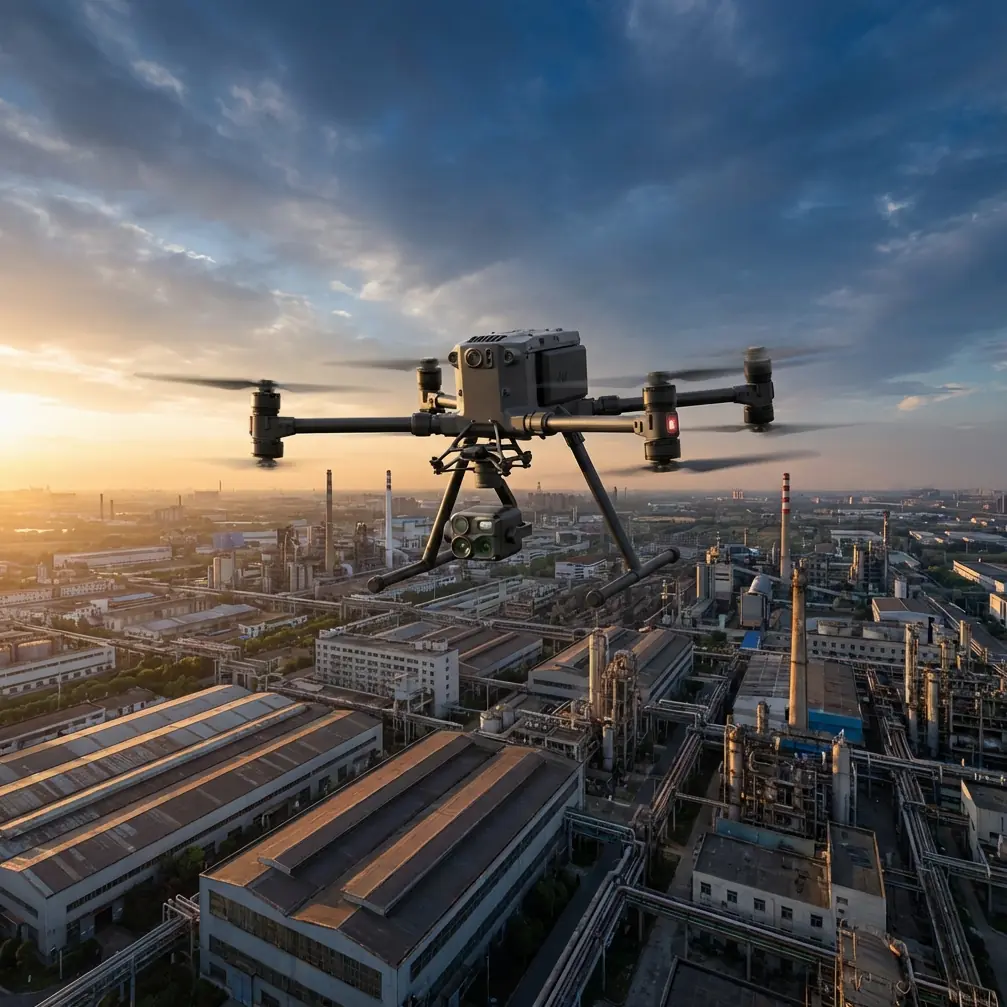
Matrice 4 on Remote Highway Recon: A Field Report on Structure, Systems, and Battery Discipline
META: Specialist field report on using Matrice 4 for remote highway scouting, with practical insight on structural loads, flight-system test logic, thermal workflow, O3 transmission, AES-256, BVLOS planning, and battery management.
Remote highway scouting punishes weak assumptions.
You are rarely flying in postcard conditions. Heat shimmer comes off asphalt by late morning. Embankments create odd wind behavior. Long linear corridors tempt crews to stretch distance, but the real constraint is not bravado. It is systems discipline: link quality, battery timing, sensor intent, and a flight platform that remains predictable after repeated transport, setup, and mission cycles.
That is why the Matrice 4 conversation should not be reduced to camera specs or endurance claims alone. For highway work in remote areas, the more serious question is this: how well does the aircraft behave as an integrated machine when the mission requires repeated launch-recover-relocate loops, reliable observation over long corridors, and clean data for engineering decisions?
My own framework for evaluating that kind of platform comes from two places that most operators never connect. One is structural load thinking. The other is avionics test philosophy. The reference material behind this article is not a Matrice 4 brochure at all. It comes from aircraft design manuals: one discussing how load paths change across wing beams and root sections, another outlining how flight-control electronics are tested through simulated signals, loads, and automated checks. Odd source material for a UAV field report, perhaps. Yet for infrastructure operators, those ideas matter more than marketing adjectives.
Why structural thinking belongs in a highway drone workflow
One of the source documents focuses on wing structural design and makes a blunt point: when multiple load-carrying members have very different transmission paths, you cannot safely assume a simple, uniform stress picture. In the cited analysis of a short-span wing layout, the rear beam can see much larger bending effects than the forward beam because it is longer and less stiff. The text even notes that this kind of arrangement should not be designed using the ordinary flat-section bending assumption. That is not just an academic footnote.
Operationally, it tells us something useful about a drone like Matrice 4 in field deployment. Highway scouting is repetitive. Cases get loaded into pickups. Aircraft are hand-carried over gravel shoulders. Gimbals get locked and unlocked over and over. Payload assemblies, arms, landing structures, and camera mounts all live through transport vibration and mission cycling before they ever see aerodynamic loads in the air.
Why does that matter? Because inspection crews often act as if the aircraft is either “fine” or “damaged,” with nothing in between. Real machines age through load-path accumulation. A transport shock may not break anything obvious, but it can shift how a mounted sensor or structural member carries repeated vibration afterward. In practical terms, if your Matrice 4 starts producing subtle blur at higher zoom, inconsistent horizon leveling, or small photogrammetry alignment errors on corridor passes, the cause is not always software or pilot technique. Sometimes it is the cumulative effect of real-world handling on the aircraft’s stiffness chain.
That structural manual also references a solved bending-moment distribution for a delta-wing root section and shows how elastic effects change the original root load distribution. Again, the engineering detail matters because it reinforces a lesson drone crews should respect: actual load behavior shifts once the structure flexes. For a highway operator, that is a reminder to treat calibration and repeatability as living tasks, not one-time setup items. If you are collecting photogrammetry for slope stability, culvert deformation, or pavement edge erosion, repeatable geometry matters more than cinematic smoothness.
So when I build a Matrice 4 field workflow for remote roads, I include a “mechanical truth” ritual before every serious mapping block:
- check arm locks and visible alignment,
- verify gimbal freedom before power-on,
- run a short hover for vibration and attitude behavior,
- inspect image sharpness at center and edge before committing to a long corridor.
That last point saves hours. A 90-second image sanity check beats discovering back at the office that a half-day corridor mission has inconsistent sharpness.
What avionics test doctrine teaches Matrice 4 operators
The second source document is about flight-control system test equipment. It describes both manual and automatic test setups for flight-control computers and boards. The practical substance is fascinating. The testing environment supplies different input excitations such as DC voltage, current signals, AC signals at different frequencies and amplitudes, pulse signals, and other waveforms. It also simulates loads, switches input signals and loads, measures analog and digital quantities accurately, processes the data, judges whether results are correct, and records them through display, printing, and storage. The document also distinguishes between manual test equipment for development or small-batch production and automated systems for batch testing, including an integrated test setup for the flight-control computer where the unit under test is real but the surrounding environment is simulated.
Why should a highway drone operator care?
Because that is exactly how you should think about trust in a mission aircraft. Not as magic. As a chain of inputs, loads, measurements, and recorded outcomes.
When crews lose confidence in a platform during remote corridor work, the reason is often vague: “the aircraft felt off,” “the signal dipped,” “the camera lagged,” “the batteries dropped faster than expected.” Vague observations are expensive. The better approach is to copy the logic of test engineering.
Before a BVLOS-style corridor plan, even where regulations require visual observers or segmented operations, ask:
- What inputs am I relying on?
- What loads is the system seeing?
- What outputs can I verify before the mission starts?
- What can I record to isolate faults later?
That mindset changes behavior. On Matrice 4, O3 transmission quality is no longer just a comfort feature. It becomes one testable component of mission integrity. AES-256 is no longer abstract cybersecurity language. It matters because a remote highway survey may include sensitive infrastructure imagery, contractor work records, or georeferenced defect evidence that must be protected in transit and at handoff. Thermal signature work is not just about “seeing heat.” It becomes a controlled method for locating drainage anomalies, overheated equipment near service corridors, or moisture-driven material differences at dawn or dusk, when thermal contrast is most informative.
The old avionics manual’s distinction between manual and automated testing also mirrors a mature drone program. A small team may begin with manual checks: hover test, live feed review, battery voltage review, compass status, SD health, and sample capture. As operations scale, that should evolve into standardized preflight automation and postflight logging. The crews with the best results on remote roads are not the ones who fly the most aggressively. They are the ones who make anomalies visible early.
A battery lesson that changed how I run long-road missions
Here is the field habit I wish more Matrice 4 teams would adopt.
Do not plan battery changes around the point when the app begins making you nervous. Plan them around the point when your landing options are still generous.
Remote highways create a psychological trap. The route looks open, so pilots keep pushing one more bridge, one more cut slope, one more thermal pass over a culvert line. Then the aircraft is returning against a headwind over sparse terrain with fewer practical recovery spots than the map suggested. That is not battery management. That is borrowed luck.
My rule is simple: if the mission profile involves long outbound tracking over a road corridor, I decide the turn point before takeoff and tie it to reserve logic, not optimism. On hot days, I cut that turn point back further than the spreadsheet says I need. Asphalt radiance, ambient temperature, and wind layers all conspire against theoretical endurance. The aircraft may be healthy and still consume margin faster than expected.
If your operation uses hot-swap batteries in a rotating field workflow, discipline matters even more. The benefit of hot-swap capability is tempo. The risk is complacency. A battery set that is electrically acceptable can still be operationally inconvenient if its temperature, charge balance, or recent discharge history makes it the wrong choice for the next leg. I prefer to group batteries by mission role during the day: freshest set for the longest corridor block, warmed and monitored set for shorter verification flights, and no “squeeze one more sortie out of it” behavior late in the day.
One practical tip from field experience: after a long return leg, do not rush a hot-swapped relaunch just because the road team is waiting. Use the reset window to review the previous flight’s power curve, wind behavior, and actual reserve at touchdown. That two-minute pause often tells you whether your second sortie should keep the same altitude and speed profile or change it. Battery swaps are not just about replacing energy. They are decision points.
Building a Matrice 4 highway workflow that produces engineering-grade outputs
For remote highway scouting, Matrice 4 becomes most valuable when you stop treating it as a one-mode tool.
A thermal signature pass at first light can reveal moisture retention patterns near shoulders, blocked drainage paths, or temperature contrasts around utility structures. Later in the morning, a photogrammetry mission can document the same corridor for orthomosaics, surface models, and progress tracking. If you need measurable outputs for design or claims support, use GCP discipline where the terrain and access plan allow it. Even when onboard positioning is good, ground control still matters when the deliverable must survive scrutiny.
This is where structural repeatability and systems verification meet real project value. If the aircraft is mechanically stable, the camera geometry is behaving, the link remains solid through O3 transmission, and your workflow is built around verified inputs and logged outcomes, the result is not just attractive imagery. It is defensible data.
That distinction is huge on highways. A beautiful image does not help much when the client asks whether a slope movement is measurable, whether a crack pattern aligns with drainage failure, or whether imported fill has changed shape between two mobilizations. Reliable drone work answers those questions because the operation was designed for consistency from the start.
What I would brief a highway crew before a Matrice 4 deployment
If I were briefing a team tomorrow for remote road scouting with Matrice 4, I would keep it blunt.
First, protect the aircraft from hidden mechanical drift. Transport and repetitive setup affect performance long before obvious damage appears.
Second, think like a test engineer. The old flight-control reference describes systems that inject known signals, simulate loads, switch conditions, and verify outputs across both analog and digital channels. That same logic belongs in your preflight and postflight routine. Validate the system, do not merely assume it.
Third, use the platform’s secure communications and link performance intentionally. O3 transmission and AES-256 matter because remote work is both technically demanding and operationally sensitive.
Fourth, separate sensor goals. Thermal missions, zoom reconnaissance, and photogrammetry each punish different mistakes. Fly each one with its own tolerances.
Fifth, battery management is a mission-planning issue, not a charger issue. Turn early. Swap deliberately. Review every power curve.
And if your team is still refining its corridor workflow, I would rather see a short, repeatable mission flown well than an ambitious route flown on thin reserves and unverified assumptions. For operators comparing field methods or building a deployment checklist around remote-road inspections, this quick Matrice 4 operations chat can help clarify workflow choices before your next mobilization.
The strongest case for Matrice 4 in highway scouting is not glamour. It is composure. A platform earns trust when it remains structurally consistent in repeated field use, behaves like a verifiable system rather than a black box, and supports disciplined energy management over long linear missions. Those are not brochure virtues. They are the difference between data you can use and footage you merely captured.
Ready for your own Matrice 4? Contact our team for expert consultation.