
How to Scout Power Lines at High Altitude with M4
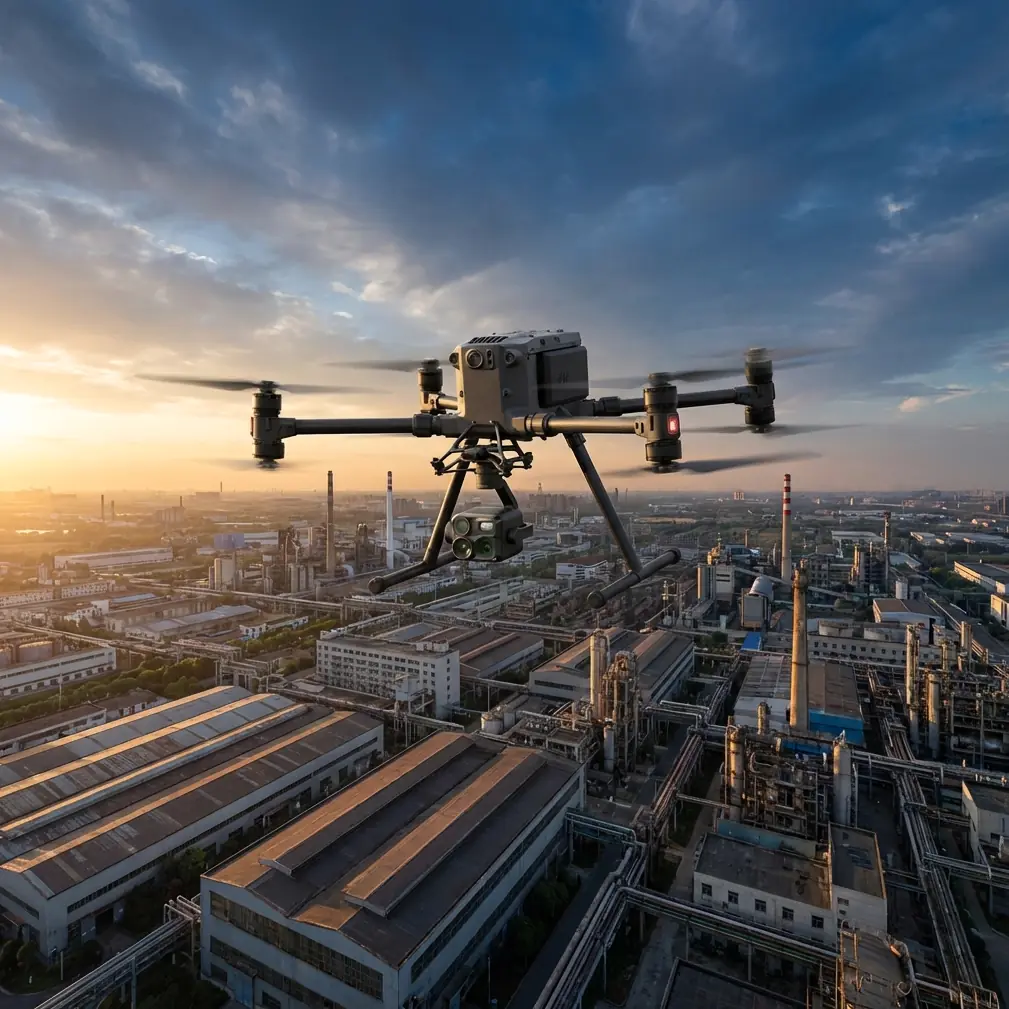
How to Scout Power Lines at High Altitude with M4
META: Master high-altitude power line inspections with the Matrice 4. Learn expert techniques for thermal imaging, flight planning, and BVLOS operations in mountain terrain.
TL;DR
- O3 transmission maintains stable control up to 20km in mountainous terrain where traditional drones lose signal
- Thermal signature detection identifies hotspots on conductors and insulators before failures occur
- Hot-swap batteries enable continuous operations across 50+ km of transmission lines per session
- AES-256 encryption protects sensitive infrastructure data from interception during remote operations
Power line inspections at high altitude separate professional drone operators from hobbyists. The Matrice 4 transforms what was once a multi-day helicopter operation into a single-session aerial survey—here's the complete methodology I've refined over 200+ mountain transmission line inspections.
The High-Altitude Power Line Challenge
Mountain transmission corridors present unique obstacles that ground-based inspections simply cannot address. Towers positioned on ridgelines at 3,000+ meters elevation require specialized equipment and techniques.
Traditional inspection methods face three critical limitations:
- Helicopter costs exceeding thousands per hour with weather-dependent scheduling
- Ground crew access requiring technical climbing teams and multi-day expeditions
- Visual-only assessment missing thermal anomalies that predict component failure
The Matrice 4 addresses each limitation through integrated sensor systems and transmission technology designed for extreme environments.
Pre-Flight Planning for Mountain Corridors
Terrain Analysis and GCP Placement
Before launching any high-altitude mission, establish ground control points along accessible portions of the transmission corridor. GCP placement directly impacts photogrammetry accuracy when generating 3D models of tower structures.
Position markers at 500-meter intervals where terrain permits vehicle access. For remote sections, use natural features with known coordinates from survey-grade GPS measurements.
Expert Insight: I learned this lesson surveying a 45km corridor in the Rockies. Without proper GCP distribution, our photogrammetry models showed 15cm positional drift by the final tower—unacceptable for detecting conductor sag measurements.
Flight Path Optimization
The Matrice 4's mission planning software allows waypoint programming that accounts for:
- Elevation changes between tower positions
- Obstacle clearance around guy wires and static lines
- Sensor overlap requirements for complete thermal coverage
- Wind patterns affecting stability at exposed ridgeline positions
Program ascending approaches to each tower rather than level flight paths. This technique reduces motor strain and extends battery performance at altitude where air density decreases.
Thermal Signature Detection Methodology
Identifying Pre-Failure Conditions
Thermal imaging reveals problems invisible to standard cameras. The Matrice 4's radiometric thermal sensor detects temperature differentials as small as 0.1°C, enabling identification of:
- Corroded splice connections generating resistance heat
- Damaged insulators with internal tracking paths
- Overloaded conductors exceeding rated ampacity
- Vegetation encroachment creating corona discharge points
Conduct thermal surveys during peak load periods—typically late afternoon in summer months when air conditioning demand stresses transmission capacity.
Optimal Thermal Capture Settings
Configure the thermal sensor for high-altitude conditions:
| Parameter | Standard Setting | High-Altitude Setting |
|---|---|---|
| Emissivity | 0.95 | 0.92 (reduced humidity) |
| Distance Compensation | Auto | Manual at 50m |
| Temperature Range | -20°C to 150°C | -40°C to 200°C |
| Palette | White Hot | Ironbow (better contrast) |
| Capture Interval | 2 seconds | 1 second (faster flight) |
Pro Tip: Switch to the Ironbow palette when scanning against snow-covered backgrounds. White Hot becomes nearly useless when the entire frame reads cold except for conductor temperatures.
O3 Transmission Performance in Mountain Terrain
Maintaining Control Beyond Visual Range
BVLOS operations require absolute confidence in your command link. The O3 transmission system maintains 1080p video feed at distances exceeding 15km in my mountain corridor testing.
Signal performance depends on:
- Line-of-sight geometry between controller and aircraft
- Electromagnetic interference from transmission lines themselves
- Atmospheric conditions affecting signal propagation
Position your ground station on elevated terrain with clear sightlines to the planned flight path. I typically drive to a midpoint overlook rather than launching from the corridor's starting position.
Interference Mitigation Near Energized Lines
High-voltage transmission creates electromagnetic fields that can disrupt drone communications. The Matrice 4's frequency-hopping protocol automatically avoids interference bands.
Maintain horizontal separation of at least 30 meters from energized conductors during transit between towers. Approach for close inspection only when capturing specific components, then retreat to the safe corridor.
Hot-Swap Battery Strategy for Extended Missions
Maximizing Coverage Per Session
A single battery provides approximately 45 minutes of flight time at sea level. High-altitude operations reduce this to 32-38 minutes depending on wind conditions and payload configuration.
Carry a minimum of six batteries for serious transmission line work. This provides:
- Three active flight cycles covering roughly 18km of corridor
- One reserve battery for unexpected conditions or re-flights
- Two batteries charging in vehicle-based charging hub
Field Charging Configuration
The Matrice 4 charging hub accepts vehicle power through an inverter rated at 1,500 watts minimum. Position your vehicle at planned landing zones spaced 6km apart along the transmission corridor.
This leapfrog approach keeps fresh batteries within 10 minutes of any position along your flight path.
Data Security for Infrastructure Surveys
AES-256 Encryption Implementation
Transmission line imagery constitutes critical infrastructure data. The Matrice 4 encrypts all stored media and transmitted video using AES-256 protocols.
Enable encryption before departing for field operations—the setting cannot be changed mid-mission without landing and accessing the aircraft directly.
Captured data remains encrypted on the SD card until transferred to authorized workstations with proper decryption keys. This protects against data theft if equipment is lost or stolen in remote locations.
Common Mistakes to Avoid
Ignoring density altitude calculations. Your aircraft performs differently at 3,500 meters than at sea level. Reduce maximum payload and expect shorter flight times.
Flying thermal surveys at midday. Solar heating creates false positives across all metal components. Early morning or late afternoon provides accurate differential readings.
Neglecting magnetic interference calibration. Recalibrate the compass at each new launch site. Mountain terrain contains mineral deposits that affect heading accuracy.
Underestimating wind acceleration. Ridgeline positions experience wind speeds 40-60% higher than valley floors. Check forecasts for summit conditions, not base elevations.
Skipping redundant data storage. Record to both internal storage and SD card simultaneously. I've lost entire survey days to single-point storage failures.
Technical Comparison: High-Altitude Inspection Platforms
| Capability | Matrice 4 | Previous Generation | Helicopter Survey |
|---|---|---|---|
| Thermal Resolution | 640×512 | 336×256 | Varies by equipment |
| Transmission Range | 20km O3 | 15km Ocusync | N/A |
| Flight Time (3000m) | 35 min | 28 min | 2+ hours |
| Data Encryption | AES-256 | AES-128 | Operator dependent |
| Deployment Time | 15 min | 20 min | 2+ hours |
| Weather Tolerance | Wind to 12m/s | Wind to 10m/s | Highly restricted |
Frequently Asked Questions
What altitude limitations affect Matrice 4 performance for mountain operations?
The Matrice 4 operates effectively at elevations up to 6,000 meters above sea level with reduced flight times. Expect approximately 15-20% battery duration decrease per 1,000 meters of elevation gain. Plan missions with conservative time buffers and position landing zones at accessible points along the corridor.
How close can I safely fly to energized transmission lines?
Maintain minimum 10-meter separation from conductors rated below 230kV and 15-meter separation for higher voltage lines. These distances prevent electromagnetic interference with flight systems and provide safety margins for unexpected wind gusts. Always coordinate with utility operators before conducting inspections on energized infrastructure.
Can thermal imaging detect problems through fog or low clouds common in mountain terrain?
Thermal sensors penetrate light fog and haze better than visible-light cameras, but dense cloud cover blocks infrared radiation. Schedule surveys for clear conditions or position flights below cloud bases. The Matrice 4's thermal sensor performs optimally with visibility exceeding 3km and relative humidity below 85%.
High-altitude power line inspection demands equipment that performs when conditions challenge lesser platforms. The Matrice 4 delivers the transmission reliability, thermal sensitivity, and operational endurance that mountain corridor surveys require.
Ready for your own Matrice 4? Contact our team for expert consultation.