
Matrice 4 in the Field: How I’d Scout a Remote Solar Farm
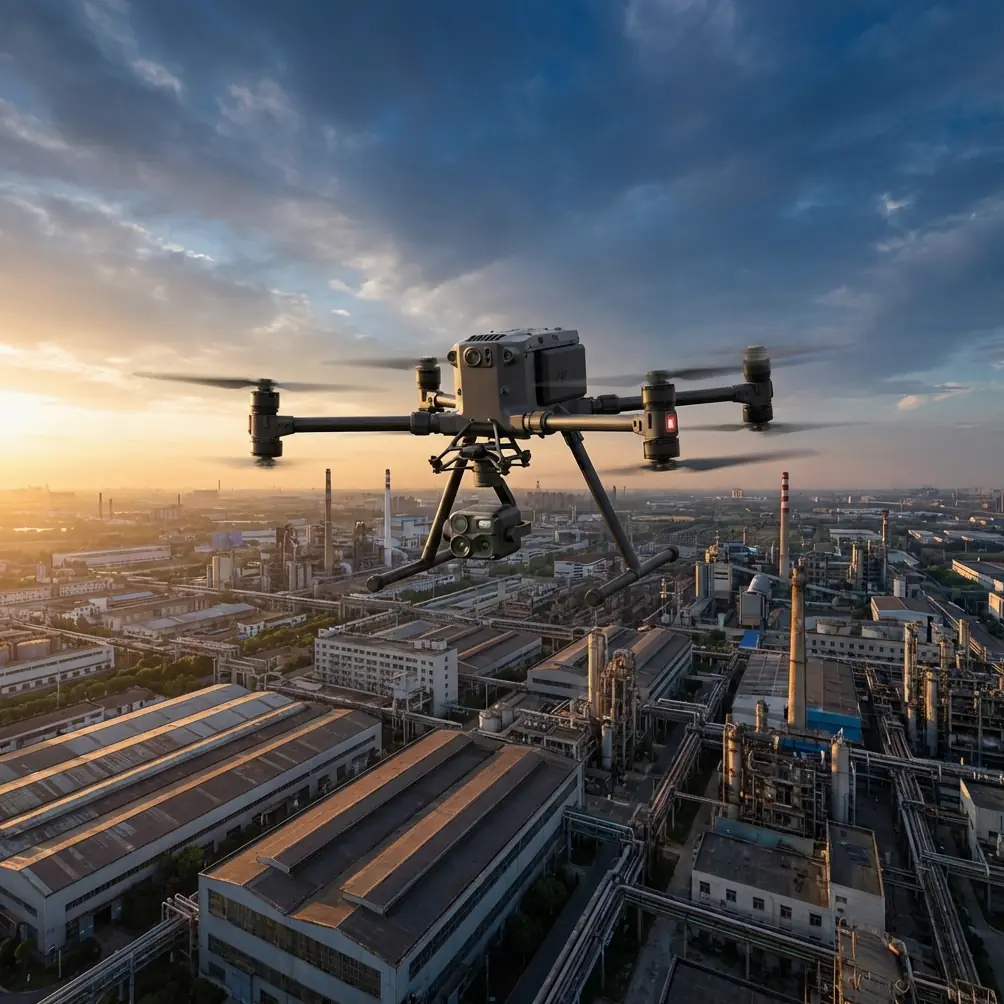
Matrice 4 in the Field: How I’d Scout a Remote Solar Farm for Faults, Mapping Accuracy, and Faster Decisions
META: A field-report style guide to using Matrice 4 for remote solar farm scouting, covering thermal signature capture, photogrammetry workflow, GCP strategy, O3 transmission, AES-256 security, hot-swap batteries, and practical accessory upgrades.
Remote solar sites look simple from the access road. Row after row of panels, clean geometry, little apparent drama. Then the aircraft goes up and the truth starts to separate itself from the pattern: a string with a thermal anomaly, inverter housing heating unevenly, washout around a service track, vegetation creeping toward a fence line, standing water where there should be none.
That is where a platform like the Matrice 4 earns its keep.
If I were planning a scouting mission over a remote solar farm today, I would not think about the aircraft as a camera with props. I would think about it as a decision tool. The point is not just to collect images. The point is to return with evidence strong enough to support maintenance dispatch, engineering review, and repeatable site comparisons over time. For that kind of work, the Matrice 4 workflow matters more than any single spec sheet bullet.
This field report is built for a practical scenario: a remote solar installation where access is limited, weather can shift fast, and every additional truck roll has a cost in time and risk. Under those conditions, the Matrice 4 stands out less because of marketing shorthand and more because it allows one crew to combine thermal inspection, visual assessment, and mapping-grade data capture in a single operation.
The first operational question is usually range and link reliability. On a large solar farm, especially one broken into separated blocks over uneven terrain, transmission quality decides whether the mission feels controlled or compromised. This is where O3 transmission becomes more than a familiar acronym. A stable O3 link means the pilot can maintain clearer situational awareness while pushing across long panel corridors and around service infrastructure. On solar assets, that matters because inspection quality often depends on disciplined flight paths rather than improvisation. You do not want to shorten a leg or skip a troublesome section because video confidence drops at the far edge of the array.
There is another reason transmission quality matters in solar work: thermal interpretation is unforgiving. A faint hot cell, a suspicious connector, or a localized heating pattern near combiner equipment can be easy to dismiss if the live view is inconsistent. Good link performance does not replace careful post-processing, but it improves in-field judgment. When your crew sees a thermal signature that looks wrong, they can make a real-time call about whether to re-fly, tighten altitude, or capture an oblique pass before moving on.
Thermal work on solar sites also exposes one of the biggest mistakes I see from newer teams: they treat heat like a yes-or-no indicator. It is not. Thermal signature analysis is comparative. You are looking for outliers across strings, modules, connectors, and electrical housings under similar irradiance conditions. The Matrice 4 becomes useful here when the mission is designed around consistency. Fly at a repeatable altitude. Maintain overlap if you intend to cross-reference with orthomosaics. Record ambient conditions. Build a library of comparable missions instead of a pile of disconnected flights.
This is why I often pair thermal sorties with a photogrammetry run, even when the original request sounds purely inspection-driven. Maintenance teams may ask for hot spots. Asset managers often need more. They want to understand where the issue sits in the wider context of access routes, drainage, perimeter security, vegetation encroachment, and nearby equipment. A clean photogrammetry product gives them that context. It turns a defect from an isolated image into a mapped operational problem.
On a remote solar farm, photogrammetry has another advantage: it lets you document site change without sending survey crews across every block. If storm runoff has shifted gravel access, if erosion has started near mounting rows, or if a substation perimeter shows signs of settlement, a structured mapping mission creates a baseline you can actually revisit. That is where GCP strategy enters the conversation.
A lot of operators either overuse GCPs or skip them because RTK-era workflows have made the subject feel optional. For solar scouting, I still like to use ground control in a disciplined way whenever the deliverable may influence engineering or construction decisions. Not because the aircraft cannot produce strong results on its own, but because GCPs strengthen trust in the map. Trust matters. A maintenance lead deciding whether a recurring issue tracks to the same row segment month after month should not have to wonder if positional drift is muddying the picture.
I do not blanket the site with targets. That wastes time, especially in remote environments. I place GCPs where they support the geometry of the mission and the likely decision points: site corners, access intersections, transitions between panel blocks, and areas near known infrastructure pinch points. Used well, a small, thoughtful set of control points can do more for project confidence than a large, sloppy spread ever will.
Security is another piece that gets overlooked in public discussions and quickly becomes central in real operations. Remote energy sites are critical infrastructure. The value of aerial data is not limited to the defect itself; the imagery may reveal site layout, perimeter weaknesses, equipment placement, and operational routines. That is why AES-256 matters in a way that sounds dry until you are the one responsible for handling inspection data. Encryption is not a vanity feature for this kind of mission. It is part of basic professional hygiene. If you are flying over utility-scale assets, data security belongs in the same sentence as airspace checks and battery planning.
Battery planning, in fact, is where many remote missions succeed or fail. Solar farms can be deceptively punishing because the terrain invites long, repetitive legs. Operators assume the work is straightforward, then discover that ferry time, wind correction, and heat all chip away at the margin. Hot-swap batteries change the rhythm of the day. Instead of powering down and rebuilding the aircraft state between flights, the team can keep momentum. On a remote site with a narrow weather window, that matters more than convenience. It can be the difference between completing both thermal and mapping missions before the afternoon winds pick up or returning with partial coverage and a rescheduled revisit.
I have seen hot-swap capability pay off most clearly when crews split the operation into purpose-built sorties. One flight for broad thermal reconnaissance during favorable environmental conditions. A second for detailed visual confirmation over suspect areas. A third for photogrammetry at a different altitude and overlap profile. If the platform supports smooth battery transitions, the crew thinks in terms of data quality rather than rushing to cram everything into a single compromised mission.
There is also a regulatory and operational planning layer hanging over any remote inspection conversation: BVLOS. Whether the mission is conducted under standard visual limits or a BVLOS framework depends on jurisdiction, authorization, and operator capability. Even when a crew is not flying beyond visual line of sight, the logic of BVLOS-ready planning is useful. It forces discipline. You think harder about route segmentation, emergency procedures, command link integrity, observer placement, and lost-link contingencies. For a remote solar farm spread over significant acreage, that mindset sharpens the mission even if the operation remains fully compliant within line-of-sight boundaries.
One accessory I would strongly consider for this exact use case is a third-party high-visibility landing pad system with weighted edges and integrated GCP markers. It is not glamorous, but it solves two field problems at once. First, it gives the Matrice 4 a cleaner launch and recovery point on dusty, gravel-heavy sites where debris can become an issue. Second, if the markers are surveyed and placed deliberately, the same kit can support portions of the mapping workflow. That is the kind of accessory upgrade I respect: one piece of gear, multiple operational gains, less clutter in the truck.
Another practical accessory worth mentioning is a third-party sun hood for the controller display. Again, not flashy. But on bright solar fields, reflections are relentless, and subtle thermal interpretation on a washed-out screen is a recipe for missed calls. The best field upgrades are usually the least dramatic. They reduce friction, preserve concentration, and let the team make better decisions without changing the aircraft itself.
A typical mission day with the Matrice 4 over a remote solar farm would start before launch, not at it. I would review irradiance conditions, forecast wind shifts, known maintenance history, and previous orthomosaics if available. Then I would define what success looks like. Is the job mainly to identify thermal anomalies at the module level? Is it to verify whether recent storm activity caused grading or drainage issues? Is it to create a sitewide visual baseline for upcoming maintenance? The answer changes flight design. Too many crews skip this step and end up collecting “useful” data that does not directly answer the client’s question.
Once airborne, I would avoid the temptation to chase every anomaly live. Mark it, log it, stay disciplined. Large solar sites punish curiosity when it breaks mission structure. Finish the systematic capture first. Then, if battery and conditions allow, return for targeted detail passes. The Matrice 4 workflow works best when broad coverage and focused inspection are treated as separate data products, even if they happen on the same day.
After landing, the real value starts to take shape in the handoff. Thermal images without operational interpretation are easy to misunderstand. A warm area may reflect loading conditions, angle, or timing rather than a defect. A photogrammetry model without site notes may miss why a maintenance team should care about a surface change near an access track. What decision does the dataset support? Dispatch a technician? Schedule a ground verification? Monitor over time? Reassess after cleaning? That framing is what turns drone output into field intelligence.
For teams building a repeatable inspection program, I would also standardize the reporting language. Use the same row naming logic every time. Keep image references consistent. Tie thermal observations to mapped positions. Note whether GCPs were used and where. Record environmental conditions. The point is not bureaucracy. The point is comparability. If a hotspot reappears six weeks later, the team should be able to line up the evidence without reinventing the system.
One final thought on remote sites: communications with stakeholders often lag behind operations. The pilot may know what was found, but asset managers, EPC teams, and field technicians need a clean path into the information. If you need a quick operational discussion around mission setup or data handoff, I’d usually suggest starting with a simple field coordination thread like message the ops desk here so the right people can align before the next deployment. On complex sites, clarity between teams saves more time than any headline aircraft feature.
The Matrice 4 is not valuable because it promises everything. It is valuable because, in the right hands, it supports a disciplined inspection stack for real infrastructure work. O3 transmission helps maintain control and confidence across long solar corridors. AES-256 supports responsible handling of sensitive site data. Hot-swap batteries preserve momentum when weather and distance put pressure on the schedule. Thermal capture reveals faults that visual inspection can miss. Photogrammetry, reinforced by smart GCP placement, gives those faults context and makes the findings easier to act on.
That is the difference between flying a drone over a solar farm and actually scouting one.
Ready for your own Matrice 4? Contact our team for expert consultation.