
Matrice 4 in Mountain Solar Farm Recon: What Actually
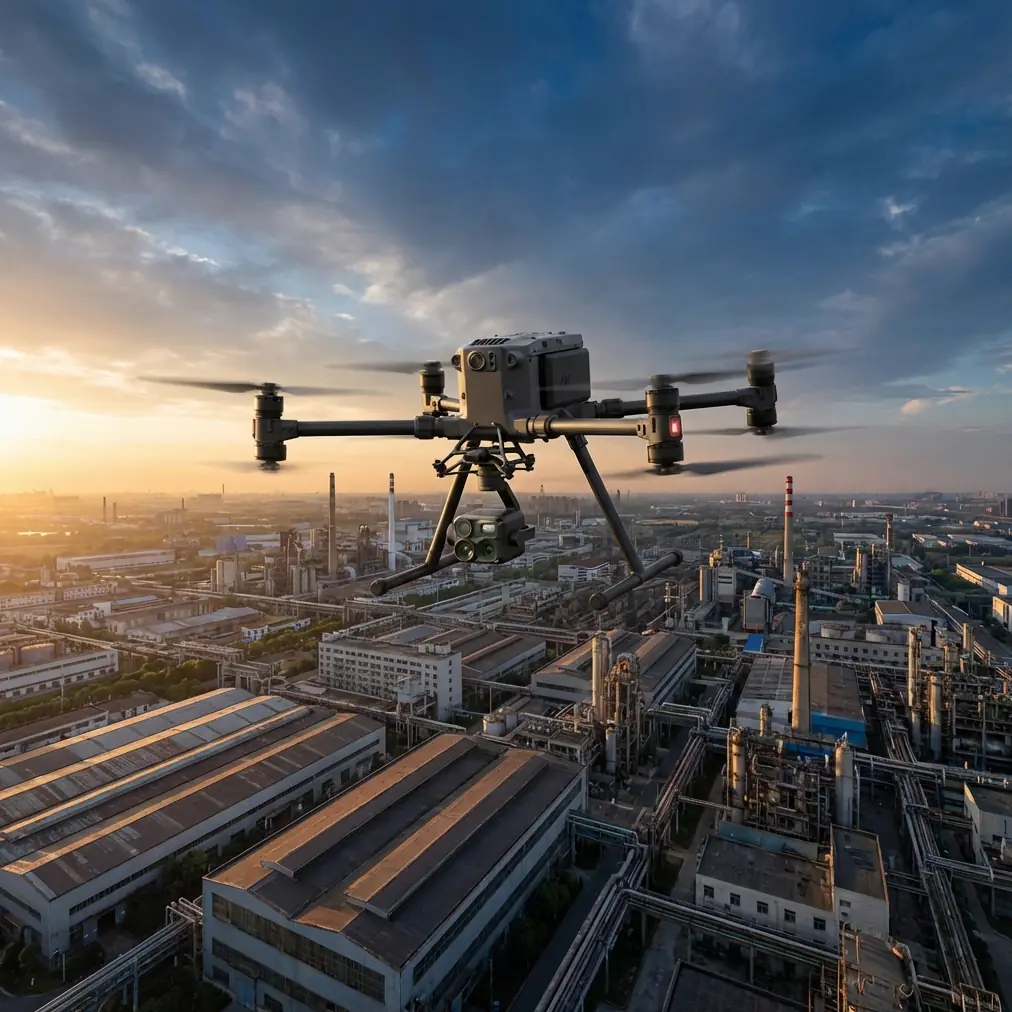
Matrice 4 in Mountain Solar Farm Recon: What Actually Matters in the Field
META: A field-driven Matrice 4 case study on scouting mountain solar farms, covering thermal signature work, photogrammetry, transmission reliability, and why system design details matter in difficult terrain.
By Dr. Lisa Wang, Specialist
Mountain solar farm scouting looks straightforward on a screen. In the field, it rarely is.
Terrain breaks line of sight. Wind shifts along ridgelines. Panel rows create repeating visual patterns that can confuse weak mapping workflows. And the mission itself is usually two jobs disguised as one: first, build a reliable site model; second, identify what the eye cannot see, especially heat anomalies, drainage issues, access constraints, and early signs of installation or maintenance risk.
This is where Matrice 4 becomes more interesting than a simple “better drone” story. For mountain solar work, the real advantage is not any single headline feature. It is how the aircraft behaves as a system under transitions: switching from terrain-following reconnaissance to precise photogrammetry, from visual inspection to thermal interpretation, from exposed ridge transit to low, slow passes over arrays.
That systems view matters because mountain scouting punishes weak integration.
A real scouting scenario: steep access, fragmented visibility, compressed flight windows
A recent planning exercise for a mountain solar prospect illustrates the point. The site had three terraces cut into uneven slopes, narrow service roads, and long strings of candidate panel zones separated by vegetation and rock outcrops. Ground teams could not efficiently assess all sections in one day. The brief called for:
- a photogrammetric base map
- thermal signature review of terrain and installed electrical assets nearby
- access path verification for construction vehicles
- repeatable data capture for later design comparison
On paper, many enterprise drones can do this. In practice, the platform has to hold together when the mission changes rhythm every few minutes.
Matrice 4 is especially strong here because its value shows up in the handoffs. You are not flying one isolated sensor task. You are managing a chain of interdependent observations.
Why transmission reliability is not a footnote in mountain solar work
People often talk about sensors first. In mountain scouting, I would start with link stability.
Ridges, cuts, and reflective surfaces can make command and video consistency more fragile than operators expect. When a team is relying on O3 transmission across changing topography, the point is not just range on a spec sheet. It is confidence during partial occlusion, route adjustment, and moment-to-moment framing decisions when you need to confirm whether a hotspot is real, whether a service road drops too sharply, or whether a string of modules has a drainage shadow or a thermal issue.
Competitor platforms often look comparable until terrain begins interrupting clean geometry. Then latency, image continuity, and confidence in framing become operational issues, not technical trivia. On a mountain site, that difference affects whether you finish the scouting window before weather shifts.
For teams planning future BVLOS-style workflows where regulations and approvals permit, this matters even more. A stable data link architecture is foundational long before a project reaches beyond visual line of sight. Even during standard operations, mountain solar scouting benefits from that level of communication resilience.
Thermal work: the image is only step one
Thermal signature capture is often misunderstood in early-stage solar assessment. Operators see a warm patch and call it actionable. That is rarely enough.
A mountain site introduces slope angle variation, wind cooling differences, changing irradiance, and mixed surface materials. So the thermal task is not merely collecting heat images. It is separating meaningful anomalies from terrain-driven noise.
Matrice 4 fits this kind of work because it can support a disciplined workflow: wide-area thermal screening first, then closer inspection, then correlation with RGB context and terrain model outputs. In a solar environment, that means you can evaluate whether a suspicious signature aligns with a combiner area, an access corridor under stress, a potential erosion path, or localized vegetation pressure affecting infrastructure planning.
This is where experienced teams outperform casual operators. They do not treat thermal as a standalone deliverable. They pair it with photogrammetry and location control.
Photogrammetry on repeating panel geometry: why control still matters
Anyone who has mapped solar fields knows that rows of panels can create a false sense of precision. Orthomosaics may look clean while underlying alignment drifts. In mountain locations, elevation shifts make this worse.
Using GCP strategy intelligently remains critical, even with a strong aircraft platform. The goal is not to overcomplicate the survey. It is to anchor the model where slope transitions, road junctions, and terrace edges would otherwise introduce uncertainty.
With Matrice 4, a practical workflow is to establish a limited but well-placed set of control points around breaklines and elevation changes, then use the aircraft for consistent overlap and disciplined flight geometry. That gives engineering teams something they can trust when comparing drainage, grading, cable routing, and access options.
This is also one area where the platform can stand out against lighter competitors. Some drones can capture attractive imagery, but when the mission requires switching from reconnaissance to engineering-grade site interpretation, the limiting factor is often repeatability and control discipline, not just camera quality.
A lesson from aircraft system design that applies surprisingly well
One of the more interesting reference points for understanding reliable field systems comes from an older aircraft design handbook discussing propulsion exhaust architecture. It describes a thrust-reversing nozzle arrangement in which 95% of the gas flow can be redirected through reversing cascades in full reverse mode, and it notes a crucial design benefit: the nozzle area control actuator can serve as redundancy for the reverse actuation system, allowing a return to forward thrust if the primary reverse mechanism fails.
At first glance, that has nothing to do with Matrice 4 or solar scouting. But the engineering principle is directly relevant: robust systems are built around controlled transitions and graceful recovery.
In mountain drone operations, the best platform is not just the one that performs well under ideal conditions. It is the one that keeps the mission recoverable when a step changes unexpectedly: signal degradation behind terrain, a weather shift requiring an altered route, battery timing pressure during a second inspection pass, or the need to reframe from mapping altitude to lower-altitude thermal verification.
The handbook also describes a nozzle assembly made from 3 groups of interlinked “petal” and seal structures, with each group containing 12 to 16 pieces. Operationally, that kind of segmented architecture exists because controlled movement and sealing across multiple modes is hard. Again, the lesson transfers. Multi-role field drones succeed when their subsystems are coordinated rather than bolted together as disconnected capabilities.
That is one reason Matrice 4 feels strong in professional scouting. The aircraft is useful not because it has many features, but because those features can be sequenced without turning the mission into a patchwork.
Durability is not just about the airframe
Another reference source in the provided material focuses on sealants and material standards, listing specialized compounds for different functions, including heat-resistant sealing materials and fast-repair categories. That may sound obscure, but it points to a practical truth every mountain operator learns quickly: environmental reliability often comes down to unglamorous details like sealing, contamination resistance, and the ability to maintain integrity through repeated temperature swings.
Solar farm scouting in the mountains exposes an aircraft and its support kit to dust, sudden cooling, strong sun loading, and repeated packing and redeployment. So when evaluating Matrice 4 for this work, I pay attention to the platform as a field system: battery changes, payload protection, connector robustness, workflow continuity after relocation, and how well the aircraft supports repeated takeoff cycles across dispersed launch points.
That is where hot-swap batteries become more than a convenience. On mountain sites, moving between terraces or road cutouts can waste more time than flying. If the aircraft supports faster turnarounds, crews spend less time rebuilding the mission rhythm from scratch and more time maintaining data consistency during narrow weather windows.
Security matters when projects are still sensitive
Early-stage solar scouting often involves land negotiation, design alternatives, and infrastructure planning that clients do not want loosely circulated. AES-256 matters here for a simple reason: transmission and stored mission data can carry commercially sensitive site intelligence long before the project is public.
This is especially relevant when multiple stakeholders are involved—developer, EPC, surveyor, environmental consultant, and asset owner. Matrice 4’s fit for serious enterprise work improves when the data chain is treated as part of the mission, not an afterthought.
What the mountain site taught us about workflow design
The most effective Matrice 4 workflow for this scenario was not a single long mission. It was a layered sequence:
- Initial terrain read from a conservative altitude to understand line-of-sight breaks and wind behavior.
- Photogrammetry block flights with overlap and GCP support focused on terraces, access roads, and drainage paths.
- Thermal screening passes timed for meaningful contrast rather than convenience.
- Targeted revisit flights to investigate anomalies that only became obvious after initial review.
- Battery and launch point choreography to keep crews ahead of mountain travel delays.
That last point is easy to underestimate. In flatland work, inefficient battery planning costs time. In mountain work, it can cost the useful portion of the day. A platform that supports quick resets and stable mission continuity has a measurable advantage.
Where Matrice 4 pulls ahead of weaker alternatives
Some competing systems are acceptable at either mapping or inspection. Fewer are genuinely comfortable doing both on uneven solar terrain without friction.
The issue is not whether another drone can technically capture thermal imagery or produce an orthomosaic. Many can. The issue is whether the operator can move from one task to the next without sacrificing confidence in data alignment, transmission clarity, or turnaround time.
Matrice 4 excels when the mission is dynamic and the site is awkward. That is exactly what mountain solar scouting is.
A lesser platform may force compromises:
- mapping too high to revisit anomalies efficiently
- thermal passes disconnected from survey control
- more conservative routing because transmission confidence drops near terrain breaks
- longer pauses between sorties that fragment the dataset
Those compromises compound. By the end of the day, they show up as reshoots, uncertain engineering inputs, and field notes that cannot fully explain the imagery.
Practical best practices for teams scouting mountain solar farms
If you are deploying Matrice 4 in this environment, these are the habits that consistently improve outcomes:
- Scout for transmission geometry before detailed capture. Do not let the first mapping grid become the experiment.
- Use GCPs where terrain changes, not everywhere. A few smart control points beat many lazy ones.
- Treat thermal anomalies as hypotheses. Verify with RGB context, slope awareness, and repeat passes.
- Plan battery rotations around vehicle movement. The road network often dictates sortie efficiency more than air time.
- Segment the site into decision zones. Construction access, drainage, panel suitability, and maintenance exposure rarely align neatly on one map layer.
- Protect the data path. Security settings are part of mission planning, especially with sensitive development sites.
If your team is building a mountain solar scouting workflow and wants to compare mission design options, a quick field-oriented discussion can save a lot of trial and error: message our UAV specialist directly.
The bottom line
Matrice 4 is not compelling here because of a single buzzword feature. It is compelling because mountain solar farm scouting is a transition-heavy mission, and this aircraft is well suited to transitions.
The most useful lesson from the reference material is not about old engine hardware by itself. It is about engineering philosophy. Systems that work in demanding conditions are designed for mode changes, control continuity, and fallback paths. The same principle separates a drone that merely flies from one that delivers reliable project intelligence.
When you are evaluating ridge access, thermal signature irregularities, terrace geometry, and mapping accuracy in the same day, that difference becomes obvious.
Ready for your own Matrice 4? Contact our team for expert consultation.