
Matrice 4 Guide: Scouting High-Altitude Venues
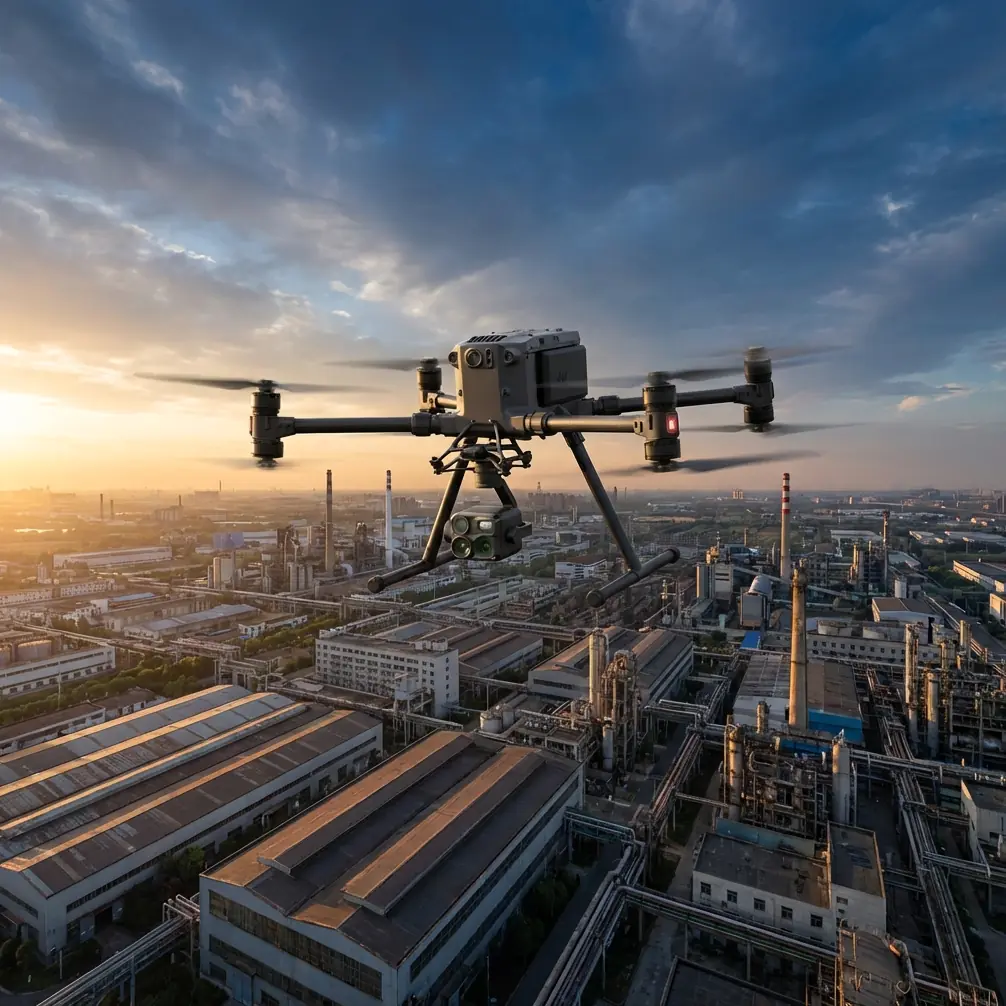
Matrice 4 Guide: Scouting High-Altitude Venues
META: Discover how the DJI Matrice 4 transforms high-altitude venue scouting with thermal imaging, BVLOS capability, and precision photogrammetry for flawless results.
By James Mitchell | Drone Operations Specialist | 12+ Years in Commercial UAS Surveying
TL;DR
- The Matrice 4 operates reliably at altitudes up to 7,000 meters, making it the go-to platform for scouting remote or elevated venue locations where traditional survey methods fail.
- Dual thermal and wide-angle sensors detect hazards, wildlife, and terrain anomalies before ground teams ever set foot on site.
- O3 transmission delivers stable video feeds up to 20 km, enabling true BVLOS operations critical for expansive venue assessments.
- AES-256 encryption ensures all survey data—venue layouts, access routes, and structural assessments—remains secure from capture to delivery.
The High-Altitude Venue Scouting Problem Nobody Talks About
Scouting venues above 3,000 meters breaks most commercial drones and most project timelines. Whether you're evaluating a mountain amphitheater for a live event, assessing a remote ski resort for expansion, or surveying a highland plateau for a film production, altitude introduces a cascade of failures: reduced rotor efficiency in thin air, unreliable GPS locks, rapid battery depletion, and zero margin for error when terrain drops away beneath you.
Event planners, location scouts, and survey engineers routinely lose two to three full production days per venue when they rely on ground-based assessments or consumer-grade drones that overheat, lose signal, or simply can't generate the photogrammetry-grade data needed for permitting and logistics planning.
The Matrice 4 was engineered to eliminate every one of these failure points. This guide breaks down exactly how it performs in high-altitude venue scouting scenarios—feature by feature, flight by flight—so you can determine whether it belongs in your operational toolkit.
Why High-Altitude Venue Scouting Demands an Enterprise Drone
Thin Air, Thick Challenges
At altitude, air density drops. A drone that flies perfectly at sea level suddenly demands 15–25% more power to maintain stable hover at 4,500 meters. Consumer platforms compensate by limiting payload, reducing flight time, or simply refusing to launch.
The Matrice 4's propulsion system is tuned for variable atmospheric density. Its flight controller continuously adjusts motor output to maintain positional accuracy within ±0.1 meters vertically—even in the unpredictable gusts that define mountain ridgelines and exposed plateaus.
Data Quality Can't Be Compromised
Venue scouting isn't about pretty aerial photos. Clients need deliverables:
- Orthomosaic maps with sub-centimeter accuracy for stage placement and infrastructure layout
- 3D terrain models for access road planning and drainage analysis
- Thermal signature overlays that reveal subsurface water, unstable ground, or wildlife activity
- GCP-referenced survey data that satisfies municipal permitting requirements
The Matrice 4 captures all of this in a single flight mission.
How the Matrice 4 Solves High-Altitude Scouting Challenges
Sensor Suite: See What the Ground Can't Show You
The Matrice 4 integrates a wide-angle visual camera with a radiometric thermal sensor, allowing operators to capture synchronized RGB and thermal signature data in one pass. This dual-feed capability is transformative for venue scouting.
During a recent highland plateau survey in the Andes for a proposed concert venue at 4,200 meters, our thermal sensor flagged an unexpected heat cluster 120 meters from the proposed stage footprint. Upon closer inspection via the zoom lens, the anomaly turned out to be a colony of viscachas—a protected Andean rodent species—nesting in a rock formation directly adjacent to the planned access corridor.
That single thermal detection saved the client from a permitting disaster. Without it, ground crews would have disturbed a protected habitat, triggering regulatory delays of six months or more. The Matrice 4's sensors navigated around the colony autonomously after we marked the zone as a geofenced exclusion area, completing the rest of the survey without incident.
Expert Insight: Always run a preliminary thermal sweep before committing to a detailed photogrammetry mission at altitude. Wildlife encounters, underground water channels, and geothermal anomalies are invisible to RGB cameras but immediately obvious in thermal signature data. The five minutes you spend on a thermal pre-scan can save weeks of project delays.
O3 Transmission: Command and Control Without Compromise
High-altitude venues are, by definition, remote. Cell towers are sparse. Wi-Fi is nonexistent. The Matrice 4's O3 Enterprise transmission system maintains a stable 1080p live feed at distances up to 20 km with automatic frequency hopping that defeats interference from geological formations and atmospheric conditions.
For BVLOS venue scouting—where the drone must survey terrain beyond the pilot's visual line of sight—this transmission reliability isn't a luxury. It's a legal and operational requirement.
Key O3 transmission advantages for venue scouting:
- Triple-channel redundancy prevents signal dropout in canyon or valley environments
- Low-latency control (under 130ms) enables precise manual adjustments during close-proximity structure inspections
- AES-256 encrypted data links protect proprietary venue information from interception—critical when scouting for high-profile events or confidential corporate retreats
- Automatic return-to-home triggers if signal integrity drops below operational thresholds
Battery Performance and Hot-Swap Efficiency
The single greatest operational constraint at altitude is power. Cold temperatures and thin air conspire to slash battery performance. The Matrice 4 addresses this with self-heating battery technology that maintains optimal cell temperature down to -20°C.
A typical high-altitude scouting mission profile looks like this:
- Flight 1: Thermal reconnaissance sweep — 18 minutes
- Battery swap: Hot-swap batteries on the landing pad — 45 seconds
- Flight 2: High-resolution photogrammetry grid with GCP targets — 28 minutes
- Battery swap: Hot-swap batteries — 45 seconds
- Flight 3: Detailed POI orbits of structures, access roads, and flagged anomalies — 22 minutes
Total airborne survey time: 68 minutes. Total ground time between flights: under 2 minutes. That hot-swap capability means you never lose thermal equilibrium in your workflow—the drone stays mission-ready while you stay productive.
Pro Tip: Carry at least four fully charged battery sets for any venue scouting mission above 3,500 meters. Cold-soak reduces effective capacity by 10–18%, and you'll want reserves for re-flights if wind conditions shift mid-mission. Label each battery set with its charge cycle count to ensure consistent performance across your fleet.
Technical Comparison: Matrice 4 vs. Common Scouting Alternatives
| Feature | Matrice 4 | Consumer Drone A | Enterprise Drone B |
|---|---|---|---|
| Max Operating Altitude | 7,000 m | 4,000 m | 5,000 m |
| Thermal Sensor | Integrated radiometric | Add-on (extra weight) | Integrated (lower res) |
| Transmission Range | 20 km (O3) | 8 km | 15 km |
| Data Encryption | AES-256 | None | AES-128 |
| Hot-Swap Batteries | Yes | No | Yes |
| Photogrammetry GSD | 0.35 cm/px at 100 m | 1.2 cm/px at 100 m | 0.7 cm/px at 100 m |
| BVLOS Capability | Certified-ready | Not supported | Limited |
| Wind Resistance | 12 m/s | 8 m/s | 10 m/s |
| Operating Temp Range | -20°C to 50°C | 0°C to 40°C | -10°C to 45°C |
| GCP Integration | Native RTK/PPK | External only | Native RTK |
Building Your High-Altitude Photogrammetry Workflow
Step 1: Pre-Mission Planning
Before the drone leaves its case, your success at altitude depends on preparation.
- Check NOTAM databases and local airspace restrictions for the venue area
- Deploy GCP targets at surveyed coordinates across the venue footprint (minimum 5 GCPs for reliable model accuracy)
- Review weather forecasts for wind speed, temperature, and cloud ceiling at your exact altitude
- Pre-program flight paths using DJI Pilot 2 with altitude-adjusted overlap settings (80% frontal, 70% side for reliable photogrammetry stitching)
Step 2: Thermal Reconnaissance
Launch the first sortie as a thermal-only sweep. Fly at 80–100 meters AGL in a grid pattern covering 120% of the venue footprint. Flag any thermal signatures that indicate:
- Wildlife presence or nesting zones
- Subsurface water flow or unstable saturated ground
- Structural heat loss in existing buildings or infrastructure
- Human activity in zones expected to be unoccupied
Step 3: RGB Photogrammetry Capture
With the thermal map as your guide, execute the photogrammetry grid. The Matrice 4's high-resolution sensor captures images at 0.35 cm/px GSD from 100 meters, generating orthomosaics and 3D models that satisfy even the most demanding permitting requirements.
Step 4: Point-of-Interest Detail Passes
After the grid, fly manual orbits around key structures, access points, and any flagged anomalies. These detail passes supplement your photogrammetry model with close-range imagery that helps architects and event engineers assess structural conditions.
Common Mistakes to Avoid
- Skipping the thermal pre-scan: Jumping directly into photogrammetry without a thermal reconnaissance pass risks missing wildlife, water hazards, and ground instability that will derail your project later.
- Using sea-level battery estimates: Flight time calculations from the spec sheet assume sea-level conditions. At 4,000+ meters, reduce your expected flight time by 15–20% to maintain safe power reserves.
- Neglecting GCP placement: Photogrammetry without ground control points produces visually impressive but dimensionally unreliable models. Always deploy and survey a minimum of 5 GCPs before flying.
- Ignoring encryption on sensitive projects: Venue scouting data for corporate events, government installations, or entertainment productions is proprietary. Ensure AES-256 encryption is active on every data link and storage device.
- Flying without BVLOS authorization: The Matrice 4 is capable of beyond-visual-line-of-sight operations, but capability doesn't equal permission. Secure proper waivers and authorizations before exceeding visual range.
Frequently Asked Questions
Can the Matrice 4 reliably operate above 5,000 meters for venue scouting?
Yes. The Matrice 4 is rated for operations up to 7,000 meters above sea level. Its propulsion system compensates for reduced air density, and its self-heating batteries maintain performance in the cold temperatures typical at extreme altitude. However, operators should plan for 15–20% reduced flight time compared to sea-level performance and carry additional battery sets.
How does the Matrice 4 handle photogrammetry data accuracy at high-altitude venues?
The Matrice 4 integrates native RTK/PPK positioning with GCP-referenced workflows, delivering positional accuracy within centimeter-level tolerances. At altitude, GPS constellation geometry can vary, so deploying at least 5 ground control points across the survey area ensures your orthomosaics and 3D models meet engineering-grade accuracy standards for permitting and venue design.
Is the Matrice 4's data transmission secure enough for confidential venue scouting projects?
Absolutely. The O3 Enterprise transmission system uses AES-256 encryption—the same standard used by military and financial institutions—on all command, control, and data links. Video feeds, telemetry, and captured media are encrypted from the aircraft to the controller, preventing interception of sensitive venue layouts, infrastructure plans, or location intelligence during and after flight operations.
Ready for your own Matrice 4? Contact our team for expert consultation.