
Matrice 4 for Dusty Venue Scouting: A Practical Field
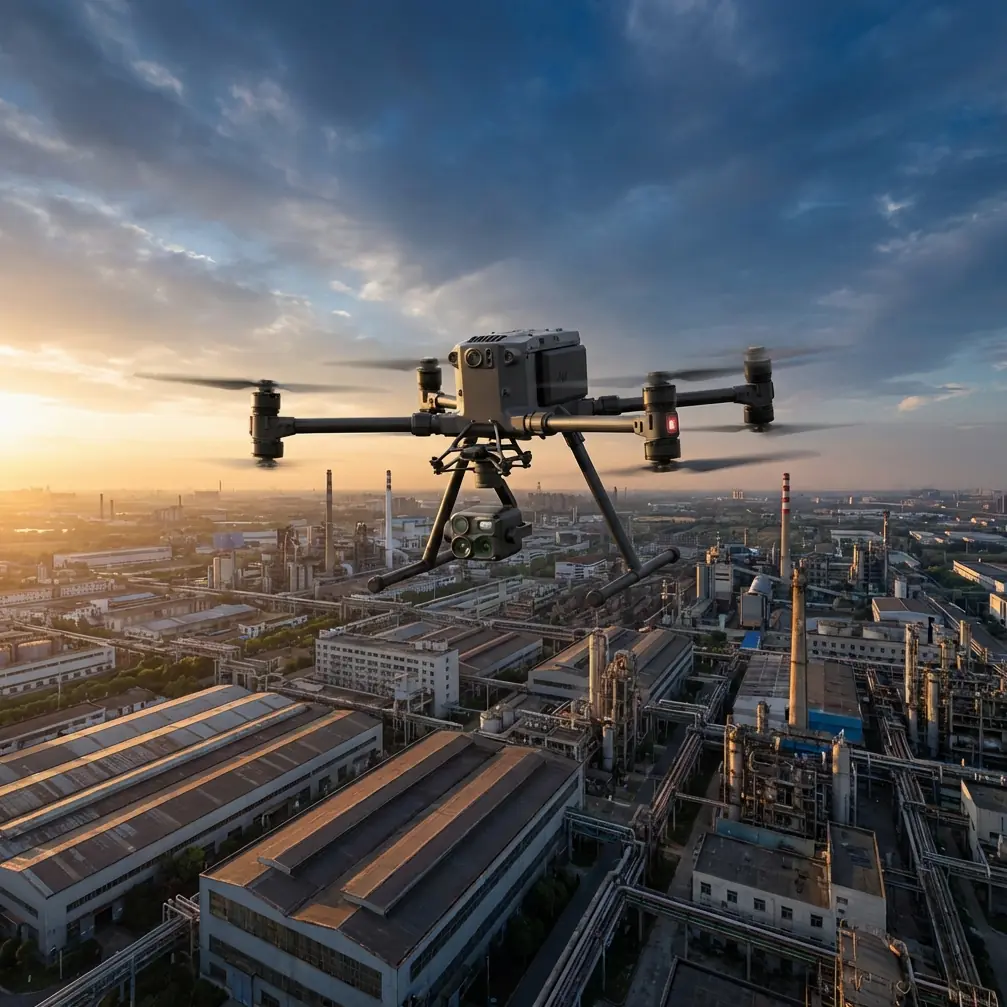
Matrice 4 for Dusty Venue Scouting: A Practical Field Method That Prioritizes Control, Data Quality, and Mechanical Margin
META: A field-focused Matrice 4 guide for scouting dusty venues, covering flight planning, thermal signature checks, photogrammetry workflow, transmission reliability, and why rotor load management matters in harsh environments.
Dust changes everything.
A venue that looks simple on a site map can become difficult the moment rotors start pulling loose grit into the air. Visibility degrades. Fine particles work their way into moving assemblies. Pilots get tempted to rush turns, shorten passes, or fly lower than the data really requires. If you are scouting a large outdoor site with a Matrice 4, especially for event planning, infrastructure staging, or temporary logistics layout, the real job is not just getting airborne. It is preserving aircraft stability and collecting usable information without letting the environment dictate poor decisions.
That is where disciplined flight design matters more than brochure features.
I approach dusty venue scouting as a systems problem. Dr. Lisa Wang’s way of looking at it is simple: every useful dataset starts with load paths, maneuver limits, and sensor intent. That may sound like helicopter-engineering language applied to a compact enterprise drone, but the logic carries over cleanly. One of the reference texts behind this discussion describes how control loads in a rotorcraft are not random; tangential loads, radial plane loads, and vertical force components each travel through specific structures such as bearings, hinges, and control links. Another source points out that in turning flight, load factor rises with the aircraft’s aerodynamic and thrust conditions, and at a given speed, the highest sustained load factor also corresponds to the highest turn rate and smallest turn radius. Operationally, those two details matter a lot in dusty scouting work: aggressive control inputs and tight orbiting are exactly the habits that can push a rotor platform into harsher mechanical and environmental exposure than the mission actually needs.
So this guide is not about flying the Matrice 4 harder. It is about flying it smarter.
What makes dusty venue scouting different
A dusty venue creates three simultaneous problems.
First, the airframe works in a dirtier boundary layer close to the surface. Rotor wash lifts particles, reducing visual clarity and making low-altitude rework passes less attractive. Second, the site often has mixed textures: bare soil, reflective temporary roofing, staging truss, parked vehicles, fencing, and heat-soaked equipment. That means your thermal signature review can become more valuable than the visible image alone, particularly when you are trying to identify recently used access lanes, overloaded generator zones, or HVAC hot spots around temporary structures. Third, if your output includes photogrammetry, dust and uneven contrast can reduce tie-point consistency unless your overlap, angle choice, and ground control strategy are deliberate.
This is where the Matrice 4 tends to separate itself from lighter, more consumer-oriented aircraft. In commercial fieldwork, reliability under compromised conditions is worth more than headline speed. A platform with stronger transmission resilience, enterprise security features such as AES-256, and battery handling designed around quick turnaround has an advantage because it lets the team maintain a methodical workflow instead of improvising under pressure.
Start with the right mission objective, not the right camera mode
Before takeoff, decide which of these three outputs matters most:
Rapid situational awareness
You need a current, readable overview for access planning, crowd-flow design, temporary structure placement, or safety zoning.Measurement-grade site documentation
You need photogrammetry outputs that support dimensional checks, layout drafting, slope awareness, or drainage review.Condition-based review
You need to detect heat anomalies, stressed equipment zones, utility concerns, or recently trafficked areas through thermal signature interpretation.
Pilots often blend all three objectives into one flight. That is inefficient. A better approach is to split the work into discrete sorties or at least discrete blocks of the same sortie. Dusty environments punish indecision. The lower and slower you linger while changing mission logic in the air, the more you invite rotor wash contamination and unnecessary maneuvering.
Why smooth control inputs matter more than most teams realize
One of the most useful engineering principles from the helicopter reference is that control forces are transmitted through a chain of components, and reliability depends heavily on mature structures, proven dimensions, and avoiding interference points during motion. The text specifically describes how vertical load components generated at the pitch-link interface are passed through a thrust bearing into the non-rotating control structure, where they ultimately become control moments in different axes. Even though the Matrice 4 is not a manned helicopter with a classic swashplate architecture in the same sense, the lesson is still operationally relevant: rotorcraft control authority is always linked to how loads are introduced, transferred, and stabilized. In the field, abrupt stick inputs, over-tight corners, and unnecessary speed changes create compounded stress right when dust is also eroding visibility and increasing contamination risk.
The second reference sharpens that point. It notes that in turning flight, the maximum sustained load factor at a given speed also produces the highest angular turn rate and the smallest turn radius. That sounds efficient until you remember what happens over a dusty venue: tighter turns mean more aggressive bank, more localized downwash disturbance, and more chances to obscure your own visual line and sensor quality.
For scouting work, the implication is clear. Do not chase the smallest orbit just because the aircraft can do it. Use larger-radius turns and straighter mapping legs unless obstacle geometry truly demands otherwise. Competitor platforms may advertise nimbleness, but in this mission category, excessive agility is not the winning metric. The Matrice 4 excels when you use its stability and enterprise stack to protect the dataset.
A practical Matrice 4 flight method for dusty venues
Here is the sequence I recommend.
1) Establish a clean launch bubble
Pick a launch point upwind if possible and away from loose debris. The goal is to reduce immediate dust ingestion and preserve visual clarity during ascent. If the site is very dry, do not launch from the exact area you need to image first. Gain altitude, move laterally, and begin acquisition after the disturbed surface settles.
This one decision improves both optics and thermal interpretation. Fine dust can create short-lived visual haze and complicate reading thermal edges near the ground.
2) Run a high pass before any low-detail work
Your first pass should be conservative: higher altitude, broad framing, no aggressive orbiting. Use it to identify:
- vehicle movement corridors
- scaffold or truss placement
- heat-producing assets
- reflective surfaces
- dust plumes that indicate problem zones for later close work
If your Matrice 4 payload configuration supports thermal views, use them early. In venue scouting, thermal signature often reveals operational truth faster than RGB. A recently active generator, overloaded cable run area, temporary kitchen exhaust zone, or sun-heated storage cluster can change where teams place infrastructure or route foot traffic.
3) Separate photogrammetry from inspection-style flying
If you need a map or model, treat that as its own mission block. Maintain consistent altitude, overlap, and speed. Bring in GCPs where accuracy matters. Dusty sites can have low-feature surfaces, so ground control points become more than a best practice; they stabilize the deliverable when native visual texture is weak.
This is also where the temptation to hand-fly tight corrections should be resisted. A repeatable grid or corridor pattern usually beats freestyle flying for model quality. The old design-handbook logic about sizing and refinement through motion analysis, with special attention to likely interference points, translates surprisingly well here. In mission planning terms, “interference points” are the places where your route, rotor wash, obstacles, and sensor geometry fight each other. Resolve those on the screen before takeoff, not in the middle of a dusty run.
4) Use transmission margin as an operational tool
O3 transmission is not just a nice specification on paper. In a venue survey, especially one with steel structures, temporary staging, and service vehicles, link stability affects how confidently you can hold planned lines without over-correcting. A robust transmission chain helps reduce pilot-induced wobble because video and telemetry stay coherent at the moment you need them.
That is one area where the Matrice 4 can outperform weaker field setups. Some competing systems are perfectly usable in clean open space but become less comfortable around visual clutter, reflective materials, or sprawling temporary infrastructure. In dusty venue scouting, consistency beats theoretical peak capability.
If your team is planning a site with complex transmission conditions and wants to compare deployment options, you can discuss the workflow directly via field coordination chat.
5) Preserve battery rhythm, not just battery percentage
Hot-swap batteries matter on long venue jobs because they preserve mission continuity. Dusty work often requires a first pass, a confirmatory pass, and then one or two targeted captures after stakeholders review the initial imagery. If you can swap efficiently and relaunch without rebuilding the operation from scratch, the whole team works faster and with fewer mistakes.
That is a field advantage, not a convenience feature.
The real benefit is cognitive. A clean battery rotation lets the pilot maintain route logic, sensor settings, and annotation discipline. When teams stretch a pack too far or delay a relaunch because the battery workflow is clumsy, they often return to the air with changed light, changed dust conditions, and fragmented data.
6) Keep turns wide during low-level confirmation passes
This is where the aerodynamic reference earns its keep. Since higher load factor at a given speed corresponds to faster turning and tighter radius, pilots should actively avoid using maximum turning capability close to dusty surfaces unless absolutely necessary. Smaller radius is not free. It costs environmental calm, sensor stability, and mechanical margin.
For low-altitude confirmation work, I prefer elongated racetrack patterns over stacked circles. You get steadier imagery, less self-generated dust, and cleaner thermal edge interpretation.
Thermal signature is more than a bonus layer
Teams scouting venues often underuse thermal data because they think it is only for utility inspection. That leaves value on the table.
In dusty or heat-stressed environments, thermal signature can help identify:
- compacted travel routes with recent vehicle use
- overloaded temporary power areas
- HVAC or refrigeration stress points
- hidden moisture contrasts near ground disturbance
- uneven roof heating on temporary or semi-permanent structures
For event planners, facility managers, and site operations teams, this can change where people stage assets or how they separate pedestrian movement from service access. The Matrice 4 becomes more than a camera platform here. It becomes a fast screening tool.
Security and workflow discipline still matter on civilian site surveys
Venue scouting often involves unreleased layouts, contractor sequencing, or sensitive private-site details. AES-256 matters because not every drone mission is about public-facing imagery. Some are about pre-event infrastructure, restricted access design, or industrial scheduling. If the data has business sensitivity, the aircraft and workflow should reflect that.
The same is true for BVLOS planning, where allowed and properly authorized. Even when the mission is conducted within normal visual constraints, the discipline required for BVLOS-style route planning improves basic scouting flights: cleaner segmentation, better contingency thinking, and more predictable coverage.
Where Matrice 4 stands out against the field
A lot of aircraft can capture a nice photo on a calm day. That is not the benchmark.
For dusty venue scouting, the better question is this: which platform lets your team maintain data quality when the environment starts degrading visibility, complicating turns, and forcing rapid decisions? The Matrice 4’s edge is not one isolated feature. It is the combination of transmission confidence, enterprise-grade data handling, repeatable battery workflow, and the ability to support both photogrammetry and thermal review without turning the mission into a juggling act.
That integrated strength is often more useful than a competitor’s flashier single-spec advantage.
Final field checklist
Before you deploy the Matrice 4 on a dusty venue, verify:
- launch area is upwind and debris-limited
- first sortie is a high-altitude situational pass
- thermal capture is planned early, before surface conditions change
- photogrammetry is separated from ad hoc inspection flying
- GCP placement is set if mapping accuracy matters
- turns are planned wide near the surface
- battery swaps are staged for continuity
- secure storage and transfer workflow are enforced with AES-256-compatible practices
- route design prioritizes stable lines over aggressive maneuvering
The smartest pilots on dusty jobs are usually the least dramatic ones. They do not fight the site. They shape the mission so the aircraft can stay in its comfort zone while still delivering high-value data.
That is the real lesson hidden inside the engineering references. Rotorcraft performance is never just about what the machine can do in theory. It is about how loads move, how turns are managed, and how mature systems hold up in harsh operating conditions. Bring that mindset to the Matrice 4, and venue scouting becomes cleaner, safer, and far more useful to the people waiting on the results.
Ready for your own Matrice 4? Contact our team for expert consultation.