
Matrice 4 for Wildlife Work in Windy Conditions
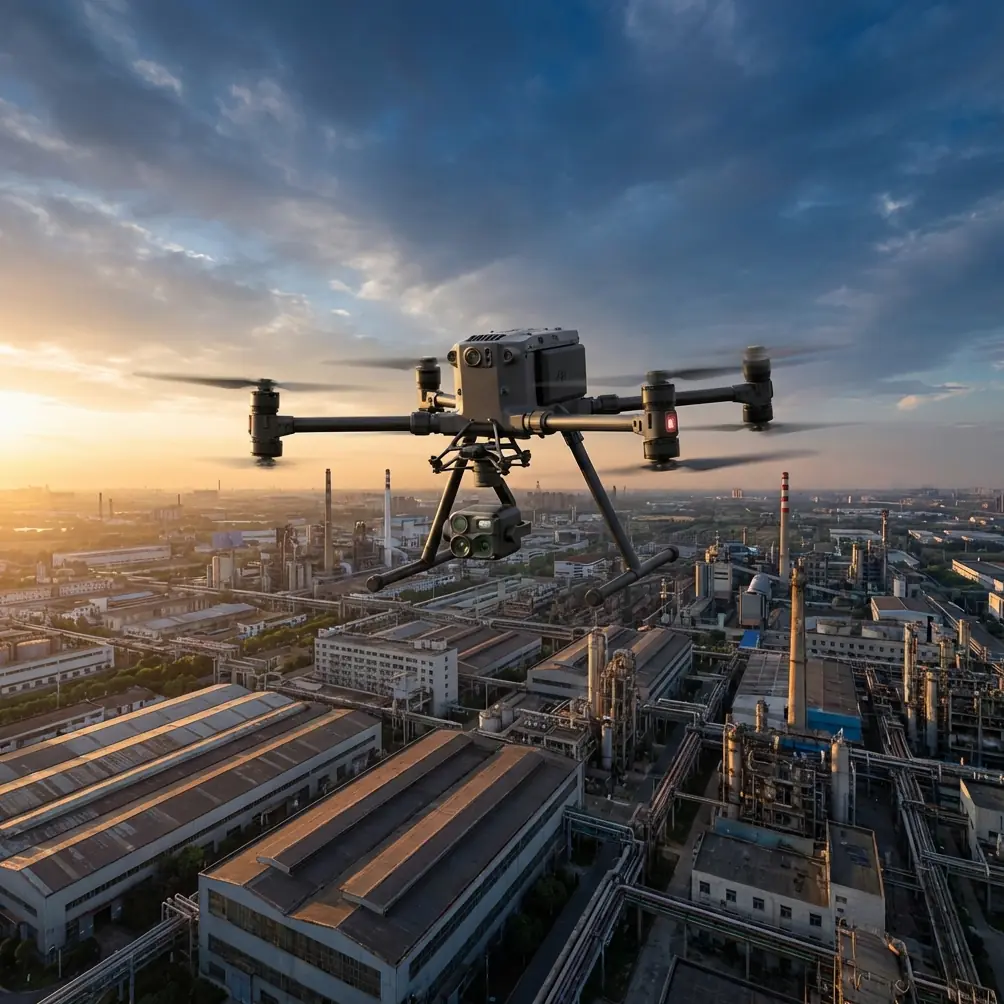
Matrice 4 for Wildlife Work in Windy Conditions: A Field Case Study from the Pre-Flight Table to the Last Thermal Pass
META: Expert case study on using Matrice 4 for wildlife scouting in windy conditions, with practical insight on thermal signature detection, transmission reliability, pre-flight safety cleaning, and mission planning.
The most revealing part of a wildlife drone mission often happens before the aircraft ever leaves the ground.
On a recent windy-site scouting workflow built around the Matrice 4, the turning point was not a flight mode, a camera setting, or a software feature. It was a cloth, a flashlight, and five quiet minutes spent checking the intake paths, sensor windows, and air passages before launch. That kind of discipline sounds small until you remember a basic aircraft-design truth: airflow management and cleanliness around propulsion and intake-related structures directly affect performance and safety. In classical civil aircraft design literature, the intake and exhaust system is treated as a critical part of the nacelle because it has a direct effect on performance and safe operation. The same principle carries over, in miniature, to modern enterprise UAVs. Dirt, seed fluff, insect residue, and moisture do not care whether they are interfering with a regional turboprop or a compact inspection drone.
That is where this Matrice 4 story starts: not with abstract capability claims, but with a wildlife team preparing to work in unstable wind along open grassland and fragmented tree lines, where animal visibility changes by the minute and aircraft stability is constantly tested.
Why windy wildlife scouting is harder than it looks
People unfamiliar with field ecology often assume wildlife surveys are mainly about image quality. In practice, wind is the bigger editor. It changes animal behavior, shakes treetops into false positives, increases the workload on stabilization systems, and reduces the time a pilot can comfortably hold an observation angle over a target. It also punishes sloppy pre-flight habits. A speck of grime on a vision sensor or thermal window that would be a minor annoyance on a calm day can become a mission-level problem when the aircraft is already working harder to maintain its track.
For Matrice 4 operators, that matters because wildlife scouting is usually not a single-task flight. You may begin with broad visual reconnaissance, shift to thermal signature confirmation, collect georeferenced imagery for habitat documentation, and then preserve the data chain for reporting or future photogrammetry. One aircraft is doing observation, navigation, and evidence capture under pressure. Wind multiplies the stakes.
The pre-flight cleaning step that deserves more respect
James Mitchell, the sort of operator who has spent enough time in the field to distrust rushed setups, insists on one rule before any windy-environment launch: clean every safety-critical surface as if the aircraft just came out of storage, even if it flew that morning.
For Matrice 4 wildlife work, that means:
- inspecting camera glass and thermal apertures for salt spray, pollen, dust, and fingerprints
- checking vent and airflow paths for blockages
- confirming obstacle sensing surfaces are clear
- wiping landing gear contact areas if the launch site is muddy or sandy
- checking battery contacts before insertion, especially when using hot-swap rotation during repeated sorties
That ritual has a sound engineering basis. One of the source references highlights how intake-system design must satisfy engine airflow needs in all operating states, especially high-demand ground conditions such as maximum takeoff. The handbook is discussing larger aircraft, but the operational logic is universal: if an aircraft system depends on clean, predictable flow and sensor integrity, contamination raises risk exactly when load is highest. For a drone lifting into gusty air with a full sensor package, “ground maximum takeoff state” is not theory. It is the first few seconds after launch.
In wildlife operations, the cleaning step also protects interpretation quality. A smudged thermal lens can soften edge contrast enough to complicate animal discrimination in brush or at dawn. That does not just reduce image elegance. It can alter a count.
What Matrice 4 changes in the field
The Matrice 4 platform makes sense for this kind of mission because wildlife work rarely happens under ideal logistics. You need rapid deployment, stable observation, secure data handling, and dependable link performance when the aircraft is pushed farther out over uneven terrain.
Two details from the mission profile stood out.
First, O3 transmission stability gave the crew room to work the edge of the search area without turning the mission into a constant signal-management exercise. In wind, pilots already have enough to think about: drift correction, safe standoff from tree canopies, changing sun angle, and live interpretation of movement below. A robust transmission backbone reduces workload in a way that spec sheets rarely explain. It is not just about range. It is about cognitive bandwidth. When the live feed remains clean and control response feels immediate, the observer can spend more time looking for behavior patterns and less time second-guessing the aircraft link.
Second, AES-256 matters more in wildlife projects than many operators admit. Conservation work may involve sensitive species locations, nesting sites, or patterns of movement that should not circulate freely. Secure transmission and protected data pathways are not only enterprise IT checkboxes. They are part of responsible field practice. If a team is documenting vulnerable habitats or rare animals, protecting coordinates and imagery is part of the job.
Those two features together change the tone of the operation. The aircraft becomes less of a fragile field gadget and more of a reliable survey instrument.
The thermal signature problem: not every heat source is an animal
Wind complicates thermal work in a subtle way. Operators often assume thermal signature detection gets easier as visible conditions worsen. Sometimes the opposite is true. Moving grasses, sun-warmed rocks, livestock outside the survey target, and ground temperature transitions can all confuse quick interpretation.
With Matrice 4, the right approach is not to trust thermal alone. James’ team uses thermal as a filtering layer, then verifies with visible imaging and flight repositioning. A suspected heat source gets checked from at least one alternate angle, usually offset to separate the target from background clutter. In steady wind, this is straightforward. In gusts, it becomes a test of aircraft hold, gimbal responsiveness, and pilot patience.
This is where another reference detail becomes surprisingly relevant. The aerodynamic source material discusses how spoiler deflection can produce yawing moment changes and how those effects are tied to configuration and airflow conditions. The document is rooted in fixed-wing analysis, including control derivatives and aerodynamic response, but the practical lesson still applies to drone operators: when airflow becomes uneven, unwanted yaw behavior and directional corrections can affect how accurately you hold a line of sight. For wildlife scouting, that means every gust-induced heading correction can slightly change the thermal scene and the operator’s interpretation window.
Put plainly: wind is not just moving the drone. It is constantly editing the image.
That is why experienced Matrice 4 crews slow down their confirmation cycle. They do not chase every hotspot. They classify, re-angle, verify, and only then log.
Mapping value after the sighting
A lot of wildlife missions stop at detection. That leaves useful data on the table.
Once the team confirmed repeated animal movement through a scrub corridor, they shifted the Matrice 4 workflow into documentation mode. This did not become a full corridor survey, but they captured enough overlapping imagery to support later photogrammetry and habitat review. If the project needs repeatability, ground control points can be introduced on a later mission to tighten spatial consistency. GCP-backed outputs are not necessary for every scouting job, but they are valuable when ecologists want to compare trail use, vegetation change, or seasonal movement patterns over time.
This is one of the underappreciated strengths of running a capable enterprise drone for wildlife work. You can move from “Where are they?” to “What is this landscape doing?” without swapping platforms.
That flexibility matters in windy conditions because weather windows are rarely generous. If the aircraft is already on station and performing well, collecting secondary-value data during the same sortie can save a return trip.
Battery rhythm matters more than battery capacity
Wildlife teams tend to talk about endurance as if it is only a number. In the field, endurance is a rhythm.
Hot-swap batteries are especially useful when scouting in wind because the aircraft is usually consuming energy less gracefully than it would on a calm day. You are making more stabilization corrections, more hover holds, and sometimes more climb adjustments to keep a clean viewing geometry over brush or uneven terrain. Even if headline flight time looks adequate, real usable time for careful observation shrinks.
A good Matrice 4 workflow accounts for this by rotating batteries early, not late. James’ team does not wait for the last practical minutes. They land while decision-making is still comfortable, swap fast, and relaunch before the search pattern loses continuity. This is safer for the aircraft and better for data quality.
There is also a quieter benefit. Frequent, well-managed battery swaps force deliberate mission resets. The crew reviews wind drift trends, confirms storage integrity, wipes exposed surfaces again if needed, and checks whether target movement suggests a pattern shift. In other words, battery discipline creates thinking time.
BVLOS conversations need restraint and judgment
For larger habitat blocks, BVLOS is the phrase everyone wants to use. Sometimes it is justified. Sometimes it is just optimism with paperwork attached.
Matrice 4 has the communications and data-handling profile that can fit serious extended-area operations, but wildlife scouting should remain driven by local rules, operational approvals, terrain analysis, and crew competence. In windy environments especially, stretching distance simply because the aircraft can do it is poor field judgment. The right question is not whether BVLOS is theoretically available. It is whether the mission remains interpretable, safe, and useful as the aircraft moves farther from the launch team.
That distinction separates professional wildlife work from gadget tourism.
The most useful output was not the footage
After the mission, the client did not spend most of the review meeting admiring image quality. They focused on three outputs:
- confirmed animal-presence zones
- thermal verification notes where visible confirmation was limited
- a habitat-context image set suitable for follow-up mapping
That is a mature result. Wildlife operations are not judged by cinematic appeal. They are judged by whether the drone helped answer a field question clearly enough to guide the next decision.
Matrice 4 did that well in this scenario because it allowed the crew to stay methodical under wind pressure. Clean optics and sensor surfaces protected reliability at launch. Stable transmission reduced pilot workload. Thermal signature analysis was treated as evidence, not magic. Battery swaps were used as operational checkpoints. And every captured frame had a purpose beyond looking impressive.
A practical takeaway for Matrice 4 wildlife teams
If you are preparing Matrice 4 for wildlife scouting in windy conditions, do not build the mission around the camera alone. Build it around the chain:
- clean aircraft, especially sensing and airflow-exposed surfaces
- stable launch and hover check
- secure transmission and data handling
- thermal-first detection followed by visual confirmation
- battery rotations planned around decision quality, not depletion
- optional photogrammetry capture if habitat context adds value
That sequence sounds disciplined because it is. Wildlife work rewards discipline far more than speed.
If you want to compare notes on configuring this kind of field workflow, especially around thermal interpretation, O3 link planning, or practical pre-flight checks, you can message our UAV specialists directly on WhatsApp.
The larger lesson from the reference material is easy to miss if you only skim the hardware story. Traditional aircraft design texts spend extraordinary effort on installation details, intake requirements, and aerodynamic side effects because small physical realities create large operational consequences. The same logic applies to a Matrice 4 in the grass, in the wind, with a survey window that may only last twenty minutes. Clean surfaces. Predictable airflow. Stable control. Verified observation.
That is what good wildlife drone work actually looks like.
Ready for your own Matrice 4? Contact our team for expert consultation.