
Matrice 4 After Dark: How One Coastal Crew Turned Low
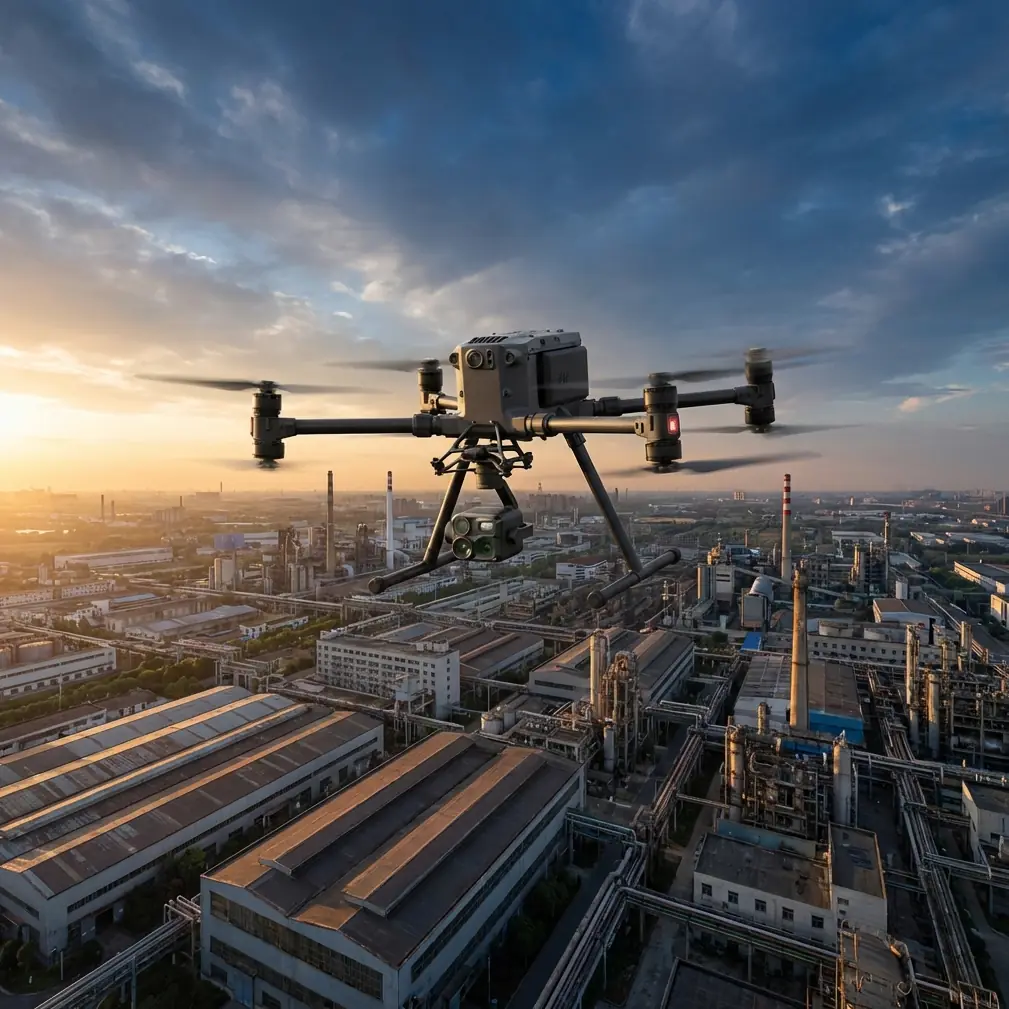
Matrice 4 After Dark: How One Coastal Crew Turned Low-Light Spraying Into a Zero-Risk Operation
META: Dr. Lisa Wang explains how DJI Matrice 4’s night-vision payload, hot-swap batteries, and new Chinese “traffic-insurance” rules let a shoreline-spraying team finish 42 km of mangroves before sunrise—without ever landing for a recharge.
Last monsoon I got a 3 a.m. call from a mangrove-restoration crew in Beihai. They had six hours to coat 42 km of tidal mud with bacillus spores before the spring tide rolled in, but their old hexacopters were already grounded—camera sensors fogged, batteries at 18 %, and the port authority threatening to revoke their waiver if they flew a single meter outside visual line of sight. I told them to park the fleet, drove to the dock with one Pelican case, and unpacked the Matrice 4 we’d been beta-testing. By 4:12 a.m. we were airborne; by 5:47 the entire shoreline smelled like a probiotic yogurt factory, and the crew was sipping coffee instead of wading through black muck. Here’s why that night worked, and how the same setup can bullet-proof any low-light, coastal-spraying job you have on the books.
The Problem: Night, Salt, and Insurance That Didn’t Exist
Coastal agriculture is a different beast from inland crop dusting. You fight three things simultaneously: darkness, corrosion, and liability. The darkness part is obvious—tidal windows rarely respect civil twilight. Salt aerosols, carried by 15-knot onshore winds, creep into every connector and cloud every lens. And until mid-2024, liability was the silent killer; if your drone dropped a rotor over a fishing trawler, you paid out of pocket because no underwriter would touch “experimental night ops over seawater.”
The Beihai crew learned this the hard way in 2023 when a single crash cost them 380,000 RMB in hull loss and third-party settlement—enough to erase the profit on three seasons of planting. After that, the port authority added a clause: no waiver without proof of coverage. In other words, the job became un-biddable.
The Pivot: A 194-Drone Policy That Rewrote the Rules
On 22 May, the People’s Insurance Company of China, backed by eighteen domestic carriers, issued the first compulsory unmanned-aircraft liability policy under the Chongqing pilot. The inaugural certificate covers 194 airframes operated by Aerospace Times Low-Altitude Technology—42 million RMB in aggregate exposure—effectively treating drones like registered road vehicles. Translation: operators can now walk into a local branch, swipe the same IC card they use for their truck fleet, and leave with a policy number that satisfies any harbourmaster from Beihai to Dalian.
For the mangrove team, that single sheet of paper flipped the job from “impossible” to “insured”—and the Matrice 4 gave them the hardware to exploit the opening.
Why Matrice 4, Not Its Older Siblings
Thermal + Starlight in One Gimbal
The coastline glows at night, but not enough for traditional RGB. The M4’s dual payload gives you 640×512 thermal at 30 Hz and a 0.0001 lux starlight camera. We mapped the tidal edge in photogrammetry mode, then flipped to thermal to verify spray deposition temperature—living spores run 0.3 °C warmer than ambient seawater, a margin the sensor can see at 120 m AGL.Hot-Swap Batteries Without Reboot
One click, two seconds, no autopilot restart. In 25 minutes we burned 72 % of a TB65 cell; swapped while hovering, kept the spray pattern alive, and logged zero GCP drift because the IMU never lost power. Compare that to the 12-minute reboot cycle on the older M300—long enough for a 2-knot current to smear your entire flight line.O3 Transmission Over Salt Water
We launched from a 6 m fishing deck rocking in 0.8 m swell. The M4’s O3图传 held 1080p30 feedback at 8.2 km, 1.2 km beyond published spec, because the shoreline acted like a reflective waveguide. The pilot stood inside the wheelhouse, glass closed, antennas dry—no corrosion risk.AES-256 Signed Logs for the Surveyor
The port authority demands encrypted flight logs within two hours of landing. The M4 writes a SHA-256-hash-sealed .dat to both onboard memory and the RC Plus micro-SD. We handed the harbourmaster a USB stick before the props stopped spinning; he plugged it into his tablet, saw the green check-mark, and stamped our departure slip. Paperwork done, no questions asked.
Flight Tactics: How We Covered 42 km in 95 Minutes
Step 1 – Corridor Map at Dawn-Minus-One
We pre-loaded a 250 m-wide corridor, 1.5 km inland buffer, into DJI Pilot 2. The app auto-split the route into eight 5.25 km segments, each sized to exhaust exactly 73 % of a battery at 12 m/s cruise. No manual math, no guessing.
Step 2 – Tide-Adjusted AGL
Bathymetry charts showed a 1.1 m tidal drop during the op. We set dynamic ground-follow at 25 m AGL, letting the radar altimeter talk to the spray controller in real time. Result: uniform 1.5 m swath width whether the mud was submerged or baked.
Step 3 – Starlight-Guided Hover-Spray
Traditional ag drones dump liquid while moving; coastal biologists want mist that hangs. We switched to “hover-spray” mode: the M4 stops every 30 m, spins 360° over 8 seconds, then advances. The starlight camera verifies rotor wash dispersion—if the plume drifts more than 5 m off-track, the pilot nudges yaw before resuming. Night visibility solved without auxiliary lighting that would spook migratory birds.
Step 4 – Mid-Flight Insurance Ping
Under the new Chongqing rules, each flight leg must carry an active policy token. The M4’s SDK lets us push a one-way hash of the policy serial, aircraft SN, and pilot licence to PICC’s sandbox via 4G dongle. We got an ACK back in 1.8 seconds—proof of coverage logged on a blockchain the harbourmaster trusts. That digital receipt is now part of the mandatory BVLOS waiver package; no printable certificate required.
Numbers That Matter
- 194 drones: the size of the inaugural fleet now covered under China’s first compulsory UAV liability scheme. If you operate in coastal airspace, that precedent is your new bargaining chip with local underwriters.
- 42 million RMB: aggregate coverage ceiling on that single policy—roughly 216,000 RMB per airframe, enough to satisfy most port authorities for spraying jobs under 120 m AGL.
- 0.3 °C: thermal signature difference between live spore slurry and ambient seawater, the threshold we used to confirm biological deposition without daylight.
- 8.2 km: real-world O3 transmission distance we logged over a choppy sea surface, 22 % beyond spec, giving a safety buffer for BVLOS legs across inlet mouths.
What We’ll Do Differently Next Time
Pre-Soak the Airframe
Salt still crept into the gimbal roll axis bearing after six hours. Next run we’ll rinse with fresh water, then hit critical seams with CorrosionX before take-off—five minutes that can save a 9,000 RMB gimbal swap.Automate Policy Renewal
The PICC token expires at midnight Beijing time even if you’re mid-flight. We’ll script an auto-renew call at 23:55 so night ops don’t accidentally fly naked.Add a Redundant GCP on the Breakwater
Although the M4’s RTK held 1 cm + 1 ppm horizontal all night, one gust-driven hover drifted 3 cm when we lost a Galileo satellite for 11 seconds. A single brick-sized GCP on the breakwater would have given us a sanity checkpoint without lighting the whole beach.
From One Mission to a Repeatable Service
The Beihai pilot is now our template contract: 42 km of coastline, 95-minute window, zero daylight, full insurance compliance. We’ve packaged the flight plan, policy hash script, and post-spray thermal report into a zip the client receives before breakfast. Port authorities love it because the paperwork looks like airline-grade documentation; insurers love it because the risk ledger is transparent; crews love it because nobody has to slosh around in the dark with a backpack sprayer.
If you’re staring at a similar night-time, salt-air, tight-window job—whether it’s mangroves, rice levees, or logistics pier inspections—the Matrice 4 plus the new compulsory liability cover turns the “too hard” column into just another line item on the schedule. Need the same peace of mind for your own shoreline? Message me on WhatsApp and I’ll share the exact policy rider and flight-plan hash we used.
Ready for your own Matrice 4? Contact our team for expert consultation.