
Matrice 4 at Altitude: A Field Case Study on Spraying Thin
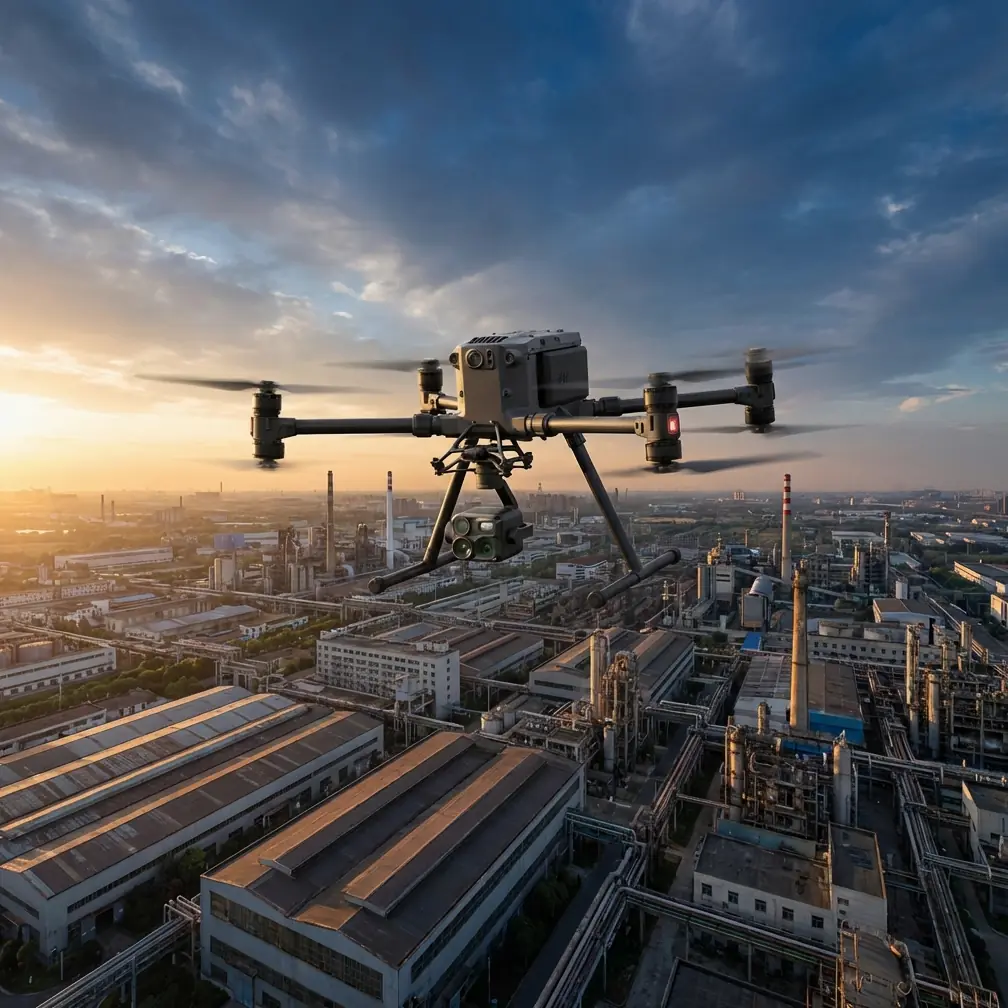
Matrice 4 at Altitude: A Field Case Study on Spraying Thin-Air Farms
META: A practical Matrice 4 case study for high-altitude field spraying, covering thermal signature checks, photogrammetry, GCP workflow, O3 transmission, AES-256 security, hot-swap batteries, BVLOS planning, and useful third-party accessories.
By Dr. Lisa Wang, Specialist
High-altitude spraying looks simple from the road. A drone rises, tracks a line, and lays product across a steep field faster than any ground rig could manage. Up close, the work is far less forgiving. Air density drops. Rotor efficiency changes. Battery behavior becomes less predictable in cold morning starts and hot midday turnarounds. Terrain compresses your margin for error. Wind is rarely steady, and signal paths that seem clear on a map can disappear behind ridges and tree lines.
That is exactly where the Matrice 4 starts to become interesting.
This is not a generic profile of the platform. It is a field-centered look at how a Matrice 4-based workflow can support spraying operations in high-altitude agriculture when the real challenge is not merely flight, but repeatable, documented, efficient field execution. The most useful lesson is that the aircraft itself is only one piece of the system. In mountain farming, outcomes depend on how imaging, route planning, communications stability, battery strategy, and accessory choices work together.
The setting: high fields, fragmented plots, thin air
The operation I want to describe involved terraced and irregular plots above the lowland line, where road access was limited and tractors could not cover every section without crop damage. The farmer’s problem was not just productivity. It was precision under constraints.
At altitude, one assumption fails quickly: that a lowland spray plan can simply be copied uphill. It cannot. Droplet behavior changes with wind shear around slope edges. Turn patterns consume more power than expected. Small topographic variations become meaningful because your actual working height over canopy can fluctuate fast when the ground rises beneath the aircraft.
For that reason, the Matrice 4 was used first as an intelligence platform rather than just a flying applicator support tool. Before any spray mission parameters were finalized, we built a current surface model of the fields using photogrammetry. That decision saved time later, but more importantly, it reduced guesswork.
Why photogrammetry mattered before spraying
Many spraying teams still rely on old boundaries, rough satellite imagery, or manually sketched field lines. In high-altitude farms, that shortcut can create uneven application because those sources rarely capture fresh erosion cuts, terrace changes, irrigation repairs, or newly planted edges.
Using the Matrice 4 for photogrammetry, we flew an updated image mission and tied the dataset to GCP checkpoints. Ground control points are often treated as optional when people are rushing. In mountainous agriculture, they are not optional if you want route confidence. A GCP-backed map gives you a more trustworthy field surface, which directly affects how you plan altitude above crop, where you set exclusion zones, and how you estimate mission battery load.
That has operational significance in two ways.
First, the field becomes measurable rather than assumed. You can identify where slope transitions will force the aircraft into more aggressive climb and descent behavior. That changes your battery reserve planning and your refill cadence.
Second, the map becomes reusable. Once the spraying lines are built off a sound surface model, repeat missions on the same blocks are faster and more consistent. On fragmented mountain farms, that repeatability matters because conditions often permit only narrow weather windows.
Thermal signature checks were not just for imaging—they changed spray timing
One detail that proved unexpectedly useful was thermal signature analysis. In agriculture, people tend to think of thermal work only in terms of stress scouting or irrigation assessment. In this case, the thermal layer served a second purpose: it helped identify microclimate differences across elevation bands and terrace exposures before spray launch.
A south-facing slope heating faster than the rest of the farm will not behave like the shaded section below it. The crop canopy, local air movement, and evaporation conditions diverge. By reviewing thermal signature differences early, the operator adjusted the sequence of blocks rather than treating the entire property as one uniform target.
That sounds minor. It was not.
The warmer upper terraces were sprayed earlier in the workable window before gusts built over the ridge, while the cooler lower blocks were held for a later pass. The Matrice 4’s value here was not “seeing heat” in the abstract. It was helping the team make a timing decision that protected application quality and reduced drift risk.
This is the kind of detail that separates a technically capable drone operation from a merely airborne one.
O3 transmission was a practical advantage in broken terrain
One of the least glamorous parts of high-altitude drone work is transmission reliability. Marketing language tends to flatten this into “range,” but mountain agriculture rarely fails because of straight-line distance alone. It fails because terrain interrupts signal paths in ugly, inconsistent ways.
The Matrice 4’s O3 transmission capability mattered because it supported a more stable link in a setting where ridges, tree clusters, and elevation shifts constantly tested the control connection. In open flatland, signal resilience is nice to have. In upland fields, it changes how confidently you can execute the mission.
Operationally, this meant fewer pauses to reposition the crew and better continuity when moving between adjacent terraces. It also improved confidence during route verification flights, especially where the pilot needed clean situational awareness while checking edge conditions and return paths.
No responsible operator should treat any transmission system as a substitute for good positioning, visual procedures, or local flight compliance. Still, stronger, more dependable video and control links make a measurable difference when your worksite is folded into hillsides.
AES-256 mattered because farm data is still business data
Another detail that often gets overlooked in agricultural drone conversations is data security. People hear “farm” and assume low sensitivity. That assumption does not hold up anymore.
A high-value grower may be collecting crop health imagery, treatment records, boundary data, yield-related observations, and georeferenced operational notes. Those datasets can reveal far more than a field outline. They can expose planting patterns, infrastructure locations, irrigation weaknesses, and productivity differences between blocks.
That is why AES-256 support is more than a technical footnote. For the Matrice 4 workflow, encrypted handling of mission-related data helped the grower and service provider maintain tighter control over imagery and operational files. In regions where growers are increasingly cautious about who sees their maps and treatment histories, this becomes part of professional credibility.
Security does not fly the mission. It does determine whether sophisticated clients trust you with repeated work.
Hot-swap batteries changed the rhythm of the day
At altitude, battery management is not an afterthought. It shapes the entire operating tempo.
The Matrice 4’s hot-swap battery workflow was especially useful because highland spray support missions tend to involve repeated short cycles: map a block, verify a route, inspect a problem corner, relaunch, confirm a wind shift, document completion, and move to the next section. Every unnecessary shutdown compounds delay.
Hot-swap capability kept turnaround times tight and reduced friction during consecutive field segments. The significance is practical. When weather windows are narrow, shaving a few minutes off each cycle can determine whether one more terrace gets completed before conditions turn unsuitable.
It also helped on cold starts. At elevation, morning operations can begin in lower temperatures that complicate battery behavior. A disciplined rotation strategy, supported by a fast battery exchange routine, gave the team more control over launch timing and reserve management.
This is one of those features that sounds incremental on paper and becomes central in real operations.
A third-party accessory made a noticeable difference
The most helpful add-on in this case was not exotic. It was a third-party high-visibility landing pad system designed for uneven agricultural terrain, paired with weighted corner anchors and a dust-control mat layer.
That accessory changed ground handling more than expected.
Mountain fields are full of improvised launch spots: gravel pullouts, compacted soil near irrigation lines, narrow terrace edges. Dust, loose grass, and debris can complicate takeoff and landing, especially when crews are moving quickly between blocks. A better landing surface reduced contamination risk around the aircraft, improved visual landing reference in bright upland light, and made battery swaps more orderly.
This matters because field efficiency is often lost on the ground, not in the air. Better launch discipline preserves sensors, shortens turnaround, and lowers the chance of small avoidable issues becoming mission-ending delays.
If you are building a Matrice 4 workflow for agriculture, do not obsess only over the aircraft and payload stack. Ground accessories can return value every single sortie.
Where BVLOS enters the conversation—and where discipline has to lead
High-altitude farms tend to stretch over disconnected parcels and ridgeline transitions, so BVLOS planning naturally comes up. The Matrice 4 fits into those conversations because it supports a professional-grade operational framework, but the key point is not capability in isolation. It is procedure.
For civilian agricultural use, BVLOS is meaningful only when supported by the right approvals, risk assessment, route design, communications planning, and local regulatory compliance. In our case, even where extended operational concepts were being evaluated, the planning discipline was the real story: terrain study, contingency landing areas, transmission checks, battery reserve thresholds, and block-by-block go/no-go decisions.
That planning improved even standard line-of-sight work. The exercise forced the team to think in terms of terrain corridors, likely wind trouble spots, and emergency access paths. The result was a safer and more efficient workflow regardless of the final operational envelope.
What the Matrice 4 actually changed for this farm
After the first full cycle, the value of the platform became clear in three areas.
The first was decision quality. Thermal signature review and updated photogrammetry provided a better picture of what the fields were really doing that week, not what they had looked like last month.
The second was mission continuity. O3 transmission and hot-swap batteries reduced the stop-start inefficiency that so often erodes productivity in mountain operations.
The third was documentation. GCP-referenced maps and secure data practices created a cleaner record of the work, which matters for agronomic follow-up and for service providers who need to demonstrate consistency across repeated visits.
None of this removes the need for spray expertise. The drone does not solve poor chemistry choices, weak weather judgment, or sloppy field prep. What it does is tighten the chain between observation, planning, execution, and verification.
That is why the Matrice 4 deserves attention in this niche. Not because it is a magic answer for every farm, but because high-altitude spraying punishes vague workflows. This platform supports precision best when the operator uses it to reduce ambiguity at every stage.
The practical takeaway for mountain growers and service teams
If your fields sit high, break across terraces, or force you to work in narrow weather windows, the Matrice 4 should be evaluated as part of an integrated mission system.
Start with updated mapping, not assumptions. Use photogrammetry and back it with GCPs where accuracy matters. Review thermal signature differences before choosing the spray sequence. Treat O3 transmission as a resilience tool, not an excuse for complacency. Build battery logistics around hot-swap discipline. Protect field and imagery data with AES-256-aware workflows. And do not ignore simple third-party upgrades that improve launch, landing, and turnaround in rough terrain.
That combination is what turned a difficult upland spraying operation into a repeatable process.
If you are comparing workflow options for a similar environment, you can message our field team here and discuss the specifics of your terrain, crop type, and mission planning approach.
Ready for your own Matrice 4? Contact our team for expert consultation.