
How to Plan a Remote Power Line Spraying Mission With Matric
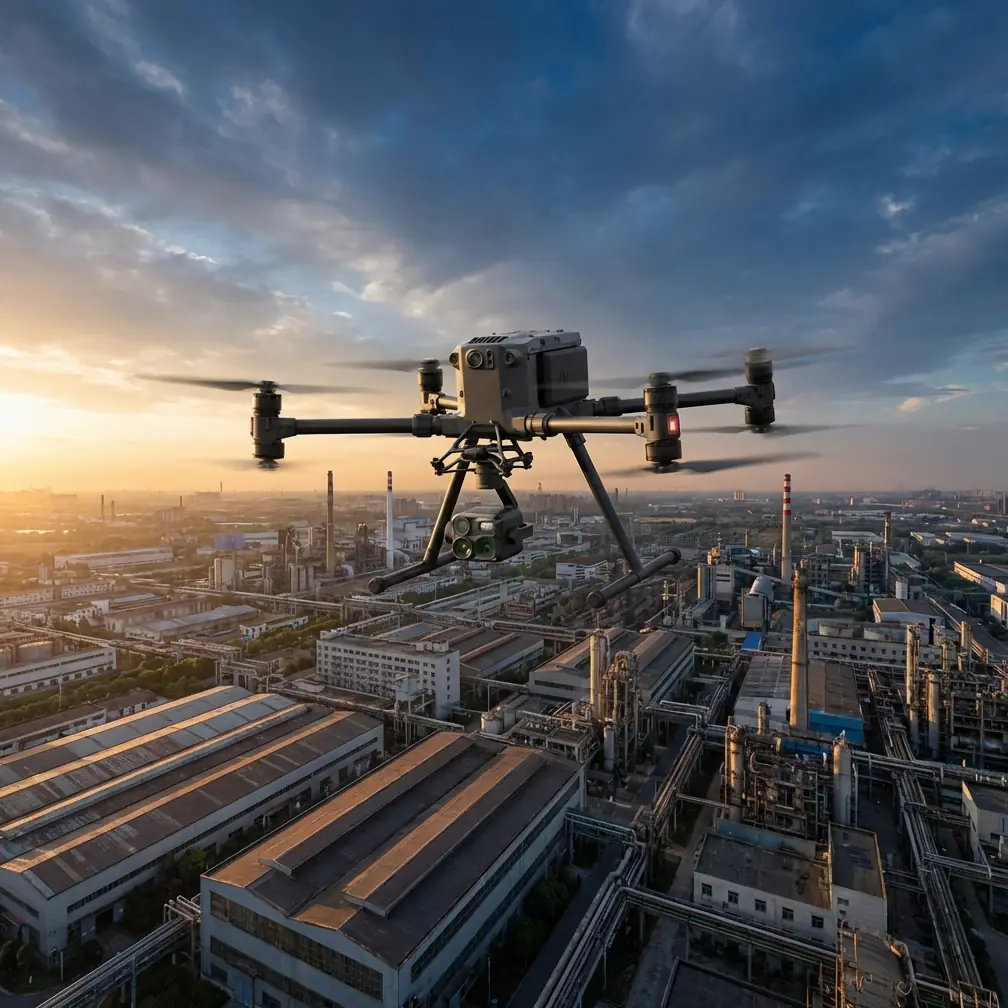
How to Plan a Remote Power Line Spraying Mission With Matrice 4
META: Expert tutorial on using Matrice 4 for remote power line spraying support, covering thermal checks, transmission reliability, battery swaps, mapping workflow, and BVLOS-ready field practices.
Power line spraying in remote terrain is not really a flying problem first. It is an access problem, a timing problem, and a risk-control problem that happens to involve an aircraft.
That distinction matters when the platform is a Matrice 4. Crews looking at vegetation control, insulator contamination treatment, corridor assessment, or precision spot application around utility infrastructure often start with the aircraft spec sheet. In the field, the better starting point is different: how do you maintain link stability beyond easy road access, keep battery rhythm tight when the nearest charging point is far away, and document exactly what was treated so the utility can defend the work later?
This is where the Matrice 4 becomes useful. Not because it magically turns a spraying job into a push-button task, but because it gives an experienced team enough sensing, transmission resilience, and mission structure to make remote line work repeatable.
I have seen crews lose more time to preventable battery handling mistakes than to wind. I have also seen excellent pilots collect footage that looked impressive and still failed to answer the one question the asset owner cared about: what section was treated, under what conditions, and what evidence supports the result? If your operation involves remote power lines, the Matrice 4 workflow should be built around those realities.
Start with the mission objective, not the route
For remote power line spraying support, the first job is to define the exact purpose of the sortie. “Inspect and spray the line” is too broad to be operationally useful. Break it into one of four mission types:
- pre-treatment survey of vegetation or contamination
- live targeting support for a spraying team
- post-treatment verification
- full corridor documentation for repeat maintenance cycles
Each mission type changes how you set up the Matrice 4. A pre-treatment survey leans heavily on photogrammetry and location accuracy. A live support mission puts more weight on link reliability, camera handoff discipline, and fast battery rotation. Post-treatment verification often benefits from thermal signature review if you are checking for abnormal heat patterns around components that may indicate unresolved issues or contamination effects.
Even if the operation includes spraying activity near the line, the Matrice 4’s value is often in the intelligence layer around that work: spotting inaccessible problem sections, confirming drift risk areas, identifying approach hazards, and recording evidence for maintenance logs.
Why remote power lines change the way you fly
Remote utility corridors are rarely kind to a clean textbook workflow. Terrain rises and falls without warning. Access roads disappear into soft ground. Cellular coverage becomes unreliable. The line itself may run across tree canopy, ravines, and rock faces that distort depth perception.
That is where O3 transmission matters in operational terms. People tend to mention transmission systems like they are marketing shorthand. In remote line work, link quality is the difference between a controlled inspection pattern and a rushed return-to-home decision at exactly the wrong time. A strong digital link gives the pilot and observer more confidence to hold standoff distance from wires, inspect small features, and maintain situational awareness when the aircraft is no longer visually comfortable from the launch point.
If your organization is moving toward BVLOS-aligned procedures where regulations and approvals allow, transmission reliability and data security stop being secondary features. AES-256 encryption becomes relevant because utility infrastructure imagery is not casual content. You are often collecting sensitive operational data on critical assets, access routes, and maintenance conditions. Protecting that feed is part of professional practice, not a box-ticking exercise.
Build the site workflow around battery discipline
Here is the field tip I wish more teams treated as doctrine: do not fly remote line missions until you have decided exactly when each battery leaves the case, goes into the aircraft, comes out, cools, and returns to charge.
That sounds basic. It is not.
On remote jobs, crews often waste battery life in small, quiet ways. They power the aircraft too early while discussing the route. They hover longer than needed while the ground team confirms pole IDs. They swap a warm pack too quickly because everyone wants to keep moving. By mid-mission, endurance shrinks, timing slips, and the team starts making bad decisions to “just finish this segment.”
Hot-swap batteries are one of the most practical advantages in this kind of work, but only if the handoff routine is disciplined. My rule in remote corridors is simple:
- one battery set flies
- one battery set cools
- one battery set stays protected and ready
- no pack goes back into rotation without a temperature and state check
That rotation matters more than most camera settings.
When you are operating far from support vehicles, a poor battery cycle can force you to abandon an unfinished section and re-stage the whole crew. For line operations spread across multiple towers or spans, that can mean another drive, another launch setup, and another weather assessment window. On a long day, that lost time compounds fast.
A practical habit is to tag each battery pair by sequence and log the mission section flown on each cycle. That gives you a usable record later if one segment shows weaker image quality, shorter endurance, or abnormal voltage behavior. It also helps maintenance planning because battery performance trends become visible before they become operational failures.
Use photogrammetry when the corridor needs proof, not just pictures
If the utility wants a defensible record of vegetation encroachment, drift risk, access limitations, or treatment coverage, ordinary video is not enough. This is where Matrice 4 crews should think in terms of photogrammetry rather than media capture.
A structured mapping pass can create measurable outputs that support maintenance planning over time. Even in a spraying-related mission, mapping the corridor before and after the operation gives context that a single oblique video never will. You can compare canopy proximity, identify slope-driven runoff concerns, and document how treatment decisions were made around poles, towers, and insulator zones.
Ground control points, or GCPs, still matter when higher positional confidence is needed. In remote utility terrain, teams sometimes skip them because placing markers is inconvenient. That shortcut can weaken the usefulness of the final dataset, especially if the map will be used to compare changes across maintenance cycles or support engineering review. A few well-placed GCPs can make the difference between a visually appealing model and one that holds up when someone asks for exact location verification.
The operational significance is straightforward: if you are spraying or supporting spraying near critical assets, you need records that can answer where work happened, how close conditions were to infrastructure, and what changed afterward.
Thermal work is not just for fault hunting
Thermal signature analysis is often treated as a separate inspection specialty, but in remote power line work it can support spraying-related decisions in subtle ways.
For example, thermal review can help crews distinguish between ordinary visual clutter and components that may need closer attention before nearby treatment or maintenance activity. Heat anomalies do not automatically dictate action, but they can flag a section of line where the team should slow down, maintain more conservative separation, or notify the asset owner for a different maintenance response.
Thermal data is also useful after treatment support missions when environmental conditions make normal visual interpretation less reliable. Early morning, shaded valleys, mixed terrain backgrounds, and dust can all complicate visual checks. A thermal layer can add another piece of evidence without requiring the crew to physically access difficult structures.
The key point is not to use thermal because it sounds advanced. Use it because it changes decisions on site.
Keep standoff distance sacred
Remote line corridors tempt pilots into getting closer than necessary, especially when trying to identify contamination, vegetation proximity, or hardware condition. The Matrice 4’s camera and transmission stack should reduce that temptation, not encourage it.
If the mission is supporting a spraying operation, safe positioning becomes even more important. Rotor wash, drift awareness, and obstacle clearance all become harder around wires, crossarms, and uneven terrain. Experienced operators know that the best image is the one collected from a position you can hold consistently, not the one that forces constant micro-corrections next to energized infrastructure.
This is where planning your viewing geometry pays off. Instead of improvising around each structure, define preferred observation offsets before takeoff. Decide which side of the line gives the clearest background separation. Decide how the observer will call out terrain and conductor spacing. Decide how you will reposition if glare or vegetation blocks the view. Remote jobs punish crews that leave those choices until the aircraft is already in the air.
A practical mission sequence for remote spraying support
If I were setting up a Matrice 4 deployment for remote power line spraying support, I would keep the workflow tight:
- Confirm the exact maintenance objective for each line segment.
- Review terrain, access points, and emergency recovery zones.
- Assign battery sequence and cooling order before first power-up.
- Run a short reconnaissance pass to assess wind, visual clutter, and link behavior.
- Capture a structured pre-treatment dataset where documentation matters.
- Support the treatment phase with stable standoff observation, not aggressive close-in flying.
- Recheck critical sections with visual and thermal review if available.
- Log every flown segment against battery usage, crew notes, and site conditions.
That sequence sounds conservative because it is. Conservative workflows are what keep remote utility operations repeatable.
If your team is refining its own field checklist, it helps to compare notes with operators who work similar corridors and constraints. A quick way to trade practical setup ideas is through this field ops chat.
Data handling matters as much as air time
A lot of otherwise skilled teams underperform after landing. Files are scattered. Segment names are vague. Thermal and visual data are not synchronized. Battery notes stay in someone’s pocket notebook. By the time the utility asks for verification on a specific structure, the evidence trail is weaker than it should be.
The Matrice 4 is capable of producing useful operational records, but only if the data flow is structured. Name files by corridor, structure range, and mission phase. Separate pre-treatment, live support, and post-treatment folders. Keep the battery log attached to the sortie record. If you used GCP-backed mapping, note exactly which control points were deployed and whether any were compromised by terrain or visibility.
For utilities and contractors alike, this administrative discipline is not paperwork for its own sake. It reduces disputes, improves repeat scheduling, and helps future crews understand what they are looking at before they ever step onto the site.
What makes Matrice 4 a strong fit here
For remote power line spraying support, the Matrice 4 stands out when the mission needs more than basic aerial visibility. The useful combination is not one feature. It is the stack.
O3 transmission supports confidence when the line runs beyond easy access and clean visual backgrounds. AES-256 matters when infrastructure imagery should not travel loosely. Hot-swap battery capability helps keep the aircraft productive without stretching unsafe pack behavior. Photogrammetry and GCP-based workflows give the job a measurable record. Thermal signature review adds decision support where standard imagery is incomplete.
That combination does not remove the need for field judgment. It raises the ceiling for teams that already have it.
The smartest way to use a Matrice 4 on remote power line work is to treat it as a documentation and decision platform first, and only then as an aircraft. Once you do that, the mission becomes clearer. You fly with a reason for every pass, a battery plan for every segment, and a record that still makes sense days later when someone asks what happened at tower 17 in the back valley.
That is what professional utility drone work actually looks like.
Ready for your own Matrice 4? Contact our team for expert consultation.