
How I’d Plan Low-Light Venue Spraying with Matrice 4
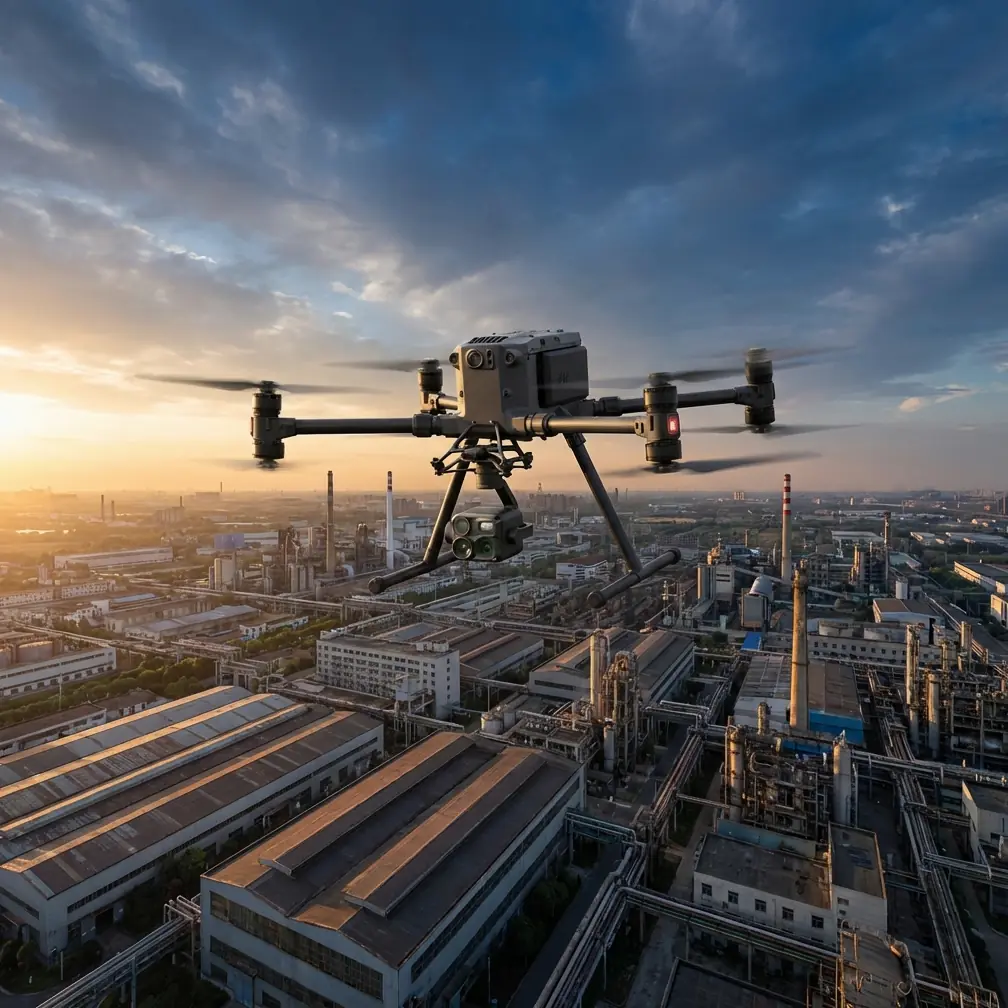
How I’d Plan Low-Light Venue Spraying with Matrice 4: Altitude, Load Reality, and Safer Margins
META: Expert tutorial on planning low-light venue spraying with Matrice 4, including flight altitude, fatigue-aware operations, thermal use, transmission reliability, and practical mission setup.
Low-light spraying sounds simple until you put a drone over a real venue.
The light is poor. Surface contrast drops. Trees, poles, cables, canopies, seating structures, and roof edges all start blending into the same dark mass. If the site has decorative lighting, reflective surfaces, or patchy moisture, your visual cues get worse, not better. And unlike a daytime mapping sortie, spraying adds another layer: the aircraft is carrying changing mass, working close to obstacles, and repeating similar flight lines that can tempt crews into overconfidence.
That is exactly why my advice for Matrice 4 operations in this scenario starts with one question:
What flight altitude gives you the best balance of spray placement, obstacle clearance, sensor confidence, and repeatable safety in low light?
For most venue spraying tasks, I’d begin with a conservative working band around 3 to 5 meters above the target surface, then adjust based on nozzle pattern, vegetation height, airflow behavior, and obstacle density. If the venue has mixed landscaping, seating islands, pergolas, or uneven ground, I often bias toward the upper end first for reconnaissance and only come lower after I’m confident the route is clean.
That is not a random number. It is an operational compromise.
Too low, and the aircraft spends the whole mission living inside its own risk envelope. Rotor wash becomes more disruptive. Small elevation changes matter more. Thermal interpretation can become less useful because the aircraft is constantly reacting to near-field clutter. The pilot’s margin for branch tips, tension wires, lighting poles, or decorative structures shrinks fast.
Too high, and spraying quality suffers. Drift becomes harder to control. Coverage consistency falls off. If you’re relying on low-light visual and thermal signature cues to confirm boundaries, a little extra altitude helps at first, but too much starts separating the aircraft from the treatment zone you actually need to manage.
So for Matrice 4 in a venue environment, especially under low light, altitude is not just a spray parameter. It is a sensor and safety parameter.
Why low-light venue spraying is harder than open-field work
A venue is not a farm block.
It has edge conditions everywhere: pathways, curbs, ornamental shrubs, awnings, netting, signs, parked maintenance equipment, HVAC protrusions, and often partial pedestrian infrastructure even during closed hours. Those features create irregular geometry, which matters because low-light flight is rarely limited by straight-line navigation. It is limited by how well the crew can interpret the scene in real time.
This is where Matrice 4’s broader mission toolkit matters more than raw flight capability. In low-light work, crews benefit from combining thermal signature awareness, visible imaging, and stable command links rather than trying to “eyeball” the route the way they might at midday.
Thermal is especially useful before the first spray pass. Not because every obstacle glows clearly, but because low-light environments often create temperature separation that reveals hidden inconsistencies in the site: irrigation-soaked grass, warm mechanical units, recently occupied zones, pavement edges, and drainage patterns. Those details can affect both route planning and how spray behaves near the surface.
If I’m building the mission properly, I don’t treat thermal as a gimmick. I use it as a pre-spray reconnaissance layer.
Start with a reconnaissance pass, not a spray pass
One of the biggest mistakes I see is crews launching directly into application mode because the venue is familiar.
Familiarity is not current intelligence.
Low-light conditions change the site. Grounds crews move equipment. Temporary barriers appear. Moisture changes reflectivity. Event setups leave structures that were not there yesterday. A prudent Matrice 4 workflow starts with a slow, higher-altitude inspection pass—often around 8 to 12 meters depending on the site—to build fresh situational awareness before descending into the treatment envelope.
That first pass should answer five things:
- Are the route edges still clear?
- Are there any new vertical hazards?
- Does thermal reveal occupancy, warm machinery, or sensitive zones?
- Is the transmission environment stable across the whole venue?
- Are there local airflow issues near walls, roofs, canopies, or tree lines?
Only after that do I settle into the lower spraying altitude.
If the venue owner wants a tighter planning review or a second set of eyes on route design, I’d point them to a practical mission-planning channel here: https://wa.me/85255379740. That kind of support is most useful before the aircraft is loaded and airborne.
The real reason I’m conservative about altitude: repeated loads change the risk picture
This is where the reference material becomes more relevant than it may appear at first glance.
One of the source documents discusses helicopter structural fatigue and makes a very specific point: because full symmetric-cycle fatigue testing is often difficult to perform, engineers frequently rely on fatigue tests with a positive stress ratio, R>0, then use an engineering Goodman-style correction to estimate behavior under other load conditions. The warning in that material is operationally significant: depending on the direction of the correction—from low mean load to high mean load, or the reverse—the result can become either dangerously non-conservative or merely conservative. In plain English, once you start translating test conditions into real-world use, you can fool yourself about actual life and safety margins.
Why does that matter for Matrice 4 spraying in low light?
Because spraying missions are not steady-state flights. The aircraft’s mean load changes during the sortie as payload mass decreases. Add repeated climb-outs, decelerations at line ends, and obstacle-avoidance corrections near venue structures, and you are no longer operating in a neat, uniform fatigue world. You are operating in a variable-load profile. The lesson from the helicopter fatigue reference is not that Matrice 4 behaves like a full-size rotorcraft in every respect. The lesson is that load correction assumptions can hide risk.
Operationally, that means three things:
- Do not assume that “similar” flights are equally benign just because the route is familiar.
- Avoid aggressive low-altitude flying that demands constant micro-corrections when the aircraft is carrying its heaviest initial load.
- Treat repeated venue spraying cycles as cumulative structural and reliability stress, especially if crews regularly launch at maximum operational tempo.
This is one reason I prefer using the first loaded passes at the cleaner, more open segments of a venue before moving into tighter geometries. The aircraft is heavier at the start. Save the fussier corners for later in the cycle when the control margin is naturally less burdened by payload mass.
That is fatigue-aware mission design in practice.
A second engineering lesson: geometry matters more than people think
The other source document focuses on intake design and highlights two details worth borrowing conceptually. First, it notes that for a NACA-1 series intake, the X/D ratio of the intake head is the main factor controlling critical Mach number, while inlet diameter ratio has less influence. Second, it states that designers commonly leave about 0.02 margin in critical Mach selection. It also warns that as throat Mach number increases, performance declines: total pressure recovery drops and distortion increases.
No, Matrice 4 venue spraying is not an intake design problem. But the engineering principle transfers cleanly: shape and margin matter, and once flow conditions get too aggressive, performance degrades in ways that are not always obvious from a simple dimensional view.
For drone spraying in low light, I apply that lesson like this:
- The route shape through the venue often matters more than a headline aircraft spec.
- A small operational margin is not wasted capacity; it is what keeps the mission stable when conditions shift.
- Pushing “flow” too hard—here meaning speed, descent rate, turn sharpness, or low-altitude wash interaction—can quietly degrade performance before the pilot feels overt failure.
That is why I do not recommend chasing maximum efficiency in the dark. I recommend preserving margin.
If the route is narrow between trees and seating structures, I’d rather widen the turn geometry, slow down slightly, and hold a cleaner 4 to 5 meter pass than force a lower, faster line that looks efficient on paper but creates unstable spray behavior and higher pilot workload.
Transmission and data discipline matter more after sunset
Low-light spraying adds dependence on the datalink.
If you are relying on onboard imaging, thermal interpretation, route overlays, and telemetry confidence, a stable O3 transmission environment is not a luxury. It is mission-critical. Venues can be surprisingly hostile RF environments because of lighting systems, nearby buildings, Wi-Fi spillover, metal structures, and partial line-of-sight blockages.
I advise crews to test link quality from the actual pilot station before loading for application. Walk the planned control point. Check for signal shadows near grandstands, roof overhangs, or service corridors. If the venue layout creates dead zones, solve that in planning rather than in the middle of an application run.
On the data side, if the mission files, site imagery, and operational records involve third-party venues, encrypted handling matters. AES-256 support is not just a technical line item. For contractors working with private commercial properties, sports facilities, campuses, or event spaces, it helps keep site data protected through the planning and reporting chain.
Use photogrammetry and GCPs when the venue is complex enough
For one-off routine grounds treatment, you may not need a full mapping workflow.
But for larger campuses, sports complexes, resort grounds, or multi-zone public venues, it is often worth building a site model ahead of recurring night or low-light work. Photogrammetry gives you consistent geometry. GCPs help anchor that geometry when precision matters around landscaped edges, water features, pathways, and structures.
The key point is operational repeatability. When you know the actual site dimensions and obstacle positions with confidence, altitude selection becomes less guesswork and more controlled planning. You can separate reconnaissance altitude, transit altitude, and treatment altitude with discipline instead of improvising in the dark.
That becomes even more valuable if the operator has approval frameworks moving toward BVLOS workflows in suitable civilian environments. Even when the actual venue mission remains within visual limits, BVLOS-grade planning habits tend to improve route robustness, contingency design, and communications discipline.
Battery handling can quietly decide the quality of the night
Low-light venue jobs often happen in compressed windows: after closing, before opening, between maintenance cycles, or around irrigation schedules.
That puts pressure on turnaround times. Hot-swap batteries can help keep the operation moving, but speed on the ground should never create sloppiness in the air. My rule is simple: use hot-swap capability to preserve mission continuity, not to skip post-flight checks.
After each sortie, I want a quick scan of:
- Prop condition
- Arm and landing gear integrity
- Nozzle and spray path cleanliness
- Tank or payload system consistency
- Battery seating and thermal state
- Sensor lens cleanliness, especially after drift or mist exposure
This is another place where the fatigue reference earns practical respect. Repeated cycles can mask emerging issues until they are normalized by the crew. A structured turnaround breaks that pattern.
My recommended altitude workflow for low-light venue spraying with Matrice 4
If I were setting a baseline method for an experienced civilian crew, it would look like this:
1. Site review before arrival Use previous maps, imagery, and any venue updates to identify likely hazards, pedestrian-sensitive zones, reflective surfaces, and areas of dense structure.
2. Initial reconnaissance pass at 8 to 12 meters Use thermal and visible imaging to confirm current conditions, route edges, equipment placement, and airflow trouble spots.
3. Establish treatment altitude at 3 to 5 meters Start near 5 meters if obstacle uncertainty is still high or the landscape has uneven relief. Move lower only where coverage quality clearly benefits and the route is proven clean.
4. Reduce speed in cluttered geometry Do not compensate for darkness by dropping too low and rushing. Keep turns wide and stable.
5. Sequence the route by payload state Fly the simplest segments first while the aircraft is heaviest. Use later passes for tighter sections if needed.
6. Maintain link and telemetry discipline Watch the O3 link quality continuously, especially near structures and RF-dense corners of the venue.
7. Turn around with intent Use hot-swap efficiency, but keep inspections real.
Final thought from the field
When crews ask for the “best” altitude for low-light venue spraying with Matrice 4, they usually want one number.
The honest answer is that altitude is a decision framework, not a magic setting.
For most venues, 3 to 5 meters above the target is the right starting band for application. But the professional difference lies in how you arrive there: reconnaissance first, margins preserved, route geometry respected, transmission verified, and structural reality never ignored just because the aircraft handled the last mission well.
That last point matters most. The engineering references behind this discussion make it clear that when complex load conditions are corrected too casually, conclusions can drift toward the unsafe side. In drone operations, that same mistake shows up as false confidence. The mission looks repeatable until one night it is not.
Low-light spraying rewards crews who leave margin on purpose.
Ready for your own Matrice 4? Contact our team for expert consultation.