
Matrice 4 for Remote Coastline Survey: A Field Tutorial
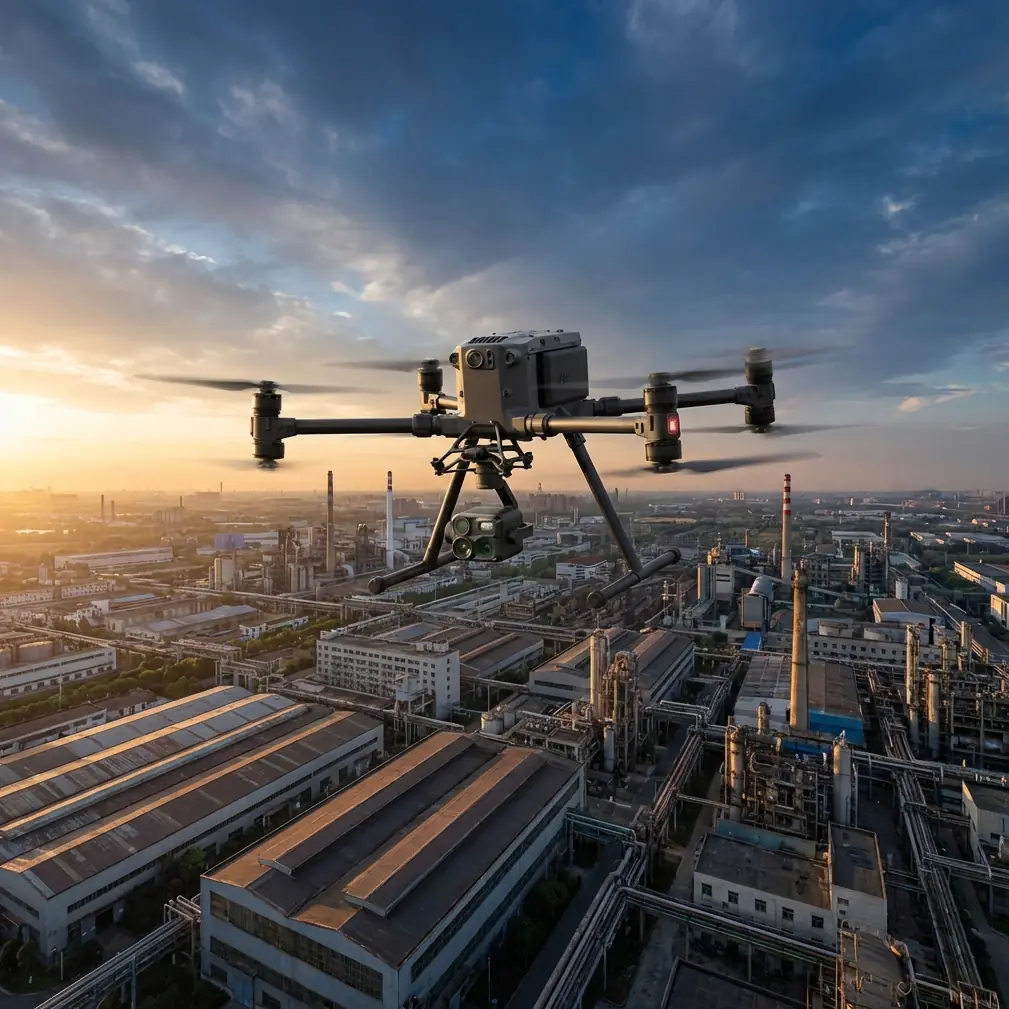
Matrice 4 for Remote Coastline Survey: A Field Tutorial Built Around Reliability, Range, and Data Integrity
META: Practical Matrice 4 tutorial for remote coastline surveying, covering antenna positioning, thermal workflow, photogrammetry discipline, hose-routing reliability lessons from aircraft design, and landing-risk thinking for rough coastal sites.
Remote coastline survey work punishes weak planning.
Salt air creeps into connectors. Wind shifts without warning. Landing zones are rarely ideal. And when you are operating far from roads, the cost of a small setup mistake grows quickly: poor image overlap, unstable telemetry, unreliable battery rotation, or a compromised return-and-land sequence.
If you are preparing a Matrice 4 mission in remote coastal terrain, the smartest approach is not to obsess over headline specs alone. It is to think like an aviation systems engineer. That means treating the aircraft, payload, link, landing surface, and data chain as one operating system.
I want to build this tutorial around two reference points that may seem far removed from a modern UAV mission. One comes from an aircraft design handbook section on hose protection and assembly tolerances. The other comes from landing gear dynamic testing across different surfaces and speeds. Those details are not random. They point to the same truth every serious Matrice 4 operator eventually learns: repeatable results depend on disciplined physical setup, not just good software.
Why remote coastline work is different
Coastal mapping blends several mission types into one sortie.
You may be running standard photogrammetry for erosion tracking in the morning, switching to thermal signature checks near rock outcrops or infrastructure by midday, and collecting oblique imagery for slope interpretation in late light. In remote areas, that stack gets harder because there is usually no easy fallback. If transmission quality drops, if your launch point is poorly chosen, or if your battery rotation is sloppy, the mission can stall.
That is where Matrice 4 becomes useful as a working platform rather than just a camera drone. The value is in how well you can organize the whole operation around long-link stability, dependable image capture, and safe recoveries in uneven environments. Features like O3 transmission, AES-256-secured links, and hot-swap batteries matter most when the coastline is far from your support vehicle and the weather window is narrow.
Start with the real bottleneck: the link
Most failed coastal survey flights do not begin with bad camera settings. They begin with bad antenna habits.
If you are operating Matrice 4 along a remote shoreline, your first range upgrade often has nothing to do with new hardware. It comes from how you stand and how you point the antennas. Do not aim the antenna tips directly at the aircraft. That is a common mistake. For maximum range and stronger O3 transmission stability, keep the broad side of the antennas facing the aircraft’s direction of travel, and reposition your body as the mission track shifts down the coast. Small angle corrections make a measurable difference when the aircraft is stretching distance over water or around cliff contours.
This matters even more in coastline jobs because the environment can trick operators. Open water looks RF-friendly, but cliffs, ridgelines, metal structures, and even parked service vehicles near the control point can create reflections or shadowing. If your signal margin drops during a mapping leg, your overlap plan is now at risk. That is not just a transmission issue. It becomes a photogrammetry issue.
So before takeoff, do three simple things:
- Choose a control point with a clean horizon in the direction of the longest leg.
- Face your body and antenna plane toward the aircraft, adjusting as it moves.
- Avoid standing next to metal fencing, vehicles, or equipment boxes.
These are basic habits, but they protect the entire mission.
What an old aircraft hose table teaches Matrice 4 crews
One of the source references includes a detailed aircraft design table for hose and sleeve dimensions. At first glance, it has nothing to do with drones. But look closer and the lesson is excellent for field operations.
The handbook lists protective sleeve dimensions for hose outer diameters such as 0.250, 0.375, 0.500, 0.625, 0.750, and 1.000 inches. It also lists assembly length tolerances: under 18 inches, the tolerance is ±0.125 inch; from 18 to under 36 inches, ±0.250 inch; from 36 to under 50 inches, ±0.500 inch; and at 50 inches or more, +1%.
Why should a Matrice 4 coastline operator care?
Because remote missions fail when crews treat cable management and protective routing as cosmetic instead of structural. On a UAV team, that includes payload leads, charging leads, field power cables, RTK base station connections, tablet mounts, and weather protection sleeves for transport. The aviation logic is clear: protection layers change external dimensions, and small length deviations become system problems when you stack components tightly.
Operationally, this means:
- If you add protective wraps or sleeves to field cables, account for the increased bend radius and bulk.
- Do not cram battery, charger, and cable sets into transport cases so tightly that connectors are stressed every time you unpack.
- Standardize cable lengths for your GCP kit, base station, and power bank setup so every deployment has the same physical layout.
That tolerance table is a reminder that “close enough” is not a professional standard. On remote coastlines, repeatability beats improvisation.
Build your mission around recoverable data, not just flight time
When teams talk about efficiency, they often jump straight to battery endurance. In practice, the more important metric is whether each sortie produces a complete and aligned dataset.
For coastline photogrammetry, I recommend planning around data blocks, not maximum distance. Divide the shoreline into segments you can fully complete with confidence, including buffer overlap at both ends. If one leg is interrupted by gusts or signal degradation, you want a recoverable edge, not a broken mosaic.
Use GCPs where practical, especially if the output needs to support repeat-change analysis over time. Along remote coasts, a pure GNSS-only workflow can still produce usable mapping, but GCP discipline helps when terrain texture is inconsistent or when you need tighter confidence in shoreline movement, revetment changes, or asset positioning.
Matrice 4’s value in this context is not only image collection. It is the workflow integrity you can maintain when switching between visible-light mapping and thermal signature review. Thermal passes can reveal seepage zones, moisture retention patterns, failed drainage, or heat contrast near exposed utility lines and structures. That kind of thermal layer is often most useful when aligned against a clean photogrammetric base map.
The key is not to treat thermal as a bonus. Treat it as a second dataset that needs its own geometry, altitude logic, and annotation discipline.
Landing risk is bigger on coastlines than most operators admit
The second reference source is much more obviously relevant. It comes from landing gear dynamic testing and shows how strongly surface type, surface roughness, and speed influence friction behavior during touchdown.
The test program examined 45 conditions. On concrete-type surfaces, when sink speed was at or above 2 m/s, the maximum tire-to-platform friction coefficient reached roughly 0.46 to 0.57 for rear-wheel spin-up events. On steel plate, it increased to around 0.47 to 0.61. The text also notes that patterned steel plate produced the highest friction coefficient, and that as horizontal speed increased from 150 km/h to 230 km/h under a fixed sink condition, friction coefficient tended to decrease.
You are not landing a Matrice 4 at 150 km/h, of course. But the operational principle transfers cleanly: touchdown behavior changes with surface material, roughness, and impact dynamics. That matters on remote coastlines because launch and recovery spots are often a mix of damp concrete, metal deck surfaces, compacted soil, rock shelves, or uneven man-made pads.
What does that mean for UAV practice?
First, never assume that a visually flat site is a predictable landing site. Wet steel, patterned metal, or salt-coated hard surfaces can change skid behavior and tip risk during touchdown, especially in crosswind. Second, descent management matters. The aircraft’s final vertical profile influences how much stability margin you preserve at ground contact. Third, surface choice affects more than safety. A poor landing zone throws sand, salt, or spray into motors and joints, quietly degrading reliability over time.
My field rule is simple: if the recovery zone is questionable, move the recovery zone. A longer walk beats a damaged aircraft.
A practical Matrice 4 coastline workflow
Here is the workflow I recommend for remote shoreline jobs.
1. Recon the control point before powering up
Do not open the aircraft case the moment you arrive. Walk the area first.
Look for:
- Clear line of sight along the main survey corridor
- Minimal reflective clutter near the pilot position
- A recovery spot protected from rotor wash-driven sand or spray
- Safe GCP placement if required
- A place where the pilot can physically rotate with the aircraft track for better antenna alignment
This one habit improves both safety and data quality.
2. Set the communications posture intentionally
With O3 transmission, the link is usually strong when the operator helps it. Keep the controller high enough for comfortable orientation, maintain antenna broadside alignment, and avoid letting your body block the path. If the route bends around headlands, relocate the pilot station rather than forcing a weak geometry from a single point.
If your team is handling sensitive infrastructure imagery, use AES-256 link security as part of your data handling standard, not as a forgotten menu option. Security matters more when working in remote zones where field teams often rely on portable devices and temporary networks.
3. Plan the photogrammetry pass like a surveyor, not a hobby pilot
Remote coastline mapping punishes sloppy overlap. Keep your altitude and speed conservative enough to preserve image sharpness in wind. Use consistent sidelap and frontlap through the entire segment. If the coast includes tide pools, surf zones, or reflective wet rock, expect some surfaces to produce weak tie points. That is another reason to build with GCP support where possible.
Do not chase the far horizon just because the aircraft can go there. Coastline mapping is won in the overlap margins.
4. Run thermal only when the environment supports interpretation
Thermal signature work near coasts can be extremely useful, but timing matters. Sun-heated rock, wet surfaces, and changing cloud cover can distort what you think you are seeing. Use thermal when you have a reason: seep detection, structural screening, drainage path analysis, habitat edge observation, or condition assessment of exposed assets. Then log the environmental context. A thermal image without context is often just a colorful screenshot.
5. Use hot-swap batteries to protect tempo, not to rush
Hot-swap batteries are a major operational advantage in remote work because they reduce reset time between segments. But crews sometimes misuse that speed and skip checks. Keep a written cycle rhythm: aircraft battery swap, lens check, salt mist wipe-down, card verification, battery seating confirmation, and next block review. Fast turnover is helpful only if each launch is as clean as the first.
The human factor nobody writes about
Coastline flights are physically distracting. Wind noise is constant. Your eyes chase surf, birds, boats, and moving glare. That is why cockpit discipline matters even for small unmanned systems.
Aviation references about tolerances and touchdown forces may look oversized for a Matrice 4 conversation, but they sharpen the right instinct. The aircraft is not operating in isolation. Every cable, case layout, antenna angle, landing surface, and swap procedure contributes to the outcome.
If your team wants a clean field checklist for remote shoreline deployments, you can message our flight ops desk here: send a coastline mission note. Keep it practical: site type, expected range, payload mix, and whether you need photogrammetry, thermal, or both.
Final field advice from Dr. Lisa Wang’s playbook
For remote coastline work, the Matrice 4 should be flown with a survey mindset and an aviation maintenance mindset at the same time.
Survey mindset means:
- segment the coast logically
- protect overlap
- place GCPs where they actually improve confidence
- document environmental conditions for thermal interpretation
Aviation maintenance mindset means:
- respect cable routing and transport tolerances
- protect connectors from salt and abrasion
- choose landing surfaces deliberately
- manage the control link actively with proper antenna positioning
Those two reference details from the aircraft manuals are worth carrying into every coastal job. One showed that tiny dimensional changes in protected assemblies are managed with explicit tolerances, down to ±0.125 inch on short lengths. The other showed that friction and touchdown loads change materially with surface type, with measured coefficients reaching roughly 0.46 to 0.61 once sink speed passes 2 m/s depending on the test surface. For Matrice 4 operators, the message is straightforward: physical discipline in the field is not overkill. It is what keeps your range stable, your landings cleaner, and your datasets usable.
Ready for your own Matrice 4? Contact our team for expert consultation.