
Matrice 4 in Low-Light Construction Surveying
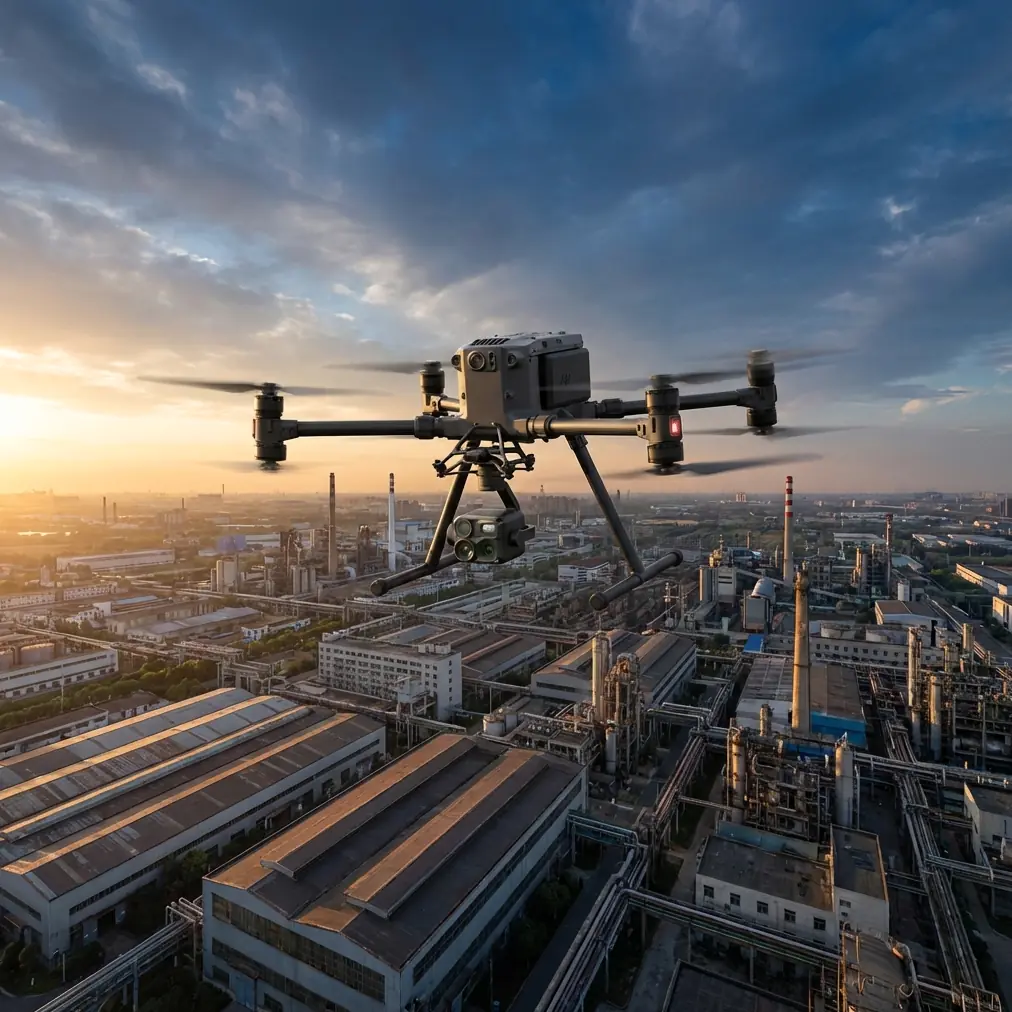
Matrice 4 in Low-Light Construction Surveying: A Field Case Study on What Actually Changes the Workflow
META: Expert case study on using Matrice 4 for low-light construction site surveying, with practical insight on thermal signature review, photogrammetry discipline, transmission reliability, encrypted data handling, and battery strategy.
A few winters ago, I was working with a contractor trying to document grading progress on a large site after sunset. The problem was familiar: the crew still needed visibility into stockpile movement, drainage cut accuracy, and unfinished utility corridors, but daylight had already gone. Ground teams could walk it with handheld gear, yet that meant slower coverage, more missed context, and a stitched-together record that never quite matched the pace of the build.
The lesson from jobs like that is simple. Low-light surveying is not just “day surveying with darker photos.” It changes everything—how you plan your flight lines, how you verify data quality, how you manage battery timing, and how you protect the information moving off the site. That is exactly where the Matrice 4 starts to matter.
This is not a generic overview. It is a practical look at how a Matrice 4-style workflow fits a real construction surveying problem, especially when the site is active, the light is fading, and the project team still expects usable deliverables by the next morning.
The real challenge with low-light site surveys
Construction teams often think the main obstacle is image brightness. In practice, brightness is only one part of it.
Low-light conditions affect edge definition, tie-point quality, and confidence in surface interpretation. If your job is photogrammetry, you care about whether repeated textures—gravel, steel decking, wet soil, erosion blanket, concrete forms—can still be distinguished well enough to support clean reconstruction. If your job is progress verification, you care whether the imagery tells the truth about what changed, not whether it simply looks dramatic on a screen.
That is why I now approach evening or pre-dawn missions with a dual-purpose mindset:
- Capture enough visual information for mapping and progress review.
- Use thermal signature analysis where it adds operational clarity.
For construction, thermal is not a gimmick. It can separate active machinery from static material, reveal heat-retaining surfaces, and help crews read the site differently when the visible scene is flat or partially obscured by shadows. On one site, the difference between recently compacted sections and surrounding ground was easier to interpret when the thermal layer was reviewed alongside the visual dataset. That did not replace survey controls. It made the site easier to understand.
Where Matrice 4 improves the job
The Matrice 4 conversation usually drifts toward sensors, automation, or transmission range. Those matter, but on a low-light construction site, the platform’s value is really about reducing failure points.
When the site window is short, you do not want to spend the first ten minutes troubleshooting links, the next fifteen managing battery swaps under pressure, and the final part of the mission wondering whether the dataset is safe to transfer. The aircraft has to support a disciplined workflow, not create extra friction.
Three pieces stand out.
1. O3 transmission is more than convenience
O3 transmission matters in low-light work because weak visual conditions increase your dependence on a stable command and viewing link. You are making flight decisions when the scene itself offers less visual certainty than a midday mission. A robust transmission pipeline helps the pilot maintain confidence in framing, route execution, and scene interpretation.
On construction sites, that becomes more important around cranes, temporary structures, stacked materials, and shifting equipment zones. Even when you are operating conservatively within site procedures, the ability to maintain a dependable feed reduces hesitation and helps preserve consistent flight geometry across survey lines.
That consistency directly affects photogrammetry. If you interrupt pattern flow, vary altitude unnecessarily, or second-guess overlap coverage, the final model usually tells on you.
2. AES-256 matters because construction data is sensitive
People sometimes treat encrypted transmission as a box-tick feature. On active commercial sites, it is not.
Project imagery can expose staging layouts, structural progress, utility routing, safety barriers, vehicle flows, subcontractor sequencing, and schedule realities. Add thermal layers and the dataset becomes even more revealing. AES-256 support matters because site owners, developers, and contractors increasingly expect drone operations to fit broader data governance rules.
This is not abstract IT language. If you are flying a major commercial build, your client may already have strict expectations around who can access site records, how they are stored, and how they are transmitted. A Matrice 4 workflow that aligns with encrypted handling is easier to defend in meetings with project managers and digital construction teams.
It also changes how confidently teams use the outputs. Aerial data becomes more valuable when stakeholders trust the chain around it.
3. Hot-swap batteries preserve survey rhythm
Low-light windows are often narrow. Civil twilight does not wait for your charging schedule, and neither does a contractor trying to verify overnight earthwork before the morning coordination call.
Hot-swap batteries matter because they protect momentum. If you can turn the aircraft around quickly without cold-starting your entire workflow, you keep your mission logic intact: same grid strategy, same crew focus, same environmental read of the site. That continuity is often the difference between completing the full capture plan and returning with an incomplete block that forces a second mobilization.
I learned this the hard way years back on a site where a delayed battery change pushed the second sortie into worse visibility and rising wind. The resulting model was technically usable, but inconsistent enough that we had to flag sections for reduced confidence. Once you have lived through that, you stop seeing battery management as housekeeping. It is a data-quality issue.
The overlooked discipline: low-light photogrammetry still depends on old-school control
No aircraft feature rescues a weak survey plan. If the job is to generate trustworthy outputs, Ground Control Points still matter.
GCP placement becomes even more important when ambient light drops, because image matching has less room for error. Targets need to be unmistakable, distributed intelligently across the area, and checked for visibility under expected flight conditions before the mission starts. A crew that lays control for daylight and assumes it will read the same at dusk is taking a gamble.
This is where one of the supplied aviation reference themes is surprisingly relevant. One document centers on standard units and conversion practices, including heat-related properties such as specific heat capacity and thermal flow concepts, while another is essentially a materials and coatings reference that catalogs aerospace finishing systems and supplier specifications. At first glance, that seems far from drone surveying. It is not.
On construction sites in low light, material behavior matters. Different surfaces absorb and release heat differently. That affects thermal signature interpretation. Fresh asphalt, painted steel, damp aggregate, membrane roofing, and coated prefab elements may all present distinct thermal behavior even when the visible image is muted. Understanding that materials do not cool or radiate uniformly keeps operators from over-reading the thermal layer.
That is the operational significance: thermal is most useful when tied to known site materials and conditions, not when treated as a magic x-ray.
The standards reference also points to another practical habit—unit discipline. Survey teams still lose time to inconsistent units more often than they admit. Construction data might move between metric site plans, imperial subcontractor notes, and mixed reporting templates. If your Matrice 4 workflow includes photogrammetry outputs, stockpile calculations, and thermal review notes, consistent unit handling is not glamorous, but it prevents expensive misunderstanding later.
A field workflow that works
When I plan a low-light Matrice 4 mission for a construction site, I break it into five phases.
Preflight site read
I start by identifying what the client actually needs by morning. A progress orthomosaic? A cut/fill update? A thermal check of recently worked areas? A visual/thermal comparison of drainage lines or slab sections? The answer shapes the mission.
Then I assess lighting conditions, reflective surfaces, dust, moisture, and machine activity. Wet ground after sunset can flatten visible contrast fast. Steel can throw visual glare while retaining a different thermal profile than surrounding material. Those conditions affect both altitude selection and overlap planning.
Control and reference preparation
GCPs are checked before takeoff, not after the flight when someone discovers half the targets disappeared into shadow. If the site is large, I prefer to verify a small sample set from the live view before committing to the full grid.
I also confirm coordinate systems and output units before launch. This is where the discipline hinted at in the standards reference earns its keep. Unit confusion is one of the easiest ways to undermine confidence in otherwise good drone data.
Flight execution
For low-light photogrammetry, I prefer conservative speed and overlap settings. This is not the moment to chase theoretical productivity numbers. I would rather return with a cleaner reconstruction than explain why the edge of the site broke apart in processing.
If thermal collection is part of the mission, I define in advance what thermal is expected to answer. It might highlight active haul routes, warm equipment staging, recently disturbed ground, or drainage anomalies. It should not be used as a substitute for proper survey interpretation.
O3 transmission provides the confidence to maintain deliberate flight lines even when visual context is reduced. That keeps the capture block orderly, which is exactly what the processing stage wants.
Battery turnover
This is where hot-swap capability quietly saves the mission. Crews stay in rhythm, the aircraft returns to the same job with minimal interruption, and the environmental conditions remain closer to those from the first sortie. On a short evening window, that continuity can preserve dataset consistency.
Data handling and review
After landing, the first review is not artistic. It is diagnostic. Did the imagery hold enough detail across repeated textures? Were GCPs clean? Did thermal signatures align with known site conditions? Did any pass suffer from visibility degradation?
This is also where AES-256 support matters in a practical sense. Construction datasets often move quickly among surveyors, project engineers, VDC teams, and client reps. Secure handling makes collaboration easier because nobody has to treat the drone workflow as a weak point in the project’s information chain.
If you are setting up a similar low-light workflow and want to compare field setup notes, I usually tell teams to start with a direct planning discussion rather than trying to solve it through spec sheets alone: message the flight team here.
What changed for my teams after moving to this approach
The biggest improvement was not flashy. It was reliability.
We stopped treating low-light flights as compromised versions of “real” survey missions. With the right planning, the Matrice 4 became a tool for extending site visibility in a structured way. The combination of stable transmission, secure data practices, thermal utility, and fast battery turnover meant fewer abandoned flights, fewer inconsistent datasets, and faster handoff to project stakeholders.
It also changed client expectations. Once teams saw that an evening mission could produce organized, interpretable information instead of blurry record shots, they started scheduling drone capture around operational need rather than sunlight alone.
That is a meaningful shift for construction. Many important site moments happen outside perfect daylight: end-of-shift earthmoving checks, overnight prep verification, early-morning access planning, and short-notice issue documentation. A Matrice 4 workflow built for those moments is far more useful than one optimized only for ideal conditions.
The practical bottom line
If you are surveying construction sites in low light, the aircraft itself is only part of the story. The real advantage comes from how the platform supports a disciplined mission: dependable O3 transmission for cleaner execution, AES-256 for secure site data handling, hot-swap batteries for continuity, and a workflow that respects both photogrammetry fundamentals and material-driven thermal interpretation.
That last point is where many teams still fall short. They collect thermal because they can, not because they have thought through what site materials and heat behavior are telling them. The old aerospace references to coatings, materials, and heat-related properties may seem distant from drone operations, yet they point to a truth every serious operator should understand: surfaces behave differently, and your sensors will show that difference whether you interpret it correctly or not.
On a low-light construction site, that understanding is not academic. It is the line between useful data and confident-looking noise.
Ready for your own Matrice 4? Contact our team for expert consultation.