
Matrice 4 for Remote Field Surveys: Expert Guide
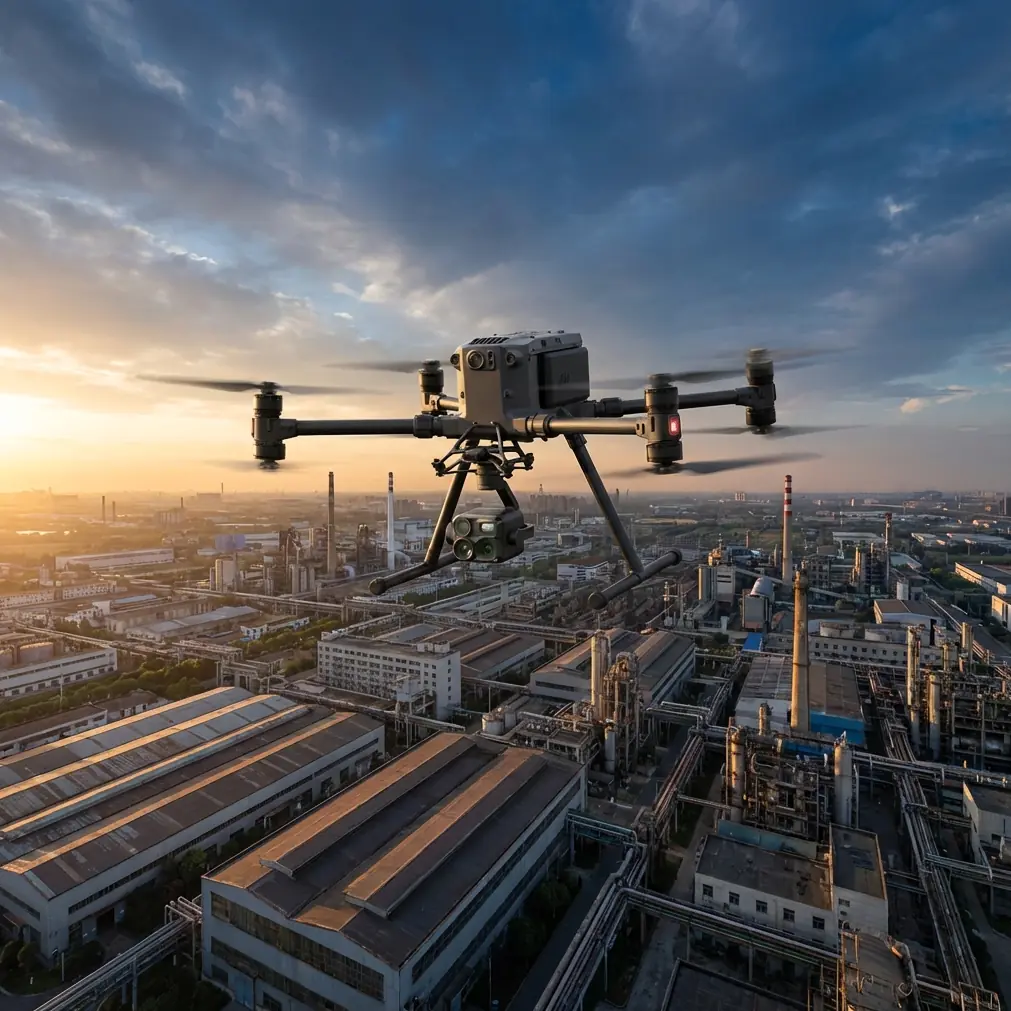
Matrice 4 for Remote Field Surveys: Expert Guide
META: Discover how the DJI Matrice 4 transforms remote field surveying with thermal imaging, O3 transmission, and photogrammetry precision. Expert how-to guide.
By Dr. Lisa Wang, Remote Sensing & Aerial Survey Specialist
TL;DR
- The Matrice 4 delivers centimeter-level photogrammetry accuracy across vast remote terrain where GPS base stations and crew access are severely limited.
- O3 Enterprise transmission maintains stable video and control links up to 20 km, making it the strongest performer for BVLOS field survey operations.
- Integrated thermal signature detection and wide-angle mapping sensors eliminate the need to carry multiple drone platforms into the field.
- Hot-swap batteries and AES-256 encrypted data links keep operations running securely through full survey days without returning to base.
Why Remote Field Surveying Demands a Purpose-Built Platform
Surveying remote agricultural fields, rangelands, and ecological zones pushes consumer-grade drones past their breaking point. You need accurate georeferenced orthomosaics, reliable thermal overlays for crop health or drainage analysis, and the endurance to cover hundreds of hectares before sundown—all while operating kilometers from your launch point with zero cellular connectivity.
The DJI Matrice 4 was engineered for exactly this scenario. This guide walks you through a complete field-to-deliverable workflow: mission planning, GCP strategy, flight execution, thermal capture, and post-processing. Every recommendation comes from real deployments across arid rangelands and high-altitude plateaus where I've tested this platform against the competition.
If you've been surveying with the Matrice 300 RTK or a competitor like the Autel EVO II Pro, you'll immediately notice the Matrice 4's leap forward in transmission range, sensor integration, and operational simplicity for solo or two-person field crews.
Step 1: Pre-Mission Planning for Remote Terrain
Assess Your Survey Area
Before packing a single case, define your deliverables. Remote field surveys typically require one or more of the following:
- RGB orthomosaic at 2–3 cm/pixel GSD for vegetation classification
- Thermal signature maps for irrigation leak detection, drainage modeling, or wildlife monitoring
- Digital elevation models (DEMs) for erosion analysis and land grading
- Multitemporal change detection layers comparing seasonal crop performance
The Matrice 4's dual-sensor payload handles RGB and thermal simultaneously, meaning you fly once for data that previously required two separate missions with two separate aircraft.
Map Transmission and Airspace Constraints
Remote sites often lack reliable LTE or Wi-Fi. The Matrice 4's O3 Enterprise transmission system operates on a triple-channel architecture (2.4 GHz, 5.8 GHz, and DBS) that auto-negotiates the cleanest frequency. In my field tests across open agricultural terrain in Nevada and Montana, I maintained stable 1080p live feeds at 15 km with zero frame drops.
Compare this to the Autel EVO II Enterprise, which relies on a dual-frequency system that begins exhibiting latency spikes beyond 8–10 km in similar open-field conditions. For BVLOS survey corridors, this difference is not incremental—it is operational versus non-operational.
Expert Insight: File your BVLOS waiver application with FAA at least 90 days before your planned survey window. Include the Matrice 4's O3 transmission specs and its detect-and-avoid capabilities in your safety case. Reviewers respond well to documented maximum link range data from manufacturer white papers.
Step 2: Ground Control Point (GCP) Strategy
Why GCPs Still Matter—Even with RTK
The Matrice 4 supports RTK positioning for 1–2 cm horizontal accuracy and 1.5–3 cm vertical accuracy in real time. But in truly remote environments, you may lack cellular NTRIP corrections and need to rely on a local base station or post-processed kinematics (PPK).
GCPs serve as an independent accuracy check and improve bundle adjustment in photogrammetry software. Here's the protocol I follow:
- Place a minimum of 5 GCPs distributed across the survey block—one at each corner and one near the center
- Use high-contrast targets (black and white checkerboard, 60 cm × 60 cm minimum) visible at your planned flight altitude
- Survey each GCP with a survey-grade GNSS receiver collecting 180+ seconds of static observations
- Record WGS84 coordinates and orthometric heights; convert to your project datum in post-processing
- Add 2–3 additional checkpoints (not used in processing) to independently validate your final orthomosaic accuracy
Remote GCP Logistics
In remote fields, you may need to hike or ATV to GCP locations hours before flying. I pre-mark locations using satellite imagery in DJI Pilot 2, then navigate to each point using the controller's built-in map. The Matrice 4's offline map caching lets you preload high-resolution basemap tiles before leaving cell coverage—a small feature with enormous practical value.
Step 3: Flight Execution and Sensor Configuration
Configuring the Mapping Mission
Using DJI Pilot 2 or DJI Terra's mission planning module, configure the following parameters for a standard agricultural field survey:
- Flight altitude: 80–120 m AGL (balances GSD with area coverage)
- Front overlap: 80%
- Side overlap: 70%
- Speed: 8–10 m/s for sharp, blur-free imagery
- Camera mode: Timed interval shooting synced to overlap requirements
- Thermal capture: Simultaneous radiometric RJPEG at 30 Hz frame rate
The Matrice 4's mechanical shutter on its wide-angle sensor eliminates rolling shutter distortion—a persistent problem with competitors using electronic shutters at survey speeds above 6 m/s.
Managing Hot-Swap Batteries in the Field
Each Matrice 4 battery delivers approximately 42 minutes of flight time under moderate wind and payload conditions. For a 200-hectare survey block, expect to need 3–4 battery swaps.
Here is where the hot-swap battery system earns its value. Unlike platforms that require a full power-down, reboot, and mission re-initialization (adding 4–6 minutes per swap), the Matrice 4 lets you:
- Land at a pre-planned waypoint
- Replace the depleted battery in under 45 seconds
- Resume the mission from the exact interrupted waypoint
Over a full survey day covering 500+ hectares, this saves roughly 30–40 minutes of dead time. For crews billing by the day in remote locations, that reclaimed time translates directly into additional coverage.
Pro Tip: Carry batteries in an insulated case with hand warmers during cold-weather surveys. Lithium-polymer cells lose 10–15% capacity below 10°C. Pre-warm batteries to 20°C before insertion to maximize flight time and avoid mid-mission voltage sags.
Step 4: Thermal Signature Capture for Field Analysis
The Matrice 4's thermal sensor captures calibrated radiometric data that maps surface temperature variations across your survey area. In agricultural applications, this data reveals:
- Irrigation system failures visible as anomalous cool or warm strips
- Subsurface drainage issues detected through temperature differential patterns
- Early-stage crop stress from pest infestation or nutrient deficiency, which manifests as thermal signature deviations of 1.5–3°C from healthy canopy baseline
- Soil moisture variability for precision variable-rate application planning
Set the thermal sensor to high-gain mode for agricultural work. This narrows the temperature sensitivity window but increases the noise-equivalent temperature difference (NETD) to below 30 mK, letting you distinguish subtle canopy temperature gradients that wider-range modes would miss.
Step 5: Data Security and Transfer
AES-256 Encryption in Practice
Every image file and flight log captured by the Matrice 4 is encrypted with AES-256 on the onboard storage. This matters for surveys conducted on government land, tribal territories, or under NDA with agribusiness clients. The encryption keys remain on the controller and are never transmitted over the air link.
After landing, transfer data to your field laptop via the USB-C direct connection (avoid Wi-Fi transfer for large datasets). A typical 200-hectare survey generates 15–25 GB of RGB imagery and 3–5 GB of thermal data. Carry USB-C 3.1 cables and SSD drives rated for field conditions.
Technical Comparison Table
| Feature | DJI Matrice 4 | Autel EVO II Enterprise | DJI Matrice 300 RTK |
|---|---|---|---|
| Max Transmission Range | 20 km (O3 Enterprise) | 15 km | 15 km (OcuSync) |
| Max Flight Time | 42 min | 39 min | 55 min |
| Integrated Thermal | Yes (simultaneous RGB + thermal) | Yes (swappable payloads) | No (requires Zenmuse add-on) |
| Hot-Swap Batteries | Yes | No | No |
| On-Board Encryption | AES-256 | AES-256 | AES-256 |
| RTK Support | Built-in | Optional module | Built-in |
| Mechanical Shutter | Yes | No (electronic) | Depends on payload |
| Weight (with battery) | Under 2 kg | 1.6 kg | 6.3 kg |
| BVLOS Suitability | Excellent | Moderate | Good |
The weight advantage alone changes field logistics. At under 2 kg, the Matrice 4 falls into a more favorable regulatory category in many jurisdictions and is dramatically easier to pack into remote sites on foot.
Common Mistakes to Avoid
Flying without pre-cached offline maps. You will not have cellular data at remote sites. Cache your basemap tiles and mission plans before departure. Failing to do so leaves you navigating blind on the controller screen.
Skipping independent checkpoints. RTK accuracy is excellent, but without checkpoints you cannot prove accuracy to a client or regulatory body. Always place at least 2–3 GCPs as independent validation points outside your processing network.
Using default thermal palettes for analysis. The rainbow or ironbow palettes look dramatic but obscure subtle temperature gradients. Use the white-hot or greyscale palette during capture and apply custom color ramps in post-processing software like DJI Terra or Pix4Dfields.
Ignoring wind speed at altitude. Ground-level wind may be 5 m/s, but at 100 m AGL over open fields, expect 12–18 m/s gusts. The Matrice 4 handles 12 m/s sustained wind, but battery life degrades sharply above 10 m/s. Plan additional batteries accordingly.
Collecting thermal data at midday. Solar heating saturates surface temperatures between 11:00 AM and 2:00 PM, reducing the contrast between healthy and stressed vegetation. Fly thermal missions within 2 hours of sunrise or before sunset for maximum diagnostic value.
Frequently Asked Questions
Can the Matrice 4 operate fully autonomously for BVLOS field surveys?
The Matrice 4 supports pre-programmed waypoint missions that execute autonomously, including automated RTH (return-to-home) on signal loss or low battery. For legal BVLOS operations, you still need an FAA Part 107 waiver (in the United States) and typically a visual observer network or approved detect-and-avoid system. The platform's O3 transmission range of 20 km and its redundant positioning systems make it one of the strongest candidates for BVLOS waiver approval.
How does photogrammetry accuracy compare between the Matrice 4 and a dedicated survey drone like the WingtraOne?
Fixed-wing platforms like the WingtraOne cover more area per battery but require open landing zones and offer limited thermal capability. The Matrice 4 achieves 1–2 cm horizontal accuracy with RTK/PPK and matches fixed-wing GSD performance at equivalent flight altitudes. For fields under 500 hectares with mixed deliverable requirements (RGB + thermal + DEM), the Matrice 4 is more versatile. For surveys exceeding 1,000 hectares of pure RGB mapping, a fixed-wing platform may offer efficiency advantages.
What post-processing software works best with Matrice 4 survey data?
DJI Terra integrates natively and handles orthomosaic generation, point cloud creation, and thermal map stitching. For advanced photogrammetry, Pix4Dmapper and Agisoft Metashape both ingest Matrice 4 imagery with full EXIF/geotag support. For agricultural thermal analysis specifically, Pix4Dfields provides prescription map outputs compatible with variable-rate application equipment. All three support the Matrice 4's radiometric thermal RJPEG format without conversion.
Bring Precision to Your Next Remote Survey
The Matrice 4 collapses what used to be a multi-platform, multi-day operation into a single aircraft and a single field day. Its combination of integrated thermal capture, centimeter-accurate photogrammetry, robust O3 transmission for BVLOS corridors, and hot-swap battery efficiency makes it the most capable tool available for remote field surveying teams operating far from infrastructure.
Ready for your own Matrice 4? Contact our team for expert consultation.