
Matrice 4 in Windy Forest Survey Work: A Field Report
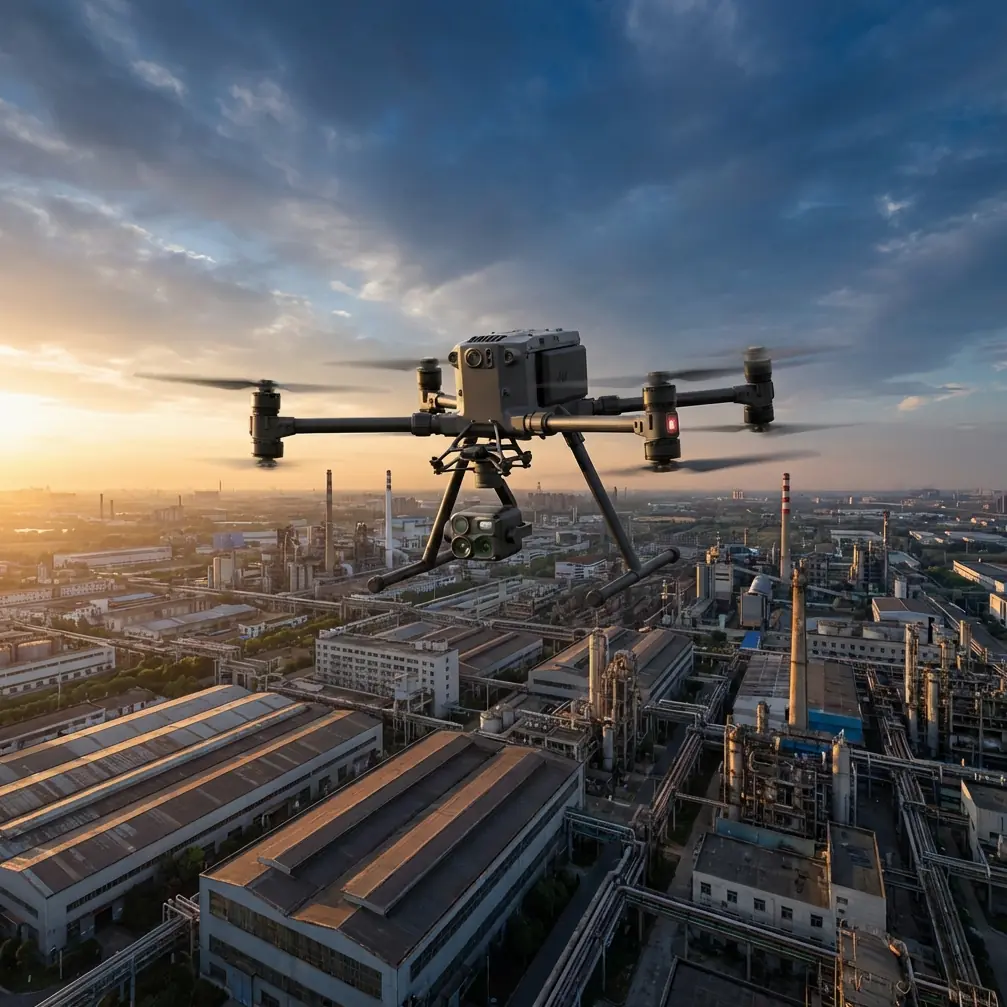
Matrice 4 in Windy Forest Survey Work: A Field Report from the Canopy Edge
META: Expert field report on using Matrice 4 for windy forest surveying, with practical insight on thermal signature capture, photogrammetry, GCP workflow, O3 transmission, AES-256 security, hot-swap batteries, and BVLOS planning.
I took the Matrice 4 into a forest block on a day that looked manageable from the truck and less friendly once we reached the launch point. That detail matters, because forest survey missions rarely fail on paper. They fail at the tree line, where wind starts curling over ridges, light changes every few minutes, and your neat preflight assumptions get tested in real time.
This was not a showcase flight. It was a working survey in mixed woodland, with the usual objectives stacked on top of each other: capture imagery suitable for photogrammetry, validate key control with GCPs, monitor thermal signature variation in shaded and exposed sections, and maintain a stable link deep enough into the stand to keep the operation efficient. The aircraft in focus was the Matrice 4, and the interesting part was not that it could fly the mission. It was how it behaved when conditions shifted halfway through.
That distinction is what forest operators care about.
A drone can look excellent in a spec sheet and still become awkward in timber country. Wind over forest is rarely smooth. It shears along access roads, gets trapped in gaps, then spills over the canopy in bursts. If you are building a usable terrain model or orthomosaic, those bursts matter because consistency matters. Any abrupt speed correction, unwanted yaw movement, or interrupted image sequence shows up later in the data. That is where the Matrice 4 starts to separate itself from aircraft that feel fine in calm conditions but become workarounds in real jobs.
We launched in a narrow clearing just after first light. The original plan was straightforward: low-altitude mapping runs along a compartment boundary, a second pass for overlap insurance, then a thermal sweep over a drainage line where earlier ground observations suggested abnormal moisture and possible root stress. The first phase went exactly as planned. The aircraft held its line cleanly, and the image cadence stayed reliable enough to keep confidence high for later photogrammetry processing. If you have ever rebuilt a block because one windy leg ruined overlap consistency, you know why that first hour matters.
Then the weather changed.
It was not dramatic in the cinematic sense. No storm wall. No sudden downpour. Just the sort of subtle shift field crews dread because it ruins efficiency without giving you an obvious reason to abort. The upper canopy started moving in a different direction from the lower edge. Gusts began arriving cross-track rather than head-on. The air at ground level still felt tolerable, but the aircraft was now working in layered wind. That is often the moment where a mission becomes expensive in hidden ways: slower groundspeed, more battery spent on stabilization, inconsistent image geometry, and a pilot who starts babysitting the route instead of supervising the larger survey objective.
The Matrice 4 handled that transition with less fuss than I expected.
The most useful trait was not raw power. It was composure. The aircraft did not overcorrect or create the kind of jerky path behavior that can quietly degrade survey quality. It absorbed gusts, corrected, and kept moving with the steady confidence you want when flying mapping lines near forest edges. That stability has direct operational value. In photogrammetry, clean positional behavior supports more reliable tie points, better reconstruction, and less time spent trying to salvage a dataset that should have been routine.
We had set GCPs before launch in a few open pockets and road intersections where satellite visibility was acceptable. In dense forest survey work, GCP placement is never as elegant as textbook examples suggest. You take what the site gives you. The point is not just accuracy on paper. It is confidence in the final output when canopy interference, uneven light, and difficult terrain conspire against you. With the Matrice 4, the image set coming back from the windy period still aligned well enough to preserve that confidence. That is not a glamorous observation, but it is exactly the kind of practical outcome that decides whether a long field day produces a deliverable or another reschedule.
The thermal pass told a similar story.
Forest thermal work is unforgiving when weather moves. A thermal signature that looks distinct at dawn can flatten quickly as sunlight starts striking one slope and not another. Add wind, and leaf movement can muddy the interpretation even further. We were interested in relative temperature behavior along a drainage channel, especially where crown density changed abruptly. The Matrice 4 maintained enough steadiness for the thermal data to remain useful rather than merely interesting. That operational significance is easy to miss if you focus only on sensor specs. In practice, thermal value depends on platform control. If the aircraft cannot maintain a disciplined flight path when the air gets messy, your thermal interpretation becomes far less trustworthy.
This is also where transmission reliability stops being a marketing bullet and becomes a field issue. In forest environments, especially around rolling terrain and dense vegetation, signal confidence shapes decision-making. The O3 transmission link is relevant here because it gives the crew a stronger basis for maintaining situational awareness when the aircraft pushes beyond the easy part of the site. That does not remove planning discipline, and it certainly does not turn every mission into a casual BVLOS exercise. But in practical terms, a robust link helps the pilot manage route execution, monitor aircraft behavior in shifting wind, and avoid the hesitation that often creeps into borderline signal conditions.
For operators working in infrastructure corridors, managed woodland, or environmental assessment, that matters more than many buyers realize. A weak or unstable link does not just threaten continuity. It changes pilot behavior. People shorten legs, avoid useful flight geometry, or fly more conservatively than the mission actually requires. The result is lower productivity and sometimes poorer data. A stable transmission system lets the aircraft be used closer to its operational intent.
Security also deserves a place in this discussion, especially when the site includes sensitive land data, utility-adjacent assets, or protected environmental records. AES-256 is not the kind of phrase that excites casual readers, but it is highly relevant to professional forestry and survey teams. Forest survey work increasingly intersects with regulated datasets, concession boundaries, habitat monitoring, and infrastructure planning. Secure transmission and handling are not abstract enterprise features in that context. They are part of responsible operations. If a team is collecting georeferenced imagery and thermal information over land that carries commercial or environmental sensitivity, strong encryption is a practical requirement, not a technical ornament.
Battery workflow was another factor that shaped the day. Windy forest jobs tend to punish bad battery planning because the mission area often sits just far enough from easy logistics to make every turnaround more disruptive. Hot-swap batteries are valuable here because they compress the gap between sorties. That sounds like a small convenience until weather windows start shrinking. On this mission, the change in wind arrived during the middle third of the work. Being able to cycle the aircraft back into the air quickly meant we could adapt the plan while the site conditions were still interpretable, rather than losing the thermal timing and low-angle light that made the dataset worth collecting in the first place.
That is one of the understated strengths of a system like the Matrice 4 in field use: it supports tempo. Survey teams often talk about endurance, but tempo is usually the more important metric. How quickly can you reposition, relaunch, revise your route, and capture the second dataset before the environment changes again? Forests are dynamic survey spaces. Light shifts, mist burns off, wind changes direction, and ground crews discover access issues. Aircraft that help maintain operational tempo tend to outperform aircraft that simply look efficient in a brochure.
There is also a larger point about BVLOS planning. Many forestry missions are not formally flown beyond visual line of sight, but they are often designed with BVLOS logic in mind. That means route discipline, communication reliability, emergency planning, terrain awareness, and a strong preference for aircraft behavior that remains predictable as the mission extends deeper into operational space. The Matrice 4 fits that mindset well. Even when flying within a conservative envelope, you can feel whether an aircraft belongs in more structured, more demanding operational frameworks. This one does.
What stood out most, though, was how little mental bandwidth the aircraft demanded once the weather shifted. That may be the strongest compliment a field platform can earn. In difficult survey conditions, the best aircraft are the ones that leave room for the crew to think about the survey itself. Are the GCPs visible enough? Is the overlap still sufficient? Has the thermal contrast faded on the south-facing slope? Does the drainage line need a second pass from a different angle? If the pilot is consumed by keeping the drone tidy in gusts, those higher-order decisions suffer.
The Matrice 4 kept the workload where it should be. We adjusted speed, revised one leg, widened a margin near a stand edge, and continued. The aircraft behaved like a tool built for that kind of correction, not a platform being forced beyond its comfort zone.
That matters for deliverables, but it also matters for trust. Forest survey work is not usually ruined by one dramatic failure. It is degraded by a series of small compromises: less overlap than planned, a rushed battery change, a thermal pass that came five minutes too late, a weak signal at the wrong moment, an orthomosaic with one troublesome corner no one noticed in the field. Aircraft that reduce those compromises earn their place quickly.
If you are evaluating the Matrice 4 specifically for windy forest surveying, I would focus less on broad claims and more on these field realities. Stable flight behavior protects photogrammetry outputs. Reliable O3 transmission supports better control at the edge of difficult terrain. AES-256 matters when the survey data itself carries sensitivity. Hot-swap batteries help preserve narrow operational windows. Thermal signature collection benefits directly from platform steadiness when weather becomes uneven. None of that is theoretical. It is the difference between a mission that merely launches and one that finishes with usable, defensible results.
For crews building repeatable workflows in woodland environments, that is the real story.
If you want to compare notes on route design, control strategy, or how to set up a forest survey workflow around the Matrice 4, you can message us here. The aircraft does not eliminate the hard parts of timber work. It just handles enough of them competently that the survey team can stay focused on the data instead of the drama.
By the time we packed up, the canopy was moving hard enough that launching from scratch would have required a much longer debate. That timing reinforced the lesson. Good survey aircraft do not just survive weather changes. They help you make use of the narrow period before conditions slide out of tolerance. In this case, the Matrice 4 gave us that margin, and in field operations, margin is often the whole job.
Ready for your own Matrice 4? Contact our team for expert consultation.