
Matrice 4 in Dusty Power-Line Surveys: A Field Report
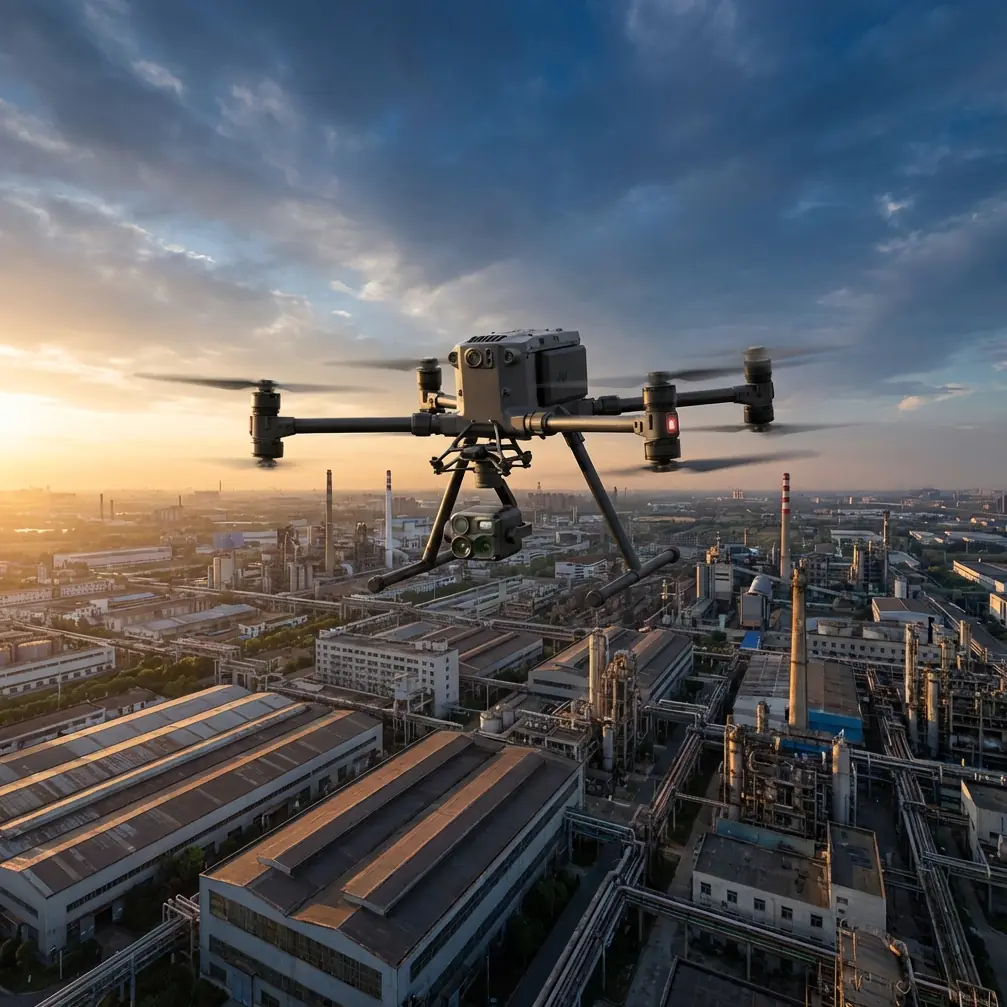
Matrice 4 in Dusty Power-Line Surveys: A Field Report on What Actually Keeps the Mission Moving
META: A field-based expert report on using Matrice 4 for dusty power-line surveys, covering maintainability, landing stress, battery discipline, inspection access, and why test logic from rotorcraft and landing-gear design matters in real operations.
Power-line survey work has a way of exposing the difference between brochure capability and operational capability.
On paper, almost any professional UAV platform can map, inspect, and document linear infrastructure. In the field, dusty corridors change the equation. Fine particles get into seams, cling to landing surfaces, obscure visual checks, and turn routine battery swaps into contamination events if the crew gets sloppy. When the assignment involves repeated takeoffs and landings along utility routes, the weak points are rarely the glamorous ones. They are access, inspection, landing resilience, and battery discipline.
That is why the most useful way to think about Matrice 4 for dusty power-line surveying is not as a flying camera first. It is a maintainability-centered inspection tool that happens to fly.
I have been revisiting two older aerospace design references while evaluating how crews should approach Matrice 4 deployment in these conditions. Neither source discusses this drone directly, of course. One is a helicopter design manual section on reliability and maintainability. The other examines landing-gear drop testing and lift simulation. On the surface, they belong to manned aircraft engineering. In practice, they reveal something surprisingly relevant for UAV teams running survey operations in dirt, grit, and repeated field launches.
Dust punishes poor maintainability faster than poor performance
One of the helicopter references states that maintainability design criteria should be determined during development and documented, not improvised later. That sounds administrative until you put a drone beside a dusty access road under a power corridor.
In power-line work, maintainability is not a paperwork issue. It is a mission continuity issue.
The same source points to GJB1613, a maintenance-related requirement set organized into seven sub-volumes, and to HB7255, which includes 31 general requirements and 202 detailed requirements across 14 major systems. Those numbers matter because they reflect a mature engineering truth: keeping an aircraft usable is not one feature. It is a system of small design decisions.
For a Matrice 4 crew, the lesson is immediate. When dust is everywhere, the ability to quickly inspect exposed areas, open access panels safely, verify structural condition, and clean critical surfaces without awkward disassembly becomes more valuable than another abstract spec point.
One line from the rotorcraft maintainability guidance is especially relevant: important structural areas should be easy to inspect visually or by non-destructive methods, and crack-monitoring provisions may be necessary to ensure effective lifecycle monitoring. Translate that into UAV field practice and you get a very practical workflow:
- inspect landing gear and arm junctions after hard or uneven landings
- check for dust tracks around seams, which often reveal particle ingress paths
- verify that sensor windows and thermal optics remain clean enough for reliable interpretation
- look at fasteners and attachment points before the next sortie, not after the day is done
This is where Matrice 4 crews often gain or lose real productivity. Dust does not always cause immediate failure. More often, it degrades trust in the data. A thermal signature that should indicate heating at a connector may instead be softened by contamination on the lens cover. A photogrammetry run may complete successfully, but image consistency can suffer if crews rush pre-flight cleaning or fail to monitor takeoff and landing dust exposure. Good operators do not just ask whether the aircraft can fly. They ask whether the output still deserves to be used.
Why access design matters more than most teams admit
The helicopter handbook also emphasizes simple connection forms, reduced disassembly complexity, reasonable separation surfaces for repair access, and quick-release maintenance covers with secure retention. Again, this sounds like traditional aircraft engineering. But for dusty utility inspections, it maps directly onto downtime.
When a UAV platform is difficult to open, difficult to examine, or difficult to clean around high-risk areas, the crew starts skipping steps. First they shorten inspections. Then they normalize contamination. Then they trust yesterday’s assumption more than today’s physical evidence.
That is exactly how small field issues become fleet issues.
For Matrice 4 operations along power lines, especially in remote substations, service roads, and dry agricultural interfaces, I recommend treating accessibility as part of mission planning. If a component or zone cannot be checked quickly on-site, build extra time into the stop. Dust does not care about dispatch pressure.
This is also where hot-swap batteries can be operationally valuable beyond convenience. In dirty environments, every unnecessary aircraft shutdown, battery door exposure, and handling cycle creates another opportunity for contamination. Efficient battery changes reduce that exposure window. But speed alone is not the goal. Controlled speed is.
A field tip I give crews is simple: never place a warm battery straight onto a dusty case lid or vehicle tailgate. Warm surfaces attract fine dust more aggressively than most people realize, and that debris has a habit of migrating right where you do not want it during reinstallation. We keep a clean fabric pad in a sealed pouch just for battery handling. It weighs almost nothing and saves arguments later when someone is trying to explain an avoidable contact issue. If you are coordinating crew procedures and want a quick field checklist, sending it through this direct crew chat line is often faster than passing around another PDF nobody opens in the truck.
Repeated landings are the hidden stress case in corridor work
The second reference, on landing-gear dynamic testing, is just as instructive.
It discusses drop testing using a complete landing-gear assembly and notes minimum free-drop heights of 0.475 m and 0.170 m under specified conditions. It also explains a key test-method debate: whether to simulate wing lift with air cylinders or equivalent reduced weight. The practical takeaway is not about copying manned-aircraft certification methods. It is about recognizing that landing loads are difficult to simulate perfectly, and test setups themselves can introduce errors, including unstable peak loads.
That matters for Matrice 4 because power-line surveys in dusty terrain often involve many more landing cycles than teams expect during planning. A long corridor mission may be limited not by range alone, but by site access, visibility, battery rotation, and local airspace constraints. Each touchdown becomes part of the aircraft’s fatigue story.
And dusty landings are rarely clean landings.
Loose soil changes friction. Small gravel alters contact behavior. Sloped shoulders near service roads encourage rushed pilot inputs. If aerospace test engineers devote so much attention to how landing loads are represented, field operators should be equally serious about how real-world touchdown conditions accumulate wear.
Operationally, that means three things.
First, review landing areas with the same seriousness you give route planning. A slightly longer walk to a firmer patch is often worth it.
Second, after any landing that felt heavier than normal, inspect before launching again. The maintainability reference explicitly favors design that supports visual inspection of important moving parts and connection points. Even if the aircraft appears fine, dust can hide scuffing, looseness, or early damage indicators.
Third, stop pretending all “successful” landings are equal. They are not. A drone that stayed upright is not necessarily a drone that should be relaunched without checks.
Data quality starts before the aircraft leaves the ground
The Matrice 4 conversation in the utility sector often centers on payload output: thermal signature review for hotspot detection, high-resolution imagery for component condition, and photogrammetry for corridor documentation. All valid. But dusty conditions create a pre-data problem.
If the aircraft is not clean enough, stable enough, and mechanically trustworthy enough, the data may still arrive looking polished while carrying subtle defects. That risk is higher in linear inspections because crews get into a rhythm. Rhythm is productive, but it also masks drift.
For photogrammetry, dust on optics can reduce contrast and image consistency in ways that affect tie point reliability and downstream reconstruction. If your workflow uses GCPs, that does not rescue poor raw image quality; it only helps anchor the model. For thermal work, even slight contamination can complicate interpretation, especially when teams are comparing small temperature differences rather than obvious faults. In utility inspections, false confidence is more dangerous than obvious failure.
This is where a maintainability mindset supports analytics. Quick access for cleaning, straightforward visual checks, and disciplined handling of batteries and landing surfaces preserve the integrity of the sensor stack. The result is not just more uptime. It is more defensible output.
Transmission and security matter, but they do not replace field discipline
Readers evaluating Matrice 4 for infrastructure work often focus on O3 transmission, AES-256 protection, and longer-route operational readiness, including future BVLOS-oriented workflows where regulations permit. Those are relevant capabilities. Reliable link performance helps on linear assets where terrain, towers, and vegetation can complicate positioning. Strong encryption matters when utility imagery and asset records move across teams and contractors.
Still, dusty corridor work has a way of humbling anyone who believes digital sophistication can override physical neglect.
A secure link does not clean a lens. A stable downlink does not inspect a landing strut. A smart battery system does not excuse careless swap habits.
That is not a criticism of the platform. It is a reminder that the best UAVs reveal their value only when crews adopt aircraft-grade habits.
What I would standardize for Matrice 4 power-line crews
If I were building a field SOP around Matrice 4 for dusty power-line surveys, I would center it on five non-negotiables.
1. Treat inspection access as a mission resource
Do not compress turnaround until checks become symbolic. The helicopter design guidance is clear that important areas should be inspectable and maintainability criteria should be defined up front. Your field process should reflect that discipline.
2. Log landing quality, not just landing count
The landing-test reference exists because touchdown dynamics are not trivial. Record hard or uneven landings separately from normal ones. That creates a meaningful maintenance history instead of a vague one.
3. Build a clean battery ritual
Use sealed storage, a designated clean handling surface, and a cooling pause before repacking warm batteries. Hot-swap capability is most valuable when it reduces both downtime and contamination risk.
4. Separate thermal and photogrammetry cleaning checks
Do not assume one wipe routine suits every sensor task. Thermal signature interpretation and photogrammetric consistency fail in different ways.
5. Assume dust will exploit shortcuts
If a cover, latch, seam, or mounting point is routinely exposed during field use, inspect it routinely. Mature aerospace standards did not arrive at hundreds of maintainability clauses by accident.
The bigger lesson from older aircraft engineering
The most interesting thing about these references is not their age. It is their persistence. Engineers dealing with helicopters and landing-gear systems were wrestling with the same operational truths UAV teams face now: aircraft must be inspectable, repairable, and testable in ways that reflect real use, not ideal use.
That is exactly the lens through which Matrice 4 should be evaluated for dusty power-line surveying.
Not just by how far it flies. Not just by how sharp the image looks on a clean day. By how well the platform and the crew process hold up after repeated dusty landings, battery changes in the field, and inspection cycles that need to stay fast without becoming careless.
When operators adopt that mindset, the drone stops being a fragile flying sensor and starts becoming what a utility team actually needs: a dependable field instrument with repeatable output.
That is the threshold that matters.
Ready for your own Matrice 4? Contact our team for expert consultation.