
Matrice 4 on Solar Farms in Extreme Temperatures
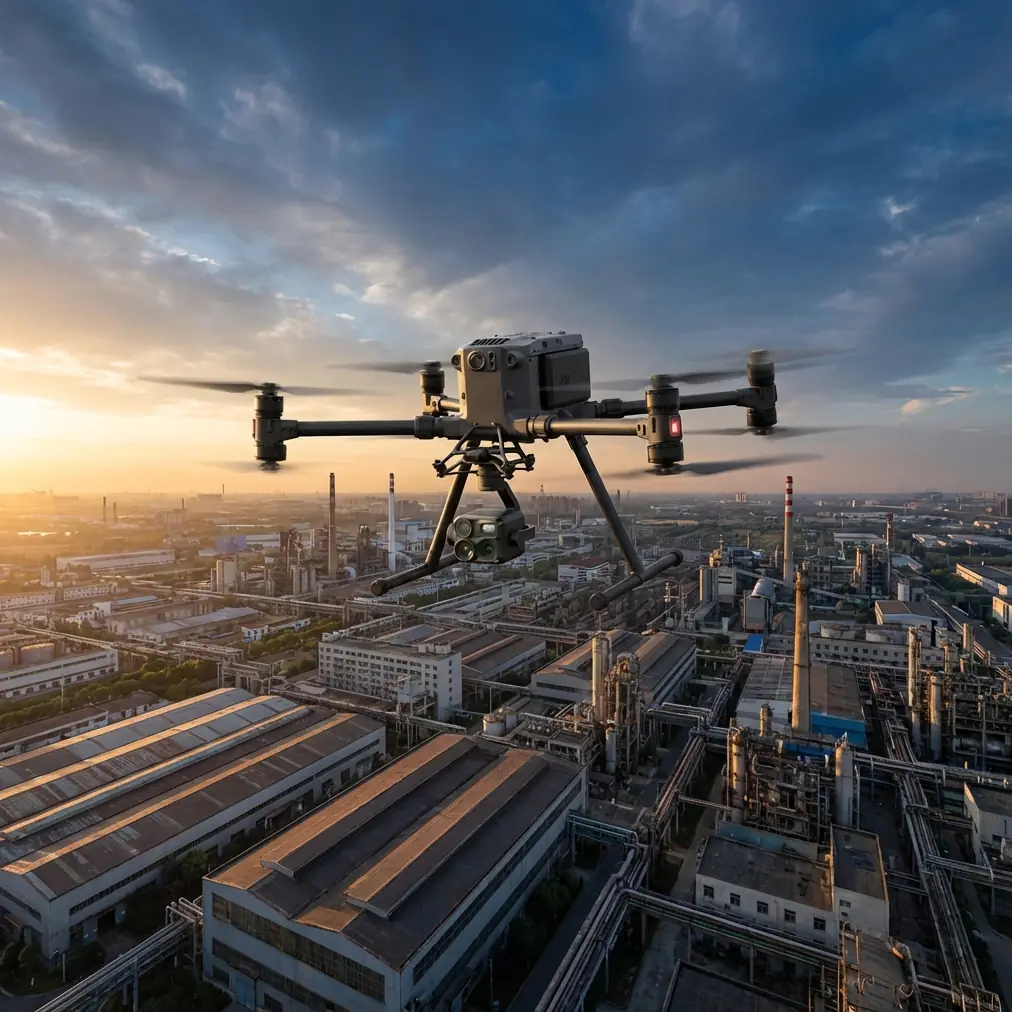
Matrice 4 on Solar Farms in Extreme Temperatures: What an Aircraft Inspection Funding Round Reveals About Where UAV Operations Are Headed
META: A case-study analysis of using Matrice 4 for solar farm surveys in extreme temperatures, with lessons drawn from Donecle’s €10 million aircraft inspection expansion and the rise of AI-driven maintenance workflows.
When a drone inspection company focused on aircraft attracts €10 million to scale internationally, that matters well beyond aviation.
Donecle, based in France, just raised that amount in a funding round led by IRDI Capital Investissement and SWEN Capital Partners to expand its drone-based aircraft inspection platform and continue developing AI-driven maintenance solutions. On the surface, that sounds like aviation infrastructure news. Look closer, and it points to a broader shift in industrial UAV operations: asset owners no longer want images alone. They want inspection data that fits maintenance decisions, works across fleets, and holds up under operational pressure.
That is exactly the lens through which the Matrice 4 should be evaluated for solar farm work in extreme temperatures.
As Dr. Lisa Wang, I would not frame the Matrice 4 as simply “a drone for capturing thermal and visible imagery.” That misses the real issue. Large solar sites expose the weak points in UAV programs fast: heat shimmer, reflective surfaces, long cable corridors, patchy RF conditions, pressure to shorten downtime, and maintenance teams that need actionable defect calls rather than folders full of media. The significance of Donecle’s funding is not that aircraft and solar farms are identical. They are not. The significance is that serious capital is moving toward automated inspection platforms with AI-assisted maintenance logic. Solar operators should read that as a signal.
Why an aircraft inspection story matters to a solar farm operator
Aircraft inspection is one of the most demanding civilian inspection environments available to drones. The tolerance for missed anomalies is low. Repeatability matters. Workflows have to integrate with maintenance systems, not remain trapped in an image viewer. So when Donecle says its next phase is international expansion and deeper AI-driven maintenance development, the message is clear: the market rewards inspection ecosystems, not isolated flights.
For Matrice 4 users surveying solar farms, that has operational significance in two direct ways.
First, inspection quality is no longer judged only by whether the drone flew the mission. It is judged by whether the resulting data can support maintenance prioritization across many assets and many sites. A drone team flying a 500-hectare solar project in desert heat needs thermal signature consistency, geospatial confidence from GCP-backed mapping, and a workflow that separates true module faults from false positives caused by irradiance swings or panel soiling.
Second, scale changes everything. Donecle’s funding is specifically tied to international growth. That is important because inspection methods that work for one pilot and one site often break when rolled out across regions. For solar portfolios, standardization becomes the hidden battleground: identical mission templates, reliable transmission behavior, secure data handling, and battery logistics that do not collapse in extreme temperatures.
That is where the Matrice 4 conversation gets interesting.
Case study frame: surveying a solar farm during a temperature swing
Picture a utility-scale solar farm with a severe daytime heat load and sharp temperature drop near sunset. The maintenance team wants a combined thermal and photogrammetry pass to identify underperforming strings, hotspot clusters, and mounting structure issues. The site sits near inverters and substations where electromagnetic interference can disrupt a clean link if the pilot treats antenna orientation as an afterthought.
The aircraft in this scenario is the Matrice 4, deployed not as a camera platform alone, but as a node in a maintenance workflow.
The mission objective has two layers:
- Produce a precise orthomosaic and thermal map for defect detection.
- Generate outputs that maintenance crews can act on without spending days manually sorting imagery.
This is where lessons from aircraft inspection transfer well. Aviation has already shown that the value sits in automation, repeatability, and maintenance integration. Donecle built an entire business around drone-based automated inspections. Its latest funding round tells us customers are backing systems that reduce friction between data capture and maintenance action. Solar operators should demand the same standard from a Matrice 4 deployment.
Extreme temperatures are not a side condition. They shape the mission.
Heat affects more than batteries. It changes the surface behavior of the site.
On very hot days, module temperature divergence can widen enough to make genuine hotspots easier to detect, but atmospheric distortion and thermal reflections can also complicate interpretation. Then, if ambient temperature drops quickly, the relative contrast across panels changes again. A competent Matrice 4 workflow accounts for this by timing thermal collection windows carefully and pairing them with visual data robust enough for later review.
This is why I advise clients to avoid treating thermal as a standalone output. A thermal signature without spatial confidence can waste maintenance hours. Photogrammetry stitched against solid GCP placement gives the thermal layer context. If a hotspot appears near a panel edge in one pass, the team needs confidence that it maps to the same physical component in the next pass and that the anomaly is not just a misalignment artifact.
In practical terms, GCP-backed surveying remains highly relevant even when the drone’s onboard positioning is strong. On large solar farms, especially in repetitive panel arrays, small geospatial errors can create painful ambiguity during repair dispatch. The maintenance team does not want “somewhere in row 42.” They want the exact module group, mounting lane, and access route.
Handling EMI near inverter blocks: antenna adjustment is not optional
One of the most common field mistakes on energy sites is blaming every signal issue on the drone.
Near inverter stations, transformers, and site communications equipment, RF conditions can become messy. With O3 transmission, pilots often have excellent link performance, but that performance still depends on how the ground station is used. In the field, small antenna adjustments can make a disproportionate difference.
When I brief crews for solar missions, I emphasize three habits.
Keep the controller oriented to preserve the cleanest possible relationship between the antennas and the aircraft’s path. Do not stand lazily behind a vehicle or steel equipment cabinet and expect the link to behave the same. If telemetry starts to fluctuate while crossing near high-interference zones, pause, reposition yourself, and adjust antenna alignment before pressing on. On long runs across panel rows, maintain awareness of whether your own body, a service truck, or substation structures are shadowing the signal path.
This sounds simple. It is. But it is often ignored.
And this is not just about pilot convenience. It affects data quality. A stable transmission link supports smoother mission execution, fewer interruptions, and cleaner dataset continuity. For AI-driven maintenance pipelines, consistency matters. The more fragmented the mission, the harder it becomes to preserve repeatability across surveys.
The real value of secure transmission and disciplined data handling
Industrial energy clients increasingly ask not just how data is collected, but how it is protected. That concern grows when inspections span multiple sites, contractors, and cloud workflows. AES-256 encryption matters here because inspection data can reveal asset layout, equipment condition, and maintenance vulnerabilities. For an operator managing a geographically distributed solar portfolio, secure handling is no longer an IT footnote. It is part of vendor qualification.
This is another reason the Donecle news is relevant. The company is not merely expanding a flying service. It is investing in AI-driven maintenance solutions. Once inspection outputs feed broader maintenance systems, data governance becomes central. Solar farm operators deploying Matrice 4 workflows should think the same way: who accesses the files, where they are processed, how findings are versioned, and how field teams validate model outputs before issuing work orders.
A mature drone program is really a data integrity program with rotors attached.
Hot-swap batteries change throughput in punishing conditions
Extreme temperatures turn battery planning into operational strategy.
On large solar sites, every forced delay compounds. If the aircraft must cool excessively between sorties or crews waste time shutting down to replace packs, the mission window shrinks. Hot-swap battery capability is valuable because it keeps the aircraft moving through the site with less interruption, which is especially useful when you are trying to preserve similar irradiance conditions across a full thermal survey.
Why does that matter? Because thermal comparison works best when capture conditions are controlled as tightly as practical. If one section of the site is flown under one thermal regime and another section much later under substantially different conditions, defect interpretation becomes less clean. Faster turnarounds help preserve consistency.
Again, this echoes the aircraft inspection model. Automated inspection platforms win by reducing downtime and increasing standardization. The same principle applies on solar farms. Every design choice that preserves repeatability across many sorties improves the trustworthiness of the resulting maintenance decisions.
BVLOS ambition must be matched by process discipline
For expansive solar developments, BVLOS is an obvious point of interest. The attraction is easy to understand: long linear corridors, large fenced properties, and recurring inspections that reward route efficiency. But BVLOS should not be treated as a shortcut to scale. It only works when mission design, communications reliability, site risk assessment, and recovery planning are already mature.
This is another place where the Donecle funding round says something useful between the lines. Investors backed a company built around automated inspection, not ad hoc piloting. Scale follows process. It does not replace it.
For Matrice 4 teams, that means building the site workflow first:
- standardized thermal capture windows
- repeatable photogrammetry settings
- GCP methodology where needed
- transmission checks around interference zones
- battery rotation procedures suited to heat stress
- QA rules for AI-assisted anomaly review
Once those pieces are reliable, expanding to larger operational envelopes becomes realistic.
From images to maintenance intelligence
The most useful takeaway from the Donecle story is not about aviation prestige. It is about where the inspection market is placing value. A France-based company focused on automated aircraft inspection raised €10 million, with backing from IRDI Capital Investissement and SWEN Capital Partners, specifically to grow internationally and keep building AI-driven maintenance tools. That combination tells us something precise: the market wants inspection outputs that become operational decisions at scale.
Solar farm operators should hold Matrice 4 programs to that same benchmark.
A strong mission does not end with a completed flight log. It ends when the maintenance team can answer four questions with confidence:
- Which anomalies are real?
- Where exactly are they?
- How urgent are they?
- Can we compare this result to the last survey without guessing?
When the answer is yes, the drone program is doing real work.
If you are refining a workflow for high-temperature solar inspections, especially where EMI from electrical infrastructure complicates transmission behavior, it helps to compare field notes with teams running similar environments. I often suggest operators share mission constraints and link-behavior observations early rather than after a flawed dataset is already in processing; one practical way to start that conversation is through this direct field coordination channel: message our UAV operations desk.
What Matrice 4 operators should take from this moment
The drone industry is maturing away from novelty. Funding is flowing toward systems that connect capture, analysis, and maintenance action. Donecle’s new capital is a visible example of that shift. Its focus on automated aircraft inspection and AI-driven maintenance is not a niche story. It is a preview of what asset-heavy industries now expect.
For solar farm teams using Matrice 4 in extreme temperatures, the implications are straightforward.
Fly for repeatability, not just coverage. Use thermal and photogrammetry together, not in isolation. Bring GCP discipline to sites where exact defect localization matters. Treat antenna adjustment as an active response to EMI, not a minor pilot preference. Use secure transmission and controlled data handling because inspection data has operational value. Lean on hot-swap battery workflows to preserve capture consistency across large sites. And if BVLOS is on the roadmap, earn it through process maturity first.
That is how Matrice 4 stops being a flying sensor and becomes part of an inspection system that maintenance teams trust.
Ready for your own Matrice 4? Contact our team for expert consultation.