
Matrice 4 for Dusty Solar Farm Surveys: A Reliability
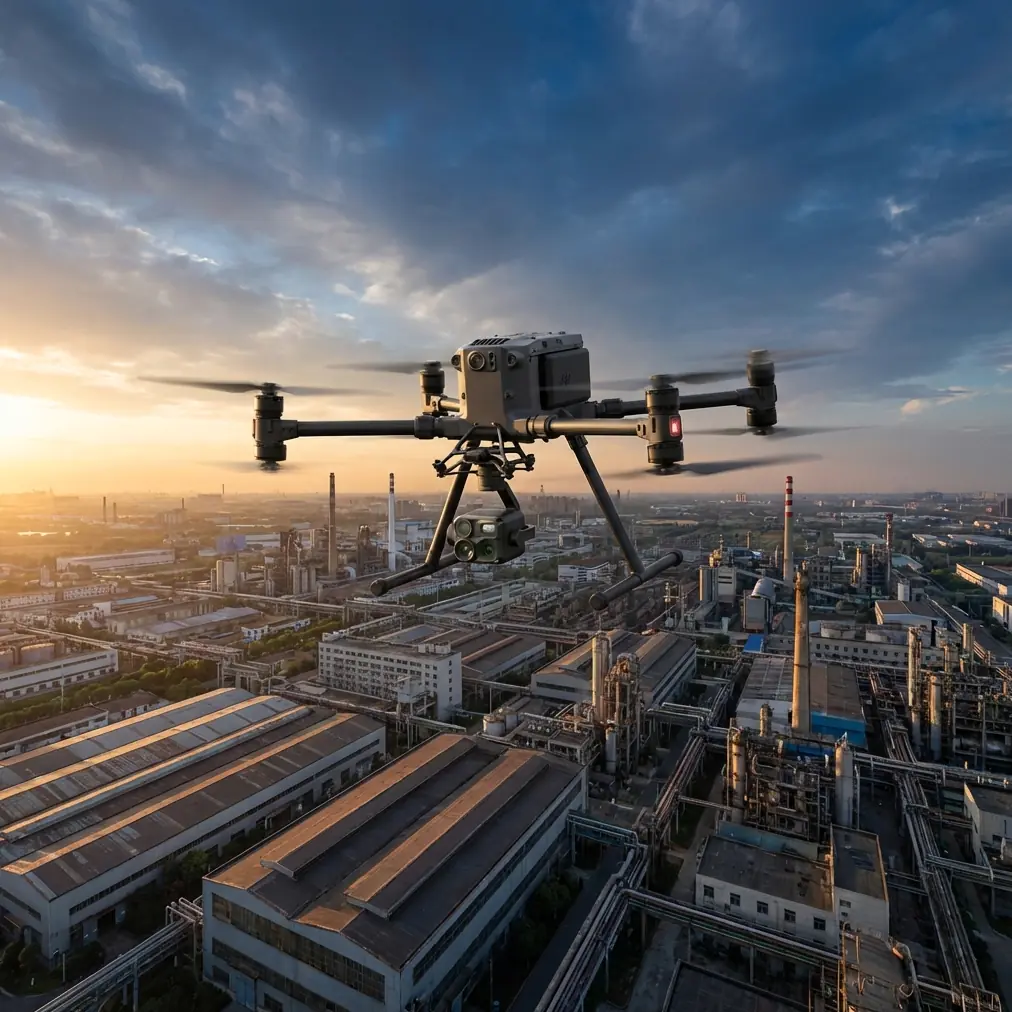
Matrice 4 for Dusty Solar Farm Surveys: A Reliability-First Field View
META: An expert look at using Matrice 4 for dusty solar farm surveys, with practical insight on reliability analysis, thermal signature capture, photogrammetry workflow, transmission security, and field operations.
By James Mitchell
Solar farm survey work looks clean on paper. Straight rows. Repeatable missions. Predictable assets. The reality is rougher.
Dust gets into everything. Heat shimmer can distort perception. Long arrays push pilots to the edge of practical line-of-sight planning. Wildlife appears where you least want a distraction. And when the aircraft is being used for thermal signature collection and photogrammetry on the same site, small reliability issues stop being minor annoyances. They become schedule problems, data-quality problems, and sometimes safety problems.
That is the right lens for thinking about Matrice 4 in this role. Not as a generic “advanced drone,” but as a system that has to survive repeated, industrial-grade survey cycles in dusty solar environments while producing useful outputs the first time.
The most useful way to frame that challenge actually comes from classical aircraft design thinking. One reference point is the use of Functional Hazard Analysis, or FHA, during new aircraft design. Another is the bottom-up logic of Failure Mode and Effects Analysis, FMEA. Those are not abstract engineering terms here. They map surprisingly well to real Matrice 4 field operations on utility-scale solar sites.
Why reliability matters more than specs on a solar farm
A solar survey mission often combines two jobs that punish weak workflows differently.
First, thermal inspection asks the payload to identify heat anomalies accurately enough to spot suspect modules, strings, or combiner-related issues before a technician ever walks the row. Second, photogrammetry asks for disciplined overlap, repeatable geometry, and stable flight behavior so orthomosaics and measurement outputs hold up when compared against GCP-backed ground truth.
If your aircraft slows unexpectedly in one phase, drifts into degraded route consistency in another, or forces a landing because turnaround planning was optimistic, the losses compound. You don’t just lose minutes. You may lose thermal consistency across the sun angle window or break the continuity needed for a clean reconstruction.
That is why the old aircraft-design distinction between “a fault that reduces efficiency” and “a fault that jeopardizes mission success” is so relevant. In the landing gear handbook reference, one example describes a mild oil leak in an actuator: the part itself loses efficiency, the higher-level mechanism slows, yet the final aircraft impact may be negligible. Another example is harsher: a return spring with insufficient force or a spring fracture can prevent locking at the next level up, creating a much more serious outcome.
Translate that into drone survey work and the lesson is obvious. Some faults are annoying. Some faults kill the job.
A dusty solar operator should evaluate Matrice 4 the same way: what kind of degradation can the system absorb, and which weak points escalate into failed sorties or bad data?
The right question is not “Can Matrice 4 fly this site?”
It is: can the whole survey system keep producing dependable outputs inside the site’s real constraints?
That distinction comes from another design reference in the source material: aircraft concept development starts with user requirements, then evolves through iterative analysis. The reference makes a sharp point that analysis is not merely a check on a finished concept. Good analysis often changes the design itself, sometimes enough to produce an entirely new solution.
That is exactly how experienced drone teams should deploy Matrice 4 on solar sites.
The user requirement is not “fly a drone over panels.” It is closer to this:
- cover a large site efficiently
- preserve thermal integrity in hot, dusty conditions
- maintain secure command and data links
- switch batteries with minimal downtime
- preserve mapping accuracy with GCP-supported outputs
- avoid unnecessary site rework
Once you define the requirement properly, the rest of the mission architecture changes. Flight altitude, sensor sequencing, overlap settings, battery staging, takeoff point placement, and even handoff procedures between visual observer and pilot all become design choices rather than habits.
Dust changes the mission architecture
Dust is not just a maintenance issue. It is a reliability variable.
On a solar farm, fine particulate can influence launch discipline, lens cleanliness, landing zone choice, and post-flight inspection frequency. The classical FHA mindset from the aircraft reference asks designers to examine whether hidden faults are easy to detect, whether maintenance is convenient, whether preventive methods exist, and whether backup or redundancy is available.
That thinking is excellent for Matrice 4 crews.
For example:
- Is dust contamination on optics easy to detect before the next thermal run?
- Is the landing setup creating repeated ingestion exposure near loose aggregate roads?
- Can the team catch a gradual degradation in image consistency before the mission set is complete?
- Is the battery swap area organized so hot-swap batteries really reduce downtime rather than create rushed error chains?
These are reliability questions, not housekeeping questions.
A strong Matrice 4 operation in this environment usually treats every sortie as part of a managed system. Aircraft status, payload condition, mission profile, transmission quality, and battery rotation all need to stay inside design boundaries. The aircraft handbook language about converting reliability requirements and operational constraints into design boundary conditions is a very practical way to think about this. On a solar farm, those boundaries may include ambient dust level, acceptable thermal window, maximum useful leg distance, and minimum link margin.
O3 transmission and AES-256 matter because survey work is operational, not theoretical
A lot of content around enterprise drones treats transmission and encryption like checklist items. On a utility site, they are operational tools.
O3 transmission matters because solar farms stretch out. Long linear arrays can pull crews into awkward geometry, especially when terrain, fencing, service roads, and substation proximity complicate staging. A stable transmission architecture gives the pilot more freedom to place takeoff points where dust, sightlines, and access are better rather than where the route is simply shortest.
AES-256 also matters in a way that is often understated. Inspection data from energy infrastructure is sensitive by nature. Even when the mission is routine, the combination of thermal imagery, georeferenced mapping, and asset condition indicators creates a data package that owners expect to be handled responsibly. Secure transmission is part of trust, and trust is part of contract continuity.
Neither feature should be viewed in isolation. In practical field use, strong transmission plus strong security supports a calmer workflow. Fewer interruptions. Less need to reposition for link confidence. Better continuity between collection and review.
Thermal signature work is where weak planning gets exposed
Matrice 4 becomes most valuable on solar assets when the team respects the difference between seeing heat and interpreting it.
A thermal camera can find apparent hotspots. That does not mean every thermal anomaly is actionable, and it does not mean every flight plan produces consistent evidence. Dust haze, panel angle, time of day, and altitude all influence how useful the thermal signature becomes.
This is why the aircraft design reference on analysis is so relevant. Analysis should feed back into design. If early thermal passes show inconsistent results across sections of the site, the answer may not be “refly the same plan.” It may be to redesign the plan: alter altitude, adjust route segmentation, change battery swap timing, or separate photogrammetry from thermal collection windows.
That iterative loop is what mature operators do well. They do not cling to the original mission design simply because it was the first one built.
On one dusty site visit, a marsh harrier cut low across the service corridor between panel blocks just as the aircraft was transitioning to the next leg. The sensor view caught it early enough to pause the route and hold position rather than force an evasive, dust-heavy descent near the array edge. That sounds like a small field anecdote. It is not. It is a reminder that sensor awareness and disciplined mission architecture work together. Good systems avoid cascading problems.
Photogrammetry quality is won before the first takeoff
Solar operators often say they want “inspection and mapping” in a single visit. That is reasonable, but only if the planning respects what each output needs.
Photogrammetry has stricter appetite for consistency than many teams admit. Overlap discipline, route geometry, camera behavior, and GCP strategy all influence the final dataset. If GCPs are being used, they should not be treated as a ceremonial add-on. They are the control structure that tells you whether your output is merely good-looking or actually dependable.
Again, the FMEA logic from the source material is useful. It examines failure modes from the component level upward, tracking effects on the subsystem and then on the final mission. In a Matrice 4 mapping workflow, one small issue—say, preventable lens contamination or an unnoticed deviation in flight path caused by a poor segment handoff—may first affect image clarity, then reconstruction quality, then the credibility of measurements delivered to the client.
That is the same three-level consequence chain described in the reference:
- effect on the item itself
- effect on the next level up
- final effect on the aircraft or mission
For solar drone work, the final effect is often not a crash. It is something more common and more expensive over time: incomplete confidence in the survey output.
Hot-swap batteries are only valuable if the process around them is disciplined
Battery strategy on a solar farm is where workflow either feels professional or improvised.
Hot-swap batteries can keep Matrice 4 moving through large inspection blocks without rebuilding the operation after every landing. But that only delivers real value when the team designs the rhythm around it: shaded staging, clear battery rotation order, dust-conscious handling, and mission blocks sized to the actual environmental load rather than brochure endurance.
This is another place where classical aircraft thinking helps. Simplification improves baseline reliability. Redundancy improves mission reliability and safety. In practical drone terms, that means reducing avoidable procedural complexity while adding resilience where it matters. A clean battery workflow is simplification. Carrying enough properly managed packs and assigning mission blocks with margin is redundancy.
Teams that skip this thinking often discover too late that they have built a fragile day plan. The aircraft may be capable. The operation is not.
BVLOS discussions should start with system maturity, not ambition
Many large solar sites naturally lead people toward BVLOS conversations. Fair enough. But BVLOS should be approached as an operational maturity issue, not as a shortcut to scale.
If a team has not yet stabilized its route design, thermal consistency, battery choreography, dust controls, and data validation process under ordinary site conditions, pushing farther out only magnifies those weaknesses. The aircraft design material in the references makes a broader point: all major design disciplines need to begin work early and iteratively in the concept phase. That is a useful model for drone operations too. Airframe capability, transmission confidence, observer planning, payload use, and data handling should be built together, not patched together.
The result is usually less glamorous and more effective: fewer surprises, cleaner datasets, and less site repeat work.
What Matrice 4 should look like in a well-designed solar workflow
When Matrice 4 is used well on dusty solar assets, the operation tends to have a few recognizable traits.
The crew defines mission success before launch. Thermal and mapping objectives are separated where needed instead of blurred together. GCP placement supports the actual deliverable. O3 transmission is used to improve site staging rather than excuse lazy route design. AES-256 is part of the data-handling standard, not a forgotten specification. Hot-swap batteries support a stable rhythm. Wildlife, dust, and heat are treated as normal operating constraints, not unusual disruptions.
Most of all, the team thinks like designers.
That may be the strongest lesson hidden in the source material. Good aviation work is not just analysis after the fact. It is synthesis—building a system that can meet real user needs and then refining it when evidence says the first idea is not enough.
If you are planning Matrice 4 for solar farm surveys and want to talk through mission design, payload workflow, or site-specific constraints, you can message our field team here.
That is the difference between flying a drone over panels and running a reliable survey program. One creates footage. The other creates decisions people can trust.
Ready for your own Matrice 4? Contact our team for expert consultation.