
Matrice 4 for Urban Venue Surveying: A Field Case Study
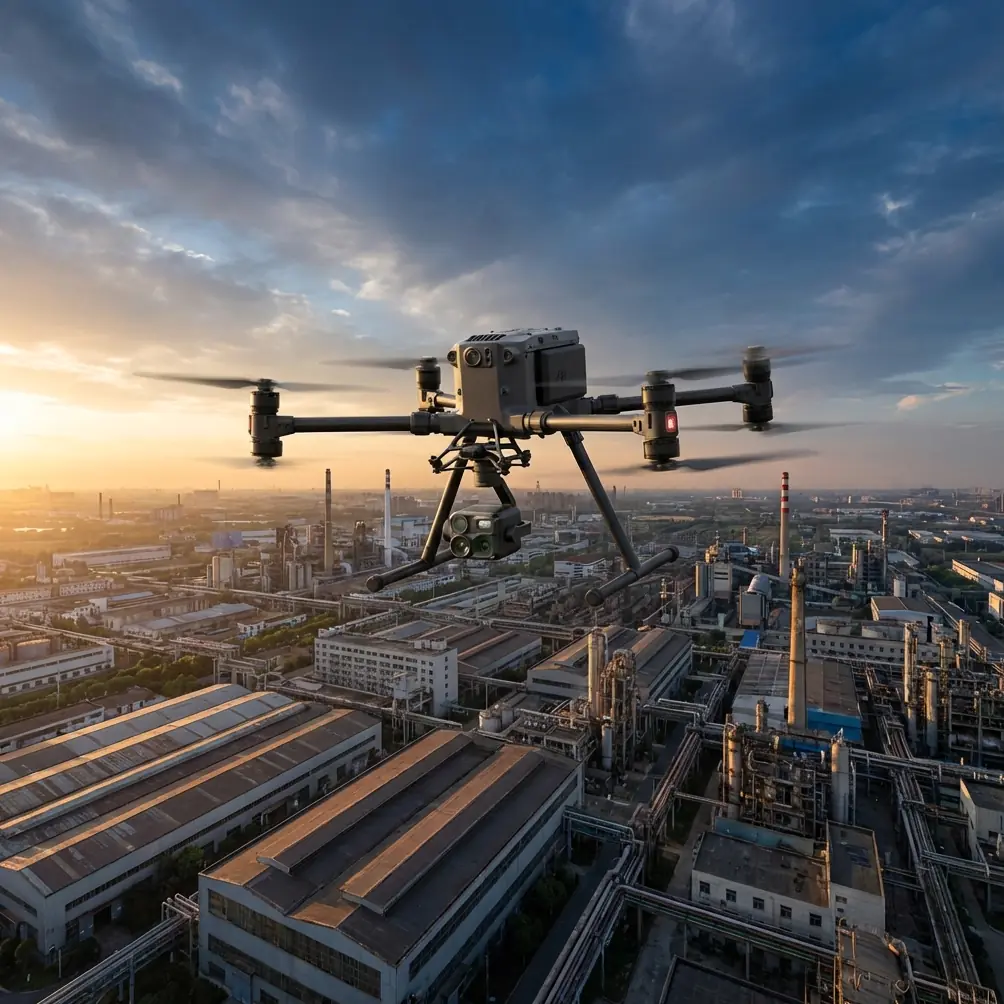
Matrice 4 for Urban Venue Surveying: A Field Case Study on Stability, Materials, and Mid-Flight Weather Change
META: Expert case study on using Matrice 4 for urban venue surveying, with practical insight on photogrammetry, thermal signature work, transmission reliability, payload confidence, and why control stability and structural material choices matter in changing weather.
Urban venue surveying sounds straightforward until the site starts behaving like a city.
Glass throws light where you do not want it. Rooftop HVAC units leak heat into thermal work. Narrow access roads compress takeoff planning. RF noise is never theoretical. Wind channels between structures make one side of the flight box feel calm and the other side feel like a different day entirely.
That is the backdrop for this Matrice 4 case study.
I approached this project as Dr. Lisa Wang, a UAV specialist focused on survey-grade operations in built environments. The assignment was a multi-layer venue survey in an urban district: façade capture for planning, roof condition review, thermal signature checks around service zones, and a photogrammetry run tied to GCP control for accurate downstream modeling. The aircraft platform was Matrice 4, selected not because it is fashionable, but because urban venue work punishes weak control behavior and rewards systems that stay predictable when conditions stop being polite.
What follows is not a generic overview of the platform. It is a practical read on what mattered in the field, especially once the weather shifted mid-flight.
The mission profile: one site, several data products
The venue itself was dense and visually busy. Public plazas, reflective curtain walls, neighboring towers, service alleys, and rooftop mechanical clusters all sat inside a compressed operating area. The deliverables were equally mixed:
- visible-light imagery for planning and inspection
- photogrammetry outputs for a current site model
- thermal signature review for envelope and rooftop anomalies
- repeatable flight records suitable for professional reporting
This is where Matrice 4 becomes more than “a drone with a camera.” In urban survey work, the airframe, control logic, link reliability, and power workflow all shape data quality. If any of those elements become unstable, your orthomosaic suffers, your thermal comparisons drift, and your clients start asking why the west elevation does not align with the roof model.
The mission started under stable conditions. By the second collection block, the weather turned.
The weather changed fast. That is when platform behavior becomes visible.
About midway through the roof and upper-façade pass, a mild overcast thickened into a moving wind front. Gusts were not extreme, but they became directional and inconsistent. Between two building faces, airflow accelerated and rolled upward in a way that changed the aircraft’s attitude corrections from smooth to active.
This is where operators often talk only about pilot skill. That misses the deeper point. Pilot input matters, but aircraft stability characteristics decide how much drama reaches the pilot in the first place.
One of the reference texts behind this discussion, 飞机设计手册 第6册 气动设计 on page 848, focuses on control system behavior under specific assumptions: no counterweight, no centering spring, and no allowance for inertia, damping, friction, or elastic deformation in the control system. It then presents the control stick displacement gradient and stick force gradient relationships, including formulas identified as (26-16), (26-17), and (26-18).
At first glance, that sounds like old-school fixed-wing theory, far removed from a modern enterprise UAV. It is not. The operational lesson is direct: predictable control response depends on how force, displacement, and aerodynamic loading relate as flight conditions change. In manned aircraft language, the handbook is quantifying whether the pilot feels a clean, progressive response or an awkward, nonlinear one. In drone language, especially for high-value urban survey work, that same principle appears as confidence in attitude holding, trajectory correction, and camera steadiness when the environment changes around the aircraft.
The Matrice 4 handled the wind shift the way a serious survey platform should. Corrections stayed composed. Yaw behavior remained usable for façade alignment. Hovering near standoff positions did not devolve into a fight. That matters because photogrammetry is less forgiving than people assume. Small instability penalties propagate into image overlap consistency, edge sharpness, and reconstruction quality.
Why stability matters more in venue surveying than in open-field mapping
Open-field mapping lets you hide a lot of sins. Urban venue work does not.
At this site, we were working close enough to architectural features that small positional inconsistency could show up in the model where planners actually care: parapet edges, drainage falls, service equipment spacing, and interface zones between old and renovated structures. Stable control behavior preserved the rhythm of image acquisition and made the GCP-tied dataset easier to process.
That page-848 aerodynamic reference also distinguishes between different assisted control arrangements, including servo-tab and boosted control cases. Again, the value here is not the historical hardware itself. The significance is that the handbook explicitly treats control feel and response as engineering variables, not pilot folklore. For Matrice 4 users in urban surveying, that is the right lens. When a platform remains coherent under changing aerodynamic loading, operators can protect the mission objective instead of burning time re-flying borderline capture lines.
In practical terms, the weather change forced three adjustments:
- We tightened the overlap strategy on the wind-exposed side of the venue.
- We leaned more heavily on disciplined GCP placement to preserve confidence in the final geometry.
- We monitored transmission quality continuously because urban wind and urban RF interference often arrive together.
The aircraft remained usable through all three.
O3 transmission and AES-256 are not brochure details in a city
Urban venues are full of invisible obstacles. Most operators plan around cranes, rooftops, trees, and access restrictions. Fewer respect the communication environment with the same seriousness.
For this mission, O3 transmission reliability was one of the quiet reasons the operation stayed efficient. The point is not just range. In city work, what you need is a resilient link that stays intelligible through clutter, reflections, and competing signals long enough for you to make good decisions. A video feed that degrades at the wrong moment can force conservative aborts or compromise framing consistency during inspection passes.
AES-256 also had operational value beyond compliance language. Venue surveys often involve commercially sensitive layouts, service areas, and infrastructure details. If your workflow includes image transfer, cloud synchronization, or shared stakeholder review, encryption is not decorative. It is part of how you maintain trust while handling potentially sensitive site information.
That trust issue came up directly on this project because the venue management team wanted confirmation that thermal outputs and roof imagery would be handled securely. I was able to explain the workflow clearly, and that sped up approvals. Technical confidence often shortens operational friction.
Thermal signature work gets harder when the weather moves
The thermal portion of the survey was planned for consistency, but the weather shift changed surface behavior and background contrast. This is common in real jobs. Rooftop membranes, glazed sections, and mechanical exhaust zones respond differently once cloud cover thickens and airflow rises.
The challenge is not simply capturing thermal images. It is knowing whether a visible anomaly is building-related or weather-induced.
Here the Matrice 4 workflow benefited from being part of a combined mission rather than a standalone thermal flight. Because we were already collecting structured visible-light coverage for photogrammetry, we had stronger context for interpreting heat patterns around vents, drainage zones, and façade transitions. A thermal signature without geometry can mislead. A thermal signature tied to a clean spatial model is much more useful.
This is another place where stable platform behavior matters. Thermal interpretation suffers when framing drifts or when repeated passes do not line up well enough for comparison. In shifting wind, keeping the aircraft composed is not about aesthetics. It is about preserving analytical value.
Hot-swap batteries changed the pace of the job
Urban venue surveying is full of interruptions: access windows, pedestrian management, rooftop coordination, and weather timing. Battery workflow can either amplify those delays or help absorb them.
Hot-swap batteries made a visible difference on this mission. When conditions changed, we chose to land, review a subset of captures, re-brief the next block, and relaunch without turning a short operational pause into a full reset. That kind of continuity matters more than many people admit. Survey quality often depends on keeping the team mentally inside the same mission logic while the site is still behaving the same way.
On a larger campus or stadium-adjacent venue, this also supports a more credible path toward extended corridor work or managed BVLOS-style planning where regulations permit and mission design justifies it. Even when you are not flying beyond visual line of sight, the discipline behind BVLOS thinking—link integrity, route predictability, power transitions, contingency planning—improves ordinary urban operations.
Why airframe material thinking still matters in a drone conversation
The second reference text, 飞机设计手册 第10册 结构设计 on page 718, might look even less connected to a Matrice 4 mission at first. It discusses forging design and common structural materials, including stainless steels and aluminum alloys.
But this material discussion carries a valuable lesson for enterprise drone users: structural confidence is always a balance of corrosion resistance, strength, fatigue behavior, manufacturability, and environmental fit.
The page identifies 1Cr18Ni9Ti as having good cold-forming performance, corrosion resistance, and strong resistance to intergranular corrosion, while also noting limitations in stress corrosion and pitting behavior. It also references aluminum alloy applications such as LY11, which after solution treatment and natural aging offers relatively high strength with moderate plasticity, and is commonly used for medium-strength stressed components.
Why does that matter to a venue survey operator?
Because urban jobs are hard on equipment in ways that spec sheets do not fully reveal. Humidity from rooftop plant areas, airborne pollutants, repetitive deployment cycles, vibration during transport, and constant assembly-disassembly routines all place quiet demands on structural design. A platform suited to professional work is not only about sensors and software. It is also about whether the components and fastening strategy can tolerate real service life without creeping into looseness, corrosion sensitivity, or fatigue-related confidence loss.
The handbook’s structural notes remind us that material selection is never random. Good airborne tools depend on it. When you are flying close to built assets and collecting data clients will use for planning, maintenance, or compliance, that matters.
The output quality came from workflow discipline, not just hardware
By the end of the mission, we had a coherent venue dataset despite the changing conditions. The deliverables held up because several layers worked together:
- stable flight behavior preserved image consistency
- GCP placement anchored photogrammetry accuracy
- O3 transmission supported confidence in live situational awareness
- AES-256 helped satisfy data security concerns
- hot-swap batteries reduced downtime when conditions shifted
- thermal and visual datasets were interpreted together, not in isolation
This is the real story of using Matrice 4 in urban venue surveying. The aircraft is valuable when it reduces uncertainty across the operation. Not one dramatic feature. A stack of smaller certainties.
If you are planning similar work—stadiums, mixed-use plazas, exhibition centers, transport interchanges, or rooftop-heavy event venues—the main question is not whether Matrice 4 can fly there. The better question is whether your workflow is built to exploit what the platform does well when the environment turns against the neat version of the mission plan.
What I would do the same next time
Three decisions proved especially sound on this job.
First, I would still combine photogrammetry and thermal signature review in a coordinated mission architecture rather than splitting them into unrelated flights. Urban context makes cross-reference valuable.
Second, I would keep GCP discipline even when the temptation is to rely heavily on onboard positioning alone. In complex venue geometry, controlled ground reference still earns its keep.
Third, I would continue treating platform stability as a procurement and planning criterion, not just an in-flight observation. The aerodynamic reference on page 848 of the design handbook is a useful reminder that control response has deep engineering roots. The structural reference on page 718 makes the same point from another angle: reliability starts in design choices long before the aircraft reaches the site.
That combination—predictable control and durable structural thinking—is exactly what serious survey work demands.
If you are evaluating a Matrice 4 setup for dense urban venue projects and want to compare workflow options, payload strategy, or deployment planning, you can message a venue survey specialist here.
Ready for your own Matrice 4? Contact our team for expert consultation.