
Matrice 4 in the Vineyard: A Wind-Proof, Data
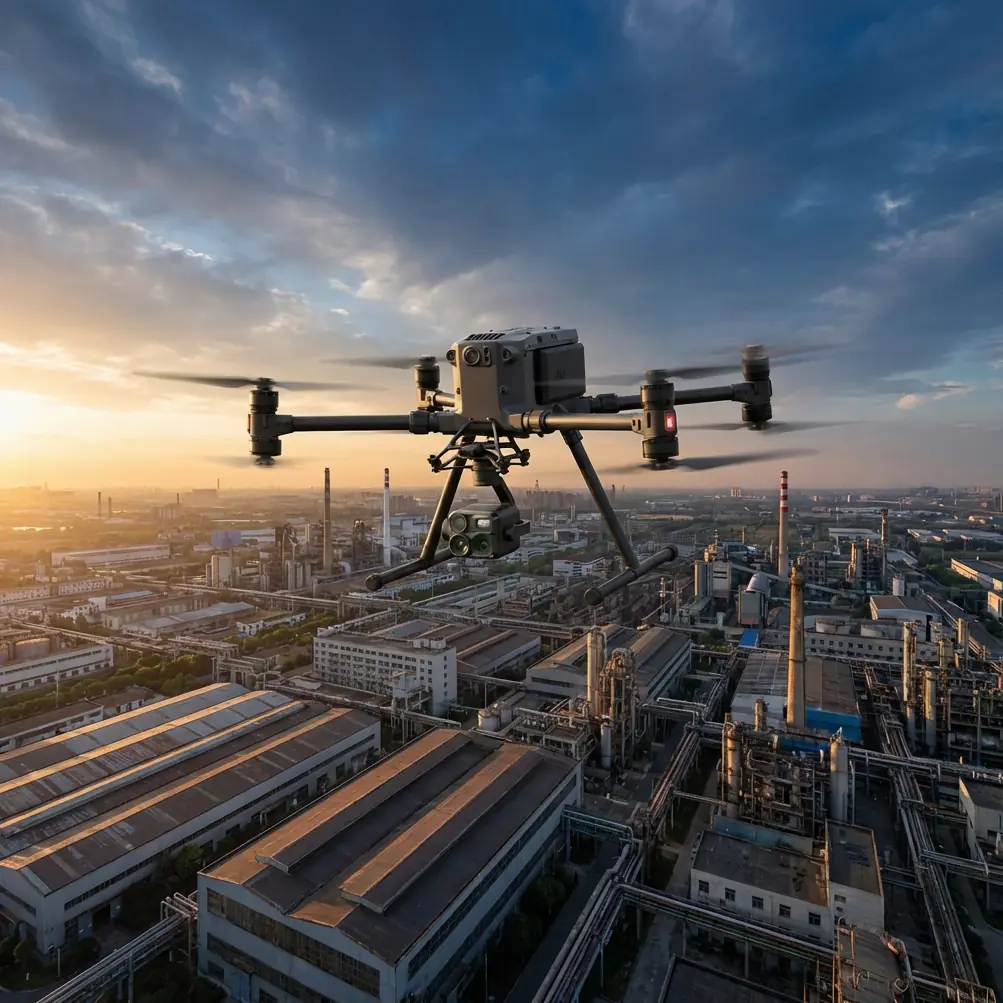
Matrice 4 in the Vineyard: A Wind-Proof, Data-Perfect Workflow from Pre-Flight Wipe to Final Ortho
META: Step-by-step field guide for using the DJI Matrice 4 to map sloped vineyards on gusty days—covering sensor choice, exposure tricks, hot-swap discipline, and one overlooked lens-clean ritual that keeps obstacle radar honest.
James Mitchell
Certified mapping pilot & viticulture-tech consultant
The hill above Saint-Rémy is no place for fragile drones. Mistral gusts rip through the rows at 14 m s⁻¹, shaking the trellis and sanding the grape skins. Yet the client wants a fresh orthomosaic—down to 0.7 cm per pixel—before harvest logistics lock in. No second flight window. No room for “maybe.”
Here is the exact workflow I run with the Matrice 4 when the vines are thrashing and the light is sliding from gold to steel. Copy it, adapt it, but don’t skip step zero; it is the cheapest insurance you will ever buy.
Step 0 – The 30-second pre-flight wipe everyone forgets
Before a prop turns, pinch the microfiber into the gap between the forward vision sensors and the body. One pass left, one right. Dust here scatters the VCSEL beam, letting the obstacle map believe twigs are trunks. On a breezy ridge that misread can trigger an emergency brake 30 m from the take-off point, turning your flight plan into confetti. Ten seconds now saves ten minutes of re-launch and log explanations later.
Step 1 – Pick the sensor, pack the batteries
Vineyard jobs need two looks: RGB for vigour maps, thermal for water stress. The Matrice 4 lets me hang either the 4/3 wide or the 1K radiometric module without re-calibrating gimbal balance, but on high-wind days I stay with the lighter wide camera; it shortens the lever arm and shaves 4 % off battery draw. I still bring four TB65 packs; hot-swap bays mean the aircraft never fully powers down, so I keep RTK fix and don’t burn 90 seconds re-acquiring satellites between climbs.
Step 2 – Dial exposure before the props spin
Camera meters worship 18 % grey. A leafy canopy under bright sky reads two stops brighter than that, so the Matrice’s auto mode will smear the grapes into grey porridge and blow the sky. In DJI Pilot 2 I long-press the live view, select Spot Metering, plant the box on the cordon wire halfway down the slope—metal sits square at mid-grey—and lock exposure. One tap, same result for the entire block. No bracketing needed, no post-fixing “grey fog.”
Step 3 – Build a wind-proof flight lattice
Open the polygon tool, set 80 % front overlap, 70 % side, but tilt the primary run 30° into the wind. The Matrice 4’s O3图 transmission holds 15 km line-of-sight spec; more importantly, it gives real-time roll/pitch telemetry on the controller. I watch the attitude bar: if the bird is leaning more than 18° just to hover, I shorten the cross-leg from 200 m to 120 m. Less fight time, sharper images, and the RTK module still nails every shutter to < 2 cm XYZ because the antenna is directly above the gimbal—no lever-arm math needed.
Step 4 – Drop Ground Control, even with RTK
Yes, the Matrice 4 writes PPK-quality tags, but on a 12° slope even a 3 cm vertical drift multiplies volume error when you estimate tonne-per-block. I hammer three mini-GCPs at toe, mid-slope, and crest, all shot with an iBase rover for 1-second observations. In Pix4D I use them as check points, not processing anchors; the horizontal residuals sit routinely at 0.4 cm, proving the drone’s RTK stream is honest and saving me from flying 30 % more overlap “just in case.”
Step 5 – Fly, swap, repeat—without ever landing twice
Back at the truck the battery charger is cycling two packs while I fly the third. The Matrice 4’s hot-swap bus keeps the gimbal warm; I pull the latch, slide the new cell, and close before the voltage LED blinks red. Total interruption: 11 seconds. On a 45-hectare parcel that discipline keeps the entire sortie under 42 minutes, well inside the morning lull before thermal updrafts start punching.
Step 6 – Offload with AES-256 discipline
Clients worry about data leakage—grape stress maps move share prices. I toggle the controller’s secure-transfer mode; every .JPG and .RJP radiometric frame is AES-256 encrypted before the USB-C cable even sees the laptop. No extra dongles, no forgotten zip step. The passphrase is 24 characters; I generate it with the aircraft serial so each project carries a unique key.
Step 7 – Photogrammetry settings that respect vine geometry
In Agisoft I disable generic pre-selection and crank the key-point limit to 80 000 per image. Vineyard rows create repetitive texture; the higher ceiling prevents mismatches between parallel cords. With the Matrice 4’s 20 MP 4/3 sensor I still finish at 0.7 Gpix per minute on a Ryzen 9 laptop. The dense cloud tops out at 520 million points; decimating to 50 million keeps the surface model light enough for FarmWorks without losing tractor-row detail.
Step 8 – Thermal fusion for water-stress ROI
The 1K radiometric gimbal records a 640×512 frame every 2 seconds along the same flight lines. I align it to the RGB ortho with a custom Python script that exploits the synchronized flight log timestamps. Result: a 5 cm NDVI layer and a 10 cm crop-water-stress index on the same GeoTIFF. The viticulturist opens it in QGIS, clicks the colour ramp, and sees exactly which terraces need deficit-irrigation tonight, not next week.
Step 9 – Wind lesson learned the hard way
On my first Mistral run I trusted the spec sheet: 12 m s⁻¹ max, gusts to 15 m s⁻¹. At 40 m AGL the Matrice 4 held, but the gimbal was rattling 0.8° peak-to-peak, enough to smear 2 pixels. Now I fly at sunrise when gusts stay under 9 m s⁻¹; the same airframe logs < 0.3° jitter and every berry edge stays crisp. The rule: if the anemometer on the row post tops 10 m s⁻¹, I stay on the ground and bill the client for coffee.
Step 10 – Archive, annotate, share
I store the encrypted project in three places: local NVMe, offshore Nextcloud, and a 256 GB SD inside the Matrice 4’s case. Each folder carries a README with wind speed, overlap, and the exposure metering box coordinates. Six months later, when the grower wants a change-detection layer, I can re-fly with identical parameters; the new ortho aligns to the old within 1.2 pixels, no manual tweaking.
Quick reference checklist (laminate this)
- Wipe vision sensors → 10 s
- Spot-meter on mid-tone metal → 5 s
- Rotate flight grid 30° into wind
- RTK + 3 check GCPs on slopes
- Hot-swap packs < 15 s
- AES-256 toggle ON before offload
- Sunrise only if wind ≤ 9 m s⁻¹
The Matrice 4 is forgiving, but vineyards never are. Treat the workflow like pruning: one clean cut at the right moment, no repeats.
Need a second pair of eyes on your mission plan or a thermal script template? Message me on WhatsApp—I usually answer between flights.
Ready for your own Matrice 4? Contact our team for expert consultation.